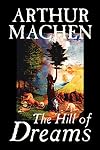
The Hill of Dreams
by Arthur Machen
On This Page
Description
Writer's block takes on a supernatural dimension in The Hill of Dreams, a haunting novel about a young novelist struggling to make his literary dreams come true. Immerse yourself in Machen's lyrical, eerie account of what it means to truly wrestle with one's creativity..
Tags
Recommendations

























Member Recommendations



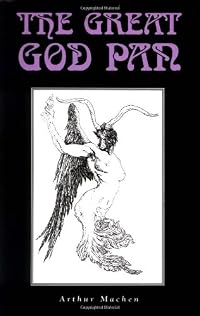
Bookwomble Both feature a protagonist immersed in an other-world superimposed upon the "real" world.
Nialle Young, emotionally complex, imaginative narrators in isolated situations - have something going on that the reader only glimpses before the big reveal
Member Reviews
Arthur Machen is, along with Blackwood and Bierce and Clark Ashton Smith, an early proponent of weird/ supernatural horror fantasy. Whereas Lovecraft seemed to revere Dunsany, Machen's influence is not as apparent. He seems to inhabit the outskirts of literature, as no one's favorite.
From the get-go The Hill of Dreams radiates an aura of 'masterpiece.' In my opinion, there are only a few books so polished, so evocative, and so articulate in the English language. It is so precise in its description, that its surreal landscapes and Lovecraftian visions are truly bone-chilling. The narrator, while cliched in some ways by today's standards, is incredibly rigorous in his intellectual pursuits. More so than Machen's other works, this one is show more the quintessential suggestively occult work of genius.
Like Clark Ashton Smith, Machen had some roots and understanding of poetry. The poetic sensibility is clear and resonating throughout this work. In some ways, the publishing details and coming-of-age revelations serve to ground the magic and dream aspects well, while giving the reader a break from the heady mixture of logic-defying structures of imagery.
I can't think of any novels where the scenery is whipped up into a literary froth as well as in this one. There is a depth of emotion alongside a continually surprising atmosphere of longing and subtle perversions. It is the story of an artist, who changes his perception to better suit his ideals. This idealism is endearing, and we are given over to his delight and maddening setbacks because he is enchanted by a majestic muse.
Prose so rich you have to sip it. And, incredibly, the best Librivox recording I have ever found. show less
From the get-go The Hill of Dreams radiates an aura of 'masterpiece.' In my opinion, there are only a few books so polished, so evocative, and so articulate in the English language. It is so precise in its description, that its surreal landscapes and Lovecraftian visions are truly bone-chilling. The narrator, while cliched in some ways by today's standards, is incredibly rigorous in his intellectual pursuits. More so than Machen's other works, this one is show more the quintessential suggestively occult work of genius.
Like Clark Ashton Smith, Machen had some roots and understanding of poetry. The poetic sensibility is clear and resonating throughout this work. In some ways, the publishing details and coming-of-age revelations serve to ground the magic and dream aspects well, while giving the reader a break from the heady mixture of logic-defying structures of imagery.
I can't think of any novels where the scenery is whipped up into a literary froth as well as in this one. There is a depth of emotion alongside a continually surprising atmosphere of longing and subtle perversions. It is the story of an artist, who changes his perception to better suit his ideals. This idealism is endearing, and we are given over to his delight and maddening setbacks because he is enchanted by a majestic muse.
Prose so rich you have to sip it. And, incredibly, the best Librivox recording I have ever found. show less
I've never read anything quite like this. After The Great God Pan and The White People (which I obviously read in a slightly patronising, exoteric way) it comes as a depth-charge, and speaks to the inner life and the mental structures and furnishings of which one is mostly barely conscious, in a way I've never found before. Even the structural use of repetition seemed original. Plus it is scary, not in a haunted-house way but in its absolutely veracious account of the sensitive soul's encounter with, on the one hand, the surges of intense exultation and intuition of beauty first experienced in all their power and purity in childhood, and on the other, the crassness and brutalities of the outer life. Trust me, I know. Lucian's painful show more and painstaking attempt to make sense of existence by welding the two together in creative writing is a failure. Thus ineluctably leading to insanity and death. But there is, also, the ever-present haunted house: the dusty mouldering empty rooms we glimpse in nightmares. And that's not all: the feminine principle, the unattainable warmth and tenderness of home and family, are woven into the story too. Plus he even throws in a hint on how to read his book, in the section on Milton's Lycidas. Unique, and for 1907 quite astonishing. Now I guess I need to return to his other works with somewhat more attentiveness and humility. show less
A weird and compelling book, and one of a very few literary novels I actually enjoyed. I initially expected this to be a supernatural weird tale, perhaps a novel fairy tale, and it took a long while to realise otherwise. Machen explores the life of an introverted dreamer and writer. It's full of rich description, both of landscapes and of states of mind, and these are thematically linked. Mental peculiarities are depicted in unflinching but convincing detail, but despite some grimness, they don't make this a miserable read. On the downside, the sheer amount of purple prose is sometimes overwhelming, especially the long reminiscences of the final chapter.
Lucian Taylor, desde joven, camina peligrosamente entre la fantasía y la realidad, ya que su vida transcurre entre visiones.
‘La colina de los sueños’ (The Hill of Dreams, 1907), del galés Arthur Machen, no me ha gustado tanto como otras obras del autor. La primera parte, con las ensoñaciones del Lucian niño cuando se pierde en los bosques, es magnífica. Machen sabe describir perfectamente los parajes por los que pasea el protagonista. Sin embargo, poco después la novela se va por unos derroteros que no me han gustado casi nada. Mis expectativas con este libro tal vez eran demasiado grandes, porque he acabado decepcionado.
‘La colina de los sueños’ (The Hill of Dreams, 1907), del galés Arthur Machen, no me ha gustado tanto como otras obras del autor. La primera parte, con las ensoñaciones del Lucian niño cuando se pierde en los bosques, es magnífica. Machen sabe describir perfectamente los parajes por los que pasea el protagonista. Sin embargo, poco después la novela se va por unos derroteros que no me han gustado casi nada. Mis expectativas con este libro tal vez eran demasiado grandes, porque he acabado decepcionado.
This is apparently considered by some to be Machen's magnum opus. And the first 20% or so of it and the very end are pretty good. I found most of the 75% between them tedious as hell. Cutting much of that out and making this a long short story or short novella would've done it a great service.
To be sure, Machen penned some lovely passages describing Lucian's physical and mental peregrinations, but it got repetitive. Extremely repetitive. I found myself skimming at times, because the descriptions were so alike earlier ones.
If you want to check him out, definitely don't read this. I'd recommend [b:The White People|310580|The White People|Arthur show more Machen|https://i.gr-assets.com/images/S/compressed.photo.goodreads.com/books/1173631061l/310580._SX50_.jpg|86849001] instead. show less
To be sure, Machen penned some lovely passages describing Lucian's physical and mental peregrinations, but it got repetitive. Extremely repetitive. I found myself skimming at times, because the descriptions were so alike earlier ones.
If you want to check him out, definitely don't read this. I'd recommend [b:The White People|310580|The White People|Arthur show more Machen|https://i.gr-assets.com/images/S/compressed.photo.goodreads.com/books/1173631061l/310580._SX50_.jpg|86849001] instead. show less
A dark, disturbing, and at times glorious read about the imagination, isolation, and the creative impulse which has the power to both make and unmake.
Lovely rich prose but I got fed up with it's slow pace and the disturbing rapey obsession of the narrator so I quit.
Members
- Recently Added By
Lists

Best Fantasy Novels
821 works; 357 members

Trinity College Booklist (1951): Class Ten, English Literature
358 works; 5 members

Best 20th Century Books as of 1924
100 works; 6 members

Jones & Newman: Best Horror Books Further Recommended Reading
577 works; 4 members

Horror Writers Association Reading List (1996)
40 works; 3 members

In Our Time books
4,934 works; 2 members
Author Information

237+ Works 6,617 Members
Some Editions
Series
Belongs to Publisher Series
Work Relationships
Is contained in
Has the (non-series) sequel
Common Knowledge
- Original publication date
- 1907
- People/Characters
- Lucian Taylor
- Important places
- Wales, UK; London, England, UK
- First words
- There was a glow in the sky as if great furnace doors were opened.
- Last words
- (Click to show. Warning: May contain spoilers.)The flaring light shone through the dead eyes into the dying brain, and there was a glow within, as if great furnace doors were opened.
Classifications
Statistics
- Members
- 423
- Popularity
- 72,699
- Reviews
- 8
- Rating
- (3.80)
- Languages
- 7 — English, French, German, Italian, Polish, Spanish, Swedish
- Media
- Paper, Audiobook, Ebook
- ISBNs
- 68
- ASINs
- 31