On This Page
Description
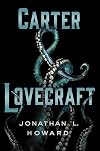
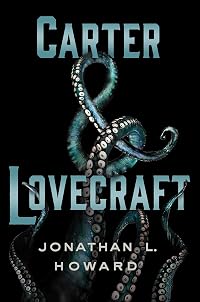
Daniel Carter used to be a homicide detective, but his last case -- the hunt for a serial killer -- went wrong in strange ways and soured the job for him. Now he's a private investigator trying to live a quiet life. Strangeness, however, has not finished with him. First he inherits a bookstore in Providence from someone he's never heard of, along with an indignant bookseller who doesn't want a new boss. She's Emily Lovecraft, the last known descendant of H.P. Lovecraft, the writer from show more Providence who told tales of the Great Old Ones and the Elder Gods, creatures and entities beyond the understanding of man. Then people start dying in impossible ways, and while Carter doesn't want to be involved, but he's beginning to suspect that someone else wants him to be. show lessTags
Recommendations
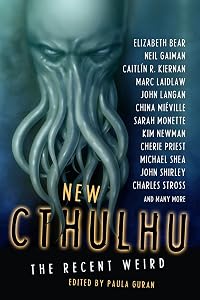
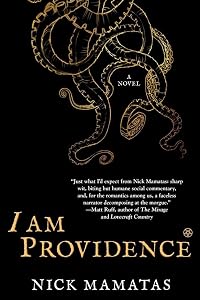
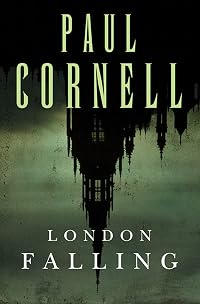
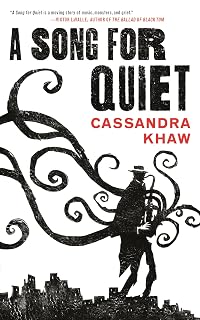







Member Recommendations
Member Reviews
The first couple of chapters of this novel had me worried. Felt like a whole lot of tell and little show. But, I have a ten per cent rule...that is, if the book doesn't get better by the end of the first tenth, then I throw in the towel (I'm looking at you, [a:Jeremy Bates|5327980|Jeremy Bates|https://d.gr-assets.com/authors/1453803472p2/5327980.jpg] and your shit [b:Suicide Forest|26594914|Suicide Forest (World's Scariest Places #1)|Jeremy Bates|https://d.gr-assets.com/books/1442428195s/26594914.jpg|43168499] novel).
Thankfully, the writing improved a lot after that first little bit, and then, BOOM it just got great. I enjoyed the characters, I loved William Colt, I loved how Howard pulled a bunch of stuff together and wove a new show more Lovecraft story from the elements.
Basically, I loved how he took the best parts of Lovecraft's stories (the monsters and the ideas) and left the bad writing behind, and created a whole new story that was completely in the spirit of the originals.
If you don't know Lovecraft, much of this will just go over your head. But if you do know Lovecraft, then this book is fun as hell.
Loved it. show less
Thankfully, the writing improved a lot after that first little bit, and then, BOOM it just got great. I enjoyed the characters, I loved William Colt, I loved how Howard pulled a bunch of stuff together and wove a new show more Lovecraft story from the elements.
Basically, I loved how he took the best parts of Lovecraft's stories (the monsters and the ideas) and left the bad writing behind, and created a whole new story that was completely in the spirit of the originals.
If you don't know Lovecraft, much of this will just go over your head. But if you do know Lovecraft, then this book is fun as hell.
Loved it. show less
This book gave me panic attacks, although nothing in it is particularly horrible. I didn't like it, but I could not stop reading it. Lovecraft stories -- the ones I've read, at least -- don't bother me. The archaic language, the purple prose, provides a handy armor for me. None of that in this book, and so my heart beats too fast, my breathing is labored, my hands tingle, my stomach roils, and yet I kept reading. There's no happy ending, although the main characters, whom I like, survived. I'm not scared of anything. I'm not upset. Panic attacks, while rare these days, are not strange to me. The book is a level of horror story that doesn't rely on body horror, dead puppies, or graphic descriptions of monsters. The tension build is show more subtle, but I finished reading about 10 minutes ago and my fingers still tremble. I will recover, and I will read the next one, and I hope I will not have a heart attack. show less
It's totally me.
No, really; it sounds like a line, but it's true. I'm a huge fan of Howard's Johannes Cabal series (particularly The Long Spoon and the succubus and part-spider, Zarenyia), and when I saw this one had a detective as a lead character, I thought it might be equally engaging. Alas; I glossed over the 'Lovecraft mythos,' one of my least favorite subgenres of supernatural fiction. Or horror, if you prefer to shelve your Lovecraft that direction. Either way, add in lovely fall weather and leaving my job, and it was a battle for my interest. Eventually I committed and finished the story. Carter & Lovecraft is well-written, with what feels like a solid re-invention of the mythos, admittedly to someone who isn't all that familiar show more with it. It also lays the groundwork for a new series, and I sincerely hope for Howard's sake that it's successful, because he's got talent that deserves to be more widely known.
The book does open with a mildly horrific scene of Detective Carter and his partner Hammond chasing down a child serial killer in Red Hook. Those few pages and the tension reminded me, quite unexpectedly, of John Connolley, and his own peculiar blend of supernatural-tinged horror-thriller, and honestly, I wasn't sure I could continue. Serial killers and child-killers are usually plot lines I avoid like the plague. However, it proved to be largely exposition, setting the tone and reason for why Carter was open to profound changes in his life. It settled down into a more straightforward supernatural mystery, at least from Detective Carter's perspective, but I understand a few readers felt like there was a bit of a bait-and-switch, with a beginning that didn't well match the remainder of the book. I'd agree if one was looking for that kind of horror-thriller, but what Howard is really writing is a more thoughtful police procedural crossed with otherworldly supernatural.
"What do you do, Mr. Carter?'...
'I'm an investigator,' said Carter. Leaving 'private' out covered a multitude of sins, real and imaginary.'"
The writing is solid, a fair blend of dialogue and introspection. It is a departure from the witty, tongue-in-cheek tone used in the Cabal stories. The focus is more on the atmosphere oft the world and the whole story, as is fitting for a book built on oddness and suspense.
"Carter had been to Providence handful of times in his life, and never by choice. It was always something to do with a case, or to help somebody out, but he had never willingly been to the place. He didn't like the city at all, but he couldn't have told you why. He knew the dislike was irrational; that didn't mitigate it in the slightest. The small flurry of optimism he had felt that this unexpected inheritance might be worth something was dampened...the discovery that it was in Providence, of all places, had already killed his buzz magnificently."
Still, there's moments of entertaining oddness, such as when he and the lawyer Weston meet regarding his inheritance. Lovecraft is the current manager of the bookstore that Carter mysteriously inherits, and is an intriguing character. Although African-American, she is the last of the genetic line of Lovecraft. Both characters feel very real, and their responses to the situations they face are built slowly and well enough to feel believable. I love that Howard decided that was one of the ways he would subvert the mythos. He also addresses the racism of Lovecraft's work (the author) directly through her voice.
I liked the book, but the fact that I wasn't wild about it really says more to do with my own tastes and my own level of life-distraction than it does for the quality of the story. It's worth nothing that for friends who enjoy this sort of thing, it had a solid four-star rating. show less
No, really; it sounds like a line, but it's true. I'm a huge fan of Howard's Johannes Cabal series (particularly The Long Spoon and the succubus and part-spider, Zarenyia), and when I saw this one had a detective as a lead character, I thought it might be equally engaging. Alas; I glossed over the 'Lovecraft mythos,' one of my least favorite subgenres of supernatural fiction. Or horror, if you prefer to shelve your Lovecraft that direction. Either way, add in lovely fall weather and leaving my job, and it was a battle for my interest. Eventually I committed and finished the story. Carter & Lovecraft is well-written, with what feels like a solid re-invention of the mythos, admittedly to someone who isn't all that familiar show more with it. It also lays the groundwork for a new series, and I sincerely hope for Howard's sake that it's successful, because he's got talent that deserves to be more widely known.
The book does open with a mildly horrific scene of Detective Carter and his partner Hammond chasing down a child serial killer in Red Hook. Those few pages and the tension reminded me, quite unexpectedly, of John Connolley, and his own peculiar blend of supernatural-tinged horror-thriller, and honestly, I wasn't sure I could continue. Serial killers and child-killers are usually plot lines I avoid like the plague. However, it proved to be largely exposition, setting the tone and reason for why Carter was open to profound changes in his life. It settled down into a more straightforward supernatural mystery, at least from Detective Carter's perspective, but I understand a few readers felt like there was a bit of a bait-and-switch, with a beginning that didn't well match the remainder of the book. I'd agree if one was looking for that kind of horror-thriller, but what Howard is really writing is a more thoughtful police procedural crossed with otherworldly supernatural.
"What do you do, Mr. Carter?'...
'I'm an investigator,' said Carter. Leaving 'private' out covered a multitude of sins, real and imaginary.'"
The writing is solid, a fair blend of dialogue and introspection. It is a departure from the witty, tongue-in-cheek tone used in the Cabal stories. The focus is more on the atmosphere oft the world and the whole story, as is fitting for a book built on oddness and suspense.
"Carter had been to Providence handful of times in his life, and never by choice. It was always something to do with a case, or to help somebody out, but he had never willingly been to the place. He didn't like the city at all, but he couldn't have told you why. He knew the dislike was irrational; that didn't mitigate it in the slightest. The small flurry of optimism he had felt that this unexpected inheritance might be worth something was dampened...the discovery that it was in Providence, of all places, had already killed his buzz magnificently."
Still, there's moments of entertaining oddness, such as when he and the lawyer Weston meet regarding his inheritance. Lovecraft is the current manager of the bookstore that Carter mysteriously inherits, and is an intriguing character. Although African-American, she is the last of the genetic line of Lovecraft. Both characters feel very real, and their responses to the situations they face are built slowly and well enough to feel believable. I love that Howard decided that was one of the ways he would subvert the mythos. He also addresses the racism of Lovecraft's work (the author) directly through her voice.
I liked the book, but the fact that I wasn't wild about it really says more to do with my own tastes and my own level of life-distraction than it does for the quality of the story. It's worth nothing that for friends who enjoy this sort of thing, it had a solid four-star rating. show less
Great fun for H.P. Lovecraft & Cthulhu Mythos fans
Author H.P. Lovecraft (1890-1937) was barely recognized in his own lifetime but his writings have been the source material for countless other writers and for filmmakers. This is especially so in the case of those stories which have been retroactively tagged as the Cthulhu Mythos, which imagined an alternate world of Elder Gods and Deep Ones which made occasional appearances and incursions into our reality.
Jonathan L. Howard invents a present-day hard-boiled noir/weird sci-fi investigative team here with Daniel Carter and Emily Lovecraft, descendants of Lovecraft's fictional adventurer Randolph Carter (see for instance "The Statement of Randolph Carter" a.o.) and of Lovecraft himself. show more This is more of an origin story though, so the teaming up doesn't really happen until the latter half. Saying too much would be a spoiler but Lovecraft fans will recognize all sorts of references throughout, including the inspirations behind the chapter titles.
This is the beginning of what looks to be a long-going series as it ends on a cliff-hanger and early reports indicate that the 2017 sequel "After the End of the World" concludes on a similar note.
What better way to end than to say:
"Ph'nglui mglw'nafh Cthulhu R'lyeh wgah'nagl fhtagn" (In his house in R'lyeh, dead Cthulhu waits dreaming) - The Call of Cthulhu.
Its dreams (and your nightmares) are about to become real... show less
Author H.P. Lovecraft (1890-1937) was barely recognized in his own lifetime but his writings have been the source material for countless other writers and for filmmakers. This is especially so in the case of those stories which have been retroactively tagged as the Cthulhu Mythos, which imagined an alternate world of Elder Gods and Deep Ones which made occasional appearances and incursions into our reality.
Jonathan L. Howard invents a present-day hard-boiled noir/weird sci-fi investigative team here with Daniel Carter and Emily Lovecraft, descendants of Lovecraft's fictional adventurer Randolph Carter (see for instance "The Statement of Randolph Carter" a.o.) and of Lovecraft himself. show more This is more of an origin story though, so the teaming up doesn't really happen until the latter half. Saying too much would be a spoiler but Lovecraft fans will recognize all sorts of references throughout, including the inspirations behind the chapter titles.
This is the beginning of what looks to be a long-going series as it ends on a cliff-hanger and early reports indicate that the 2017 sequel "After the End of the World" concludes on a similar note.
What better way to end than to say:
"Ph'nglui mglw'nafh Cthulhu R'lyeh wgah'nagl fhtagn" (In his house in R'lyeh, dead Cthulhu waits dreaming) - The Call of Cthulhu.
Its dreams (and your nightmares) are about to become real... show less
I came across this book entirely by chance, as if the gods had set us on our path of destiny. It was highly improbable, but it happened: saw it in a library, picked it up, and fell absolutely in love with it.
The story was a fun jaunt featuring Lovecraft and Carter's modern-day ancestors. They're wrapped up in a story that has Lovecraftian charm without the boring language. It also offers up nice 'twists', so to speak, that keep things refreshing.
Best part is the author's homage to Lovecraftian inexpressability. Howard approaches it in a conceptual way over physical, focusing on not the visual aspect, rather the emotional and psychological ways of experience. The "Twist" itself is evident of this, and the way he deals with it is utterly show more magical. Sort of reminded me of Chiang's short stories.
I highly enjoyed this read and can't wait to read the next one! show less
The story was a fun jaunt featuring Lovecraft and Carter's modern-day ancestors. They're wrapped up in a story that has Lovecraftian charm without the boring language. It also offers up nice 'twists', so to speak, that keep things refreshing.
Best part is the author's homage to Lovecraftian inexpressability. Howard approaches it in a conceptual way over physical, focusing on not the visual aspect, rather the emotional and psychological ways of experience. The "Twist" itself is evident of this, and the way he deals with it is utterly show more magical. Sort of reminded me of Chiang's short stories.
I highly enjoyed this read and can't wait to read the next one! show less
This was so not what I was expecting, but I really liked it. Things with lots of math and probability tend to make my brain glaze, but this was truly interesting, and I loved the history/genealogy of Carter and Lovecraft--I also really liked both of their characters. The ending was pretty...wow...just very curious to see what happens in a follow-up, which seems to be strongly hinted at. It's a very original story, and I enjoyed the layers of the plots.
My thanks to the folks at the Horror Aficionados group for selecting this book as the February audio group selection, this giving me the opportunity to read and discuss it, and many other fine books, with others.
I really enjoyed this book. It provided a good mix of horror and comedy that reminded me of the old TV series Kolchak: The Night Stalker. The interpersonal dynamic between ex-cop turned private eye Dan Carter and antiquarian bookstore manager Emily Lovecraft is perfect, very enjoyable.
Another thing I enjoyed about the book is that it bears out my attitude towards H.P. Lovecraft. It's my belief that he was a thoroughly loathsome individual and a writer of marginal quality, at best. The one thing he has going for him is the show more Cthulhu mythos that he created. It is a perfect framework that other, more talented authors than H.P., could expand upon with great success. Thank you Jonathan L. Howard for proving me right. I never entirely got a firm grasp on Howard's attitude towards Lovecraft but the fact that he made the racist and misogynistic author's great great grand niece a woman of color gave me an inkling that we were pretty much on the same page.
I don't want to relate too much of what happens for fear of spoiling other readers' enjoyment but I will say it begins with a series of inexplicable events and deaths that defy the rules of physics. From there things just get curiouser and curiouser, all the way to a really great twist at the end.
I very much hope there is a sequel in the works. This would make a great series.
BTW: Ari Fliakos did a tremendous job narrating the audio version of this book. show less
I really enjoyed this book. It provided a good mix of horror and comedy that reminded me of the old TV series Kolchak: The Night Stalker. The interpersonal dynamic between ex-cop turned private eye Dan Carter and antiquarian bookstore manager Emily Lovecraft is perfect, very enjoyable.
Another thing I enjoyed about the book is that it bears out my attitude towards H.P. Lovecraft. It's my belief that he was a thoroughly loathsome individual and a writer of marginal quality, at best. The one thing he has going for him is the show more Cthulhu mythos that he created. It is a perfect framework that other, more talented authors than H.P., could expand upon with great success. Thank you Jonathan L. Howard for proving me right. I never entirely got a firm grasp on Howard's attitude towards Lovecraft but the fact that he made the racist and misogynistic author's great great grand niece a woman of color gave me an inkling that we were pretty much on the same page.
I don't want to relate too much of what happens for fear of spoiling other readers' enjoyment but I will say it begins with a series of inexplicable events and deaths that defy the rules of physics. From there things just get curiouser and curiouser, all the way to a really great twist at the end.
I very much hope there is a sequel in the works. This would make a great series.
BTW: Ari Fliakos did a tremendous job narrating the audio version of this book. show less
Members
- Recently Added By
Lists

Books Read in 2016
4,666 works; 199 members
Author Information

42+ Works 5,222 Members
Awards and Honors
Notable Lists
Series

Common Knowledge
- Canonical title
- Carter & Lovecraft
- Original title
- Carter & Lovecraft
- Original publication date
- 2015-10
- People/Characters
- Daniel Carter; Emily Lovecraft; Kenneth Rothwell
- Important places
- Providence, Rhode Island, USA
- Original language
- English
Classifications
Statistics
- Members
- 406
- Popularity
- 76,535
- Reviews
- 36
- Rating
- (3.81)
- Languages
- English, German, Spanish
- Media
- Paper, Audiobook, Ebook
- ISBNs
- 9
- ASINs
- 4