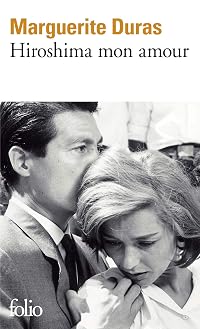
Hiroshima Mon Amour
by Marguerite Duras
On This Page
Description
Jacket description/back: One of the most influential works in the history of cinema, Alain Renais's Hiroshima Mon Amour gathered international acclaim upon its release in 1959 and was awarded the International Critics' Prize at the Cannes Film festival and the New York Film Critics' Award. Ostensibly the story of a love affair between a Japanese architect and a French actress visiting Japan to make a film on peace, Hiroshima Mon Amour is a stunning exploration of the influence of war on both show more Japanese and French culture and the conflict between love and humanity. show lessTags
Recommendations






























Member Reviews
After watching and utterly falling for Alain Resnais's and Marguerite Duras's 1959 film Hiroshima mon amour back in March, I was so enamored of the language—sparse, yet compelling enough that I recited phrases from the film to myself for weeks after watching it—that I had to search out Duras's original screenplay and spend some time absorbing the words at a slower-than-speech pace. Doing so only increased my admiration for Duras's work here, while at the same time helping me realize how much the visual and audio elements of the film augment and alter the words spoken. Having read with interest Amateur Reader's recent post on watching and reading plays, it was an intriguing exercise to go back and read a screenplay of a film I've show more already watched and savored.
In particular, Elle's hypnotic near-monologue from the opening of the film makes a different impression when stripped of the haunting score by Georges Delerue and Giovanni Fusco, and of the shocking and heartbreaking newsreel footage of war devastation (and its counterpoint, near-abstract images of lovers' bodies). Emmanuelle Riva's cadenced delivery of these lines emphasizes the way in which Duras's prose veers, under pressure, into poetic verse and back out again. The score, in turn, underlines that growing pressure underlying Elle's narration, as she tries to convince her Japanese lover that she has seen Hiroshima, that she has witnessed and at some level understands the devastation of the war. Take the following passage, from close to the beginning of the film (all marks and emphasis mine):
The meaning in English is more or less:
However, many of the rhymes and echoes (in particular the "eɪ" sound common among the bolded syllables above) don't translate into English. Try to read it in French even if you don't understand the words, and notice how the rhyming or echoing words are grouped together, often in the shorter sentences. The rhyming/echoing "eɪ" sounds are generally on the accented syllable, and often directly precede a comma or period, which strengthens the stress on those beats. They are repetitive yet syncopated, building on each other to create a rhythmic tension which is alleviated by the counterpoint of the longer sentences, which descend back into a more prose-like rhythm (although the underlined syllables create another, minor rhythmic line). The overall effect is insistent, incantatory. Elle is building a story, a representation that is meant to convince her lover of what she "knows," what we all "know": the devastation and cruelty of the atomic bomb at Hiroshima. But representations of something felt in the body tend to be problematic in Duras. The insistent yet fragile structure created by Elle's voice is cut short by Lui's stark refusal: "Tu n'as rien vu à Hiroshima, rien." (You saw nothing at Hiroshima, nothing.")
Although Duras communicates much of this rhythmic play via punctuation, the text alone simply does not have the power of the full filmic package*. The score underlines everything I've been talking about with regard to the building rhythmic anxiety: frenetic piano, flute, and string parts underline brilliantly the tension during her speeches about the museum, while his refusals are marked by silence, or the single, elegant line of (I'm guessing?) a clarinet. Just to illustrate the exact points Duras is making, my analysis comes nowhere close to the experience of actually watching all elements come together, which you can do here.
The cuts back from the bomb footage to the lovers' bodies provide another method of contrasting the physical immediacy of Elle's current situation with the theoretical nature of her "knowledge" about the bomb. And the questions of reality versus representation are brought to yet another level by the fact that this is itself a piece of art, being viewed by an audience, yet it incorporates the same real newsreel footage that Elle keeps referencing. As the viewer, I feel I am coming face to face with the "reality" of the war, just as Elle feels she was brought face to face with it by going four times to the museum. My reaction was the same as hers: I wept. The impact of these images does not feel negligible, does not feel like something that can be so cleanly dismissed. And yet of course, my feeling is just as illusory as Elle's: our weeping does not indicate any privileged knowledge of Hiroshima under attack. That kind of knowledge is kept locked in the bodies of those who were there, and any attempt to communicate it in language (as Elle does with her own trauma later on) will lead only to forgetfulness, not to shared understanding.
Notes on Disgust
I've decided to jot down a few notes for each of my posts about how the book in question might make use of disgust, even if said book is not directly related to my Disgust Project. This is primarily so I can get a better idea what the most common uses of disgust might be.
Hiroshima mon amour is remarkable for how little disgust it elicits, considering its subject matter. The opening 15-minute montage, in particular, shows very graphic images of disfigurement following the atomic blast, yet (at least personally) I wouldn't say disgust is my primary emotion on viewing these images. I think this is because the disgust impulse has either been superseded by grief and pity, or has reached a tipping point of extremity into horror. (Since I'm American, there may also be a certain amount of cultural guilt around the knowledge that "we" were the ones responsible for the atrocities pictured. Despite the fact that the bomb project was not exactly a democratic decision and happened in any case long before I was born, and despite my strong dislike of nationalism, witnessing photographic evidence of the devastation wrought by one's own country is for some reason more upsetting than witnessing similar devastation wrought by others. As such, most of the disgust I feel when viewing these images is directed inward, if not toward "me" at least toward "us," rather than outward toward "them.")
Speaking from the small amount of reading I've done thus far, and from my common sense, disgust is a largely dehumanizing emotion, used to police boundaries between the "safe" and the "contaminating" (us and them, clean and dirty, etc.). The degree to which Hiroshima mon amour succeeds in breaking down those us vs. them boundaries can be measured by its communication of horror and grief (however limited or suspect they may be) rather than disgust, to the viewer, despite the inclusion of images which could easily disgust. Bottom line: Transformation of disgust into grief via sympathy.
*******
*Which is not to say that I disagree with Amateur Reader's overall point: I enjoy reading plays and agree that we can stage them effectively in our imaginations. But the combined imaginative power of Marguerite Duras and Alain Resnais far outstrips my own. show less
In particular, Elle's hypnotic near-monologue from the opening of the film makes a different impression when stripped of the haunting score by Georges Delerue and Giovanni Fusco, and of the shocking and heartbreaking newsreel footage of war devastation (and its counterpoint, near-abstract images of lovers' bodies). Emmanuelle Riva's cadenced delivery of these lines emphasizes the way in which Duras's prose veers, under pressure, into poetic verse and back out again. The score, in turn, underlines that growing pressure underlying Elle's narration, as she tries to convince her Japanese lover that she has seen Hiroshima, that she has witnessed and at some level understands the devastation of the war. Take the following passage, from close to the beginning of the film (all marks and emphasis mine):
Quatre fois au musée à Hiroshima.
J'ai regardé les gens. J'ai regardé moi-même pensivement, le fer. Le fer brûlé. Le fer brisé, le fer devenu vulnérable comme la chair. J'ai vu des capsules en bouquet: qui y aurait pensé? Des peaux humaines flottantes, survivantes, encore dans la fraîcheur de leurs souffrances. Des pierres. Des pierres brûlées. Des pierres éclatées. Des chevelures anonymes que les femmes de Hiroshima retrouvaient tout entières tombées le matin, au réveil.
J'ai eu chaud place de la Paix. Dix mille degrés sur la place de la Paix. Je le sais. La température du soleil sur la place de la Paix. Comment l'ignorer?
The meaning in English is more or less:
Four times at the museum in Hiroshima.
I watched the people. I myself watched, pensively, the metal. Metal burnt. Metal broken, metal become vulnerable like flesh. I saw the bouquet of bottle caps: who would have thought? The preserved human skins, floating, surviving, their suffering still fresh. The stones. Burnt stone. Shattered stone. The anonymous hair that the women of Hiroshima found, fallen out, on waking in the morning.
I was hot in Peace Square. Ten thousand degrees in Peace Square. I know it. The temperature of the sun in Peace Square - how could you not know it?
However, many of the rhymes and echoes (in particular the "eɪ" sound common among the bolded syllables above) don't translate into English. Try to read it in French even if you don't understand the words, and notice how the rhyming or echoing words are grouped together, often in the shorter sentences. The rhyming/echoing "eɪ" sounds are generally on the accented syllable, and often directly precede a comma or period, which strengthens the stress on those beats. They are repetitive yet syncopated, building on each other to create a rhythmic tension which is alleviated by the counterpoint of the longer sentences, which descend back into a more prose-like rhythm (although the underlined syllables create another, minor rhythmic line). The overall effect is insistent, incantatory. Elle is building a story, a representation that is meant to convince her lover of what she "knows," what we all "know": the devastation and cruelty of the atomic bomb at Hiroshima. But representations of something felt in the body tend to be problematic in Duras. The insistent yet fragile structure created by Elle's voice is cut short by Lui's stark refusal: "Tu n'as rien vu à Hiroshima, rien." (You saw nothing at Hiroshima, nothing.")
Although Duras communicates much of this rhythmic play via punctuation, the text alone simply does not have the power of the full filmic package*. The score underlines everything I've been talking about with regard to the building rhythmic anxiety: frenetic piano, flute, and string parts underline brilliantly the tension during her speeches about the museum, while his refusals are marked by silence, or the single, elegant line of (I'm guessing?) a clarinet. Just to illustrate the exact points Duras is making, my analysis comes nowhere close to the experience of actually watching all elements come together, which you can do here.
The cuts back from the bomb footage to the lovers' bodies provide another method of contrasting the physical immediacy of Elle's current situation with the theoretical nature of her "knowledge" about the bomb. And the questions of reality versus representation are brought to yet another level by the fact that this is itself a piece of art, being viewed by an audience, yet it incorporates the same real newsreel footage that Elle keeps referencing. As the viewer, I feel I am coming face to face with the "reality" of the war, just as Elle feels she was brought face to face with it by going four times to the museum. My reaction was the same as hers: I wept. The impact of these images does not feel negligible, does not feel like something that can be so cleanly dismissed. And yet of course, my feeling is just as illusory as Elle's: our weeping does not indicate any privileged knowledge of Hiroshima under attack. That kind of knowledge is kept locked in the bodies of those who were there, and any attempt to communicate it in language (as Elle does with her own trauma later on) will lead only to forgetfulness, not to shared understanding.
Notes on Disgust
I've decided to jot down a few notes for each of my posts about how the book in question might make use of disgust, even if said book is not directly related to my Disgust Project. This is primarily so I can get a better idea what the most common uses of disgust might be.
Hiroshima mon amour is remarkable for how little disgust it elicits, considering its subject matter. The opening 15-minute montage, in particular, shows very graphic images of disfigurement following the atomic blast, yet (at least personally) I wouldn't say disgust is my primary emotion on viewing these images. I think this is because the disgust impulse has either been superseded by grief and pity, or has reached a tipping point of extremity into horror. (Since I'm American, there may also be a certain amount of cultural guilt around the knowledge that "we" were the ones responsible for the atrocities pictured. Despite the fact that the bomb project was not exactly a democratic decision and happened in any case long before I was born, and despite my strong dislike of nationalism, witnessing photographic evidence of the devastation wrought by one's own country is for some reason more upsetting than witnessing similar devastation wrought by others. As such, most of the disgust I feel when viewing these images is directed inward, if not toward "me" at least toward "us," rather than outward toward "them.")
Speaking from the small amount of reading I've done thus far, and from my common sense, disgust is a largely dehumanizing emotion, used to police boundaries between the "safe" and the "contaminating" (us and them, clean and dirty, etc.). The degree to which Hiroshima mon amour succeeds in breaking down those us vs. them boundaries can be measured by its communication of horror and grief (however limited or suspect they may be) rather than disgust, to the viewer, despite the inclusion of images which could easily disgust. Bottom line: Transformation of disgust into grief via sympathy.
*******
*Which is not to say that I disagree with Amateur Reader's overall point: I enjoy reading plays and agree that we can stage them effectively in our imaginations. But the combined imaginative power of Marguerite Duras and Alain Resnais far outstrips my own. show less
É difícil ler esse livro sem pensar no filme incrível de Alain Resnais, que foi definido pelo Godard como Faulkner Stravinsky.
Algumas vezes eu sentia que podia ouvir as vozes dos atores declamando suas falas (como ouvi Marguerite Duras lendo Agatha, um mês após ver o filme).
Com isso não pretendo comparar o filme e o livro, apenas afirmar isso: eles se tornaram inseparáveis pra mim como representação da aliança Resnais-Duras.
Dizem que Resnais é politicamente estético quando não é esteticamente político, e Duras é uma escritora que atingiu uma prosa realmente poética. É infalível, como a posterior aliança de Resnais com Semprún para realizar Stavisky, ou com Jean Gruault e Hanri Laborit em Meu Tio da América.
Tanto um show more como outro são maravilhosos em sua representação do amor, da memória, do esquecimento... show less
Algumas vezes eu sentia que podia ouvir as vozes dos atores declamando suas falas (como ouvi Marguerite Duras lendo Agatha, um mês após ver o filme).
Com isso não pretendo comparar o filme e o livro, apenas afirmar isso: eles se tornaram inseparáveis pra mim como representação da aliança Resnais-Duras.
Dizem que Resnais é politicamente estético quando não é esteticamente político, e Duras é uma escritora que atingiu uma prosa realmente poética. É infalível, como a posterior aliança de Resnais com Semprún para realizar Stavisky, ou com Jean Gruault e Hanri Laborit em Meu Tio da América.
Tanto um show more como outro são maravilhosos em sua representação do amor, da memória, do esquecimento... show less
"Assim como no amor existe essa ilusão, essa ilusão de jamais esquecer, também eu tive a ilusão, face a Hiroxima, de que jamais esquecerei.
Como no amor."
(...)
"Como tu, também eu tentei lutar com todas as minhas forças contra o esquecimento. Como tu, esqueci. Como tu, desejei ter uma memória inconsolável, uma memória de sombras e de pedra."
Como no amor."
(...)
"Como tu, também eu tentei lutar com todas as minhas forças contra o esquecimento. Como tu, esqueci. Como tu, desejei ter uma memória inconsolável, uma memória de sombras e de pedra."
J'ai apprécié ce livre car il m'a émue. Cette femme prénommée Riva qui vit à Nevers et qui débarque à Hiroshima au départ pour y tourner un film et qui finalement y trouve l'Amour. Cet amour plus ou moins impossible mais qui va l'animer tout au long de l'histoire.
Le rythme de ce récit est plutôt lent, j'ai ressenti comme une sorte d'attente pesante, comme si les deux personnages avaient peur du lendemain. Riva est prise entre deux feux : rester avec cet homme rencontré à Hiroshima ou partir. Elle a l'air sûre de son départ, du moins dans ce qu'elle dit mais j'y ai vu une hésitation sous-jacente, une envie de rester près de cet homme.
Puis, il y a sa vie là bas, à Nevers. Son enfance triste, son mari rencontré pendant show more la guerre. Oui car en fait l'homme d'Hiroshima est son amant, ce que l'on apprend pas tout de suite et une fois cet élément de sa vie dévoilé, j'ai trouvé que leur histoire d'amour a perdu un peu de "magie" et de spontanéité.
Par ailleurs, le titre de ce livre m'a beaucoup interpellé et fait réfléchir avant de le lire puis à la lecture j'ai fait des liens, le mot Hiroshima a pris plusieurs sens : il est le nom que Riva donne à cet homme mystérieux et il traduit aussi la guerre, la souffrance de tous les rescapés. Le lien le plus fort à mon sens est que pour Riva, cet amour est d'une violence positive car il est fort et négative parce qu'elle sait au font d'elle-même que si elle part, que tout se termine, cet amour l'aura marqué et s'en défaire lui sera très difficile. On n'oublie pas Hiroshima.
Line-Rose. show less
Le rythme de ce récit est plutôt lent, j'ai ressenti comme une sorte d'attente pesante, comme si les deux personnages avaient peur du lendemain. Riva est prise entre deux feux : rester avec cet homme rencontré à Hiroshima ou partir. Elle a l'air sûre de son départ, du moins dans ce qu'elle dit mais j'y ai vu une hésitation sous-jacente, une envie de rester près de cet homme.
Puis, il y a sa vie là bas, à Nevers. Son enfance triste, son mari rencontré pendant show more la guerre. Oui car en fait l'homme d'Hiroshima est son amant, ce que l'on apprend pas tout de suite et une fois cet élément de sa vie dévoilé, j'ai trouvé que leur histoire d'amour a perdu un peu de "magie" et de spontanéité.
Par ailleurs, le titre de ce livre m'a beaucoup interpellé et fait réfléchir avant de le lire puis à la lecture j'ai fait des liens, le mot Hiroshima a pris plusieurs sens : il est le nom que Riva donne à cet homme mystérieux et il traduit aussi la guerre, la souffrance de tous les rescapés. Le lien le plus fort à mon sens est que pour Riva, cet amour est d'une violence positive car il est fort et négative parce qu'elle sait au font d'elle-même que si elle part, que tout se termine, cet amour l'aura marqué et s'en défaire lui sera très difficile. On n'oublie pas Hiroshima.
Line-Rose. show less
Apr 24, 2014 (Edited)French
Publicada originalmente en 1960; esta edición pertenece a una serie de difusión literaria.
La obra presenta el encuentro entre una actriz francesa y un arquitecto japonés en la ciudad de Hiroshima, donde ella rueda una película sobre la paz. A través de sus conversaciones, recuerdos y silencios, ambos personajes exploran el trauma, la memoria y la imposibilidad de comprender plenamente el dolor ajeno. El relato alterna presente y pasado, entrelazando la devastación de la guerra con la historia íntima de la protagonista, marcada por un amor prohibido durante la ocupación alemana en Francia.
Concebida originalmente como guion cinematográfico, la obra destaca por su estructura fragmentaria, su lirismo y su profunda carga simbólica. show more Duras articula un discurso sobre la memoria colectiva y personal mediante repeticiones, imágenes poéticas y una cadencia casi musical. La edición consultada, perteneciente a una serie de difusión literaria, ofrece un texto limpio y estable, adecuado para lectura y estudio, aunque sin aparato crítico. Su valor reside en la fuerza expresiva del lenguaje y en la capacidad de la autora para convertir un diálogo íntimo en una reflexión universal sobre la guerra, el duelo y la identidad. show less
La obra presenta el encuentro entre una actriz francesa y un arquitecto japonés en la ciudad de Hiroshima, donde ella rueda una película sobre la paz. A través de sus conversaciones, recuerdos y silencios, ambos personajes exploran el trauma, la memoria y la imposibilidad de comprender plenamente el dolor ajeno. El relato alterna presente y pasado, entrelazando la devastación de la guerra con la historia íntima de la protagonista, marcada por un amor prohibido durante la ocupación alemana en Francia.
Concebida originalmente como guion cinematográfico, la obra destaca por su estructura fragmentaria, su lirismo y su profunda carga simbólica. show more Duras articula un discurso sobre la memoria colectiva y personal mediante repeticiones, imágenes poéticas y una cadencia casi musical. La edición consultada, perteneciente a una serie de difusión literaria, ofrece un texto limpio y estable, adecuado para lectura y estudio, aunque sin aparato crítico. Su valor reside en la fuerza expresiva del lenguaje y en la capacidad de la autora para convertir un diálogo íntimo en una reflexión universal sobre la guerra, el duelo y la identidad. show less
May 8, 2026Spanish
Le synopsis et les dialogues du film d’Alain Resnais racontent l’histoire d’amour fulgurante et passionnée d’une actrice française et d’un ingénieur japonais dans les ruines d’Hiroshima. Un dialogue qui se remémore par touches le premier amour de Riva pour un Allemand et le traumatisme de sa tonsure à la libération. Échos d’un continent à l’autre, d’un amant à l’autre, d’un pays en guerre à l’autre, tension et passion dans le style épuré, sobre, poétique et pourtant intense et expressif propre à l’auteur.
Oct 24, 2023French
En août 1957, une comédienne française vient à Hiroshima tourner un film sur la paix. Elle rencontre un Japonais qui devient son amant. Leur histoire commence la veille du retour en France de la comédienne, leur temps ensemble est limité à celui du tournage, ce qui rend leur rencontre encore plus passionnée. Ils ont en point commun d'avoir connu une tragédie, ce qui les rapproche et les sépare en même temps.
Nov 21, 2010French
Members
- Recently Added By
Lists

le donne raccontano
116 works; 1 member

EU Fiction: 1950-2022
223 works; 70 members

Books With Place Names in the Title
257 works; 11 members
Talk Discussions
Past Discussions
1914: Duras - Hiroshima Mon Amour in Literary Centennials (January 2014)
Author Information

226+ Works 18,860 Members
Marguerite Duras was born in Gia-Dinh, Indochina on April 4, 1914. After attending school in Saigon, she moved to Paris, France to study law and political science. After graduation, she worked as a secretary in the French Ministry of the Colonies until 1941. During World War II, she joined the Resistance and published her first books. After the show more liberation, she became a member of the French Communist Party, and though she later resigned, she always described herself as a Marxist. Her first book, Les Impudents, was published in 1943. During her lifetime, she wrote more than 70 novels, plays, screenplays and adaptations. Her novels include The Sea Wall, The Lover, The Lover from Northern China, The War, and That's All. In 1959, she wrote her first film scenario, Hiroshima, Mon Amour, and has since been involved in a number of other films, including India Song, Baxter, Vera Baxter, Le Camion (The Truck), and The Lover. She died on March 4, 1996 at the age of 81. (Bowker Author Biography) show less
Some Editions
Series
Belongs to Publisher Series
Work Relationships
Has the adaptation
Common Knowledge
- Canonical title*
- Hiroshima mon amour
- Original title
- Hiroshima mon amour [book]
- Original publication date
- 1960
- Important places
- Hiroshima, Japan
- Related movies
- Hiroshima mon amour (1959 | IMDb)
- Original language*
- Français
*Some information comes from Common Knowledge in other languages. Click "Edit" for more information.
Classifications
- Genre
- Fiction and Literature
- DDC/MDS
- 791.4372 — Arts & recreation Recreation, sports, and performing arts Public performances Motion pictures, radio, television, podcasting Motion pictures Films; screenplays Single films
- LCC
- PN1997 .D92513 — Language and Literature Literature (General) Literature (General) Drama Motion pictures Plays, scenarios, etc.
- BISAC
Statistics
- Members
- 998
- Popularity
- 26,252
- Reviews
- 12
- Rating
- (3.68)
- Languages
- 12 — Chinese, Dutch, English, Finnish, French, German, Norwegian, Portuguese (Portugal), Romanian, Spanish, Swedish, Turkish
- Media
- Paper, Ebook
- ISBNs
- 50
- UPCs
- 1
- ASINs
- 20