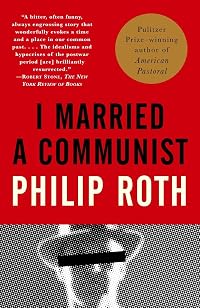
On This Page
Description
Radio actor Iron Rinn (born Ira Ringold) is a big Newark roughneck blighted by a brutal personal secret from which he is perpetually in flight. An idealistic Communist, a self-educated ditchdigger turned popular performer, a six-foot six-inch Abe Lincoln look-alike, he marries the nation's reigning radio actress and beloved silent-film star, the exquisite Eve Frame (born Chava Fromkin). Their marriage evolves from a glamorous, romantic idyll into a dispiriting soap opera of tears and show more treachery. And with Eve's dramatic revelation to the gossip columnist Bryden Grant of her husband's life of "espionage" for the Soviet Union, the relationship enlarges from private drama into national scandal. Set in the heart of the McCarthy era, the story of Iron Rinn's denunciation and disgrace brings to harrowing life the human drama that was central to the nation's political tribulations in the dark years of betrayal, the blacklist, and naming names. I Married a Communist is an American tragedy as only Philip Roth could write it. show lessTags
Recommendations
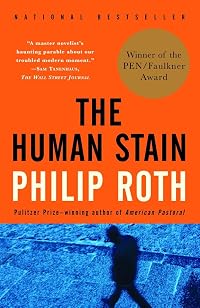
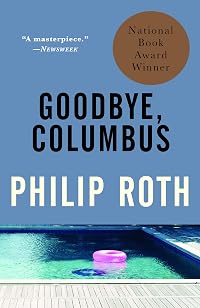
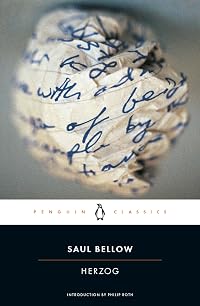
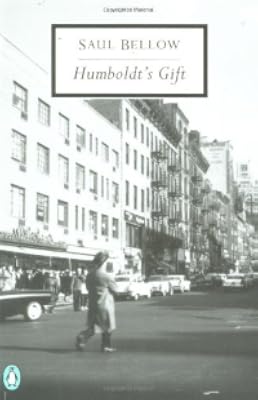
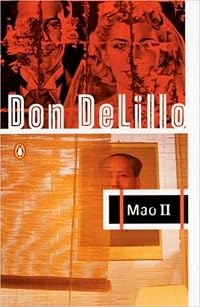
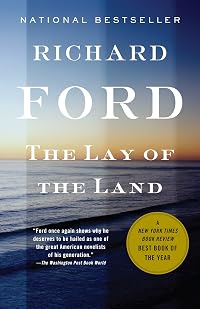
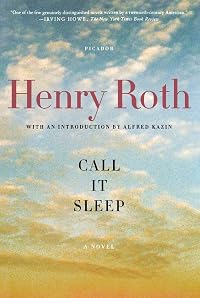







Member Recommendations
Member Reviews
People complain that Americans lack a political memory, but we can thank our lucky stars that the narrative of the Red Scare is pretty well-established in our popular imagination. It would probably have been easy for Philip Roth to write a novel that conformed to that familiar narrative, in which a well-meaning, largely innocent American is unjustly removed from his or her job after a villainous public inquisitor draws some spurious link between them and a largely imaginary Red Menace and capitalizes on public hysteria. While there is a brief courtroom scene in the first section of "I Married a Communist," I'm glad to say that Philip Roth did not choose to go down this too-familiar path. In fact, Roth doesn't seem to be particularly show more interested in the general American public's reaction to the communist threat or their Antisemitism, which plays a far greater role in "The Plot Against America." His real subject here is fanaticism and ideological narrow-mindedness, which could be said to be prescient, since this novel was published before the attacks of September 11, 2001 changed the focus of American discourse, perhaps for good.
"I Married a Communist," like so many other good novels, could be read as a tool of resistance to all-encompassing ideologies like communism and an impassioned argument in favor of critical thinking. To reduce it to a mere civics lesson would ignore its human element, which Roth, as per usual, handles masterfully. The character at the center of this novel, Ira Ringold, is both a classically Rothian protagonist who struggles, largely unsuccessfully, in this case, to synthesize his American and Jewish identities and an unrepentant communist. As a victim, he's not particularly sympathetic, either; he uses his political ideology to stifle his most violent impulses and seems to lack the intellectual capacity to fully understand the philosophy he espouses. These shortcomings make "I Married a Communist" an occasionally harrowing read; Roth seems to want to impress upon his readers the inner and turmoil and emotional violence that it takes to create a genuine fanatic. As Roth's longtime narrator and authorial stand-in Nathan Zuckerman and Murray Ringold, Ira's brother, try to patch together a serviceable narrative that can make sense Ira's chaotic life, they are also seeking to examine the emotional scars that this sort of absolutist thinking leaves upon the psyches of its practitioners. Ira, for example, seeks to achieve a sort of impersonal dedication to communism but seems unable to gain the necessary emotional distance to do so. And this novel is brimming with misdirected emotional energy. Characters in this novel fall in and out of love with each other, with their illusions, and with various political philosophies with typically messy, painful results. The tense triangle that Roth describes between Ira, Eve Frame, his co-star and sometime wife, and her emotionally damaged daughter is a fascinating picture of familial dysfunction. His portrait of Johnny O'Day, Ira's mentor, is a similarly spellbinding account of a character alienated from everything but his own ideas. One suspects that the only genuine personal growth in this novel occurs when Nathan Zuckerman rejects the lure of communism, chooses to dedicate his life to literature, and escapes Ira's circle.
As for Roth's prose: what's left to say? To say that he flawlessly mimics the speech pattens of his characters wouldn't be quite correct: Few people are able to speak as elegantly as Roth writes. When he gets going, Roth's writing reminds me of nothing so much as the calming sound of the waves gently and ceaselessly crashing upon a beach. Whatever his subject, Roth's prose finds and mines a poetic vein that most writers strain to imagine, let alone commit to paper. To watch as he patiently unspools his characters' stories is to watch a master fully in control of his medium. "I Married a Communist," like "American Pastoral" and "The Plot Against America," the other entries in Roth's American trilogy, is highly recommended. show less
"I Married a Communist," like so many other good novels, could be read as a tool of resistance to all-encompassing ideologies like communism and an impassioned argument in favor of critical thinking. To reduce it to a mere civics lesson would ignore its human element, which Roth, as per usual, handles masterfully. The character at the center of this novel, Ira Ringold, is both a classically Rothian protagonist who struggles, largely unsuccessfully, in this case, to synthesize his American and Jewish identities and an unrepentant communist. As a victim, he's not particularly sympathetic, either; he uses his political ideology to stifle his most violent impulses and seems to lack the intellectual capacity to fully understand the philosophy he espouses. These shortcomings make "I Married a Communist" an occasionally harrowing read; Roth seems to want to impress upon his readers the inner and turmoil and emotional violence that it takes to create a genuine fanatic. As Roth's longtime narrator and authorial stand-in Nathan Zuckerman and Murray Ringold, Ira's brother, try to patch together a serviceable narrative that can make sense Ira's chaotic life, they are also seeking to examine the emotional scars that this sort of absolutist thinking leaves upon the psyches of its practitioners. Ira, for example, seeks to achieve a sort of impersonal dedication to communism but seems unable to gain the necessary emotional distance to do so. And this novel is brimming with misdirected emotional energy. Characters in this novel fall in and out of love with each other, with their illusions, and with various political philosophies with typically messy, painful results. The tense triangle that Roth describes between Ira, Eve Frame, his co-star and sometime wife, and her emotionally damaged daughter is a fascinating picture of familial dysfunction. His portrait of Johnny O'Day, Ira's mentor, is a similarly spellbinding account of a character alienated from everything but his own ideas. One suspects that the only genuine personal growth in this novel occurs when Nathan Zuckerman rejects the lure of communism, chooses to dedicate his life to literature, and escapes Ira's circle.
As for Roth's prose: what's left to say? To say that he flawlessly mimics the speech pattens of his characters wouldn't be quite correct: Few people are able to speak as elegantly as Roth writes. When he gets going, Roth's writing reminds me of nothing so much as the calming sound of the waves gently and ceaselessly crashing upon a beach. Whatever his subject, Roth's prose finds and mines a poetic vein that most writers strain to imagine, let alone commit to paper. To watch as he patiently unspools his characters' stories is to watch a master fully in control of his medium. "I Married a Communist," like "American Pastoral" and "The Plot Against America," the other entries in Roth's American trilogy, is highly recommended. show less
Incredible book. It's impossible to clearly summarize the ideas and political rage that Roth puts within the characters populating this book. I devoured this book.
This is one of those books that I'm glad to have read over fifty. As a young person, I would not have grasped most of the ideas. I had not yet witnessed and absorbed the repetitive nature of generational society. People don't change. In our youth we consider ourselves unique, our ideas grand in scale, we also think that our ideas are special and new. Ultimately, in age and isolation, we can see the folly.
This is one of those books that I'm glad to have read over fifty. As a young person, I would not have grasped most of the ideas. I had not yet witnessed and absorbed the repetitive nature of generational society. People don't change. In our youth we consider ourselves unique, our ideas grand in scale, we also think that our ideas are special and new. Ultimately, in age and isolation, we can see the folly.
Read this after reading Claire Blooms book about her life with Roth. I know this is a suspect step, but given Roth's mining of his own life for his fiction; I figure this is fair game. Anyway, my view is that there is a pair of them in it; they are probably both a bit mad, selfish and publically egotistical. But, this is a merciless piece of revenge fiction ; a real hatchet job on a self-supporting woman who can't possibly have deserved it. I mean she was Jewish and he casts her in the book as being anti-Semitic ; is there anything worse you could accuse a
Jew of ?
Jew of ?
Anyone who's paid any attention whatsoever to my reading habits knows that Philip Roth is far and away my favorite author. I've made it through about half of his books now and while I Married a Communist didn't quite earn the title of my favorite Roth book, it is easily in the top 5.
Many of the novels I've enjoyed by Roth I would hesitate to recommend to someone who's never experienced him before. Often times they build on one another, or I think it's necessary to know certain things about his life or his philosophy to get what you need to from his books. However, I Married a Communist certainly stands on its own and makes an excellent starting point for someone who's never experienced him before.
There were many reasons I loved this show more book, not the least of which was the total saturation with McCarthy-era politics. The characters were rich, the book was complete. With other authors I'll often read a book and be left wondering what happened after it was over, or I'll be curious about details regarding what happened before the story began. Roth manages to start right in the midst of the story and yet the novel is 100% complete. Though I loved the book I did not feel like it needed a single additional word, nor were any of the words superfluous.
As always, there were many little sentences that proved Roth's understanding of the human condition.
“I'd say to Doris, 'Why doesn't he leave? Why can't he leave?' And do you know what Doris would answer? 'Because he's like everybody – you only realize things when they're over.”
or
“I headed down the stairs with the seething self-disgust of someone young enough to think that you had to mean everything you said.”
My politics are about as left as you can get and this book certainly focuses on left-wing politics, which is certainly a bonus for me. However, there were several sections regarding the inability of a writer/artist/etc. to be political, and while I generally disagree with that point of view...well, I was a bit swayed.
“Politics is the great generalizer,” Leo told me, “and literature the great particularizer, and not only are they in an inverse relationship to each other – they are also in an antagonistic relationship. To politics, literature is decadent, soft, irrelevant, boring, wrongheaded, dull, something that makes no sense and that really oughtn't to be. Why? Because the particularizing impulse is literature. How can you be a politician and allow the nuance? As an artist the nuance is your task. Your task is not to simplify. Even should you choose to write in the simplest way, a la Hemingway, the task remains to impart the nuance, to elucidate the complication, not to deny the contradiction, but to see where, within the contradiction, lies the tormented human being. To allow the chaos. To let it in. You must let it in.”
Overall, this book reminded me that Roth is the most awarded living author for a reason. Every word he writes is there for a purpose and he rarely oversteps his reach. I would recommend this book to anyone who's interested in literary fiction. show less
Many of the novels I've enjoyed by Roth I would hesitate to recommend to someone who's never experienced him before. Often times they build on one another, or I think it's necessary to know certain things about his life or his philosophy to get what you need to from his books. However, I Married a Communist certainly stands on its own and makes an excellent starting point for someone who's never experienced him before.
There were many reasons I loved this show more book, not the least of which was the total saturation with McCarthy-era politics. The characters were rich, the book was complete. With other authors I'll often read a book and be left wondering what happened after it was over, or I'll be curious about details regarding what happened before the story began. Roth manages to start right in the midst of the story and yet the novel is 100% complete. Though I loved the book I did not feel like it needed a single additional word, nor were any of the words superfluous.
As always, there were many little sentences that proved Roth's understanding of the human condition.
“I'd say to Doris, 'Why doesn't he leave? Why can't he leave?' And do you know what Doris would answer? 'Because he's like everybody – you only realize things when they're over.”
or
“I headed down the stairs with the seething self-disgust of someone young enough to think that you had to mean everything you said.”
My politics are about as left as you can get and this book certainly focuses on left-wing politics, which is certainly a bonus for me. However, there were several sections regarding the inability of a writer/artist/etc. to be political, and while I generally disagree with that point of view...well, I was a bit swayed.
“Politics is the great generalizer,” Leo told me, “and literature the great particularizer, and not only are they in an inverse relationship to each other – they are also in an antagonistic relationship. To politics, literature is decadent, soft, irrelevant, boring, wrongheaded, dull, something that makes no sense and that really oughtn't to be. Why? Because the particularizing impulse is literature. How can you be a politician and allow the nuance? As an artist the nuance is your task. Your task is not to simplify. Even should you choose to write in the simplest way, a la Hemingway, the task remains to impart the nuance, to elucidate the complication, not to deny the contradiction, but to see where, within the contradiction, lies the tormented human being. To allow the chaos. To let it in. You must let it in.”
Overall, this book reminded me that Roth is the most awarded living author for a reason. Every word he writes is there for a purpose and he rarely oversteps his reach. I would recommend this book to anyone who's interested in literary fiction. show less
I guess I'm reading Roth's American Trilogy in reverse order, and years apart. Like The Human Stain, I Married a Communist offers a rich tapestry of characters and you will delve deeply, very deeply, into each and every one of them. Woven together they tell the story of a troubled time in American history-- early McCarthyism, and present some timeless truths about human nature.
The story spans nearly a century and is narrated by Nathan Zuckerman. It tells quite a bit of Nathan's history but the central, if not "main", character is Ira Ringold, a troubled youth turned Communist spokesman and radio star who marries into money, fame, and the NY elite-- until his downfall.
The novel is full of intellectual references to literature, show more philosophy, economics, etc. At times is seems that Roth had a bunch of random semi-essays laying around and figured out how to weave them into the novel. While I generally enjoyed these off-topic rants they could be distracting from the plot. The book was longer, denser, and more pedantic than it needed to be. But for the patient reader the finale was worthwhile. Overall a profound story, timely history lesson, full of memorable characters. show less
The story spans nearly a century and is narrated by Nathan Zuckerman. It tells quite a bit of Nathan's history but the central, if not "main", character is Ira Ringold, a troubled youth turned Communist spokesman and radio star who marries into money, fame, and the NY elite-- until his downfall.
The novel is full of intellectual references to literature, show more philosophy, economics, etc. At times is seems that Roth had a bunch of random semi-essays laying around and figured out how to weave them into the novel. While I generally enjoyed these off-topic rants they could be distracting from the plot. The book was longer, denser, and more pedantic than it needed to be. But for the patient reader the finale was worthwhile. Overall a profound story, timely history lesson, full of memorable characters. show less
Not as expansive as American Pastoral, but searching, incisive, brilliant, and quite the page-turner. While I found Roth's last, Exit Ghost, to be an anemic excuse for Roth's long literary rants, this one is a living breathing story on its own. Ira Ringold, the Communist in the title, is a tragic figure who uses ideology, and marriage, as a desperate protection against his own dark side. His wife, the aptly-named Eve Frame, betrays Ira to the red-baiting journalists of the time by participating in a libelous book that gives the novel its title. Indeed, betrayal, of self and of others, is one of the larger themes of a book that ruminates on what it what it means to be human. Can we as humans not betray? This is ultimately a story of show more human relationships and the mess we make of them, rather than a grand discourse on the politics of the time, and it is all the more interesting for that. (Oh, and the gossip? I don't care about that, and it surprised me how often it turned up in reviews). show less
After having read Roth's "The Human Stain" and "American Pastoral", "I Married a Communist" was definitely right on top of my wishlist. It gives a lot of insight into what shook America in the McCarthy era. As all of those three books, Roth - again - did it. He achieved to write a compelling story that grips its readers not so much for what is being told but rather for how its being told. A little less action, a little more thought. Insightful, American, a typical Roth. 4 stars.
Members
- Recently Added By
Published Reviews
ThingScore 100
Philip Roth beweist mit "Mein Mann, der Kommunist" erneut seinen hohen literarischen Rang. Er zeigt nicht nur seine Fähigkeit, ein auf historischen Tatsachen basierendes politisches Buch zu schreiben, sondern verknüpft dies darüber hinaus mit der psychographischen Darstellung eines exemplarischen linken Lebenslaufes. Roth versöhnt den Leser nicht mit der Welt des Machbaren, schafft keine show more Kongruenz zwischen Realität und Möglichkeit, deckt vielmehr schonungslos Dummheit, Verleumdung, machtpolitisch motivierte Kommunistenhetze und die selbstzerstörerische Gesellschaft in einer der schwärzesten Epochen des modernen Amerika auf; einer Epoche, die in einem Land, das so stolz ist auf seine liberalen, freiheitlichen Werte, noch immer gerne verschwiegen wird. In diesem hervorragenden Werk zeigt sich Roths künstlerische Klasse sowohl als politischer Autor als auch als Meister der psychologischen Literatur. show less
added by Indy133
Lists

1990s
309 works; 17 members

International IMPAC Dublin Literary Award
179 works; 6 members

Books Set in New Jersey
22 works; 4 members

The Torchlight List
95 works; 1 member

20th Century Literature
1,161 works; 54 members
Author Information

115+ Works 74,703 Members
Philip Milton Roth was born in Newark, New Jersey on March 19, 1933. He attended Rutgers University for one year before transferring to Bucknell University where he completed a B.A. in English with highest honors in 1954. He received an M.A. from the University of Chicago in 1955. His first book, Goodbye, Columbus, received the National Book Award show more in 1960. His other books include Letting Go, When She Was Good, Portnoy's Complaint, My Life as a Man, The Ghostwriter, Zuckerman Unbound, I Married a Communist, The Plot Against America, The Facts, The Anatomy Lesson, Exit Ghost, Deception, Nemesis, Everyman, Indignation, and The Humbling. He won the National Book Critic Circle Awards in 1987 for his novel The Counterlife and in 1992 for his memoir Patrimony: A True Story. He won the PEN/Faulkner Award for Fiction in 1993 for Operation Shylock: A Confession and in 2001 for The Human Stain, the National Book Award in 1995 for Sabbath's Theater, and the Pulitzer Prize in 1998 for American Pastoral. He stopped writing in 2010. He died from congestive heart failure on May 22, 2018 at the age of 85. (Bowker Author Biography) show less
Some Editions
Awards and Honors
Awards
Distinctions
Notable Lists
Series


Belongs to Publisher Series
Work Relationships
Is contained in
Common Knowledge
- Canonical title*
- J'ai épousé un communiste
- Original title
- I Married a Communist
- Original publication date
- 1998 (1e édition originale américaine) (1e édition originale américaine); 2001-05-23 (1e traduction et édition française, Du monde entier, Gallimard) (1e traduction et édition française, Du monde entier, Gallimard); 2003-10-30 (Réédition française, Folio, Gallimard) (Réédition française, Folio, Gallimard)
- People/Characters
- Nathan Zuckerman; Iron Rinn; Eve Frame; Murray Ringold
- Important places
- Newark, New Jersey, USA
- Epigraph*
- Des chansons, j'en ai entendu beaucoup dans mon pays natal,
Des chansons joyeuses et des chansons tristes.
Mais il en est une qui s'est gravée dans ma mémoire :
Le chant de l'humble travailleur
Han, lève l... (show all)a trique !
Ho ! hisse !
Tirons plus fort tous ensemble !
Ho ! hisse !
Doubinouchka, chanson folklorique russe exécutée et enregistrée dans les années quarante, en russe, par les chœurs et l'orchestre de l'Armée rouge - Dedication*
- À mon amie et éditrice, Veronica Geng,
1941-1997 - First words*
- 1
Ira Ringold avait un frère aîné, Murray, qui fut mon premier professeur d'anglais au lycée, et ce fut par lui que je me liai d'amitié avec Ira. [...] - Last words*
- (Click to show. Warning: May contain spoilers.)The stars are indispensable.
- Blurbers
- William Sutcliffe, The Independent; New York Review of Books; David Robson, Sunday Telegraph; Phillip Hensher, Mail on Sunday; New York Times Book Review; Erica Wagner
- Original language
- English US
*Some information comes from Common Knowledge in other languages. Click "Edit" for more information.
Classifications
Statistics
- Members
- 2,196
- Popularity
- 9,202
- Reviews
- 30
- Rating
- (3.69)
- Languages
- 18 — Catalan, Chinese, Danish, Dutch, English, Finnish, French, German, Greek, Hungarian, Italian, Norwegian (Bokmål), Polish, Portuguese, Romanian, Spanish, Swedish, Turkish
- Media
- Paper, Audiobook, Ebook
- ISBNs
- 58
- UPCs
- 1
- ASINs
- 24