On This Page
Description
In the late twentieth century, the streets of Paris are lined with haunted ruins. The Great Magicians' War left a trail of devastation in its wake. The grands magasins have been reduced to piles of debris, Notre-Dame is a burnt-out shell, and the Seine has turned black with ashes and rubble and the remnants of the spells that tore the city apart. But those that survived still retain their irrepressible appetite for novelty and distraction, and the great houses still vie for dominion over show more France's once-grand capital.Once the most powerful and formidable, House Silverspires now lies in disarray. Its magic is ailing; its founder, Morningstar, has been missing for decades; and now something from the shadows stalks its people inside their very own walls.Within the house, three very different people must come together: a naive but powerful fallen angel, an alchemist with a self-destructive addiction, and a resentful young man wielding spells of unknown origin. They may be Silverspires' salvation -- or the architects of its last, irreversible fall. And if Silverspires falls, so may the city itself. show lessTags
Recommendations





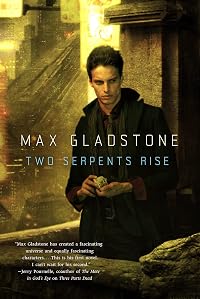
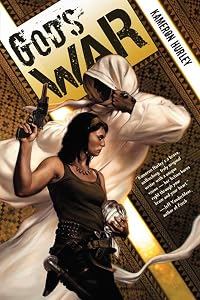
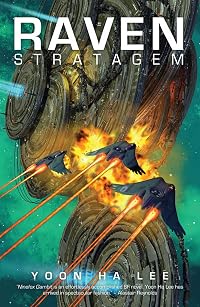




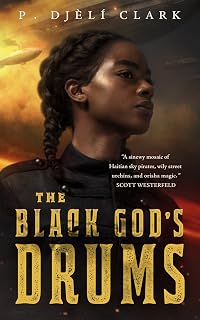

Member Recommendations
Member Reviews
Once one of the most powerful Houses in Paris Silverspires is in decline. Its founder, Morningstar, is missing. Selene, his last pupil, has taken over. For years she has led the House, protected it and its dependents and schemed and plotted on its behalf. Since the end of The Great War that is all the houses do, scheme and plot and pull at one another. No body wants an outright war, the Great War destroyed too much, contaminated too much, but every one is still locked in a struggle to survive, to stay on top.
Into this atmosphere of constant political scheming comes Philippe and Isabelle. He has lived in Paris since leaving his Vietnamese homeland, he has fought for the houses, against his will. He knows what they are capable of and show more wants nothing to do with them. Instead he has survived out among the gangs of Paris, where might makes right. Isabelle is newly Fallen. Full of power but so vulnerable until she learns control and skill. And in a world where Fallen blood and bones can be turned into magic power boosters she needs the protection and guidance of a House.
I first came across de Bodard when I read Obsidian and Blood, a collection of her Aztec stories. And I thoroughly enjoyed them. Since then she has written many fascinating short stories and you should probably go check them out if you haven't read any already. She has a wonderful way of writing, I could read her all day long.
Unfortunately I started reading this book when I didn't have the time, and so was only able to read a chapter or so a day for a while. Once I got a bit of free time however I devoured it, and I think it is a book that I would reread. I loved the world that de Bodard has created here. It is a world without and good choices, just the least worst. All of the main characters struggle with this, and the world in which they live where survival is such a struggle. In order to survive you must seize and keep power. And being in power means that you must take that power away from someone else.
Philippe, and that is not his real Viet name, is introduced to us when he is at the bottom of the pile. Exiled from his home, with no real supports in Paris, an outsider with no power. But is he really that powerless?
In order to live Isabelle must ally herself with a House, but the Houses are inextricably linked to corruption and ruthlessness. If they had not been so in their past they would have been torn down by the others. To ally herself to that is to become a part of the power struggle and all that entails; torture, betrayal, murder and more.
Isablle and Philippe are linked, but opposed. Philippe is so utterly against the Houses he cannot really understand how anyone can support them.
It is a great way of looking at power dynamics and colonialism and racism and how they are all tied up together. Power corrupts, as we all know, the more power the more corruption... but there is also a look at how the lack of power is just as damaging. If you have no options in your fight for survival are you more open to doing the "wrong thing" because it is the only thing you can do?
I think this is the first book in a trilogy, but it can be read as a standalone novel, if you don't mind certain aspects being left open to interpretation. show less
Into this atmosphere of constant political scheming comes Philippe and Isabelle. He has lived in Paris since leaving his Vietnamese homeland, he has fought for the houses, against his will. He knows what they are capable of and show more wants nothing to do with them. Instead he has survived out among the gangs of Paris, where might makes right. Isabelle is newly Fallen. Full of power but so vulnerable until she learns control and skill. And in a world where Fallen blood and bones can be turned into magic power boosters she needs the protection and guidance of a House.
I first came across de Bodard when I read Obsidian and Blood, a collection of her Aztec stories. And I thoroughly enjoyed them. Since then she has written many fascinating short stories and you should probably go check them out if you haven't read any already. She has a wonderful way of writing, I could read her all day long.
Unfortunately I started reading this book when I didn't have the time, and so was only able to read a chapter or so a day for a while. Once I got a bit of free time however I devoured it, and I think it is a book that I would reread. I loved the world that de Bodard has created here. It is a world without and good choices, just the least worst. All of the main characters struggle with this, and the world in which they live where survival is such a struggle. In order to survive you must seize and keep power. And being in power means that you must take that power away from someone else.
Philippe, and that is not his real Viet name, is introduced to us when he is at the bottom of the pile. Exiled from his home, with no real supports in Paris, an outsider with no power. But is he really that powerless?
In order to live Isabelle must ally herself with a House, but the Houses are inextricably linked to corruption and ruthlessness. If they had not been so in their past they would have been torn down by the others. To ally herself to that is to become a part of the power struggle and all that entails; torture, betrayal, murder and more.
Isablle and Philippe are linked, but opposed. Philippe is so utterly against the Houses he cannot really understand how anyone can support them.
It is a great way of looking at power dynamics and colonialism and racism and how they are all tied up together. Power corrupts, as we all know, the more power the more corruption... but there is also a look at how the lack of power is just as damaging. If you have no options in your fight for survival are you more open to doing the "wrong thing" because it is the only thing you can do?
I think this is the first book in a trilogy, but it can be read as a standalone novel, if you don't mind certain aspects being left open to interpretation. show less
I wasn't sure what I was expecting when I started this book but what I found definitely wasn't it. That said, I'm totally glad I picked this book up. It is completely different than anything else I've read or seen on the bookstore shelves recently. This is dark fantasy with a side of post-apocalyptic, with a side of murder mystery and political shenanigans.
This is the second de Bodard I've read (the first being her Hugo and Nebula award-winning On a Red Station Drifting), and I will definitely be looking out for her other works.
The world-building is phenomenal. This is a world in which World War Two gets interrupted by fallen angels, who appear on Earth with no memory of their previous lives, have amazing magical powers, and continued show more their war in our world. In Paris, a kind of detente is reached with different angelic factions forming a kind of feudal system of Houses that each hold power in the city. House Silverspires was once the greatest of these houses and was founded by Morningstar, who has long disappeared and presumed dead.
The story is told in shifting POVs among Selene, the current head of Silverspires; Madeleine, Silverspires's alchemist with a secret addiction; and Phillipe, a Vietnamese outcast immortal who was kidnapped to take part in the Fallen war decades ago.
There is a released curse, a murder mystery, political machinations, and a blending of Christian mythology with Vietnamese mythology. It is utterly fascinating. And the plot is really good too. Those who like their books fast-paced may not like this one. The plot is definitely on the slower side, with incremental reveals and regimentation of information based on who is the current narrator. But the end result is completely worth it.
This is a gorgeous book. It's a very dark book without a happy ending, but in a world that has been torn apart, the ending is fitting. I'm very looking forward to book two show less
This is the second de Bodard I've read (the first being her Hugo and Nebula award-winning On a Red Station Drifting), and I will definitely be looking out for her other works.
The world-building is phenomenal. This is a world in which World War Two gets interrupted by fallen angels, who appear on Earth with no memory of their previous lives, have amazing magical powers, and continued show more their war in our world. In Paris, a kind of detente is reached with different angelic factions forming a kind of feudal system of Houses that each hold power in the city. House Silverspires was once the greatest of these houses and was founded by Morningstar, who has long disappeared and presumed dead.
The story is told in shifting POVs among Selene, the current head of Silverspires; Madeleine, Silverspires's alchemist with a secret addiction; and Phillipe, a Vietnamese outcast immortal who was kidnapped to take part in the Fallen war decades ago.
There is a released curse, a murder mystery, political machinations, and a blending of Christian mythology with Vietnamese mythology. It is utterly fascinating. And the plot is really good too. Those who like their books fast-paced may not like this one. The plot is definitely on the slower side, with incremental reveals and regimentation of information based on who is the current narrator. But the end result is completely worth it.
This is a gorgeous book. It's a very dark book without a happy ending, but in a world that has been torn apart, the ending is fitting. I'm very looking forward to book two show less
Ugh. It's magnificently written - the characters are vivid, the settings are strongly evoked, the events draw you in...except that everyone is lying and manipulating and behaving foully. The settings are a half-destroyed Paris with "Houses" squatting here and there, in buildings where half the rooms are neglected to the point of falling in - and the ones that are kept up include the dungeons, in various forms. The (or a) main character is introduced to us and immediately commits cannibalism (is it cannibalism if a human eats a bit of an angel? And is he actually human? But nasty, anyway). I read about a third of it, until the healer apprentice is killed; slogged on through the autopsy (which isn't really an autopsy, it's harvesting all show more the useful bits of the dead man)...and stalled. I could not convince myself to go back to the book. Finally I skipped to the end, read the last chapter and a half - and decided that the book hadn't gotten any better, and I was utterly uninterested in finding out what happened between the nastiness I'd read and the end. If you like grim and gory, you'll probably love this - the writing is great. But not for me. My difficulties reading weren't helped by the fact that the publisher (through First to Read) sent me a PDF ARC - PDFs are much harder for me to read than epubs, just because they don't flow to the small-form readers I use (phone and small tablet). But I read two other PDF books while unable to force myself to this one. show less
In a Paris that isn't our Paris, Houses led (mostly) by Fallen angels rule the city, in uneasy peace and much quiet conflict. The oldest of these Houses, Silverspires, was founded by Morningstar, the first and oldest of the Fallen.
But Morningstar vanished without warning twenty years ago, and his last apprentice, Selene, has led Silverspires since then. She's not as hard and ruthless as Morningstar, and that may not be a strength. The House is having problems, and its allies are perhaps becoming unreliable.
Meanwhile, a new Fallen has just fallen to Earth, in a bad section of the city, and a few members of a gang reaches her just before Selene does. Selene wants the Fallen alive and in Silverspires' care and service; the gang wants to show more dismember her for the magical artifacts they can make from her breath, blood, skin, and bones.
One of the gang, going by the name Philippe, is his own kind of strange, neither Fallen, nor ordinary, mortal human with no magic but what he can steal from angels. He's not comfortable cutting pieces off the injured and not yet fully awake Fallen, but he knows that if he doesn't make himself useful to the gang willingly, they'd be just as happy to dismember him.
This doesn't mean he's happy when Selene and her bodyguards show up in time to stop major damage. Other gang members flee, but Philippe, for reasons he doesn't understand, can't leave the young Fallen.
It's a fateful choice, one that draws him, Selene, the new Fallen, and the members of Silverspires and two other Houses into a dangerous struggle and a buried curse. Philippe, the new Fallen (soon named Isabelle), Selene's lover Emmanuelle, Silverspires' human alchemist Madeleine, find themselves caught in dilemmas of conflicting loyalties and duty.
I found myself completely drawn in from almost the first paragraph. This world is not our world, and its history is not our history, though many of the place names are recognizable provided you did not sleep through geography in a school system that actually taught it. There's a claustrophobic feeling to Paris, yet there are reminders of the wider world, and the Houses have had their own colonial adventures, even if not exactly the ones that happened in our world. Every important character here is complex, flawed, and interesting--and possessed of strengths sometimes unexpected even by themselves.
I love this world and this story, and these characters. Highly recommended.
I received a free electronic galley of this book from the publisher via Penguin's First to Read program. show less
But Morningstar vanished without warning twenty years ago, and his last apprentice, Selene, has led Silverspires since then. She's not as hard and ruthless as Morningstar, and that may not be a strength. The House is having problems, and its allies are perhaps becoming unreliable.
Meanwhile, a new Fallen has just fallen to Earth, in a bad section of the city, and a few members of a gang reaches her just before Selene does. Selene wants the Fallen alive and in Silverspires' care and service; the gang wants to show more dismember her for the magical artifacts they can make from her breath, blood, skin, and bones.
One of the gang, going by the name Philippe, is his own kind of strange, neither Fallen, nor ordinary, mortal human with no magic but what he can steal from angels. He's not comfortable cutting pieces off the injured and not yet fully awake Fallen, but he knows that if he doesn't make himself useful to the gang willingly, they'd be just as happy to dismember him.
This doesn't mean he's happy when Selene and her bodyguards show up in time to stop major damage. Other gang members flee, but Philippe, for reasons he doesn't understand, can't leave the young Fallen.
It's a fateful choice, one that draws him, Selene, the new Fallen, and the members of Silverspires and two other Houses into a dangerous struggle and a buried curse. Philippe, the new Fallen (soon named Isabelle), Selene's lover Emmanuelle, Silverspires' human alchemist Madeleine, find themselves caught in dilemmas of conflicting loyalties and duty.
I found myself completely drawn in from almost the first paragraph. This world is not our world, and its history is not our history, though many of the place names are recognizable provided you did not sleep through geography in a school system that actually taught it. There's a claustrophobic feeling to Paris, yet there are reminders of the wider world, and the Houses have had their own colonial adventures, even if not exactly the ones that happened in our world. Every important character here is complex, flawed, and interesting--and possessed of strengths sometimes unexpected even by themselves.
I love this world and this story, and these characters. Highly recommended.
I received a free electronic galley of this book from the publisher via Penguin's First to Read program. show less
GAH. I don't even know where to begin. What IS THIS BOOK? Part mystery, part alternate history, part urban fantasy, part gorgeous mythic fantasy. As in her Obsidian & Blood series, de Bodard manages to steep a solid mystery in layers of myth and magic. Here, she pulls out all the stops: Christian mythology (FALLEN ANGELS), Vietnamese folklore (DRAGONS), and even some GREEK MYTHOLOGY (no spoilers, teehee).
Every character was so well-drawn, and even when I didn't like them (or almost hated them, in Selene's case), I understood their motives. Philippe has the distinction of being the first heartfelt and strongly sympathetic (AND COMPELLING AND BADASS) male fantasy character I've read in a long time. Madeleine frustrated and saddened me, show more but I LOVED her story arc, and the brand of alchemy presented in this book was...beautiful. Isabelle was another frustrating one (I found everyone frustrating in some of their interactions with Philippe because imperialism, and the condescension, lack of understanding, etc) but I ultimately found her interesting. And of course, the novel was populated by a host of amazing secondary characters as well, both human and Fallen (and dragon).
And the ruined Paris setting was SUMPTUOUS.
***A side note: I can't help thinking of this as a lowkey RPG. Start off choosing between playing as human or Fallen, and pick one of the 4 main Houses for certain skillsets, etc. ANYWAYS, random thought. The setting would certainly be mesmerizing as a video game. show less
Every character was so well-drawn, and even when I didn't like them (or almost hated them, in Selene's case), I understood their motives. Philippe has the distinction of being the first heartfelt and strongly sympathetic (AND COMPELLING AND BADASS) male fantasy character I've read in a long time. Madeleine frustrated and saddened me, show more but I LOVED her story arc, and the brand of alchemy presented in this book was...beautiful. Isabelle was another frustrating one (I found everyone frustrating in some of their interactions with Philippe because imperialism, and the condescension, lack of understanding, etc) but I ultimately found her interesting. And of course, the novel was populated by a host of amazing secondary characters as well, both human and Fallen (and dragon).
And the ruined Paris setting was SUMPTUOUS.
***A side note: I can't help thinking of this as a lowkey RPG. Start off choosing between playing as human or Fallen, and pick one of the 4 main Houses for certain skillsets, etc. ANYWAYS, random thought. The setting would certainly be mesmerizing as a video game. show less
An alternate twentieth century Paris. The Fallen live amongst mankind, banished for crimes against Heaven. Stripped of their wings and their memories, each must rapidly come to terms with their new earthbound existence and find a home in one of the Houses - or die at the hands of humans who steal the magic from their body parts.
Philippe, who is not entirely human himself, was brought to Paris from Vietnam when the Fallen forcibly drafted people from the colonies to fight in the great war between Houses. Decades later, Paris destroyed by the almost nuclear fall-out of magical pollution, Philippe runs with the gangs, stripped of all hope of returning home. When he stumbles across newly-Fallen Isabelle in the wreckage of Les Grands show more Magasin, he and Isabelle are seized by House Silverspires and taken to Notre Dame.
But Silverspires - founded by the Morningstar, its influence slowly crumbling in the decades following his disappearance - is under insidious attack. Philippe and Isabelle find themselves at the centre of the storm as loyalties shift and bonds are forged.
I ended up admiring and being incredibly frustrated by the world-building. It's good - very good - in the sense that this decaying, dull Paris feels real, it's inhabitants creeping through mouldering ruins and avoiding the terrors of the blackened Seine. The Houses have real stature in this landscape; the buildings as stricken as the rest, but looming large above the devastated city, bastions of power and influence run by Fallen overlords one can serve or avoid but rarely ignore. The Fallen, with their crisp suits and Louis XV furniture, are a lofty 1% who rarely value human lives as they play malicious games of influence.
The frustrating bit is the lack of detail. The Fallen know their own history on Earth; Philippe knows the history of the apocalyptic war that destroyed Europe; but none of this is spelled out. We get only fragments through memories and references, with nothing to string it together. I couldn't tell you exactly when the novel is set; I couldn't even tell you if the Great War it references is World War I or the War between Houses. Part of me is rather impressed that de Bodard has managed to construct something that feels so real without ever really giving you more than glimpses of what holds it together, because technically it's not relevant to the modern story. It's history. It's background, and it's firmly kept out of the way. It frustrates me only because when I know I'm dealing with an alternate history, I like to know how it fits together. On the flip side, I guess there's a huge opportunity for her to write a lot of novels exploring different periods ;)
The story itself is fairly traditional, but expressed in interesting ways thanks to the infusion of Vietnamese mythology and enough twists to make you genuinely unsure of whether this will end well or badly. This is a dark (but not grimdark) story - for much of the novel the enemy is literally a shadow - and the flawed, flailing cast of characters are riven by self-doubt and House politics in their attempts to face up to it. I couldn't guess how it would end, and I'm happy to say I didn't call it.
Doubleplus points for the range of on-page friendships, sexual pairings (NB no sex on-page - it's not that sort of fantasy), and for strong characters of both genders; also for shady morality, difficult decisions and proper consequences. Nobody gets off lightly here, and while it would be possible to leave this as a stand-alone novel, there are plenty of loose ends for characters and House politics that will make for fascinating future complications instalments.
I'll certainly seek out future novels in the same setting (there is a sequel in the very early works, and a number of short stories, some of which I'm going to read right now in the hope of more glimpses of that elusive history). show less
Philippe, who is not entirely human himself, was brought to Paris from Vietnam when the Fallen forcibly drafted people from the colonies to fight in the great war between Houses. Decades later, Paris destroyed by the almost nuclear fall-out of magical pollution, Philippe runs with the gangs, stripped of all hope of returning home. When he stumbles across newly-Fallen Isabelle in the wreckage of Les Grands show more Magasin, he and Isabelle are seized by House Silverspires and taken to Notre Dame.
But Silverspires - founded by the Morningstar, its influence slowly crumbling in the decades following his disappearance - is under insidious attack. Philippe and Isabelle find themselves at the centre of the storm as loyalties shift and bonds are forged.
I ended up admiring and being incredibly frustrated by the world-building. It's good - very good - in the sense that this decaying, dull Paris feels real, it's inhabitants creeping through mouldering ruins and avoiding the terrors of the blackened Seine. The Houses have real stature in this landscape; the buildings as stricken as the rest, but looming large above the devastated city, bastions of power and influence run by Fallen overlords one can serve or avoid but rarely ignore. The Fallen, with their crisp suits and Louis XV furniture, are a lofty 1% who rarely value human lives as they play malicious games of influence.
The frustrating bit is the lack of detail. The Fallen know their own history on Earth; Philippe knows the history of the apocalyptic war that destroyed Europe; but none of this is spelled out. We get only fragments through memories and references, with nothing to string it together. I couldn't tell you exactly when the novel is set; I couldn't even tell you if the Great War it references is World War I or the War between Houses. Part of me is rather impressed that de Bodard has managed to construct something that feels so real without ever really giving you more than glimpses of what holds it together, because technically it's not relevant to the modern story. It's history. It's background, and it's firmly kept out of the way. It frustrates me only because when I know I'm dealing with an alternate history, I like to know how it fits together. On the flip side, I guess there's a huge opportunity for her to write a lot of novels exploring different periods ;)
The story itself is fairly traditional, but expressed in interesting ways thanks to the infusion of Vietnamese mythology and enough twists to make you genuinely unsure of whether this will end well or badly. This is a dark (but not grimdark) story - for much of the novel the enemy is literally a shadow - and the flawed, flailing cast of characters are riven by self-doubt and House politics in their attempts to face up to it. I couldn't guess how it would end, and I'm happy to say I didn't call it.
Doubleplus points for the range of on-page friendships, sexual pairings (NB no sex on-page - it's not that sort of fantasy), and for strong characters of both genders; also for shady morality, difficult decisions and proper consequences. Nobody gets off lightly here, and while it would be possible to leave this as a stand-alone novel, there are plenty of loose ends for characters and House politics that will make for fascinating future complications instalments.
I'll certainly seek out future novels in the same setting (there is a sequel in the very early works, and a number of short stories, some of which I'm going to read right now in the hope of more glimpses of that elusive history). show less
Another Paris from the one I love. Now I love two Parises. I can't get the opening scenes out of my mind. Nor the characters.
Little known factoid: I once wrote an honors thesis on Milton's Paradise Lost. I fell a bit for his fallen angels then, and for his imagery. Aliette deBodard's got me falling all over again.
Some of you have heard me say now and then that when de Bodard starts talking about food, watch out, you're in for a great ride. Food isn't a main focus in The House of Shattered Wings. Instead, de Bodard uses it the way a chef uses their most trusted set of knives. to shape, separate, and elevate the dish.
And the dish, in this case, is exquisite.
Little known factoid: I once wrote an honors thesis on Milton's Paradise Lost. I fell a bit for his fallen angels then, and for his imagery. Aliette deBodard's got me falling all over again.
Some of you have heard me say now and then that when de Bodard starts talking about food, watch out, you're in for a great ride. Food isn't a main focus in The House of Shattered Wings. Instead, de Bodard uses it the way a chef uses their most trusted set of knives. to shape, separate, and elevate the dish.
And the dish, in this case, is exquisite.
Members
- Recently Added By
Lists

2016 Hugo Eligible Novels
90 works; 31 members

Diversity in Fantasy and Science Fiction
219 works; 31 members

Books Read in 2015
3,299 works; 129 members

Speculative Fiction from around the World
610 works; 17 members

Books Read in 2020
4,379 works; 123 members

io9 Book Club
70 works; 4 members

I Could Live There
185 works; 12 members

Books Read in 2019
4,052 works; 108 members

Which house?
423 works; 16 members
Author Information

131+ Works 5,931 Members
Aliette de Bodard was born in the United States, and grew up in France. She studied computer science and applied mathematics at Ecole Polytchnique, one of France's top engineering schools. She began writing fiction to distract herself from her classwork, and completed two novels before finishing her studies. She is a system engineer and writer of show more speculative fiction. Her works include the Obsidian and Blood trilogy and The House of Shattered Wings. Her short fiction has received two Nebula Awards, a Locus Award, and a British Science Fiction Award. (Bowker Author Biography) show less
Some Editions
Awards and Honors
Awards
Notable Lists
Series

Work Relationships
Is contained in
Common Knowledge
- Canonical title
- The House of Shattered Wings
- Original publication date
- 2015-08
- People/Characters
- Philippe/Pham Van Minh Khiet; Isabelle; Selene; Madeleine d'Aubin; Asmodeus [Dominion of the Fallen]; Morningstar (show all 12); Claire; Ngoc Bich; Aragon; Emmanuelle; Elphon; Samariel
- Important places
- Paris, France; Île de la Cité, Paris, France; Notre-Dame Cathedral, Paris, France
- Dedication
- To my son, the snakelet, for showing me magic and wonder
- First words
- It is almost pleasant, at first, to be Falling.
- Last words
- (Click to show. Warning: May contain spoilers.)"Fare you well, Isabelle. Wherever you are. I hope we meet again."
He knew they would. - Publisher's editor
- Redfearn, Gillian; Wade, Jessica
- Blurbers
- Powers, Tim; Kowal, Mary Robinette; Gladstone, Max; Liu, Ken; Elliott, Kate; Sperring, Kari (show all 8); Gilman, Laura Anne; Warrington, Freda
- Original language
- English
Classifications
Statistics
- Members
- 819
- Popularity
- 33,572
- Reviews
- 57
- Rating
- (3.34)
- Languages
- English, French, German
- Media
- Paper, Audiobook, Ebook
- ISBNs
- 20
- ASINs
- 8