
Tara O'Shea
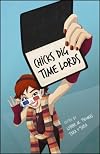
Author of Chicks Dig Time Lords: A Celebration of Doctor Who by the Women Who Love It
Works by Tara O'Shea
Chicks Dig Time Lords: A Celebration of Doctor Who by the Women Who Love It (2010) — Editor — 272 copies, 10 reviews
Associated Works
Chicks Dig Comics: A Celebration of Comic Books by the Women Who Love Them (2012) — Contributor — 90 copies, 5 reviews
Deeds of Honor: Paksenarrion World Chronicles (2014) — Cover designer, some editions — 68 copies, 3 reviews
Tagged
Common Knowledge
There is no Common Knowledge data for this author yet. You can help.
Members
Reviews

First, the negatives - in this book ostensibly about the female fan perspective in Doctor Who fandom, there were an overwhelming number of American voices, of white voices, of Anglo voices. Even as a white, Anglo-Australian middle-aged feminine fan who’s obsession with the show spans decades, I found the collection as a whole to be alienating. The large conventions that so many of the authors mention are so outside my ken that I have no way to see these as ‘fans like me’ — what show more I’ve seen referred to as the uncanny valley of culture, which looks so similar at first glance, and is in fact completely incomprehensible at second look. Several of the essays struck me as very personal, in ways I wasn’t necessarily interested in reading (others were very personal, but fascinatingly so).
On the positive side, there are a number of fabulous essays. In particular, K Tempest Bradford’s essay about Martha Jones; Kate Orman—the nearest to a representative fan to me—talking about uni clubs, and writing for the New/Missing Adventures line; Helen Kang on the safety of television for a school age child learning English; and Shoshana Magnet and Robert Smith?’s wonderful (literary) criticism about the role of companions (although there is rather a whiff of classism, given that Rose is characterised as ‘just’ a shop girl)
Also of interest were the various interviews with television and audio book actors, and what it has meant to them to be part of the family that comes with Doctor Who. show less
On the positive side, there are a number of fabulous essays. In particular, K Tempest Bradford’s essay about Martha Jones; Kate Orman—the nearest to a representative fan to me—talking about uni clubs, and writing for the New/Missing Adventures line; Helen Kang on the safety of television for a school age child learning English; and Shoshana Magnet and Robert Smith?’s wonderful (literary) criticism about the role of companions (although there is rather a whiff of classism, given that Rose is characterised as ‘just’ a shop girl)
Also of interest were the various interviews with television and audio book actors, and what it has meant to them to be part of the family that comes with Doctor Who. show less

Though I was first excited when I first heard of Chicks Dig Time Lords, by the time it came for me to read it, my initial enthusiasm had waned. In the interim, even though the book won the Hugo(!), I'd read several lukewarm reviews from folks whose opinions I trusted, and I'd also read She's Such a Geek!: Women Write About Science, Technology & Other Nerdy Stuff, an anthology with a similar premise-- get women to write about their geeky passions-- that I'd found somewhat repetitive and show more uninsightful.
Perhaps it was because of these diminished expectations, but I ended up enjoying Chicks Dig Time Lords more than I didn't. Though I think you could level a charge at it that too many essays are about Americans (seriously, do no British women like Doctor Who?) who grew up watching the show on PBS (seriously, where are those flocks of women who came in with the new show?) and love organized fandom (seriously, does no one out there enjoy the actual show for being itself?), the essays themselves are good enough to overcome that. I won't comment on all the essays here, just the somehow-noteworthy ones:
One of the first essays in the book is Carole E. Barrowman's "Time is Relative," which chronicles what it was like growing up as Doctor Who fans with her younger brother-- especially when her younger brother is John Barrowman, who of course went on to play Captain Jack in Doctor Who and Torchwood. Relatively entertaining. Coeditor Lynne Thomas also turns in a good essay about "Marrying Into the TARDIS Tribe," which has some touching Elisabeth Sladen moments in it. (Poor Lis.) Seanan McGuire's confession of love for Adric (who she was convinced was real) was absolutely hilarious.
The best of the personal essays was definitely "Two Generations of Fangirls in Middle America," about Amy Fritsch and her daughter who is growing up on the show. Adorable, and my kids had better like Doctor Who just as much.
I came to Doctor Who Magazine too late for "The Life and Time of Jackie Jenkins" column, about the personal life of a "single white Who fan," but I enjoyed "Being Jackie Jenkins: Memoirs from a Parallel Universe" nonetheless. It's a funny look at the strange period of Doctor Who fandom between 1996 and 2005, when increasingly odd things were required to discuss... but it's relevant to everyone's fandom experience, I expect. I'll probably pick up the book of Jackie Jenkins's collected columns that's recently come out.
I didn't expect to like the essays about fandom activities, but I did: Johanna Mead's "Costuming: More Productive Than Drugs, But Just as Expensive" was actually pretty interesting, even if there are some irrelevant tangents. Even more fun was Jennifer Adams Kelly's "Rutle-ing The Doctor: My Long Life in Doctor Who Fandom," where she talks about making fanvids over the years. I was expecting Tara O'Shea's essay about running the "green room" at ChicagoTARDIS to be very "insider"-- oh ho ho, look at me, how cool am I with my hobnobbing-- but it was actually a very interesting examination of a job I hadn't thought much about. (If you're wondering, my prejudice against organized fandom is simply my prejudice against all groups that I do not belong to.) The only one of these that strongly didn't work for me was Christa Dickson's "In Defense of Smut," which doesn't manage to find anything more interesting to say about smut than, "Well, I like it, so there."
There were also essays that weren't memoir, usually analyzing gender components of the show. Lloyd Rose tackles the "problem of Rose" in "What's a Girl To Do?" and comes the closest of anyone to convincing me that there is a problem of Rose-- though I'm still not convinced. The best of these was definitely "Girl Genius: Nyssa of Traken" by Francesca Coppa, a stirring tribute to an oft-neglected but excellent companion. (Like so many, though, she's shined much brighter after the series than during it; I love her rapport with the fifth Doctor in the audio dramas.)
On the other hand, "Two Steps Forward, One Step Back: Have We Really Come That Far?" by Shoshana Magnet and Robert Smith? is an unconvincing and mean-spirited examination of gender in the new series, more interested in scoring points than saying anything interesting. And though K. Tempest Bradford's "Martha Jones: Fangirl Blues" is well-written and makes some good points, it seems to think that Martha was somehow a successful character in spite of her creators, not because of them.
I also enjoyed the interviews: we get Sophie Aldred (Ace in the 1980s), who is great, but best of all, my first companion love, India Fisher, who played Charley Pollard opposite Paul McGann. My only complaint about these interviews is that there weren't more of them; there have been plenty more interesting women affiliated with Doctor Who over the years. I mean-- Laura Doddington, who played Zara in Key 2 Time!? Who cares? At least get Maggie Stables in!
And, of course, the comic by the creators of "Torchwood Babiez" (Tammy Garrison and Katy Shuttleworth) is every bit as delightful as you'd expect.
There are, as you imagine, some essays that are boring or dull or repetitive, but those simply fade from the mind as you read, leaving you with an interesting and varied set of essays about the experience of being a fan of a marvelous show-- all of which just happen to be written by women. This is perhaps what She's Such a Geek! should have been, and I'm sorry it took me so long to get around to reading it. (But then, I always am.) show less
Perhaps it was because of these diminished expectations, but I ended up enjoying Chicks Dig Time Lords more than I didn't. Though I think you could level a charge at it that too many essays are about Americans (seriously, do no British women like Doctor Who?) who grew up watching the show on PBS (seriously, where are those flocks of women who came in with the new show?) and love organized fandom (seriously, does no one out there enjoy the actual show for being itself?), the essays themselves are good enough to overcome that. I won't comment on all the essays here, just the somehow-noteworthy ones:
One of the first essays in the book is Carole E. Barrowman's "Time is Relative," which chronicles what it was like growing up as Doctor Who fans with her younger brother-- especially when her younger brother is John Barrowman, who of course went on to play Captain Jack in Doctor Who and Torchwood. Relatively entertaining. Coeditor Lynne Thomas also turns in a good essay about "Marrying Into the TARDIS Tribe," which has some touching Elisabeth Sladen moments in it. (Poor Lis.) Seanan McGuire's confession of love for Adric (who she was convinced was real) was absolutely hilarious.
The best of the personal essays was definitely "Two Generations of Fangirls in Middle America," about Amy Fritsch and her daughter who is growing up on the show. Adorable, and my kids had better like Doctor Who just as much.
I came to Doctor Who Magazine too late for "The Life and Time of Jackie Jenkins" column, about the personal life of a "single white Who fan," but I enjoyed "Being Jackie Jenkins: Memoirs from a Parallel Universe" nonetheless. It's a funny look at the strange period of Doctor Who fandom between 1996 and 2005, when increasingly odd things were required to discuss... but it's relevant to everyone's fandom experience, I expect. I'll probably pick up the book of Jackie Jenkins's collected columns that's recently come out.
I didn't expect to like the essays about fandom activities, but I did: Johanna Mead's "Costuming: More Productive Than Drugs, But Just as Expensive" was actually pretty interesting, even if there are some irrelevant tangents. Even more fun was Jennifer Adams Kelly's "Rutle-ing The Doctor: My Long Life in Doctor Who Fandom," where she talks about making fanvids over the years. I was expecting Tara O'Shea's essay about running the "green room" at ChicagoTARDIS to be very "insider"-- oh ho ho, look at me, how cool am I with my hobnobbing-- but it was actually a very interesting examination of a job I hadn't thought much about. (If you're wondering, my prejudice against organized fandom is simply my prejudice against all groups that I do not belong to.) The only one of these that strongly didn't work for me was Christa Dickson's "In Defense of Smut," which doesn't manage to find anything more interesting to say about smut than, "Well, I like it, so there."
There were also essays that weren't memoir, usually analyzing gender components of the show. Lloyd Rose tackles the "problem of Rose" in "What's a Girl To Do?" and comes the closest of anyone to convincing me that there is a problem of Rose-- though I'm still not convinced. The best of these was definitely "Girl Genius: Nyssa of Traken" by Francesca Coppa, a stirring tribute to an oft-neglected but excellent companion. (Like so many, though, she's shined much brighter after the series than during it; I love her rapport with the fifth Doctor in the audio dramas.)
On the other hand, "Two Steps Forward, One Step Back: Have We Really Come That Far?" by Shoshana Magnet and Robert Smith? is an unconvincing and mean-spirited examination of gender in the new series, more interested in scoring points than saying anything interesting. And though K. Tempest Bradford's "Martha Jones: Fangirl Blues" is well-written and makes some good points, it seems to think that Martha was somehow a successful character in spite of her creators, not because of them.
I also enjoyed the interviews: we get Sophie Aldred (Ace in the 1980s), who is great, but best of all, my first companion love, India Fisher, who played Charley Pollard opposite Paul McGann. My only complaint about these interviews is that there weren't more of them; there have been plenty more interesting women affiliated with Doctor Who over the years. I mean-- Laura Doddington, who played Zara in Key 2 Time!? Who cares? At least get Maggie Stables in!
And, of course, the comic by the creators of "Torchwood Babiez" (Tammy Garrison and Katy Shuttleworth) is every bit as delightful as you'd expect.
There are, as you imagine, some essays that are boring or dull or repetitive, but those simply fade from the mind as you read, leaving you with an interesting and varied set of essays about the experience of being a fan of a marvelous show-- all of which just happen to be written by women. This is perhaps what She's Such a Geek! should have been, and I'm sorry it took me so long to get around to reading it. (But then, I always am.) show less
This is a slim collection of essays documenting the female experience in Doctor Who fandom. These range from origin stories -- "how DW came to be part of my life" -- to essays exploring specific fannish activities, to what we on the intertubes would call meta about specific characters and themes. There are also a handful of interviews with actresses.
The first category dominates, and unfortunately, it's the weakest. Many are essentially variations on the same story ("I was watching PBS, for show more I, like all people in fandom, am American. And there was a peculiar British show which both scared and thrilled me"), which quickly grew repetitive. The highlight was Liz Myles's essay, which initially covered her introduction to Who-dom at her mother's hands, and then looked at the revival of Classic Who fandom from late 2005 onwards. Let me tell you, that warmed my black heart -- as did "Two Generations of Fangirls in America" by Amy Fritsch, about watching DW as a child, then introducing it to her daughter, and the thrill when their respective favourite companions -- Sarah Jane for the mother, Rose for the five-year-old -- met. The worst of this lot is Carole Barrowman's entry, which briefly touches on the surreal aspect of going from fangirl to family-of-actor, but says very little of substance.
Much more enjoyable are the essays about specific fannish activities. The obvious stand-out is the cartoon-format story behind Torchwood Babiez, which is funny, endearing, well-told and well-drawn. And it contains a chibi!Gary Russell, which is so cute, I would not be surprised to learn that the original version of "The End of Time" involved the Master turning all of humanity into chibi!Gary Russells, purely so that all of mankind could squee itself into oblivion. (Hey, this makes at least as much sense as anything else.) But I really loved all of these essays -- they include costuming, fan films, Tara O'Shea's adventures running the green room at ChicagoTARDIS (if that's not a fannish activity, I don't know what is!) and the zine scene. I would have liked to have seen something specifically about the craft of fic writing, but so many authors already have space in the book, and that sort of thing can so easily end in self-indulgence.
Then there's the meta, which ranges from a lovely piece about the author's love for Nyssa ("Girl Genius: Nyssa of Traken" by Francesca Coppa) to not one, but three essays about The Problem of Rose. The best is "What's A Girl To Do?" by Lloyd Rose, which is considered, well-written and contains ideas that haven't been beaten to death by fandom. The worst is "Two Steps Forward, One Step Back: Have We Really Come That Far?" by Shoshana Magnet and Robert Smith?, which makes a whole heap of really good points about a whole lot of things, but shoots itself in the foot by dividing female characters into categories of Having Worth (older, professional women), Marginal Cases (women in caregiving professions) and Don't Count (flight attendants, shop assistants, temps). This is a particular shame, because it also makes excellent and under-considered points about Jack Harkness as the acceptable queer (he's from the future, so it's okay, but don't let any of that gayness touch the Doctor!) and the problem of the black companions being the least loved.
But the meta I most loved was K. Tempest Bradford's "Martha Jones: Fangirl Blues", which utterly glows with its love for Martha, and its rage at the unfolding of her story. Reading it made me want to dance, first with the book, and then with my Martha doll. That alone was worth what I paid for the book.
The weakest essay overall was Kate Orman's "If I Can't Squee, I Don't Want To Be Part Of Your Revolution: Crone-ology of an Aging Fangirl", with its tendency to rewrite history and obsession with gendered behaviour (her tendency to become embroiled in fandom arguments is because she communicates LIKE A MAN, BABY, and not, say, because she created an anti-racism community for whites only). That is snarky, so here is a direct quote as evidence:
"So it's not hard to see why so much Internet discussion was (and is) "masculine" in nature: confrontational, brusque, concerned with winning the argument rather than with group bonding or soothing ruffled feathers. In turn, that helps to explain the grinding of gears that's happened so often when I've interacted with majority-female fandom: my learned "masculine" style of bluntly disagreeing and baldly arguing sends others into "face-saving" defensiveness ... So my bluntness shuts down some discussion..."
Yes, well. The essay ends with mention of dedicated forums for anonymous feminine with a dire warning that sooner or later, someone will Get Hurt. By this point, I was desperately sorry I'd read the essay at all; it lowers the whole tone of the book, and rather poisoned the remaining essays. It was a sad come-down after Liz Myles's essay, and rather depressing overall.
In short, would I recommend CDTL? With due respect to the contributers among my friends, I think it's one to get from the library. But I'm glad it exists, and I hope it doesn't mark the beginning and the end for female-oriented Doctor Who related titles. show less
The first category dominates, and unfortunately, it's the weakest. Many are essentially variations on the same story ("I was watching PBS, for show more I, like all people in fandom, am American. And there was a peculiar British show which both scared and thrilled me"), which quickly grew repetitive. The highlight was Liz Myles's essay, which initially covered her introduction to Who-dom at her mother's hands, and then looked at the revival of Classic Who fandom from late 2005 onwards. Let me tell you, that warmed my black heart -- as did "Two Generations of Fangirls in America" by Amy Fritsch, about watching DW as a child, then introducing it to her daughter, and the thrill when their respective favourite companions -- Sarah Jane for the mother, Rose for the five-year-old -- met. The worst of this lot is Carole Barrowman's entry, which briefly touches on the surreal aspect of going from fangirl to family-of-actor, but says very little of substance.
Much more enjoyable are the essays about specific fannish activities. The obvious stand-out is the cartoon-format story behind Torchwood Babiez, which is funny, endearing, well-told and well-drawn. And it contains a chibi!Gary Russell, which is so cute, I would not be surprised to learn that the original version of "The End of Time" involved the Master turning all of humanity into chibi!Gary Russells, purely so that all of mankind could squee itself into oblivion. (Hey, this makes at least as much sense as anything else.) But I really loved all of these essays -- they include costuming, fan films, Tara O'Shea's adventures running the green room at ChicagoTARDIS (if that's not a fannish activity, I don't know what is!) and the zine scene. I would have liked to have seen something specifically about the craft of fic writing, but so many authors already have space in the book, and that sort of thing can so easily end in self-indulgence.
Then there's the meta, which ranges from a lovely piece about the author's love for Nyssa ("Girl Genius: Nyssa of Traken" by Francesca Coppa) to not one, but three essays about The Problem of Rose. The best is "What's A Girl To Do?" by Lloyd Rose, which is considered, well-written and contains ideas that haven't been beaten to death by fandom. The worst is "Two Steps Forward, One Step Back: Have We Really Come That Far?" by Shoshana Magnet and Robert Smith?, which makes a whole heap of really good points about a whole lot of things, but shoots itself in the foot by dividing female characters into categories of Having Worth (older, professional women), Marginal Cases (women in caregiving professions) and Don't Count (flight attendants, shop assistants, temps). This is a particular shame, because it also makes excellent and under-considered points about Jack Harkness as the acceptable queer (he's from the future, so it's okay, but don't let any of that gayness touch the Doctor!) and the problem of the black companions being the least loved.
But the meta I most loved was K. Tempest Bradford's "Martha Jones: Fangirl Blues", which utterly glows with its love for Martha, and its rage at the unfolding of her story. Reading it made me want to dance, first with the book, and then with my Martha doll. That alone was worth what I paid for the book.
The weakest essay overall was Kate Orman's "If I Can't Squee, I Don't Want To Be Part Of Your Revolution: Crone-ology of an Aging Fangirl", with its tendency to rewrite history and obsession with gendered behaviour (her tendency to become embroiled in fandom arguments is because she communicates LIKE A MAN, BABY, and not, say, because she created an anti-racism community for whites only). That is snarky, so here is a direct quote as evidence:
"So it's not hard to see why so much Internet discussion was (and is) "masculine" in nature: confrontational, brusque, concerned with winning the argument rather than with group bonding or soothing ruffled feathers. In turn, that helps to explain the grinding of gears that's happened so often when I've interacted with majority-female fandom: my learned "masculine" style of bluntly disagreeing and baldly arguing sends others into "face-saving" defensiveness ... So my bluntness shuts down some discussion..."
Yes, well. The essay ends with mention of dedicated forums for anonymous feminine with a dire warning that sooner or later, someone will Get Hurt. By this point, I was desperately sorry I'd read the essay at all; it lowers the whole tone of the book, and rather poisoned the remaining essays. It was a sad come-down after Liz Myles's essay, and rather depressing overall.
In short, would I recommend CDTL? With due respect to the contributers among my friends, I think it's one to get from the library. But I'm glad it exists, and I hope it doesn't mark the beginning and the end for female-oriented Doctor Who related titles. show less
http://nwhyte.livejournal.com/1662458.html
It's a lovely collection of 27 essays by fans of Doctor Who, ranging from the gleeful to the mildly profound (as far as one can be in less than ten pages), ranging over various aspects of the fannish experience - watching the show, watching the show with your family (including one on what it feel like if your brother grows up to be Captain Jack Harkness, and two which caught at my heartstrings in which Who fans find themselves parenting children with show more special needs), conventions, fanzines, costuming, fan fiction, feminism, race, and lots and lots of references to Livejournal. Several of the contributors discuss how it was that New Who was more attractive to female fans than the ghosts of Old Who pre-2005, and I found it intersting at the time (and interesting again to review) how New Who's success led to a revival of interest in Old Who and to it being appreciated and dissected in new ways.
I think I've only met one of the contributors - Kathryn Sullivan, who I was on a panel with at the 2005 Worldcon, and who writes here about fanzines - but I finished the book feeling tremendously warmed by a strong sense of community with the authors, and I strongly recommend it to anyone who is interested in Who of any period. show less
It's a lovely collection of 27 essays by fans of Doctor Who, ranging from the gleeful to the mildly profound (as far as one can be in less than ten pages), ranging over various aspects of the fannish experience - watching the show, watching the show with your family (including one on what it feel like if your brother grows up to be Captain Jack Harkness, and two which caught at my heartstrings in which Who fans find themselves parenting children with show more special needs), conventions, fanzines, costuming, fan fiction, feminism, race, and lots and lots of references to Livejournal. Several of the contributors discuss how it was that New Who was more attractive to female fans than the ghosts of Old Who pre-2005, and I found it intersting at the time (and interesting again to review) how New Who's success led to a revival of interest in Old Who and to it being appreciated and dissected in new ways.
I think I've only met one of the contributors - Kathryn Sullivan, who I was on a panel with at the 2005 Worldcon, and who writes here about fanzines - but I finished the book feeling tremendously warmed by a strong sense of community with the authors, and I strongly recommend it to anyone who is interested in Who of any period. show less
Awards

You May Also Like
Associated Authors
Statistics
- Works
- 1
- Also by
- 20
- Members
- 272
- Popularity
- #85,117
- Rating
- 4.1
- Reviews
- 10
- ISBNs
- 1