On This Page
Description
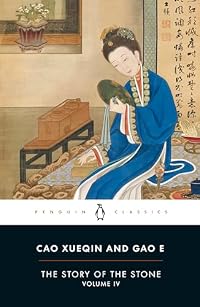
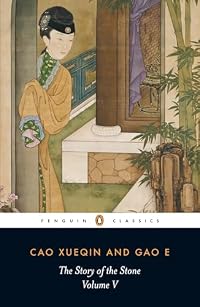
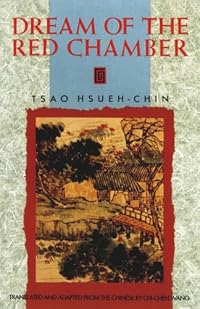
The Story of the Stone (c. 1760), also known by the title of The Dream of the Red Chamber, is the great novel of manners in Chinese literature. Divided into five volumes, of which The Debt of Tears is the fourth, it charts the glory and decline of the illustrious Jia family (a story which closely accords with the fortunes of the author's own family). The two main characters, Bao-yu and Dai-yu, are set against a rich tapestry of humour, realistic detail and delicate poetry, which accurately show more reflects the ritualized hurly-burly of Chinese family life. But over and above the novel hangs the constant reminder that there is another plane of existence - a theme which affirms the Buddhist belief in a supernatural scheme of things. show lessTags
Recommendations








Member Reviews
The plot moves along a bit more briskly now that we're outside the dilatory dreamscape of Cao's authenticated 80 chapters. Whoever wrote, arranged, or otherwise cobbled together the material in Book IV, I think they did a pretty good job of it. The chapters leading up to Bao Yu's wedding in particular are really propulsive in a way we haven't hitherto seen. The other major event here is the hopeless liability Xue Pan being arrested for murder for the second time, necesitating masses more silver to be disbursed in bribes. Looking forward to everything coming completely unglued in the last installment.
In the fourth volume of The Story of the Stone, tragic events long foreshadowed come to pass. The first half of [b:The Story of the Stone, or The Dream of the Red Chamber, Vol. 4: The Debt of Tears|139820|The Story of the Stone, or The Dream of the Red Chamber, Vol. 4 The Debt of Tears|Cao Xueqin|https://i.gr-assets.com/images/S/compressed.photo.goodreads.com/books/1172113533l/139820._SY75_.jpg|49685167] is somewhat lighter, featuring Bao-yu's attempts to keep his father happy and Xue Pan's latest way to shame the family. In a drunken fit of pique, he murders a man at a bar in front of many witnesses then, stupidly, confesses to it. His family have to make strenuous efforts at bribery to get the charge reduced from murder to accidental show more death, as otherwise he would be exiled or get the death penalty. That man is the worst. There is also some fascinating discussion of the Qin as Dai-yu takes it up again. I've only come across this instrument before while watching The Untamed, so it was lovely to learn something about it in a historical rather than xianxia context. The observations and plans of the maids were also enjoyable and insightful as ever.
The second half of the book becomes exceedingly tragic.Bao-yu loses his magic jade, sending him into a withdrawn and unstable state. His relatives decide that marriage will bring him out of it and hatch an astonishingly cruel plot. They know he loves Dai-yu, who is ailing, so tell him that he will be marrying her. In fact, Bao-yu will be married to Bao-chai. (Both are his first cousins, incidentally.) When Dai-yu hears of this, she goes into rapid decline and perishes without even saying goodbye to Bao-yu or confessing her love. Bao-yu, meanwhile, only learns after the wedding has taken place that his expected bride is dead and he is actually married to someone different. This sequence of events is moving and extraordinarily compelling.
As ever in this long novel, there is a striking balance between practical matters of daily life (meals, clothing, medicine, etc) and existential considerations (fortunes foretold, prophetic dreams, previous lives, etc). The 1985 edition I borrowed from the library also contains a charming account in the preface of the translator searching for and seemingly finding the house where the novel's events take place. I wonder at what further sadness the fifth and final volume will bring. [b:The Story of the Stone, or The Dream of the Red Chamber, Vol. 4: The Debt of Tears|139820|The Story of the Stone, or The Dream of the Red Chamber, Vol. 4 The Debt of Tears|Cao Xueqin|https://i.gr-assets.com/images/S/compressed.photo.goodreads.com/books/1172113533l/139820._SY75_.jpg|49685167] continues to be fast-paced and highly readable, a fascinating domestic saga filled with psychological insight and historical details. show less
The second half of the book becomes exceedingly tragic.
As ever in this long novel, there is a striking balance between practical matters of daily life (meals, clothing, medicine, etc) and existential considerations (fortunes foretold, prophetic dreams, previous lives, etc). The 1985 edition I borrowed from the library also contains a charming account in the preface of the translator searching for and seemingly finding the house where the novel's events take place. I wonder at what further sadness the fifth and final volume will bring. [b:The Story of the Stone, or The Dream of the Red Chamber, Vol. 4: The Debt of Tears|139820|The Story of the Stone, or The Dream of the Red Chamber, Vol. 4 The Debt of Tears|Cao Xueqin|https://i.gr-assets.com/images/S/compressed.photo.goodreads.com/books/1172113533l/139820._SY75_.jpg|49685167] continues to be fast-paced and highly readable, a fascinating domestic saga filled with psychological insight and historical details. show less
Unsurprisingly, it gets a lot more exciting when things start falling apart for the Jias. I still think everyone is too hard on Xi-feng. For one, she's sick all the time and no one else can do her job properly. She also has the gall to make the hard decisions and be a snake when no one else will.
But also how could they just let Dai-yu die alone and act all shocked about it? Everyone knew she was dying and they specifically avoided her anyway.
The Debt of Tears refers to Lin Daiyu's plaintive, obdurate settlement of her debt with fate and her surrender to lonely circumstances of death. Events in this despondent installment afford layers in increasing intensity of poignancy that presage Lin Daiyu's death and Baoyu's erroneous marriage to Bao-chai at the insistence of the Jias.
The volume begins with an ailing Lin Daiyu dreaming a bad dream that confronts her pent-up fear and fevered mind. Like a rope on a pulley Daiyu's hopes and fears spin up and down with sighs and tears. Her health takes a huge toll and deteriorates drastically. The critical nature of her condition both alarms and frightens the maids who for fear of Baoyu's lapsing into delirium decides to conceal from him. show more While Daiyu harbors an acute sense of insecurity being an outsider in the Jias mansion and broods about being at the mercy of the Jias, the family deliberately reconsiders the auspicious match between jade and the golden locket. Baochai is crowned with praise for having the aplomb of someone twice her age. Her virtuous disposition finds favor in the eyes of all the ladyships. As the Jias frantically prepare for the wedding without Daiyu's knowing, the delicate frowner happens to eavesdrop the news and plunges into utter mortification. The prophecy contained in her nightmare is to be duly fulfilled after all. Bitterness and grief overwhelm her to the point that she conceives the only way to escape is death. She is determined to undermine her health and seizes her fate.
The marriage between Baoyu and Baochai is an unfortunate mistake. It is an unexpected outcome of an incidence that should have otherwise favored Daiyu and spared her death. The sudden disappearance of Baoyu's jade, ponders Daiyu, nullifies the bond of gold and jade. But little does Daiyu realize that the loss of the jade on which Baoyu's life hinges causes the Jias to panic. The family resorts to hurry the wedding between Baoyu and Baochai to turn Baoyu's luck and rally his spirits. This paradox of the lost jade expounds the mysterious vagaries of destiny, the joy and pathos of life. Over the top of the hurly-burly of the Jias family life, there hangs the consistent reminder of some transcendental existence. Somehow the cycle of life is totally out of our calculation and grip. The wheel of karma is what inevitably governs the cycle of life and the human soul is only playing out a predetermined role. Life doesn't end at death for death is merely dispersion.
The bitter end of the tragic story of love between Baoyu and Daiyu throws the former into a delirium. What follows would be a significant theme Cao Xueqin intends for the novel, elements that take on a greater emphasis than ever after Daiyu's death: Baoyu's enlightenment and disenchantment, the seeing through of red lust, and finally the abjuring of the world. show less
The volume begins with an ailing Lin Daiyu dreaming a bad dream that confronts her pent-up fear and fevered mind. Like a rope on a pulley Daiyu's hopes and fears spin up and down with sighs and tears. Her health takes a huge toll and deteriorates drastically. The critical nature of her condition both alarms and frightens the maids who for fear of Baoyu's lapsing into delirium decides to conceal from him. show more While Daiyu harbors an acute sense of insecurity being an outsider in the Jias mansion and broods about being at the mercy of the Jias, the family deliberately reconsiders the auspicious match between jade and the golden locket. Baochai is crowned with praise for having the aplomb of someone twice her age. Her virtuous disposition finds favor in the eyes of all the ladyships. As the Jias frantically prepare for the wedding without Daiyu's knowing, the delicate frowner happens to eavesdrop the news and plunges into utter mortification. The prophecy contained in her nightmare is to be duly fulfilled after all. Bitterness and grief overwhelm her to the point that she conceives the only way to escape is death. She is determined to undermine her health and seizes her fate.
The marriage between Baoyu and Baochai is an unfortunate mistake. It is an unexpected outcome of an incidence that should have otherwise favored Daiyu and spared her death. The sudden disappearance of Baoyu's jade, ponders Daiyu, nullifies the bond of gold and jade. But little does Daiyu realize that the loss of the jade on which Baoyu's life hinges causes the Jias to panic. The family resorts to hurry the wedding between Baoyu and Baochai to turn Baoyu's luck and rally his spirits. This paradox of the lost jade expounds the mysterious vagaries of destiny, the joy and pathos of life. Over the top of the hurly-burly of the Jias family life, there hangs the consistent reminder of some transcendental existence. Somehow the cycle of life is totally out of our calculation and grip. The wheel of karma is what inevitably governs the cycle of life and the human soul is only playing out a predetermined role. Life doesn't end at death for death is merely dispersion.
The bitter end of the tragic story of love between Baoyu and Daiyu throws the former into a delirium. What follows would be a significant theme Cao Xueqin intends for the novel, elements that take on a greater emphasis than ever after Daiyu's death: Baoyu's enlightenment and disenchantment, the seeing through of red lust, and finally the abjuring of the world. show less
More readable than the last (perhaps because of the change in translator). I found it faster and easier to plow through than all the other books aside from the first. The story is a little more linear and a little more faster paced, though sometimes this comes at a cost.
A lot of the intrigue and dialogue is rather flat in comparison to the earlier installments. There are certain lazy dialogue sequences that don't use dialogue tags and instead simply name the speaker followed by a colon (Bao-yu: blah blah blah, etc.) that were either due to the new translator or the fact that Gao E wasn't a good writer. In either case it's a pretty massive downgrade from the other books.
There's a greater emphasis on the paranormal and it's done to good show more effect. I also appreciate the shift in focus towards the men of the family. Whether or not this is due to Gao E I don't know, but it's refreshing to see that side of the story finally given its due. show less
A lot of the intrigue and dialogue is rather flat in comparison to the earlier installments. There are certain lazy dialogue sequences that don't use dialogue tags and instead simply name the speaker followed by a colon (Bao-yu: blah blah blah, etc.) that were either due to the new translator or the fact that Gao E wasn't a good writer. In either case it's a pretty massive downgrade from the other books.
There's a greater emphasis on the paranormal and it's done to good show more effect. I also appreciate the shift in focus towards the men of the family. Whether or not this is due to Gao E I don't know, but it's refreshing to see that side of the story finally given its due. show less
The fourth volume of The Story of the Stone continues to tell the winding tale of the Jia family in Imperial China: their changing fortunes, focusing on the love between Jia Baoyu and his orphaned cousin, Lin Daiyu. The backdrop to this is the everyday material and literary life of a wealthy family in the Qing Dynasty.
This is the first volume not completed by Cao Xueqin; instead it was carefully edited together by Gao E. Though fragmentary, Gao E has managed to continue the story without too many glaring editorial errors and those that remain are not serious impediments to reading. Whether or not Gao E wrote the remaining 40 chapters or that they were edited together from Cao's notes is a discussion for redologists and not for this show more reviewer.
The translator also changes: David Hawkes is replaced by John Minford. Minford continues to ably translate this daunting novel and he deals well with textual errors, which understandably begin to multiply.
All that remains is to progress on to the fifth and final novel. show less
This is the first volume not completed by Cao Xueqin; instead it was carefully edited together by Gao E. Though fragmentary, Gao E has managed to continue the story without too many glaring editorial errors and those that remain are not serious impediments to reading. Whether or not Gao E wrote the remaining 40 chapters or that they were edited together from Cao's notes is a discussion for redologists and not for this show more reviewer.
The translator also changes: David Hawkes is replaced by John Minford. Minford continues to ably translate this daunting novel and he deals well with textual errors, which understandably begin to multiply.
All that remains is to progress on to the fifth and final novel. show less
--see review in vol 1 and vol 5--
Members
- Recently Added By
Author Information

102+ Works 5,382 Members
2+ Works 847 Members
Some Editions
Series

Belongs to Publisher Series
Work Relationships
Is contained in
Common Knowledge
- Canonical title
- The Debt of Tears
- People/Characters
- Jia Baoyu
- Important places
- China
- Dedication
- FOR RACHEL
(Penguin Classics, translated by John Minford) - First words
- TO CONTINUE OUR STORY,
After Ying- chun's departure, Lady Xing continued as though nothing had happened.
(Penguin Classics, translated by John Minford) - Last words
- (Click to show. Warning: May contain spoilers.)To learn what it was she had in mind to tell them, you must turn to the next volume.
EXPLICIT QUARTA PARS LAPIDIS HISTORIAE
(Penguin Classics, translated by John Minford) - Original language
- Chinese
- Disambiguation notice
- This is part 4 (of 5) of the complete work variously known as A Dream of Red Mansions , The Dream of the Red Chamber, or The Story of the Stone, by Cao Xueqin (also known as Tsao Hsueh-chin) and Kao Ngo (... (show all)also known as Kao Hgo, or Gao E). Please distinguish it from the complete work, any abridged versions, or any other portions. Thank you.
Classifications
- Genres
- Fiction and Literature, General Fiction
- DDC/MDS
- 813 — Literature & rhetoric American literature in English American fiction in English
- LCC
- PL2727 .S2 .S713 — Language and Literature Languages and literatures of Eastern Asia, Africa, Oceania Languages of Eastern Asia, Africa, Oceania Chinese language and literature Chinese literature Individual authors and works
- BISAC
Statistics
- Members
- 431
- Popularity
- 71,140
- Reviews
- 7
- Rating
- (4.13)
- Languages
- English, Swedish
- Media
- Paper, Ebook
- ISBNs
- 5
- ASINs
- 3