
LI Yu (1611–1680)
Author of The Carnal Prayer Mat
LI Yu is Yu Li (1). For other authors named Yu Li, see the disambiguation page.
Works by LI Yu
Les carnets secrets de Li Yu : Au gré d'humeurs oisives, un art du bonheur en Chine (2003) — Author — 22 copies
Tagged
Common Knowledge
- Canonical name
- LI Yu
- Legal name
- 李漁
- Other names
- 侣, 仙
笠, 翁 - Birthdate
- 1611
- Date of death
- 1680
- Gender
- male
- Occupations
- playwright
novelist
publisher - Birthplace
- Rugao, Jiangsu, China
Rugao, China - Map Location
- China
Members
Reviews

Li Yu states this is a morality tale, and indeed ‘what comes around goes around’ when it comes to adultery in the plot of The Carnal Prayer Mat. He emphasizes the need to focus on that message, while (wink wink nudge nudge) salaciously describing acts that would get the book banned throughout the years and in present day China. As for the erotica, it’s laugh out loud funny in some places, and in others a confirmation that men’s insecurities and silly fantasies have changed very show more little over time. If you’re looking for either a morality story or (I suppose more likely given its reputation) a steamy novel in isolation, you may be disappointed.
On the other hand, this is a light, reasonably fun read, and I admire Li Yu for flouting convention and being so original and daring in 1657. Memoirs of a Woman of Pleasure (or Fanny Hill), written 100 years later in the West, may be more delightful for the beauty of its prose and probably more, er, arousing, but The Carnal Prayer Mat is better as mocking satire of anything and everything, from puritanical Confucianism to the peccadilloes and self-importance of his characters. You sense the author is making light of them all, and in doing so, making light of us to this day, smiling at us devilishly across time and space. show less
On the other hand, this is a light, reasonably fun read, and I admire Li Yu for flouting convention and being so original and daring in 1657. Memoirs of a Woman of Pleasure (or Fanny Hill), written 100 years later in the West, may be more delightful for the beauty of its prose and probably more, er, arousing, but The Carnal Prayer Mat is better as mocking satire of anything and everything, from puritanical Confucianism to the peccadilloes and self-importance of his characters. You sense the author is making light of them all, and in doing so, making light of us to this day, smiling at us devilishly across time and space. show less
Jou Pu Tuan; the Prayer Mat of Flesh. Translated by Richard Martin from the German Version by Franz Kuhn by Yu Li
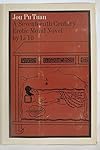
The Before Midnight Scholar spurns Buddhist enlightenment in favour of the 'prayer mat of the flesh'. He seeks and finds erotic experience. Although its descriptions of erotic activity are quite explicit, I would call this more a ribald novel (maybe like 'Tom Jones') than a pornographic or purely erotic one. Unlike a pornography, the actions of the vain scholar have consequences, including pregnancies, tragedy and death. Nevertheless the tone of most of the book is quite light and humorous, show more even mocking at times. The novel pokes fun at Confucianism, Buddhism, the vanity of academic scholars and the virtue of ladies. The characters are well described. There are some great supporting characters such as K'un-lun's Rival the noble bandit, Dr Iron Door the prudish Confucian scholar and the itinerant surgeon who operates on the Before Midnight Scholar's appendage.
Ultimately the tale is a moral one, with just punishments and repentance. There is an earnest afterword by the author which urges men to stick to their own wives and enjoy sex in moderation. show less
Ultimately the tale is a moral one, with just punishments and repentance. There is an earnest afterword by the author which urges men to stick to their own wives and enjoy sex in moderation. show less

I’ll say first that these six stories from Li Yu are pretty innocuous; there are a few bawdy references, but they certainly pale in comparison to ‘The Carnal Prayer Mat’. The most interesting is the title story, and it’s noteworthy because the telescope (or ‘thousand-li glass’) had been so recently imported from the West, that the author needed to take time to explain it to his readers, along with the microscope (‘minute-revealing glass’) and others before continuing on with show more the story. Does the guy who comes across the telescope use it to gaze out into the heavens, and make scientific discoveries? No, he uses it to spy on women bathing, and to find things out with it that no one else could know in order to appear like an immortal, thereby getting the upper hand while courting one of them. Ah, the male mind, so simple and unchanged across the centuries.
It’s a common theme in the stories – using trickery to either con people, to advance in some way in life, or to marry a beautiful girl. The book does openly acknowledge homosexuality (referred to as ‘rear courtyard relationships’) in a non-judgmental way, which I found interesting. Overall, however, there is just not enough here to recommend the book – the character development is minimal, the plots are simple, and the real glimpses into what life was like in China in 1657 are fleeting.
Quotes:
On religion:
“From this example, it is clear that where the mind is concentrated, objects of clay and wood can work miracles. The worship of gods and buddhas means worshipping our own minds; it does not mean that gods and bodhisattvas really exist.”
On the pain of parting from a lover:
“But this young man had never cared for success, only pleasure; he regarded his beautiful wife as the be-all and end-all of his existence and could not put her out of his mind. Besides, she had been incredibly solicitous in his marriage and anticipated his every desire. The endearments they exchanged on the pillow, their passion beneath the quilts – he had only to think of such things to feel his soul melt and almost expire.”
On sex:
“They realized that to attain bliss in lovemaking we cannot afford any sorrow in our hearts or tears in our eyes. The finest sex tonic in the world is composed of just two words - don’t worry - besides which all the nostrums peddled on the streets are nothing but a swindle.” show less
It’s a common theme in the stories – using trickery to either con people, to advance in some way in life, or to marry a beautiful girl. The book does openly acknowledge homosexuality (referred to as ‘rear courtyard relationships’) in a non-judgmental way, which I found interesting. Overall, however, there is just not enough here to recommend the book – the character development is minimal, the plots are simple, and the real glimpses into what life was like in China in 1657 are fleeting.
Quotes:
On religion:
“From this example, it is clear that where the mind is concentrated, objects of clay and wood can work miracles. The worship of gods and buddhas means worshipping our own minds; it does not mean that gods and bodhisattvas really exist.”
On the pain of parting from a lover:
“But this young man had never cared for success, only pleasure; he regarded his beautiful wife as the be-all and end-all of his existence and could not put her out of his mind. Besides, she had been incredibly solicitous in his marriage and anticipated his every desire. The endearments they exchanged on the pillow, their passion beneath the quilts – he had only to think of such things to feel his soul melt and almost expire.”
On sex:
“They realized that to attain bliss in lovemaking we cannot afford any sorrow in our hearts or tears in our eyes. The finest sex tonic in the world is composed of just two words - don’t worry - besides which all the nostrums peddled on the streets are nothing but a swindle.” show less
A well-crafted tale with moral pretensions...
I liked this book when I first read it many years back, and was even more
impressed (a rare occurrence) when I re-read it recently. Of course, at
first glance, I devoured immediately the directly erotic stories, but
gradually the plot and storyline and the unusual narrative style also got to
me. I am quite bowled over at the innovative narrative style of the novel -
indeed, I would rate this novel as the best erotica of yore, certainly far
superior to show more Fanny Hill and others written a few centuries afterwards. I am
actually looking to read other books by Li Yu - well, some day...
The story is set in the culturally complex background of Yuan dynasty (14th
c.) China, although it was published in 1657. The prefatory
chapter provides a motivation for the story, which reminds one of the old
marketing joke:
SEX.
Ah! Now that I have your attention, let me tell you about this
excellent snake oil.
Li Yu says at the outset:
How low contemporary morals have sunk! But if you write a moral tract
exhorting people to virtue, [you] will you get no one to buy it...
So his strategy is
to captivate your readers with erotic material and then
wait for some moment of absorbing interest before suddenly dropping in an
admonitory remark or two to make them grow fearful and sigh, "Since sexual
pleasure can be so delgithful, surely we ought to reserve our
pleasure-making bodies for long-term enjoyment instead of turning into
ghosts beneath the peony blossoms [idiom for becoming victims of
amorous excess]". p.9
from a review I had written - with extensive excerpts - at http://www.cse.iitk.ac.in/~amit/books/yu-1990-carnal-prayer-mat.html show less
I liked this book when I first read it many years back, and was even more
impressed (a rare occurrence) when I re-read it recently. Of course, at
first glance, I devoured immediately the directly erotic stories, but
gradually the plot and storyline and the unusual narrative style also got to
me. I am quite bowled over at the innovative narrative style of the novel -
indeed, I would rate this novel as the best erotica of yore, certainly far
superior to show more Fanny Hill and others written a few centuries afterwards. I am
actually looking to read other books by Li Yu - well, some day...
The story is set in the culturally complex background of Yuan dynasty (14th
c.) China, although it was published in 1657. The prefatory
chapter provides a motivation for the story, which reminds one of the old
marketing joke:
SEX.
Ah! Now that I have your attention, let me tell you about this
excellent snake oil.
Li Yu says at the outset:
How low contemporary morals have sunk! But if you write a moral tract
exhorting people to virtue, [you] will you get no one to buy it...
So his strategy is
to captivate your readers with erotic material and then
wait for some moment of absorbing interest before suddenly dropping in an
admonitory remark or two to make them grow fearful and sigh, "Since sexual
pleasure can be so delgithful, surely we ought to reserve our
pleasure-making bodies for long-term enjoyment instead of turning into
ghosts beneath the peony blossoms [idiom for becoming victims of
amorous excess]". p.9
from a review I had written - with extensive excerpts - at http://www.cse.iitk.ac.in/~amit/books/yu-1990-carnal-prayer-mat.html show less
Lists
Awards


You May Also Like


Associated Authors
Statistics
- Works
- 10
- Members
- 530
- Popularity
- #46,960
- Rating
- 3.3
- Reviews
- 10
- ISBNs
- 109
- Languages
- 12
- Favorited
- 2