
Saikaku Ihara (1642–1693)
Author of Five Women Who Loved Love
About the Author
A prolific writer of haiku, Saikaku is better known now as a writer of fiction about the life of the townspeople in his native Osaka. His style is marked by detachment, wit, and a satiric tone. A keen observer, Saikaku took as his major themes the search for love and wealth. (Bowker Author show more Biography) show less
Disambiguation Notice:
The author's family name is Ihara.
Image credit: Photo by Wikipedia user Kenpei, found at es.wikipedia.org.
Works by Saikaku Ihara
The Japanese Family Storehouse: or the Millionaires' Gospel Modernised (University of Cambridge Oriental Publications) (1959) 8 copies
男色大鑑-武士編- (B's-LOVEY COMICS) 2 copies
Le grand miroir de l'amour mâle: la coutume de l'amour garçon dans notre pays. 1, Amours des samouraïs (1687) 2 copies
Новеллы 1 copy
Pregršt srebra u zoru 1 copy
Enquêtes à l'ombre des cerisiers de notre pays. Suivi de : Vieux papiers vieilles lettres (2000) 1 copy
Gonin Onna (Five Women) 1 copy
Koshoku Gonin Onna 好色五人女 1 copy
Под сенью сакуры 1 copy
Associated Works
Partings at Dawn: An Anthology of Japanese Gay Literature (12th - 20th Century) (1996) — Contributor — 75 copies
Haiku: Gems of Intimate Beauty in a New Collection of Classic Japanese Poetry (1970) — Contributor — 54 copies
Great Short Stories: Russian, Japanese, American, Irish, French, English (2007) — Contributor — 36 copies
Tagged
Common Knowledge
- Canonical name
- Ihara, Saikaku
- Legal name
- 井原 西鶴
- Other names
- Saikaku, Ihara
Togo, Hirayama - Birthdate
- 1642
- Date of death
- 1693-09-09
- Gender
- male
- Occupations
- merchant
poet
monk
novelist - Nationality
- Japan
- Birthplace
- Osaka, Japan
- Places of residence
- Osaka, Japan (birth|death)
- Place of death
- Osaka, Japan
- Disambiguation notice
- The author's family name is Ihara.
- Associated Place (for map)
- Osaka, Japan
Members
Reviews

https://nwhyte.livejournal.com/3212901.html
It's a set of five love stories set in contemporary 1680s Japan - in fact, all based more or less on real life, where those who loved outside their social class would often face the death penalty (in four of the five stories, one or both of the protagonists is executed). I found it a really easy quick read, markedly more realistic than, say, Pilgrim's Progress (which was published the previous year). The last of the five stories is particularly show more interesting - Gengobei, a monk, is heartbroken by the deaths of two young boyfriends in quick succession; Oman, a young girl, falls in love with him and disguises herself as a boy to get into his bed; Gengobei discovers he likes her too, and they live happily ever after (after certain dramatic tribulations). It's the only story of the five with a happy ending. Sex is a universal, and probably tales of doomed love have fascinated humans since we were first able to gossip about how Ugg and Obba wanted to get together despite being from different caves, but here we have a fascinating snapshot of a changing Japan, a growing bourgeoisie not entirely happy at the policing of sexuality by the authorities. The translation by Wm. Theodore de Bary is maybe a bit old-fashioned and a twenty-first century treatment would be fun to read. show less
It's a set of five love stories set in contemporary 1680s Japan - in fact, all based more or less on real life, where those who loved outside their social class would often face the death penalty (in four of the five stories, one or both of the protagonists is executed). I found it a really easy quick read, markedly more realistic than, say, Pilgrim's Progress (which was published the previous year). The last of the five stories is particularly show more interesting - Gengobei, a monk, is heartbroken by the deaths of two young boyfriends in quick succession; Oman, a young girl, falls in love with him and disguises herself as a boy to get into his bed; Gengobei discovers he likes her too, and they live happily ever after (after certain dramatic tribulations). It's the only story of the five with a happy ending. Sex is a universal, and probably tales of doomed love have fascinated humans since we were first able to gossip about how Ugg and Obba wanted to get together despite being from different caves, but here we have a fascinating snapshot of a changing Japan, a growing bourgeoisie not entirely happy at the policing of sexuality by the authorities. The translation by Wm. Theodore de Bary is maybe a bit old-fashioned and a twenty-first century treatment would be fun to read. show less
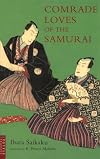
Forget vampires and werewolves, the next big trend in prurient romantic literature should be samurai! Oh yes, get me some of that intense devotion and comradely love. Honor, duels, and self-sacrifice. Put Yukio Mishima's bodybuilding pics on the covers and we're set.
All jesting aside, these was a popular literary genre and a social topic in 17th-C. Japan. The aestheticization and popularization of the 'noble warrior', as well as the social manly bonds which exist perhaps only in combat (WAR show more IS A FORCE THAT GIVES US MEANING). It was indeed considered praiseworthy and admirable for samurai to take on male lovers - not only of their own age, but younger (16-18 y.o.) boys and bring them up as apprentices.
These stories, about 20 pages each at most, have little parables of devotion and love. Few of them end well, with self-sacrifice and seppuku being still a major factor in military life. They're often very touching, despite the differences in centuries and cultures between us and them.
My edition not only came with Comrade Loves, but also some 30 pages of Songs of the Geisha. Song lyrics and poetry seldom preserve their rhythm or form in translation, but these maintain some plaintive beauty and beautiful imagery.
An interesting book, and as cliched as I may put it, is Universal. show less
All jesting aside, these was a popular literary genre and a social topic in 17th-C. Japan. The aestheticization and popularization of the 'noble warrior', as well as the social manly bonds which exist perhaps only in combat (WAR show more IS A FORCE THAT GIVES US MEANING). It was indeed considered praiseworthy and admirable for samurai to take on male lovers - not only of their own age, but younger (16-18 y.o.) boys and bring them up as apprentices.
These stories, about 20 pages each at most, have little parables of devotion and love. Few of them end well, with self-sacrifice and seppuku being still a major factor in military life. They're often very touching, despite the differences in centuries and cultures between us and them.
My edition not only came with Comrade Loves, but also some 30 pages of Songs of the Geisha. Song lyrics and poetry seldom preserve their rhythm or form in translation, but these maintain some plaintive beauty and beautiful imagery.
An interesting book, and as cliched as I may put it, is Universal. show less
Un romanzo composto da tanti piccoli racconti (in parte sconnessi) - un classico del periodo Edo.
Una delle ultime letture universitarie, finalmente leggo Saikaku Ihara. Purtroppo mi trovo a dire ciò che ho ripeto già diverse volte: dubito che qualcuno che non sia già interessato nella letteratura giapponese classica possa apprezzare a pieno questo libro.
Detto ciò, per quanto a tratti la narrazione appare sconnessa (a volte sembra che tra un capitolo e l'altro non ci sia un vero nesso show more logico) il libro non soltanto rappresenta in quadro abbastanza dettagliato della società Giapponese del periodo Edo, ma riesce a far il tutto con una sfilza di umorismo che, seppur in parte molto datato, comunque riuscirà a strappare un sorriso.
Il libro tratta di una vecchia donna che, sotto richiesta di due giovani signori, spiati da un terzo (che non posso chiamare io narrante, dato che tutto il libro è essenzialmente un enorme flashback) racconta la sua lunga vita costernata da passioni amorose. Il libro come già detto è essenzialmente un raccolta di piccoli avvenimenti: partendo come dama di corte, la nostra protagonista senza nome va da lavoro a lavoro cadendo in una spirale di continua rovina data la sua travolgente passione amorosa . Ci tengo ad aggiungere che nonostante il tema del libro, un po' come anche succede nel Genji non vi è nessuna descrizione esplicita degli atti, è tutto sottinteso.
Devo ammettere che in parte leggere la continua e ripetuta decadenza di questa povera donna mi ha fatto abbastanza pena... anche se la narrazione tratta il tutto in chiave umoristica. Degni di nota sono dei passaggi abbastanza ''inquietanti'' tipici di una racconto del terrore: non voglio fare spoiler, ma sono state delle deviazioni ben gradite, seppur inaspettate.
Ribadisco ciò che ho detto all'inizio della mia recensione: purtroppo chi non è strettamente interessato alla lettura giapponese classica, non penso potrà trovare un gran piacere nel leggere questo libro; e nel caso vogliate comunque provare, vi ricordo che il libro è stato originariamente scritto per la classe samurai/mercantile - un pubblico di soli uomini (tradotto, aspettatevi molto sessismo, cosa molto comunque nella letteratura giapponese, ma ancor più presente qua, essendo la protagonista una donna licenziosa )
Voto finale: 3.75 show less
Una delle ultime letture universitarie, finalmente leggo Saikaku Ihara. Purtroppo mi trovo a dire ciò che ho ripeto già diverse volte: dubito che qualcuno che non sia già interessato nella letteratura giapponese classica possa apprezzare a pieno questo libro.
Detto ciò, per quanto a tratti la narrazione appare sconnessa (a volte sembra che tra un capitolo e l'altro non ci sia un vero nesso show more logico) il libro non soltanto rappresenta in quadro abbastanza dettagliato della società Giapponese del periodo Edo, ma riesce a far il tutto con una sfilza di umorismo che, seppur in parte molto datato, comunque riuscirà a strappare un sorriso.
Il libro tratta di una vecchia donna che, sotto richiesta di due giovani signori, spiati da un terzo (che non posso chiamare io narrante, dato che tutto il libro è essenzialmente un enorme flashback) racconta la sua lunga vita costernata da passioni amorose. Il libro come già detto è essenzialmente un raccolta di piccoli avvenimenti: partendo come dama di corte, la nostra protagonista senza nome va da lavoro a lavoro cadendo in una spirale di continua rovina data la sua travolgente passione amorosa . Ci tengo ad aggiungere che nonostante il tema del libro, un po' come anche succede nel Genji non vi è nessuna descrizione esplicita degli atti, è tutto sottinteso.
Devo ammettere che in parte leggere la continua e ripetuta decadenza di questa povera donna mi ha fatto abbastanza pena... anche se la narrazione tratta il tutto in chiave umoristica. Degni di nota sono dei passaggi abbastanza ''inquietanti'' tipici di una racconto del terrore: non voglio fare spoiler, ma sono state delle deviazioni ben gradite, seppur inaspettate.
Ribadisco ciò che ho detto all'inizio della mia recensione: purtroppo chi non è strettamente interessato alla lettura giapponese classica, non penso potrà trovare un gran piacere nel leggere questo libro; e nel caso vogliate comunque provare, vi ricordo che il libro è stato originariamente scritto per la classe samurai/mercantile - un pubblico di soli uomini (tradotto, aspettatevi molto sessismo, cosa molto comunque nella letteratura giapponese, ma ancor più presente qua, essendo la protagonista una donna licenziosa )
Voto finale: 3.75 show less
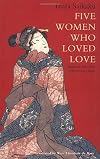
an important work in the history of Japanese literature, this novelized accounting of 5 real-life events introduces bourgeoise heroines into a genre normally represented by the more elite members of society, as well as commenting on the relevance of passion in women's lives. the author intriguingly insinuates that women - even in feudal Japan - exert more control over their lives than one would have previously suspected, albeit, in these episodes, usually not for the better.
Lists
Awards


You May Also Like


Associated Authors
Statistics
- Works
- 50
- Also by
- 6
- Members
- 1,247
- Popularity
- #20,576
- Rating
- 3.7
- Reviews
- 15
- ISBNs
- 94
- Languages
- 10
- Favorited
- 2