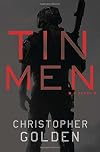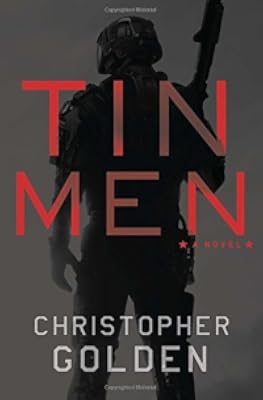
Tin Men
by Christopher Golden
On This Page
Description
Brad Thor meets Avatar in this timely thriller for the drone age as award-winning author Christopher Golden spins the troubles of today into the apocalypse of tomorrow.After political upheaval, economic collapse, and environmental disaster, the world has become a hotspot, boiling over into chaos of near apocalyptic proportions. In this perpetual state of emergency, all that separates order from anarchy is the military might of a United States determined to keep peace among nations waging a show more free-for-all battle for survival and supremacy.
But a conflict unlike any before demands an equally unprecedented fighting force on its front lines. Enter the Remote Infantry Corps: robot soldiers deployed in war zones around the world, controlled by human operators thousands of miles from the action. PFC Danny Kelso is one of these "Tin Men," stationed with his fellow platoon members at a subterranean base in Germany, steering their cybernetic avatars through combat in the civil-war-ravaged streets of Syria. Immune to injury and death, this brave new breed of American warrior has a battlefield edge that's all but unstoppable--until a flesh-and-blood enemy targets the Tin Men's high-tech advantage in a dangerously game-changing counter strike.
When anarchists unleash a massive electromagnetic pulse, short-circuiting the world's technology, Kelso and his comrades-in-arms find themselves trapped--their minds tethered within their robot bodies and, for the first time, their lives at risk.
Now, with rocket-wielding "Bot Killers" gunning for them, and desperate members of the unit threatening to go rogue, it's the worst possible time for the Tin Men to face their most crucial mission. But an economic summit is under terrorist attack, the U.S. president is running for his life, and the men and women of the 1st Remote Infantry Division must take the fight to the next level--if they want to be the last combatants standing, not the first of their kind to fall forever.
Advance praise for Tin Men
"Tin Men is the literary equivalent of a muscle car: stylish and fast-paced, with a hopped-up engine of a plot. Christopher Golden starts things off at tire-burning speed and never lets up. It's a great ride--definitely as much fun as we can ever hope to have while the world falls to ruin around us."--Scott Smith, author of A Simple Plan and The Ruins
"A chilling tale of a world that could be, Tin Men is a vicious beast--Starship Troopers meets Generation Kill--that left my nerves fried and my brain craving another fix."--Pierce Brown, author of Golden Son
"When the human soul thrums inside machines of war, the ultimate weapon is born. Golden crafts a unique combination of Terminator and Saving Private Ryan."--Scott Sigler, author of Alive
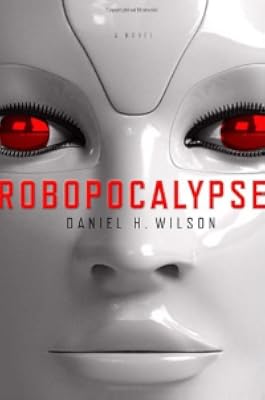
"As military robots proliferate, we have all wondered whether the wealthy will use them to dominate those with fewer resources. Fascinating and thrilling, Tin Men imagines a future in which the playing field is suddenly and violently leveled. When the stakes are life or death, will the soldiers behind the robots still have what it takes to survive?"--Daniel H. Wilson, author of Robopocalypse
"This evocative tale of the possible and the probable takes a wild walk on the perilous side. Along the way, we get a top-of-the-line lesson in what may actually be in store for us one day. You're going to love this thrilling, taut drama."--Steve Berry, author of The Lincoln Myth
From the Hardcover edition.. show less
Tags
Recommendations





















Member Recommendations
Member Reviews
I did like this book very much for several reasons: the device of using robots for remote interactions... or rather, full-out “peacekeeping” wars sponsored by the United States... brings up a very cool topic of responsibility, immediacy and especially morality.
When you’re more powerful than anyone and you don’t ever need to fear losing your life, there’s very little to hold you back from being a bully.
No matter your initial rationale, the slide is real. This is where the book begins, but thanks to a new kind of attack that upsets the balance of power, we get a pretty awesome Mil-SF adventure with lots of intrigue, fighting, and questions of might vs right.
So why do I only give this three stars?
Politics.
I would have loved it show more if there had been some real and detailed locations with real political factions and real multi-layered reasons for the fighting. Instead, we just get “anarchists”. WTF. It’s like the ultimate cop-out and generic bogeyman in writing, and yet, the novel starts out with honest humanization of the people in these occupied territories. We get the idea that these Tin Men are too removed and would be better off actually understanding the people they terrorize.
It starts out so strong.
And yet, the antagonists simply devolve into a pretty faceless mob that started out with genuine grievances and end as only “The Enemy”.
Let’s save the leaders, mourn our dead, and hate the anarchists! ......
What happened to the discussion of power differentials? Bullies? I guess the anarchists killed them.
*sigh* show less
When you’re more powerful than anyone and you don’t ever need to fear losing your life, there’s very little to hold you back from being a bully.
No matter your initial rationale, the slide is real. This is where the book begins, but thanks to a new kind of attack that upsets the balance of power, we get a pretty awesome Mil-SF adventure with lots of intrigue, fighting, and questions of might vs right.
So why do I only give this three stars?
Politics.
I would have loved it show more if there had been some real and detailed locations with real political factions and real multi-layered reasons for the fighting. Instead, we just get “anarchists”. WTF. It’s like the ultimate cop-out and generic bogeyman in writing, and yet, the novel starts out with honest humanization of the people in these occupied territories. We get the idea that these Tin Men are too removed and would be better off actually understanding the people they terrorize.
It starts out so strong.
And yet, the antagonists simply devolve into a pretty faceless mob that started out with genuine grievances and end as only “The Enemy”.
Let’s save the leaders, mourn our dead, and hate the anarchists! ......
What happened to the discussion of power differentials? Bullies? I guess the anarchists killed them.
*sigh* show less
Tin Men is action packed military scifi that waves big ideas around, but never really moves away from its pulpy roots.
In the near future, the only thing keeping the peace are the robotic soldiers of America's Remote Infantry Corps, who patrol dozens of bushfire zones with their operators safely in bunkers under Germany. When a cadre of global anarchists detonate an EMP bomb that wipes out all technology, Tin Man Danny Kelso discovers that they aren't remotely operating the bots, their consciousness has been transferred to the bots. If he and his squad of diverse stereotypes want to get back to their bodies, they'll have to fight his way from Damascus to the base in Germany, all while being chased by 'bot killer' anarchists with a show more grudge, carrying an ambassador's daughter, and oh yeah, proving that they're Bad Enough 'Bots To Save The President, who's at a G-20 summit in Athens.
There are some good gunfights, but the ideas and characters never really go anywhere, personality traits standing in for things like American global hegemony, anarchy as a reaction, and standard milSF tropes like honor and duty. Shame that I read this so close to The Red: First Light, because this novel comes off as worse in every way. show less
In the near future, the only thing keeping the peace are the robotic soldiers of America's Remote Infantry Corps, who patrol dozens of bushfire zones with their operators safely in bunkers under Germany. When a cadre of global anarchists detonate an EMP bomb that wipes out all technology, Tin Man Danny Kelso discovers that they aren't remotely operating the bots, their consciousness has been transferred to the bots. If he and his squad of diverse stereotypes want to get back to their bodies, they'll have to fight his way from Damascus to the base in Germany, all while being chased by 'bot killer' anarchists with a show more grudge, carrying an ambassador's daughter, and oh yeah, proving that they're Bad Enough 'Bots To Save The President, who's at a G-20 summit in Athens.
There are some good gunfights, but the ideas and characters never really go anywhere, personality traits standing in for things like American global hegemony, anarchy as a reaction, and standard milSF tropes like honor and duty. Shame that I read this so close to The Red: First Light, because this novel comes off as worse in every way. show less
One of the criticisms of mixing the sexes in combat units is the romantic and sexual distractions degrading combat performance. Given that the first two chapters feature a lot of that involving our hero, Danny Kelso, and Kate Wade, the legless woman he flirts with before missions, you'd almost think Golden was making some ironic comment on the wisdom of that.
Now, I have criticized the warrior babe notion before, but it works here because technology has put downloaded warrior minds in robots that carry lots of ammo, have lots of armor, and their own power plant.
Don't get excited. That's as far as Golden's technological speculation goes. The world seems little altered by all those technologies. Perhaps it's because the Tin Men aka Remote show more Infantry Corps are proprietary American technology.
America uses the Tin Men -- nicely invulnerable and operated by people safely based in places like Wiesbaden, Germany -- to police the world. How America manages to pay for this is never explained though, at the G-20 summit in Athens, Greece, the American president is about to put the screws to the world -- perhaps to make it a better paying proposition, but we never get the details.
Well, as Napoleon found out when he tried to bring better government to Spain, people don't like foreigners telling them what to do even when it's for their own good.
An international alliance of Bot Killers, so-called anarchists, have banded their abilities, partly aided by villain Khan, and developed weapons to take out the Tin Men. More importantly, they've decided to burn down modern civilization by setting off a series of electro-magnetic pulse weapons throughout the world. Thus Golden scraps a lot of his tech. And a nasty secret is revealed about Tin Men.
It's not a copy of a mind that's downloaded into a Tin Man. It's the mind. The body back in Wiesbaden is just a mindless zombie while the Tin Man runs. And, once you knock out a lot of electronic infrastructure with EMPs, the only way the Tin Men's minds are going back in the their bodies is if they make it from Damascus, Syria to Wiesbaden. (Golden brings up the question of how long those bodies can be mentally vacated before irreversible damage sets in, but he gives no answer.)
And, of course, now when you kill a Tin Man, you're killing the operator. Khan and his allies are out for blood.
The story alternates between three groups: the Tin Men in Syria, the besieged G-20 conference in Athens, and Wiesbaden. The main story of the Tin Men fleeing towards home reminded me of Xenophon's Anabasis which tells of Greek mercenaries fleeing Persia for the safety of the Black Sea.
There are traitors and lovers and civilians who die nobly and civilians who learn to kill and cowards and brutes who shape up when it counts. It's entertaining. Golden surprises with whom he chooses to let live -- not many. It must also be said that he makes an effort to show the world through all his characters' eyes and not making them rhetorical puppets.
Just don't think you're going to read deep thoughts on wartech's future or political philosophy. show less
Now, I have criticized the warrior babe notion before, but it works here because technology has put downloaded warrior minds in robots that carry lots of ammo, have lots of armor, and their own power plant.
Don't get excited. That's as far as Golden's technological speculation goes. The world seems little altered by all those technologies. Perhaps it's because the Tin Men aka Remote show more Infantry Corps are proprietary American technology.
America uses the Tin Men -- nicely invulnerable and operated by people safely based in places like Wiesbaden, Germany -- to police the world. How America manages to pay for this is never explained though, at the G-20 summit in Athens, Greece, the American president is about to put the screws to the world -- perhaps to make it a better paying proposition, but we never get the details.
Well, as Napoleon found out when he tried to bring better government to Spain, people don't like foreigners telling them what to do even when it's for their own good.
An international alliance of Bot Killers, so-called anarchists, have banded their abilities, partly aided by villain Khan, and developed weapons to take out the Tin Men. More importantly, they've decided to burn down modern civilization by setting off a series of electro-magnetic pulse weapons throughout the world. Thus Golden scraps a lot of his tech. And a nasty secret is revealed about Tin Men.
It's not a copy of a mind that's downloaded into a Tin Man. It's the mind. The body back in Wiesbaden is just a mindless zombie while the Tin Man runs. And, once you knock out a lot of electronic infrastructure with EMPs, the only way the Tin Men's minds are going back in the their bodies is if they make it from Damascus, Syria to Wiesbaden. (Golden brings up the question of how long those bodies can be mentally vacated before irreversible damage sets in, but he gives no answer.)
And, of course, now when you kill a Tin Man, you're killing the operator. Khan and his allies are out for blood.
The story alternates between three groups: the Tin Men in Syria, the besieged G-20 conference in Athens, and Wiesbaden. The main story of the Tin Men fleeing towards home reminded me of Xenophon's Anabasis which tells of Greek mercenaries fleeing Persia for the safety of the Black Sea.
There are traitors and lovers and civilians who die nobly and civilians who learn to kill and cowards and brutes who shape up when it counts. It's entertaining. Golden surprises with whom he chooses to let live -- not many. It must also be said that he makes an effort to show the world through all his characters' eyes and not making them rhetorical puppets.
Just don't think you're going to read deep thoughts on wartech's future or political philosophy. show less
Rated 3.5 stars.
The author is also a screenwriter, and this book feels like a movie in many ways. This novel takes place sometime in the future, could be 20 years or so. The premise is quite interesting, robotic soldiers (aka Tin Men) are controlled via brain waves by actual human soldiers. This way, real human soldiers don't get KIA. The Tin Men are stronger, faster, harder to "kill" than people of course, so they're more efficient at their soldier duties as well.
But of course all this amazing technology comes at a price, since the rest of the world is very resentful of these US Tin Men imposing their peace-keeping ideas onto them. And it's an unfair fight since the other nations have just people as their army. So a group gets show more together and gets revenge.
This is where the action starts -- and it's basically non-stop. There's an electromagnetic pulse that triggers the loss of power, but not to the robots, since they have a protective shield. But they still have to get back to base so the people controlling them can "get out" of the robots.
As I said, there's plenty of action. But I would have liked more regarding the EMP and more of the science behind the brain connection between human and robot. Also, the book ends with no real resolution of the effects of the pulse either for the US or the world in general. But I guess that's not the focus of the story.
Overall it was very well-written. As an ARC, this was edited extremely well, didn't notice any typos.
Received from GoodReads.com for review. show less
The author is also a screenwriter, and this book feels like a movie in many ways. This novel takes place sometime in the future, could be 20 years or so. The premise is quite interesting, robotic soldiers (aka Tin Men) are controlled via brain waves by actual human soldiers. This way, real human soldiers don't get KIA. The Tin Men are stronger, faster, harder to "kill" than people of course, so they're more efficient at their soldier duties as well.
But of course all this amazing technology comes at a price, since the rest of the world is very resentful of these US Tin Men imposing their peace-keeping ideas onto them. And it's an unfair fight since the other nations have just people as their army. So a group gets show more together and gets revenge.
This is where the action starts -- and it's basically non-stop. There's an electromagnetic pulse that triggers the loss of power, but not to the robots, since they have a protective shield. But they still have to get back to base so the people controlling them can "get out" of the robots.
As I said, there's plenty of action. But I would have liked more regarding the EMP and more of the science behind the brain connection between human and robot. Also, the book ends with no real resolution of the effects of the pulse either for the US or the world in general. But I guess that's not the focus of the story.
Overall it was very well-written. As an ARC, this was edited extremely well, didn't notice any typos.
Received from GoodReads.com for review. show less
Review copy
Another book packed with action and built on a terrific premise. In the future, hot spots around the globe are kept under control by Remote Infantry Units. The men and women who control these machines are all stationed in an ultra secure underground location at the Wiesbaden Army Airfield in Germany. At least that's where their bodies are while their minds are elsewhere controlling the Tin Men.
With both men and women participating in the project, why didn't they call them Tin Soldiers instead of Tin Men. The book provides a great answer.
"The Tin Men were mostly utilized for meddling in the business of other nations. They ended civil wars, oversaw fair elections, removed dictators, and by their mere presence they ended show more regional conflicts. Nobody seemed to notice that Remote Infantry Units had not invaded Russia or claimed the Middle Eastern oil fields for the United States or toppled any governments that weren't involved in actively torturing or murdering their citizens. Oppression was being suffocated and the result was a more just and peaceful world,, achieved through force and intimidation."
Of course not everyone is happy with the stability provided by the U.S.and one day the unthinkable happens. I don't want to spoil the experience with the hows and whys of what occurs. You really should read this one for yourself.
In some ways the concept reminded me of Avatar, but there were numerous differences. The story also read like John Scalzi's Old Man's War, but overall Tin Men is wildly original and a fast paced read.
As fantastical a story as this is, it's filled with truth. A sound tale, well told. As much about the people as it is about the conflict.
Available now in hardback, paperback, e-book and audio-book. Published by Ballantine Books.
Tin Men gets my highest recommendation. show less
Another book packed with action and built on a terrific premise. In the future, hot spots around the globe are kept under control by Remote Infantry Units. The men and women who control these machines are all stationed in an ultra secure underground location at the Wiesbaden Army Airfield in Germany. At least that's where their bodies are while their minds are elsewhere controlling the Tin Men.
With both men and women participating in the project, why didn't they call them Tin Soldiers instead of Tin Men. The book provides a great answer.
"The Tin Men were mostly utilized for meddling in the business of other nations. They ended civil wars, oversaw fair elections, removed dictators, and by their mere presence they ended show more regional conflicts. Nobody seemed to notice that Remote Infantry Units had not invaded Russia or claimed the Middle Eastern oil fields for the United States or toppled any governments that weren't involved in actively torturing or murdering their citizens. Oppression was being suffocated and the result was a more just and peaceful world,, achieved through force and intimidation."
Of course not everyone is happy with the stability provided by the U.S.and one day the unthinkable happens. I don't want to spoil the experience with the hows and whys of what occurs. You really should read this one for yourself.
In some ways the concept reminded me of Avatar, but there were numerous differences. The story also read like John Scalzi's Old Man's War, but overall Tin Men is wildly original and a fast paced read.
As fantastical a story as this is, it's filled with truth. A sound tale, well told. As much about the people as it is about the conflict.
Available now in hardback, paperback, e-book and audio-book. Published by Ballantine Books.
Tin Men gets my highest recommendation. show less
I liked the basic story. It has a glancing similarity with John Scalzi's Locked In. Locked In has characters who transferred their consciousness into an automaton, and is a mystery. This novel is a military science fiction novel. Its set in a future where America has imposed a Pax Americana on the whole world by telepresence robot soldiers. The idea of America actually taking over the world is not new. We are already its only super power. The idea of the nation resenting it isn't new either. Combining the ideas with global EMP makes the story novel. The book is high on action but low on character development. The reason for each characters actions is not explored in depth. Nor is the resentment of the western nations explored. In place show more of this we are given the standard bunch of rocket wielding Middle Eastern types. Golden does a superficial job of exploring what it means to be a human trapped in a robot body. The story had some minor problems with some of the science issues also. Despite these flaws, the novel flows. I was hooked on Golden's writing. He writes the book like it was a screenplay. One action scene after another. You never knew which character would die in some horrible way. This kept me reading until the last page. The book ends with a lot of room for more stories. While I don't suggest buying this book, it is good one try out at your local library. show less
3.25 stars. At times prescient and often accurate in its portrayal of how the us is perceived, enjoyable and fun to read. I think the central premise is a bit flawed, and the ending is rushed, but I still enjoyed it.
Members
- Recently Added By
Author Information

446+ Works 28,321 Members
Christopher Golden is the co-author of The Watcher's Guide and several Buffy the Vampire Slayer books, and the author of many other adult and teen thrillers. He is also a comic-book writer and pop-culture critic. (Bowker Author Biography) Writer Christopher Golden was born and raised in Massachusetts, and later graduated from Tufts University. show more Golden has held many positions in various places in the entertainment industry, including Billboard magazine, American Top 40, the Billboard Music Awards, and BPI Entertainment News. He was also editor of Cut!: Horror Writers on Horror Film, which won the Bram Stoker Award for Criticism. Golden has written several young adult fiction books including Buffy the Vampire Slayer (co-wrote), X-Men: Mutant Empire, Of Saints and Shadows, Angels Souls and Devil Hearts, as well as several Star Wars projects. (Bowker Author Biography) show less
Common Knowledge
- Canonical title
- Tin Men
- People/Characters
- Danny Kelso; Kate Wade; Aimee Bell; Alexa Day; Felix Wade
Classifications
Statistics
- Members
- 107
- Popularity
- 302,236
- Reviews
- 11
- Rating
- (3.25)
- Languages
- Dutch, English, German, Korean
- Media
- Paper, Audiobook, Ebook
- ISBNs
- 12
- ASINs
- 4