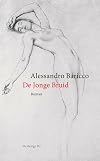
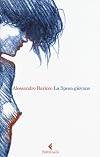
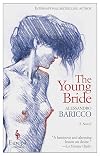
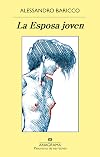
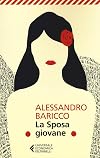
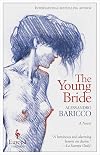
The Young Bride: A Novel
by Alessandro Baricco
On This Page
Description
Fantasy. Fiction. Literature. Romance. HTML:From international bestselling author, Alessandro Baricco, comes a scintillating and sensual novel about a young woman's ingress into a fantastically strange family.The hand of the young woman in question has been promised to the scion of a noble family. She is to make her preparations for marriage at the family's villa, where the inhabitants never seem to sleep. The atmosphere turns surreal as the days pass and her presence on the family estate show more begins to make itself felt on her future in-laws.
In this erotically charged and magical novel, Alessandro Baricco portrays a cast of mysterious characters who exist outside of the rules of causation as he tells a story, an adult fable, about fate and the difficult job of confronting the Other and creating an Us. show less
Tags
Recommendations











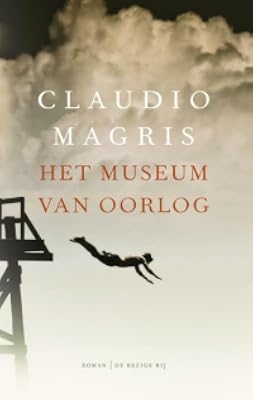
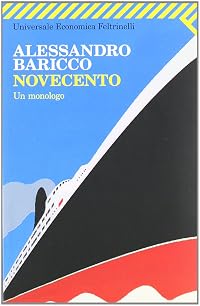
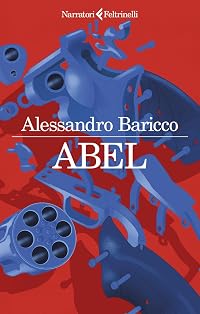
Member Reviews
...In every detail, what I had done in those hours—and heard, and said, and seen—was teaching me that it's bodies that dictate life: the rest is a result. I couldn't believe it, at that moment, because, like every young person, I expected something more complex, or sophisticated. But now I don't know any story, mine or anyone else's, that did not begin in the animal movement of a body—an inclination, a wound, an obliqueness, at times a brilliant move, often obscene instincts that came from far away. It's all written there already. The thoughts come afterward, and are always a belated map, to which, out of convention and weariness, we attribute some precision...
After her eighteenth birthday, The Young Bride returns to Italy to be show more married. Her fiancé, The Son, to whom she has been engaged for three years, is in England allegedly on business. She moves in with her fiancé's family—The Father, The Mother, The Daughter, and The Uncle—to await his return. While there, she is divested of her innocence and groomed in the lessons of sexual desire and pleasure.
Interwoven with this sensual and insidious plot is another, that of "the author" who is writing this book. Flipping abruptly between the third and first person, the text becomes a meta-text describing the process of writing and how intimately the author relates to and is present in his work.
I found this novel challenging at first. The main characters are not named, there are no chapter breaks, paragraphs can sometimes run for pages, and the switch in narrative voice was confusing at times. But about halfway through, the "author" clarifies his intent in switching from third to first point of view, and I went back and reread several passages, which started to make sense.
For example, I should have reported to the old friend how, writing about the young Bride, I more or less abruptly change the narrative voice, for reasons that at the moment seem to me exquisitely technical, or at most blandly aesthetic, with the obvious result of complicating the life of the reader; that in itself is negligible, yet it has an irritating effect of virtuosity that at first I even tried to fight, before surrendering to the evidence that I simply couldn't hear those sentences unless they slipped out that way, as if the solid basis of a clear and distinct narrative voice were something I no longer believed in, or that had become impossible for me to appreciate. A fiction for which I'd lost the necessary innocence.
From there I became intrigued and enjoyed the novel much more. So not an easy text, but one which I found interesting in the end. show less
After her eighteenth birthday, The Young Bride returns to Italy to be show more married. Her fiancé, The Son, to whom she has been engaged for three years, is in England allegedly on business. She moves in with her fiancé's family—The Father, The Mother, The Daughter, and The Uncle—to await his return. While there, she is divested of her innocence and groomed in the lessons of sexual desire and pleasure.
Interwoven with this sensual and insidious plot is another, that of "the author" who is writing this book. Flipping abruptly between the third and first person, the text becomes a meta-text describing the process of writing and how intimately the author relates to and is present in his work.
I found this novel challenging at first. The main characters are not named, there are no chapter breaks, paragraphs can sometimes run for pages, and the switch in narrative voice was confusing at times. But about halfway through, the "author" clarifies his intent in switching from third to first point of view, and I went back and reread several passages, which started to make sense.
For example, I should have reported to the old friend how, writing about the young Bride, I more or less abruptly change the narrative voice, for reasons that at the moment seem to me exquisitely technical, or at most blandly aesthetic, with the obvious result of complicating the life of the reader; that in itself is negligible, yet it has an irritating effect of virtuosity that at first I even tried to fight, before surrendering to the evidence that I simply couldn't hear those sentences unless they slipped out that way, as if the solid basis of a clear and distinct narrative voice were something I no longer believed in, or that had become impossible for me to appreciate. A fiction for which I'd lost the necessary innocence.
From there I became intrigued and enjoyed the novel much more. So not an easy text, but one which I found interesting in the end. show less
This latest novel from Baricco is a must read for all who love the dreamy narrative style on one hand and the precise, meticulous phrasing on the other hand. A story set in no time, without named protagonists, with an unclear time spend, very little information on the place of the action .... like a dream.
As i already stated about Baricco: the stories are like dreaming with your eyes open.
An allegory on power, sexuality, family relations, old habits, gentleman and servants, repeating history, the lost son and .... fun, lots of fun.
Baricco references widely to his older work, but in a very subtle way, and also to other works from Hamlet to some of the newest authors, mixes narrative viewpoints from the protagonist to "the writer", show more works with timelapses and .... well with practically everything.
Do not read this book for the story or the plot.
DO read this book because of its creativity, pleasure of reading, laughing and most of all, because if you love reading, you will get a treat you'll not lightly forget. show less
As i already stated about Baricco: the stories are like dreaming with your eyes open.
An allegory on power, sexuality, family relations, old habits, gentleman and servants, repeating history, the lost son and .... fun, lots of fun.
Baricco references widely to his older work, but in a very subtle way, and also to other works from Hamlet to some of the newest authors, mixes narrative viewpoints from the protagonist to "the writer", show more works with timelapses and .... well with practically everything.
Do not read this book for the story or the plot.
DO read this book because of its creativity, pleasure of reading, laughing and most of all, because if you love reading, you will get a treat you'll not lightly forget. show less
This novella begins promisingly with an account of how the hours and the days pass in a mansion inhabited by some archetypes who are quite eccentric, and then moves on to a poetic episode of erotica. There the fun stops for a while; the lyrical passage of the days deteriorates into an excruciating description of a series of incongruous packages which arrive at the house, and the erotica is gone for quite a while. Though it's easy from the cover to think that one is going to be immersed in eroticism, it must be said that the erotic episodes are rather drowsy by the standards of Anglophone readers who are used to more rough-and-tumble stuff. The book's strengths are its occasional deployment of magic realism and when it sets out to, as show more mentioned, describe the passage of time. A mixed blessing is the eponymous narrator's usage of a mix of first- and third-person narrative which is striking when not confusing. The author makes little effort to flesh out his characters or bother with a plot, especially a plausible one. The author, especially toward the end, feints toward a theme of the process of authorship, but this idea was too oblique for me to see what he was trying to get at. This is an appealing book in many ways, but it will not please traditionalists. show less
The author (and translator's) use of language is very nice, but a couple of idiosyncratic things about the book caused me to struggle with it a bit. First, the author persisted in changing narrative perspectives (third to first person) at random times, and even to different first person perspectives -- without warning the reader that it was happening. Second, there seems to be a bit of a sub-story about the author himself (not sure if it's actually true), that is mixed in with the main story. The way it jumped back and forth caused some narrative steam to be lost. Both of these significantly interfered with the flow and reading enjoyment of the book.
אין לי מושג איך הגעתי לקרוא אותו ומי המליץ עליו, אבל אני שמח שהגעתי. ספר איטלקי מקסים, ארוטי ומורכב שבבירור לא כולם אוהבים, אבל אני קראתי אותו תוך כמה ימים כשכל הזמן החיוך לא מש מפני.
In its posturing this story and the characters reminded of Six Characters in Search of an Author
Het heeft even geduurd voor ik mijn mening had opgemaakt of ik dit boek nu goed vind of niet. Dat zegt al iets. Het begint al met de titel: de jonge Bruid, in het Italiaanse La Sposa giovane, is duidelijk een vette knipoog naar één van de Italiaanse klassiekers, de eerste grote Romantische roman uit de 19de eeuw, De Verloofden (I promessi sposi) van Manzoni. Dat is al meteen de lat hoog leggen, of toch tenminste doen alsof.
De setting waarin Baricco het verhaal plaatst is op zijn minst ook intrigerend: een burgerlijk gezin met een ongenaamde Vader, Moeder, Dochter, Zoon en Oom, en een stokoude bediende, Modesto, die dus wel een naam draagt. Het intrigerende is dat dit gezin het “perfecte leven” lijkt te leiden: alles is tot in de show more puntjes geregeld en iedereen kent zijn plaats; maar al vlug klinken er alarmbellen door in het relaas: de familie heeft een obsessie voor de komst van de avond en nacht, want het blijkt dat alle vroegere telgen ’s nachts overleden zijn, nooit overdag; elke ochtend is de opluchting zo groot dat er wel extra aandacht wordt besteed aan het ontbijt (dat tot 3u in de namiddag gerokken wordt), en om dezelfde reden blijken ook boeken in het gezin verboden, want “er is geen nood aan palliatieve middelen” (als sarcastische opmerking kan dat tellen).
Dan komt plots de Verloofde opdagen: een 18-jarig meisje, helemaal afgereisd uit Argentinië, want 3 jaar tevoren heeft ze het hart veroverd van de Zoon van de familie. Probleem: de Zoon zit in nu in Engeland, of tenminste, dat denkt men toch, maar geen nood, hij zal elk moment terugkeren. Op dit punt van het verhaal is de auteur (Baricco?) zelf al enkele keren in beeld gekomen in discussies met vrienden over wat hij aan het schrijven is, en voor de aardigheid wisselt hij af en toe het 3de vertellersstandpunt met het perspectief van de Verloofde zelf, gewoon voor de fun.
Wat volgt is een bizarre opeenvolging van vrij expliciete erotische scenes, waarbij de ‘inwijding’ van de Verloofde centraal staat, een inwijding die zowel de Zus, de Moeder als de Vader op zich nemen. Op zijn minst een vreemde bedoening. Intussen blijft het wachten op de Zoon, of liever, wordt het twijfelachtiger dat die Zoon ooit komt opdagen. De uitkomst ga ik uiteraard niet verklappen, en eerlijk gezegd, die lijkt er ook niet zoveel toe te doen.
Wat wel van belang is, is dat Baricco of tenminste de vermoedelijke auteur van dit schrijfsel opnieuw enkele keren ten tonele verschijnt, op een bepaald moment zijn bijna afgewerkte manuscript van dit boek kwijt blijkt te zijn, en het dan maar uit het hoofd in snel tempo opnieuw op papier zet. Of ook: geregeld blijven erg bizarre scenes opduiken, zoals die van de Oom (die niet echt een oom blijkt) die al slapend voor de Verloofde een exquis diner maakt en opdient. “Il faut le faire”, zeggen de Fransen.
Om maar te zeggen: Baricco lijkt meer dan ooit zijn best te hebben gedaan om de lezer duidelijk te maken dat een schrijver er wel degelijk toe doet in de literatuur, en dat – als hij er zin in heeft – hij gewoon de meest buitennissige dingen op de lezer mag loslaten, die moet zich maar schikken en het verhaal slikken. Misschien is dit een late wraakoefening op al die literatuurexperts die de auteur als niet relevant hebben uitgeroepen.
Persoonlijk heb ik het echt niet voor dit soort virtuoze postmodernistische experimentjes; ik heb daar gewoon geen boodschap aan. Maar het woord virtuoos is wél op zijn plaats: Alessandro Baricco kan een stukje schrijven en kan – als hij wil – de meest briljante scenes neerzetten (in een prachtig Italiaans trouwens). Dus hou ik het lafweg op een gemiddelde score. show less
De setting waarin Baricco het verhaal plaatst is op zijn minst ook intrigerend: een burgerlijk gezin met een ongenaamde Vader, Moeder, Dochter, Zoon en Oom, en een stokoude bediende, Modesto, die dus wel een naam draagt. Het intrigerende is dat dit gezin het “perfecte leven” lijkt te leiden: alles is tot in de show more puntjes geregeld en iedereen kent zijn plaats; maar al vlug klinken er alarmbellen door in het relaas: de familie heeft een obsessie voor de komst van de avond en nacht, want het blijkt dat alle vroegere telgen ’s nachts overleden zijn, nooit overdag; elke ochtend is de opluchting zo groot dat er wel extra aandacht wordt besteed aan het ontbijt (dat tot 3u in de namiddag gerokken wordt), en om dezelfde reden blijken ook boeken in het gezin verboden, want “er is geen nood aan palliatieve middelen” (als sarcastische opmerking kan dat tellen).
Dan komt plots de Verloofde opdagen: een 18-jarig meisje, helemaal afgereisd uit Argentinië, want 3 jaar tevoren heeft ze het hart veroverd van de Zoon van de familie. Probleem: de Zoon zit in nu in Engeland, of tenminste, dat denkt men toch, maar geen nood, hij zal elk moment terugkeren. Op dit punt van het verhaal is de auteur (Baricco?) zelf al enkele keren in beeld gekomen in discussies met vrienden over wat hij aan het schrijven is, en voor de aardigheid wisselt hij af en toe het 3de vertellersstandpunt met het perspectief van de Verloofde zelf, gewoon voor de fun.
Wat volgt is een bizarre opeenvolging van vrij expliciete erotische scenes, waarbij de ‘inwijding’ van de Verloofde centraal staat, een inwijding die zowel de Zus, de Moeder als de Vader op zich nemen. Op zijn minst een vreemde bedoening. Intussen blijft het wachten op de Zoon, of liever, wordt het twijfelachtiger dat die Zoon ooit komt opdagen. De uitkomst ga ik uiteraard niet verklappen, en eerlijk gezegd, die lijkt er ook niet zoveel toe te doen.
Wat wel van belang is, is dat Baricco of tenminste de vermoedelijke auteur van dit schrijfsel opnieuw enkele keren ten tonele verschijnt, op een bepaald moment zijn bijna afgewerkte manuscript van dit boek kwijt blijkt te zijn, en het dan maar uit het hoofd in snel tempo opnieuw op papier zet. Of ook: geregeld blijven erg bizarre scenes opduiken, zoals die van de Oom (die niet echt een oom blijkt) die al slapend voor de Verloofde een exquis diner maakt en opdient. “Il faut le faire”, zeggen de Fransen.
Om maar te zeggen: Baricco lijkt meer dan ooit zijn best te hebben gedaan om de lezer duidelijk te maken dat een schrijver er wel degelijk toe doet in de literatuur, en dat – als hij er zin in heeft – hij gewoon de meest buitennissige dingen op de lezer mag loslaten, die moet zich maar schikken en het verhaal slikken. Misschien is dit een late wraakoefening op al die literatuurexperts die de auteur als niet relevant hebben uitgeroepen.
Persoonlijk heb ik het echt niet voor dit soort virtuoze postmodernistische experimentjes; ik heb daar gewoon geen boodschap aan. Maar het woord virtuoos is wél op zijn plaats: Alessandro Baricco kan een stukje schrijven en kan – als hij wil – de meest briljante scenes neerzetten (in een prachtig Italiaans trouwens). Dus hou ik het lafweg op een gemiddelde score. show less
Jul 2, 2019Dutch
1
Members
- Recently Added By
Lists

Italian Literature
558 works; 40 members

International Dublin Literary Award Longlist 2018
22 works; 2 members
Author Information

356 Works 14,705 Members
Some Editions
Awards and Honors
Series
Belongs to Publisher Series
Gallimard, Folio (6328)
Common Knowledge
- Canonical title
- The Young Bride: A Novel
- Original title
- La Sposa giovane
- Original publication date
- 2015
- Important places
- Italy
- Dedication
- To Samuele, Sebastiano, and Barbara. Thank you.
- First words
- There are thirty-six stone step to climb, and the old man climbs slowly, cautiously, almost as if he were collecting them, one by one, to drive them up to the second floor: he the shepherd, they meek animals.
- Last words
- (Click to show. Warning: May contain spoilers.)Here I ask the questions, she said.
- Blurbers
- Cheuse, Alan; Donadio, Rachel; Carroll, Tobias
- Original language
- Italian
Classifications
- Genres
- General Fiction, Fiction and Literature
- DDC/MDS
- 853.92 — Literature & rhetoric Italian, Romanian & related literatures Italian fiction 1900- 21st Century
- LCC
- PQ4862 .A6745 .S6613 — Language and Literature French, Italian, Spanish and Portuguese literatures Italian literature Individual authors, 1961-2000
- BISAC
Statistics
- Members
- 250
- Popularity
- 130,594
- Reviews
- 12
- Rating
- (3.52)
- Languages
- 9 — Dutch, English, Estonian, French, Hungarian, Italian, Portuguese, Russian, Spanish
- Media
- Paper, Audiobook, Ebook
- ISBNs
- 22
- ASINs
- 9