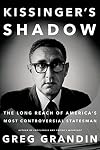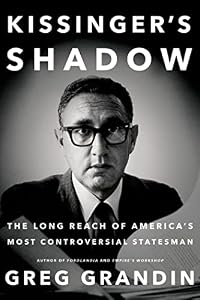
Kissinger's Shadow: The Long Reach of America's Most Controversial Statesman
by Greg Grandin
On This Page
Description
A new account of America's most controversial diplomat that moves beyond praise or condemnation to reveal Kissinger as the architect of America's current imperial stance In his fascinating new book, acclaimed historian Greg Grandin argues that to understand the crisis of contemporary America-its never-ending wars abroad and political polarization at home-we have to understand Henry Kissinger. Examining Kissinger's own writings, as well as a wealth of newly declassified documents, Grandin show more reveals how Richard Nixon's top foreign policy advisor, even as he was presiding over defeat in Vietnam and a disastrous, secret, and illegal war in Cambodia, was helping to revive a militarized version of American exceptionalism centered on an imperial presidency. Believing that reality could be bent to his will, insisting that intuition is more important in determining policy than hard facts, and vowing that past mistakes should never hinder future bold action, Kissinger anticipated, even enabled, the ascendance of the neoconservative idealists who took America into crippling wars in Afghanistan and Iraq. Going beyond accounts focusing either on Kissinger's crimes or accomplishments, Grandin offers a compelling new interpretation of the diplomat's continuing influence on how the United States views its role in the world. Greg Grandin is the author of The Empire of Necessity; Fordlandia, which was a finalist for the Pulitzer Prize and the National Book Award; as well as Empire's Workshop and The Blood of Guatemala. A professor of history at New York University and a recipient of fellowships from the Guggenheim Foundation and the New York Public Library, Grandin has served on the UN Truth Commission investigating the Guatemalan Civil War and has written for the Los Angeles Times, The Nation, and The New York Times.. show less
Tags
Recommendations
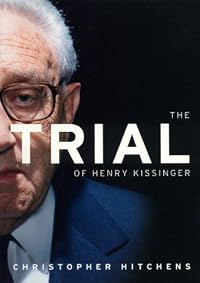
















Member Recommendations

Member Reviews
This is the second book I've read on Kissinger, (the first being Niall Ferguson's "Kissinger: The Idealist"). It is also the second book I've read by Greg Grandin (the first being "The End of the Myth," about frontier colonialism in the United States).
As I mentioned in my other review, a friend prompted: "we can all agree that Kissinger was evil; but would worse evils have been perpetrated if Kissinger hadn't done what he had done?" This book isn't interested in answering that question.
BALANCE OF VIOLENCE
Although such an argument is somewhat cliché at this point, I do agree that nuclear weapons were a turning point in the history of civilization, and that they've intensified an ethos of impossible choices. With a clash of great show more empires, like between the USA and the USSR in the Cold War, all roads lead to violence. Either both nations are more or less in balance (this balance maintained by "small wars" in other countries), or one nation becomes dominant, in which case there is much hardship in the nation that has fallen behind.
In other words, there is a system of a balance of violence (“balance of power” is the more domestic term). If you follow this logic (as Kissinger does), then anti-war protests, denuclearization, and any form of "backing down" come across as not only naïve, but downright perverse and suicidal. Peace activists may think of themselves as bringing about peace, but from Kissinger's view, this is only possible because they've failed in their objectives. If they were successful, the USA would become a Russian territory.
You could say, "but what about Russian peace activism? If both movements were successful, couldn't this ensure world peace?" One of the challenges here is that there hasn't yet been devised a "global balance of peace" system. Russia was pro-denuclearization. Why? Because they saw the ways in which the US populace would hold their government accountable in a way which the government in the USSR would simply disregard. There's a quote in the book, when Chairman Mao is chatting with Kissinger. He says something to the effect of, "why is this Watergate thing such a big deal?" In the context of the Chinese Communist Party, citizens are accountable to the government, not the other way around. And so the concept of a populace holding their government "to account" just comes across as absurd. Why would any leader be willing to submit to such shackles?
To fast forward to the present day, Xi in China, Putin in Russia, and Modi in India have all been consolidating power and building an autocracy. Trump was doing the same. Biden has kept in place many of Trump's autocratic systems rather than dismantling them, and Trump may be re-elected at the end of this year to pick up the project again.
To restate the argument here: if you believe, as Kissinger did, that foreign empires will play a no-holds-barred game for global domination, then any kind of deescalation is a form of self harm and the best we can hope for is a rough balance of violence.
It is challenging to square such rhetoric in a democratic context. If you're playing a game where agility is your friend and rules or limits are your enemy (such as in war), autocracies have a lot to recommend themselves. In this context, democracies become games of convincing the populous of beliefs that benefit your positions as a leader. In other words, voters become instrumental cogs to be manipulated, both domestically and through campaigns of cross-border propaganda. If you have an autocracy facing off against a democracy, democracy becomes a liability for the latter and an advantage for the former. All else being equal, the autocracy will prevail.
I'm not suggesting that I endorse such a perspective. I'm simply pointing out that, if you start where Kissinger began, there is nothing surprising about where he ended up.
BEHAVIORAL DIPLOMACY AND THE ALTERNATIVE
One of Kissinger's core tenants was that good diplomacy is a combination of incentives and threats (and that the threats must be regularly exercised to remain sharp). At base, this is a behavioral theory; it takes the other party and looks at them from an exterior perspective.
On the other hand, we hear that Kissinger had a human side in his negotiations. To the shame of many Americans, Kissinger sidled up alongside many a dictator and treated them with respect. He was fascinated with their interior world. This kind of empathy is the opposite of the behavioral diplomacy described above.
All of this has me wondering—what are other paradigms of diplomacy, and if we're employing a multi-modal diplomacy, what is the hierarchy (e.g. does empathy trump behavioralism, or is it the other way around)?
INTUITION AND NIHILISM
Kissinger's core epistemology was intuition. He spoke a lot in his later years of the "interdependence" of nations. He snubbed the "fact men," myopically fixated on their statistics. Iain McGilchrist, whose research has focused on brain hemispheres, would say that this is a "right hemisphere" approach aligned with gestalt perception. Grandin implies that he is critical of this capacity, but I wouldn’t say that on its own, it is a problem.
Kissinger's core cosmology was nihilism. In the 1950s, Kissinger spoke of a "spiritual crisis" in the West. This may be true, but with such a comment Kissinger reveals his own spiritual vacuity. Kissinger never managed to mature beyond this spiritual poverty, and spent his days in a state of perpetual adolescence (as do many Western leaders). This is a left-hemisphere-dominant dynamic.
What happens when you combine these two attributes? You get a great diplomat, but a poor leader.
LEGACY
Ferguson notes: Kissinger had statistically exceptional qualities, but was not able to create bureaucratic systems that mentored a future generation of his equals (not that that would necessarily be a good thing, but it didn’t happen, regardless). Rather, what remains are his precedents of spontaneous wars and an expansion of Executive Branch power. Grandin points out that neoconservatives (such as Dick Cheney with the Iraq War) and liberals alike (such as Barack Obama’s drone killings in Yemen) readily adopted precedents set by Kissinger for unaccountable war.
While on the subject of Dick Cheney, it is worth noting that in Adam McKay’s film, “Vice,” he presents essentially the same thesis about Cheney that I’ve noted Kissinger would argue about himself—worse evils would have occurred were it not for the actions they took.
There is a poignant quote in the book, a letter of advice from a colleague to Kissinger’s when he received high level security clearances, speaking about the emotional rollercoaster. His colleague notes the humility at realizing you’ve been criticizing leadership for decades with extremely partial information—often missing the key information about what was actually going on. But on the other hand he speaks of a risk that you yourself begin to discount anyone’s observations if they don’t have the same clearances you do. The colleague advises humility here too; that we can still learn from others, even if they don’t have the full picture.
All of this reminds me of the “wall facers” in Cixin Liu’s “Remembrance of the Earth’s Past,” series. These are individuals that, for reasons of alien surveillance technology, cannot disclose anything about their plans to anyone else, otherwise the enemy would have valuable intelligence. So they go about, executing grand plans, without any explanation to the vast armies they’ve rallied to serve under them. As an aside, I’ll note that this is Xi’s fantasy, and the series wouldn’t be China’s most-ready work of sci-fi without Xi’s endorsement. But that aside, I think that on a more poetic level, there is something fundamental here: that we can never fully understand nor fully comprehend each other or the world around us. A schizophrenic approach to this quality of reality is to scrabble for an ineffable control. A wiser path forward is to marvel in mystery and wonder, and to do the best with our sense of a given situation.
In closing, I’ll say that you’re welcome to condemn Kissinger, and I too have done the same. In the same breath though, we might remember that, in the world we’ve created of impossible choices, inevitably there will be people that need to make these choices, and they will be demonized. show less
As I mentioned in my other review, a friend prompted: "we can all agree that Kissinger was evil; but would worse evils have been perpetrated if Kissinger hadn't done what he had done?" This book isn't interested in answering that question.
BALANCE OF VIOLENCE
Although such an argument is somewhat cliché at this point, I do agree that nuclear weapons were a turning point in the history of civilization, and that they've intensified an ethos of impossible choices. With a clash of great show more empires, like between the USA and the USSR in the Cold War, all roads lead to violence. Either both nations are more or less in balance (this balance maintained by "small wars" in other countries), or one nation becomes dominant, in which case there is much hardship in the nation that has fallen behind.
In other words, there is a system of a balance of violence (“balance of power” is the more domestic term). If you follow this logic (as Kissinger does), then anti-war protests, denuclearization, and any form of "backing down" come across as not only naïve, but downright perverse and suicidal. Peace activists may think of themselves as bringing about peace, but from Kissinger's view, this is only possible because they've failed in their objectives. If they were successful, the USA would become a Russian territory.
You could say, "but what about Russian peace activism? If both movements were successful, couldn't this ensure world peace?" One of the challenges here is that there hasn't yet been devised a "global balance of peace" system. Russia was pro-denuclearization. Why? Because they saw the ways in which the US populace would hold their government accountable in a way which the government in the USSR would simply disregard. There's a quote in the book, when Chairman Mao is chatting with Kissinger. He says something to the effect of, "why is this Watergate thing such a big deal?" In the context of the Chinese Communist Party, citizens are accountable to the government, not the other way around. And so the concept of a populace holding their government "to account" just comes across as absurd. Why would any leader be willing to submit to such shackles?
To fast forward to the present day, Xi in China, Putin in Russia, and Modi in India have all been consolidating power and building an autocracy. Trump was doing the same. Biden has kept in place many of Trump's autocratic systems rather than dismantling them, and Trump may be re-elected at the end of this year to pick up the project again.
To restate the argument here: if you believe, as Kissinger did, that foreign empires will play a no-holds-barred game for global domination, then any kind of deescalation is a form of self harm and the best we can hope for is a rough balance of violence.
It is challenging to square such rhetoric in a democratic context. If you're playing a game where agility is your friend and rules or limits are your enemy (such as in war), autocracies have a lot to recommend themselves. In this context, democracies become games of convincing the populous of beliefs that benefit your positions as a leader. In other words, voters become instrumental cogs to be manipulated, both domestically and through campaigns of cross-border propaganda. If you have an autocracy facing off against a democracy, democracy becomes a liability for the latter and an advantage for the former. All else being equal, the autocracy will prevail.
I'm not suggesting that I endorse such a perspective. I'm simply pointing out that, if you start where Kissinger began, there is nothing surprising about where he ended up.
BEHAVIORAL DIPLOMACY AND THE ALTERNATIVE
One of Kissinger's core tenants was that good diplomacy is a combination of incentives and threats (and that the threats must be regularly exercised to remain sharp). At base, this is a behavioral theory; it takes the other party and looks at them from an exterior perspective.
On the other hand, we hear that Kissinger had a human side in his negotiations. To the shame of many Americans, Kissinger sidled up alongside many a dictator and treated them with respect. He was fascinated with their interior world. This kind of empathy is the opposite of the behavioral diplomacy described above.
All of this has me wondering—what are other paradigms of diplomacy, and if we're employing a multi-modal diplomacy, what is the hierarchy (e.g. does empathy trump behavioralism, or is it the other way around)?
INTUITION AND NIHILISM
Kissinger's core epistemology was intuition. He spoke a lot in his later years of the "interdependence" of nations. He snubbed the "fact men," myopically fixated on their statistics. Iain McGilchrist, whose research has focused on brain hemispheres, would say that this is a "right hemisphere" approach aligned with gestalt perception. Grandin implies that he is critical of this capacity, but I wouldn’t say that on its own, it is a problem.
Kissinger's core cosmology was nihilism. In the 1950s, Kissinger spoke of a "spiritual crisis" in the West. This may be true, but with such a comment Kissinger reveals his own spiritual vacuity. Kissinger never managed to mature beyond this spiritual poverty, and spent his days in a state of perpetual adolescence (as do many Western leaders). This is a left-hemisphere-dominant dynamic.
What happens when you combine these two attributes? You get a great diplomat, but a poor leader.
LEGACY
Ferguson notes: Kissinger had statistically exceptional qualities, but was not able to create bureaucratic systems that mentored a future generation of his equals (not that that would necessarily be a good thing, but it didn’t happen, regardless). Rather, what remains are his precedents of spontaneous wars and an expansion of Executive Branch power. Grandin points out that neoconservatives (such as Dick Cheney with the Iraq War) and liberals alike (such as Barack Obama’s drone killings in Yemen) readily adopted precedents set by Kissinger for unaccountable war.
While on the subject of Dick Cheney, it is worth noting that in Adam McKay’s film, “Vice,” he presents essentially the same thesis about Cheney that I’ve noted Kissinger would argue about himself—worse evils would have occurred were it not for the actions they took.
There is a poignant quote in the book, a letter of advice from a colleague to Kissinger’s when he received high level security clearances, speaking about the emotional rollercoaster. His colleague notes the humility at realizing you’ve been criticizing leadership for decades with extremely partial information—often missing the key information about what was actually going on. But on the other hand he speaks of a risk that you yourself begin to discount anyone’s observations if they don’t have the same clearances you do. The colleague advises humility here too; that we can still learn from others, even if they don’t have the full picture.
All of this reminds me of the “wall facers” in Cixin Liu’s “Remembrance of the Earth’s Past,” series. These are individuals that, for reasons of alien surveillance technology, cannot disclose anything about their plans to anyone else, otherwise the enemy would have valuable intelligence. So they go about, executing grand plans, without any explanation to the vast armies they’ve rallied to serve under them. As an aside, I’ll note that this is Xi’s fantasy, and the series wouldn’t be China’s most-ready work of sci-fi without Xi’s endorsement. But that aside, I think that on a more poetic level, there is something fundamental here: that we can never fully understand nor fully comprehend each other or the world around us. A schizophrenic approach to this quality of reality is to scrabble for an ineffable control. A wiser path forward is to marvel in mystery and wonder, and to do the best with our sense of a given situation.
In closing, I’ll say that you’re welcome to condemn Kissinger, and I too have done the same. In the same breath though, we might remember that, in the world we’ve created of impossible choices, inevitably there will be people that need to make these choices, and they will be demonized. show less
I have read several of Grandin's books. I am always a fan of history that does not attempt to gloss over the blowback that is caused by the actions of our nation in foreign countries. Grandin is an expert at exposing such actions. In this book Grandin shows how America's foreign policy became one that is totally detached from the reality of the countries that we intend to influence. According to Grandin this began with Henry Kissinger. Kissinger was not interested in reality and facts--he had his own reality. Kissinger did not see that world as it was, but rather viewed it as it should be. He saw a world in which his adopted country would lead and to accomplish this goal the end always justifies the means. Thus there is no problem with show more overthrowing democratically elected presidents such as in Chile, booming neutral countries such as Cambodia during the Vietnam War. Grandin does not only blame Kissinger for these crimes, but he also argues that his influence continues with such actions as the war in Iraq, which despite the lack of evidence to support the Bush administration's claims, was presented as a justifiable war. show less
 This review was written for LibraryThing Early Reviewers.
Kissinger's Shadow by Greg Grandin
The book is a biography/indictment of Henry Kissinger. Despite being pretty left in my politics, this book came across as a bit too much of a screed for my taste. Henry Kissinger undoubtedly has a lot to answer for - whether it is his involvement in overthrowing Latin American governments or the secret bombing of Cambodia. In addition to these actions, Grandin seeks to add a long list of further indictments - Kissinger undermining the peace talks to end the Vietnam war in conjunction with the Nixon campaign or the rise of the Khmer Rouge, Grandin puts forward a well-sourced argument but one that would be more convincing had he attempted to add a veneer of balance to his account.
Ultimately, Grandin's show more goal appears to be to lay the blame for the whole of the secretive national security structure at Kissinger's feet while tying him to the country's recent misadventures in Iraq. While I do not doubt that Kissinger played a role in most of the things that Grandin cites, I think that the level of culpability is overstated. Also, some of the events that Grandin tries to tie Kissinger to are not as clear cut as Grandin suggests. For example, Grandin argues that Kissinger sabotaged the negotiations to try to end the Vietnam war that occurred at the end of the Johnson administration. Per Grandin, Kissinger passed on secret information about the talks to the Nixon campaign which then used the information to tell various parties that they could get a "better" deal from a future Nixon administration. The peace talks collapsed as a result and Nixon narrowly defeated Humphrey.
It may have happened as Grandin describes. However, there is no smoking gun to tie Kissinger to the collapse of the peace talks. Moreover, Grandin's book is designed as such a take-down that I was left wondering if Grandin had stretched his account to fit his theory. A more even-handed account in other parts of the book may well have convinced me of Kissinger's culpability in this matter.
Henry Kissinger, for better or worse, is one the towering figures of American foreign policy in the last 50 years. His role in the ills and successes of American foreign policy should be closely examined and hotly debated. Unfortunately, this book came across as being more interested in stirring up controversy than it was in a serious examination of the subject. Kissinger's Shadow suffered from this one-sided focus. show less
The book is a biography/indictment of Henry Kissinger. Despite being pretty left in my politics, this book came across as a bit too much of a screed for my taste. Henry Kissinger undoubtedly has a lot to answer for - whether it is his involvement in overthrowing Latin American governments or the secret bombing of Cambodia. In addition to these actions, Grandin seeks to add a long list of further indictments - Kissinger undermining the peace talks to end the Vietnam war in conjunction with the Nixon campaign or the rise of the Khmer Rouge, Grandin puts forward a well-sourced argument but one that would be more convincing had he attempted to add a veneer of balance to his account.
Ultimately, Grandin's show more goal appears to be to lay the blame for the whole of the secretive national security structure at Kissinger's feet while tying him to the country's recent misadventures in Iraq. While I do not doubt that Kissinger played a role in most of the things that Grandin cites, I think that the level of culpability is overstated. Also, some of the events that Grandin tries to tie Kissinger to are not as clear cut as Grandin suggests. For example, Grandin argues that Kissinger sabotaged the negotiations to try to end the Vietnam war that occurred at the end of the Johnson administration. Per Grandin, Kissinger passed on secret information about the talks to the Nixon campaign which then used the information to tell various parties that they could get a "better" deal from a future Nixon administration. The peace talks collapsed as a result and Nixon narrowly defeated Humphrey.
It may have happened as Grandin describes. However, there is no smoking gun to tie Kissinger to the collapse of the peace talks. Moreover, Grandin's book is designed as such a take-down that I was left wondering if Grandin had stretched his account to fit his theory. A more even-handed account in other parts of the book may well have convinced me of Kissinger's culpability in this matter.
Henry Kissinger, for better or worse, is one the towering figures of American foreign policy in the last 50 years. His role in the ills and successes of American foreign policy should be closely examined and hotly debated. Unfortunately, this book came across as being more interested in stirring up controversy than it was in a serious examination of the subject. Kissinger's Shadow suffered from this one-sided focus. show less
This review was written for LibraryThing Early Reviewers."Power is not power until it is used."
There's a moment in an early chapter when Kissinger reflects on a weakness of bureaucracy being that it is too timid. Because the same people must project, execute, and evaluate, their natural inclination is to make small choices because small choices have the highest likelihood to perform as predicted.
A political junkie's biography. A book that seems to sit beside, not above other texts because it doesn't frame or wrestle with the events of its era. It barely outlines them, so a detailed knowledge of mid century American politics is assumed.
But after that caveat, a great book that frames Kissinger's actions within his own academic work, and then pays significantly more attention to how his show more transgressions of American norms of domestic and military power shifted the Overton window to bring us to the modern military bureaucracy. show less
There's a moment in an early chapter when Kissinger reflects on a weakness of bureaucracy being that it is too timid. Because the same people must project, execute, and evaluate, their natural inclination is to make small choices because small choices have the highest likelihood to perform as predicted.
A political junkie's biography. A book that seems to sit beside, not above other texts because it doesn't frame or wrestle with the events of its era. It barely outlines them, so a detailed knowledge of mid century American politics is assumed.
But after that caveat, a great book that frames Kissinger's actions within his own academic work, and then pays significantly more attention to how his show more transgressions of American norms of domestic and military power shifted the Overton window to bring us to the modern military bureaucracy. show less
Greg Grandin, “Kissinger’s Shadow; the long reach of America’s most controversial statesman” (2015)
Book review by Tom Key
Born in Bavaria in 1923, Henry Kissinger is now ninety-three years old and has seen many bad things. He is “the Cause” of many of them. That is an ironic statement -- Kissinger spent his life patiently and relentlessly rejecting the “causal principle” of historical analysis. He urged a mystical “will to power” indifferent to facts and history, and called it being creative and heroic. And it was not just for foreign policy; it was for personal success.
Greg Grandin shows how Kissinger kept dipping deeply into Spenglerian mysticism throughout his wonderful career. Drawing from unbiased sources show more (historians), and from the transcripts of taped conversations (“Nixon’s Tapes”), Grandin’s fact-based ventilation of that self-serving mysticism is his unique contribution to “Kissingerontology”. (That bad pun is my own, not that of the Author).
The book is unique as pre-obituary; Grandin calls it “an obituary foretold”. Rather than taking sides between those who describe Kissinger as a criminal and those who are his devotees, Grandin warns all obituary writers not to “miss the point” of Kissinger’s legacy. That legacy shadows us to this day.
The facts are sourced in irrefutable sources. Grandin dives into now-transcribed “Nixon Tapes”, and with past and current details from historical studies to show the perduring impact of Henry Kissinger on foreign policy. “Kissinger served not just as a foil but as a participant and active enabler” of the foreign policy of Nixon and Ford, and the neoconservative “secrecy and spectacles” executed by Reagan, Bush I, and Bush II.
Grandin includes a fair examination of other books. Grandin agrees with Christopher Hitchens’ “obvious conclusion: Kissinger is a criminal” but notes that “righteous indignation doesn’t provide much room for understanding.” Grandin notes that even slightly less damning historical chroniclers, are “missing the point”. Walter Isaacson provides the standard biography. Seymour Hersh, with “Price of Power” is a study of the Nixon/Kissinger paranoia and deception. Grandin seeks to provide insight into the “total situation” in which Kissinger operated. This work is invaluable for making 50-years of history understandable. Kissinger played a major role in creating and rationalizing the “surveillance and counter-terrorism state we now live under”. Grandin reveals the “shadow” of Kissinger which enabled “a later generation of militarists” to take us to unnecessary and self-defeating wars.
The philosophical underpinnings for the rejection of rational analytics is drawn by Kissinger from Oswald Spengler, his hero. In The Decline of the West (Der Untergang des Abendlandes), published in 1918, Spengler fabricates a civilization from his own imagination, and then presses it relentlessly into an inevitable “decline”. The fabrication of a history serves his own theory. [It occurs to me from the reading, that Spengler was something like Newt Gingrich.] Spengler was not a historian or a leader, and was not even well-read or well-traveled, but he sought to be influential. Spengler was inspired by the Agadir Crisis, which remains in Germany the best known example of bold gunboat diplomacy. ["Panthersprung" ("Panther's jump") remains a popular figure of speech for any demonstration of power, especially an unnecessary one.]
Kissinger may be the most famous, if not the only, expert on the Will to Power mysticism of Spengler. As a basis for conducting foreign affairs, it has no "working model" of long-term success. Kissinger's career is distinguished by personal success in spite of constant diplomatic failure.
Grandin explains the role Kissinger played in office and behind the scenes. The Author examines the records, including eye-witness accounts, in an objective and neutral spirit. [Ranke would approve – because “it’s the way it is” [wie es eigentlich”].
The author provides abundant reliably-sourced Kissinger quotes, drawing out the often ironic humor and context. The title of the first chapter, “History is an endless unfolding of a cosmic beat…” is a phrase from Kissinger’s 1950 Thesis, submitted at the exact moment that Truman announced the United States would support the French in Vietnam. Kissinger would play a major role in expanding the conflict in Vietnam. He directed more bomb drops into Laos and Cambodia than shattered Europe in WWII. Grandin spells out the facts so that we can learn from Kissinger’s blunders.
One of the many insights from this work is uncovering the relationship between Kissinger and Daniel Ellsberg – famous for revealing the Pentagon Papers, Kissinger and Nixon sought to suppress. Both did undergraduate and graduate studies at Harvard around the same time. Both achieved summa cum laude and wrote challenging theses.
Ellsberg, after service as a Marine officer, was stationed in the US Embassy in Saigon, and briefed Kissinger during his first visit to South Vietnam. They were both interested in the question of contingency and choice in human affairs. They knew each other well. Ellsberg provided facts and advice to Kissinger. But they became enemies. Grandin suggests that Kissinger savagely bombed Laos and Cambodia not only to look tough, but also, as a personal reaction to the policies of the previous administration—those of LBJ and McNamara, executed by Ellsberg. Kissinger's visceral hostility to a practitioner of data-based policy, Daniel Ellsberg, grew into the Watergate scandal that forced Nixon to resign.
Grandin is not content to simply document the “savagery”, and the secret, wild, off-the-books operations run by Kissinger. He explores the deliberate perversion of the McNamarian bureaucracy. Kissinger instigated and “approved a highly elaborate deception”, including a dual reporting system, and pre- and post-flight routines, designed to deceive SAC commanders, the Joint Chiefs of Staff, Congressional oversight and budgetary monitors, and of course the public.
In a chapter entitled “The Opposite of Unity”, Grandin draws from the records the fact that each of Kissinger’s initiatives ended in disaster for our and other nations, but not for Kissinger. We “miss the point” if we look at Kissinger’s legacy as merely a sequence of repeated failures: Kissinger personally benefited. The failures were never his own—he shifted the expense, the loss, the burden to others. Along with his creation, the shadowed duplicity of covert Government "shock and awe" use of military power, repeated in unnecessary wars by Reagan, and two Bush Presidents.
Grandin writes well, with both drama and composure. For example in his chapter on the ironic coupling of “Secrecy and Spectacle”, he brings us to the scene of Kissinger’s excitement about dropping bombs: “Let’s look ferocious!” And Grandin unwraps the covert and overt forms in which the modern imperial rule operates.
The book introduces the rise of the Reaganites, who initially blamed Kissinger for the “loss of American military supremacy” during his stewardship. Kissinger for his part thought it was “inconceivable” that Reagan would become President. Ironically, the Reagan administration adopted Spengler's fact-free mystic imperialism as cast by Kissinger.
Grandin presents the phenomenon of the Khymer Rouge and shows how the genocide of over 2 million people flows directly from Kissinger’s policies and his direction of them. From the proof, we come to the conclusion: “The Khmer Rouge was born out of the inferno that American policy did much to create.”
Kissinger took the lead in condemning Saddam Hussein’s assault on Kuwait in 1990. During his terms in public office he had supported Sadaam against Iran, actively prolonging a war that cost millions of lives. Kissinger said “It’s a pity they can’t both lose”.
In the Bush Iraq Wars, Grandin credits and ties Kissinger to the growth of a more spectacular, but even more covert, and more interventionist policy. The spectacle announced as “Shock and Awe”, conducted openly to capture and keep the public’s attention.
The Bush Wars in the Middle East were previewed by Panama – “Operation Just Cause”. Opening a “bold new era in American military force projection”.
When the US bombed Bagdad, Kissinger was on Fox News, excitedly advising Americans not to be “overly optimistic” or “euphoric” as he clearly was. In triumph, President Bush said “By God, we’ve kicked the Vietnam syndrome once and for all.” Eight years after the Beirut barracks bombing, when Reagan abandoned Lebanon, the U.S. now intervened in Kuwait.
But Hussein continued to hold power in Iraq. Saddam Hussein created enormous problems for Bush’s successor, Bill Clinton. A 12-year siege ensued, with sanctions damaging Iraq’s economy and inflicting hardship on its people. Here, Clinton was doing what Kissinger had done: “he was bombing a country we weren’t at war with, without Congressional approval”.
One of the reasons for bombing was to placate the militarist right which opposed Clinton’s 1997 attempt to nominate Anthony Lake as CIA Director. Lake was critical of Kissinger’s 1970 secret invasion of Cambodia. Lake, author of “Somoza Falling” (1989), describes CIA activities as “covert actions run amok”.
In the interval between 1998 and 2001, radical Islam was not invoked as a threat by the neoconservatives in the Bush II administration. But a decade after the first Gulf war, with continued missiles and punitive sanctions, the region had destabilized. The “solution to the problems created by the First Gulf War was a second Gulf War.” Grandin exposes this Spenglerian loop.
Meanwhile 9/11 happened, creating a “perfect marriage of strategy (what to do with the Middle East) and sentiment…”. In 2002, Kissinger openly endorsed the policy of “regime change” in Iraq, humbly suggesting that his advocacy was “revolutionary”. After all, he himself admits, “The notion of justified pre-emption runs counter to modern international law”. This Revolution, this overthrow of law, is needed because of the “novelty” of the “terrorist threat” which transcends the nation-state. Overwhelming attack creating catastrophic consequences must be asserted to punish the perpetrators. VP Dick Cheney quoted Kissinger’s published column, citing the “imperative for pre-emptive action”, in spite of having repeatedly humiliated Kissinger during the Ford Presidency.
Of course, to Kissinger and the GOP leadership adopting his mystic approach, the facts were not determinative or even relevant. We see Cheney adopt Kissingerism. “The issue is not whether Iraq was involved in the terrorist attack”. Bush II was not aware of the history of Iraq and saw no need to consider it. The main obstacle to the “effective foreign policy” of the neocons was weak-willed domestic opinion. The Bush administration employed a fiction ("weapons of mass destruction") to implicate Iraq as an external threat which would galvanize the public. The theoretical and operational model was Kissinger’s quick and overwhelming assault on Panama. (Spengler's bold "Panthersprung" {Panzersprung}).
Two years into the attack upon Iraq, one of Bush’s speechwriters visited Kissinger in New York. Michael Gerson wrote Bush’s 2d inaugural address including where he announced that “America’s responsibility is to rid the world of evil”. Kissinger gave Gerson, to give Bush, the “salty peanuts” memo he had given to Nixon in 1969: "Withdrawal of US troops will become like salted peanuts to the American public. The more troops come home, the more will be demanded….once withdrawals start, the harder to maintain the morale of those who remain, not to speak of their mothers.”
In reminiscing about Vietnam, Kissinger recounted the many “major” ultimatums he gave to the North Vietnamese warning of “dire consequences”. Kissinger explained that the reason he was unable to “withdraw from Vietnam with honor” was that “I didn’t have enough power”.
The author provides a uniquely insightful Epilogue on Kissingerism without Kissinger – Cheney’s adoption of his Spenglerian foreign policy fictions, without Kissinger’s level of competence.
The “Meaning of History” is the title of one of Kissinger’s books. Drawing on Spengler, he argues that History has no meaning. Our “freedom” as conscious beings depends on a refusal to stoop to any such “predetermined” meaning, but to carve out even more freedom by maneuvering past it. Grandin quotes Kissinger :
”The riddle of time opens up for Man, not to be classified as a category of Reason as Kant attempted. Time represents a denotation for something inconceivable. It expresses itself in the eternal becoming.”
Grandin concludes from Kissinger’s latest work, “World Order” that Kissinger is still agnostic about the meaning of history, pretending humility in a feigned search for its “discovery”, while simultaneously refusing to look at causation or take responsibility for “blowback” and consequences flowing from actions taken and omitted.
Clearly, a generation of successors in putative public service have adopted Kissinger’s point of view. Grandin cites Bush’s ambassador, John Bolton: Past decisions are “irrelevant to the circumstances we face now”. Dick Cheney: “If we spent our time debating what happened…we’re going to miss the threat that is growing and that we do face.” And Jeb Bush: “I won’t talk about the past. I’ll talk about the future.” Spenglerian Kissingerism.
To explain these extraordinarily empty statements, Grandin cites Kissinger’s mystical formula. “Kissinger sees the primary function of history as a way to imagine the future.” Ignore facts and create history. Intuitively ignoring facts, because great power can re-make them.
After 9/11 Kissinger was named by Bush W. to be the chair of the official investigation into the attacks. He had long had close ties to the Saudi family. A delegation of widows of 9/11 asked that Kissinger reveal the names of his client list. Rather than do so, Kissinger resigned from the commission. The list of Kissinger's clients remains one of the most sought-after documents in Washington.
When she was a student at Yale in 1970, Hillary Clinton led protests against the “Cambodia madness”. The protests were inflamed by Nixon’s announcement of the invasion of Cambodia--which he was already doing. Recently she reviewed Kissinger’s book, noting that for her service as Secretary of State, Kissinger provided her with observations about foreign leaders and written reports on traveling in the American foreign service. He provided her with helpful reports that sounded “surprisingly idealistic” with a “just and liberal” vision.
Out of public office in his own private company, Kissinger advocated for spectacular shows of military strength. He quietly lobbied for NAFTA, provided intellectual content for neoconservative internationalism, and consulted with governments on how best to privatize their industries. No one knows what he does, who he talks to, or what he says, including, no doubt, those who retain him.
As a private consultant, Kissinger uses the contacts he made as a government official. For example, he helped Union Carbide set up its chemical plant in Bhopal, India, even working with the Export-Import Bank to cover construction. After the 1989 chemical leak killed 4000 and exposed millions to toxic carcinogens, Kissinger brokered the relatively paltry $490 million out-of-court settlement for victims of the spill.
Kissinger continues to play a role in this country’s foreign-policy debates, with some intellectuals prescribing the “neo-Kissingerian tonic for today’s troubles”. Grandin shows that the legacy is one of “constant unending war”. And words become their opposite, ethics unmoored from any foundation. For this, “Kissinger is our avatar.”
The book provides a clear ventilation of the Spenglerian critique of rationalism, and Kissinger’s application of it by indulging in “spontaneity”, “instinct”, and “intuition” in conducting statecraft. Is there a realm of existence not subject to the laws of reason? Is this world but governed by the “will” of the decision-maker? Force is revealed as weakness.
Kissinger warned against those who fail to act because of complexity. He urged the use of power, without fear of uncertainty. Without doubts. show less
Book review by Tom Key
Born in Bavaria in 1923, Henry Kissinger is now ninety-three years old and has seen many bad things. He is “the Cause” of many of them. That is an ironic statement -- Kissinger spent his life patiently and relentlessly rejecting the “causal principle” of historical analysis. He urged a mystical “will to power” indifferent to facts and history, and called it being creative and heroic. And it was not just for foreign policy; it was for personal success.
Greg Grandin shows how Kissinger kept dipping deeply into Spenglerian mysticism throughout his wonderful career. Drawing from unbiased sources show more (historians), and from the transcripts of taped conversations (“Nixon’s Tapes”), Grandin’s fact-based ventilation of that self-serving mysticism is his unique contribution to “Kissingerontology”. (That bad pun is my own, not that of the Author).
The book is unique as pre-obituary; Grandin calls it “an obituary foretold”. Rather than taking sides between those who describe Kissinger as a criminal and those who are his devotees, Grandin warns all obituary writers not to “miss the point” of Kissinger’s legacy. That legacy shadows us to this day.
The facts are sourced in irrefutable sources. Grandin dives into now-transcribed “Nixon Tapes”, and with past and current details from historical studies to show the perduring impact of Henry Kissinger on foreign policy. “Kissinger served not just as a foil but as a participant and active enabler” of the foreign policy of Nixon and Ford, and the neoconservative “secrecy and spectacles” executed by Reagan, Bush I, and Bush II.
Grandin includes a fair examination of other books. Grandin agrees with Christopher Hitchens’ “obvious conclusion: Kissinger is a criminal” but notes that “righteous indignation doesn’t provide much room for understanding.” Grandin notes that even slightly less damning historical chroniclers, are “missing the point”. Walter Isaacson provides the standard biography. Seymour Hersh, with “Price of Power” is a study of the Nixon/Kissinger paranoia and deception. Grandin seeks to provide insight into the “total situation” in which Kissinger operated. This work is invaluable for making 50-years of history understandable. Kissinger played a major role in creating and rationalizing the “surveillance and counter-terrorism state we now live under”. Grandin reveals the “shadow” of Kissinger which enabled “a later generation of militarists” to take us to unnecessary and self-defeating wars.
The philosophical underpinnings for the rejection of rational analytics is drawn by Kissinger from Oswald Spengler, his hero. In The Decline of the West (Der Untergang des Abendlandes), published in 1918, Spengler fabricates a civilization from his own imagination, and then presses it relentlessly into an inevitable “decline”. The fabrication of a history serves his own theory. [It occurs to me from the reading, that Spengler was something like Newt Gingrich.] Spengler was not a historian or a leader, and was not even well-read or well-traveled, but he sought to be influential. Spengler was inspired by the Agadir Crisis, which remains in Germany the best known example of bold gunboat diplomacy. ["Panthersprung" ("Panther's jump") remains a popular figure of speech for any demonstration of power, especially an unnecessary one.]
Kissinger may be the most famous, if not the only, expert on the Will to Power mysticism of Spengler. As a basis for conducting foreign affairs, it has no "working model" of long-term success. Kissinger's career is distinguished by personal success in spite of constant diplomatic failure.
Grandin explains the role Kissinger played in office and behind the scenes. The Author examines the records, including eye-witness accounts, in an objective and neutral spirit. [Ranke would approve – because “it’s the way it is” [wie es eigentlich”].
The author provides abundant reliably-sourced Kissinger quotes, drawing out the often ironic humor and context. The title of the first chapter, “History is an endless unfolding of a cosmic beat…” is a phrase from Kissinger’s 1950 Thesis, submitted at the exact moment that Truman announced the United States would support the French in Vietnam. Kissinger would play a major role in expanding the conflict in Vietnam. He directed more bomb drops into Laos and Cambodia than shattered Europe in WWII. Grandin spells out the facts so that we can learn from Kissinger’s blunders.
One of the many insights from this work is uncovering the relationship between Kissinger and Daniel Ellsberg – famous for revealing the Pentagon Papers, Kissinger and Nixon sought to suppress. Both did undergraduate and graduate studies at Harvard around the same time. Both achieved summa cum laude and wrote challenging theses.
Ellsberg, after service as a Marine officer, was stationed in the US Embassy in Saigon, and briefed Kissinger during his first visit to South Vietnam. They were both interested in the question of contingency and choice in human affairs. They knew each other well. Ellsberg provided facts and advice to Kissinger. But they became enemies. Grandin suggests that Kissinger savagely bombed Laos and Cambodia not only to look tough, but also, as a personal reaction to the policies of the previous administration—those of LBJ and McNamara, executed by Ellsberg. Kissinger's visceral hostility to a practitioner of data-based policy, Daniel Ellsberg, grew into the Watergate scandal that forced Nixon to resign.
Grandin is not content to simply document the “savagery”, and the secret, wild, off-the-books operations run by Kissinger. He explores the deliberate perversion of the McNamarian bureaucracy. Kissinger instigated and “approved a highly elaborate deception”, including a dual reporting system, and pre- and post-flight routines, designed to deceive SAC commanders, the Joint Chiefs of Staff, Congressional oversight and budgetary monitors, and of course the public.
In a chapter entitled “The Opposite of Unity”, Grandin draws from the records the fact that each of Kissinger’s initiatives ended in disaster for our and other nations, but not for Kissinger. We “miss the point” if we look at Kissinger’s legacy as merely a sequence of repeated failures: Kissinger personally benefited. The failures were never his own—he shifted the expense, the loss, the burden to others. Along with his creation, the shadowed duplicity of covert Government "shock and awe" use of military power, repeated in unnecessary wars by Reagan, and two Bush Presidents.
Grandin writes well, with both drama and composure. For example in his chapter on the ironic coupling of “Secrecy and Spectacle”, he brings us to the scene of Kissinger’s excitement about dropping bombs: “Let’s look ferocious!” And Grandin unwraps the covert and overt forms in which the modern imperial rule operates.
The book introduces the rise of the Reaganites, who initially blamed Kissinger for the “loss of American military supremacy” during his stewardship. Kissinger for his part thought it was “inconceivable” that Reagan would become President. Ironically, the Reagan administration adopted Spengler's fact-free mystic imperialism as cast by Kissinger.
Grandin presents the phenomenon of the Khymer Rouge and shows how the genocide of over 2 million people flows directly from Kissinger’s policies and his direction of them. From the proof, we come to the conclusion: “The Khmer Rouge was born out of the inferno that American policy did much to create.”
Kissinger took the lead in condemning Saddam Hussein’s assault on Kuwait in 1990. During his terms in public office he had supported Sadaam against Iran, actively prolonging a war that cost millions of lives. Kissinger said “It’s a pity they can’t both lose”.
In the Bush Iraq Wars, Grandin credits and ties Kissinger to the growth of a more spectacular, but even more covert, and more interventionist policy. The spectacle announced as “Shock and Awe”, conducted openly to capture and keep the public’s attention.
The Bush Wars in the Middle East were previewed by Panama – “Operation Just Cause”. Opening a “bold new era in American military force projection”.
When the US bombed Bagdad, Kissinger was on Fox News, excitedly advising Americans not to be “overly optimistic” or “euphoric” as he clearly was. In triumph, President Bush said “By God, we’ve kicked the Vietnam syndrome once and for all.” Eight years after the Beirut barracks bombing, when Reagan abandoned Lebanon, the U.S. now intervened in Kuwait.
But Hussein continued to hold power in Iraq. Saddam Hussein created enormous problems for Bush’s successor, Bill Clinton. A 12-year siege ensued, with sanctions damaging Iraq’s economy and inflicting hardship on its people. Here, Clinton was doing what Kissinger had done: “he was bombing a country we weren’t at war with, without Congressional approval”.
One of the reasons for bombing was to placate the militarist right which opposed Clinton’s 1997 attempt to nominate Anthony Lake as CIA Director. Lake was critical of Kissinger’s 1970 secret invasion of Cambodia. Lake, author of “Somoza Falling” (1989), describes CIA activities as “covert actions run amok”.
In the interval between 1998 and 2001, radical Islam was not invoked as a threat by the neoconservatives in the Bush II administration. But a decade after the first Gulf war, with continued missiles and punitive sanctions, the region had destabilized. The “solution to the problems created by the First Gulf War was a second Gulf War.” Grandin exposes this Spenglerian loop.
Meanwhile 9/11 happened, creating a “perfect marriage of strategy (what to do with the Middle East) and sentiment…”. In 2002, Kissinger openly endorsed the policy of “regime change” in Iraq, humbly suggesting that his advocacy was “revolutionary”. After all, he himself admits, “The notion of justified pre-emption runs counter to modern international law”. This Revolution, this overthrow of law, is needed because of the “novelty” of the “terrorist threat” which transcends the nation-state. Overwhelming attack creating catastrophic consequences must be asserted to punish the perpetrators. VP Dick Cheney quoted Kissinger’s published column, citing the “imperative for pre-emptive action”, in spite of having repeatedly humiliated Kissinger during the Ford Presidency.
Of course, to Kissinger and the GOP leadership adopting his mystic approach, the facts were not determinative or even relevant. We see Cheney adopt Kissingerism. “The issue is not whether Iraq was involved in the terrorist attack”. Bush II was not aware of the history of Iraq and saw no need to consider it. The main obstacle to the “effective foreign policy” of the neocons was weak-willed domestic opinion. The Bush administration employed a fiction ("weapons of mass destruction") to implicate Iraq as an external threat which would galvanize the public. The theoretical and operational model was Kissinger’s quick and overwhelming assault on Panama. (Spengler's bold "Panthersprung" {Panzersprung}).
Two years into the attack upon Iraq, one of Bush’s speechwriters visited Kissinger in New York. Michael Gerson wrote Bush’s 2d inaugural address including where he announced that “America’s responsibility is to rid the world of evil”. Kissinger gave Gerson, to give Bush, the “salty peanuts” memo he had given to Nixon in 1969: "Withdrawal of US troops will become like salted peanuts to the American public. The more troops come home, the more will be demanded….once withdrawals start, the harder to maintain the morale of those who remain, not to speak of their mothers.”
In reminiscing about Vietnam, Kissinger recounted the many “major” ultimatums he gave to the North Vietnamese warning of “dire consequences”. Kissinger explained that the reason he was unable to “withdraw from Vietnam with honor” was that “I didn’t have enough power”.
The author provides a uniquely insightful Epilogue on Kissingerism without Kissinger – Cheney’s adoption of his Spenglerian foreign policy fictions, without Kissinger’s level of competence.
The “Meaning of History” is the title of one of Kissinger’s books. Drawing on Spengler, he argues that History has no meaning. Our “freedom” as conscious beings depends on a refusal to stoop to any such “predetermined” meaning, but to carve out even more freedom by maneuvering past it. Grandin quotes Kissinger :
”The riddle of time opens up for Man, not to be classified as a category of Reason as Kant attempted. Time represents a denotation for something inconceivable. It expresses itself in the eternal becoming.”
Grandin concludes from Kissinger’s latest work, “World Order” that Kissinger is still agnostic about the meaning of history, pretending humility in a feigned search for its “discovery”, while simultaneously refusing to look at causation or take responsibility for “blowback” and consequences flowing from actions taken and omitted.
Clearly, a generation of successors in putative public service have adopted Kissinger’s point of view. Grandin cites Bush’s ambassador, John Bolton: Past decisions are “irrelevant to the circumstances we face now”. Dick Cheney: “If we spent our time debating what happened…we’re going to miss the threat that is growing and that we do face.” And Jeb Bush: “I won’t talk about the past. I’ll talk about the future.” Spenglerian Kissingerism.
To explain these extraordinarily empty statements, Grandin cites Kissinger’s mystical formula. “Kissinger sees the primary function of history as a way to imagine the future.” Ignore facts and create history. Intuitively ignoring facts, because great power can re-make them.
After 9/11 Kissinger was named by Bush W. to be the chair of the official investigation into the attacks. He had long had close ties to the Saudi family. A delegation of widows of 9/11 asked that Kissinger reveal the names of his client list. Rather than do so, Kissinger resigned from the commission. The list of Kissinger's clients remains one of the most sought-after documents in Washington.
When she was a student at Yale in 1970, Hillary Clinton led protests against the “Cambodia madness”. The protests were inflamed by Nixon’s announcement of the invasion of Cambodia--which he was already doing. Recently she reviewed Kissinger’s book, noting that for her service as Secretary of State, Kissinger provided her with observations about foreign leaders and written reports on traveling in the American foreign service. He provided her with helpful reports that sounded “surprisingly idealistic” with a “just and liberal” vision.
Out of public office in his own private company, Kissinger advocated for spectacular shows of military strength. He quietly lobbied for NAFTA, provided intellectual content for neoconservative internationalism, and consulted with governments on how best to privatize their industries. No one knows what he does, who he talks to, or what he says, including, no doubt, those who retain him.
As a private consultant, Kissinger uses the contacts he made as a government official. For example, he helped Union Carbide set up its chemical plant in Bhopal, India, even working with the Export-Import Bank to cover construction. After the 1989 chemical leak killed 4000 and exposed millions to toxic carcinogens, Kissinger brokered the relatively paltry $490 million out-of-court settlement for victims of the spill.
Kissinger continues to play a role in this country’s foreign-policy debates, with some intellectuals prescribing the “neo-Kissingerian tonic for today’s troubles”. Grandin shows that the legacy is one of “constant unending war”. And words become their opposite, ethics unmoored from any foundation. For this, “Kissinger is our avatar.”
The book provides a clear ventilation of the Spenglerian critique of rationalism, and Kissinger’s application of it by indulging in “spontaneity”, “instinct”, and “intuition” in conducting statecraft. Is there a realm of existence not subject to the laws of reason? Is this world but governed by the “will” of the decision-maker? Force is revealed as weakness.
Kissinger warned against those who fail to act because of complexity. He urged the use of power, without fear of uncertainty. Without doubts. show less
This review was written for LibraryThing Early Reviewers.In Kissinger’s Shadow: The Long Reach of America’s Most Controversial Statesman, historian Greg Grandin examines the development of Henry Kissinger’s philosophy of statecraft during his time at Harvard, his implementation of that philosophy in the Nixon and Ford Whitehouses, and his legacy through the Obama Administration. Using Kissinger’s own words, Grandin defines Kissingerism as the belief that “we have to escalate in order to prove we aren’t impotent, and the more impotent we prove to be, the more we have to escalate” (p. 69). In this system, “great states are always either gaining or losing influence, which means that the balance of power has to be constantly tested through gesture and deed” (p. 192). Such a show more belief, encouraged action, discouraged inaction, and lead to a preference for intuition rather than facts.
Grandin spends most of his time examining Kissinger’s role in the Nixon presidency, as this was the height of the Secretary of State’s influence. His source base includes transcripts of conversations available at the time as well as recently declassified material and recollections from new memoirs. Grandin appears the consummate Kissinger scholar, deftly interweaving conclusions from early historians and using them to bolster his argument. After demonstrating Kissingerism during the Nixon presidency, Grandin examines how it has influenced later administrations, focusing primarily on the neoconservative movement, which early on embraced Kissinger’s philosophy while rejecting Kissinger the man. Despite this rebuttal, Kissinger quickly attached himself to the neocon movement and continued to remain influential in the growing power of the imperial presidency, even during the terms of liberal presidents such as Clinton and Obama.
Grandin’s thesis helps to explain the drive for the 2003 war in Iraq and offers crucial insight into every post-Cold War military excursion. Far from a simple biography of Henry Kissinger, Greg Grandin’s Kissinger’s Shadow is a radical look at the paradoxical manner in which politicians interpret history, where past actions justify present actions, which in turn justify the past actions. show less
Grandin spends most of his time examining Kissinger’s role in the Nixon presidency, as this was the height of the Secretary of State’s influence. His source base includes transcripts of conversations available at the time as well as recently declassified material and recollections from new memoirs. Grandin appears the consummate Kissinger scholar, deftly interweaving conclusions from early historians and using them to bolster his argument. After demonstrating Kissingerism during the Nixon presidency, Grandin examines how it has influenced later administrations, focusing primarily on the neoconservative movement, which early on embraced Kissinger’s philosophy while rejecting Kissinger the man. Despite this rebuttal, Kissinger quickly attached himself to the neocon movement and continued to remain influential in the growing power of the imperial presidency, even during the terms of liberal presidents such as Clinton and Obama.
Grandin’s thesis helps to explain the drive for the 2003 war in Iraq and offers crucial insight into every post-Cold War military excursion. Far from a simple biography of Henry Kissinger, Greg Grandin’s Kissinger’s Shadow is a radical look at the paradoxical manner in which politicians interpret history, where past actions justify present actions, which in turn justify the past actions. show less
This review was written for LibraryThing Early Reviewers.Only if you have a compulsive desire to re-argue the Vietnam War or delight in witnessing the character assassination of a person that does not fit into your idea of political correctness, will you enjoy this book. If, like me, you get riled up when pseudo historian leftists skew facts and have the audacity to cite opinions by like-minded sources as factual bases, you will not like it. They feed on their own illusions. And if you find voluminous footnotes and end notes that often ramble off in all directions and seem more likely designed to conceal sources than act as cites, you will be doubly displeased.
Grandin is obsessed with the military incursion into Cambodia and Laos in 1970 and identifies it as the defining act of Kissinger’s show more life and the precedent for all the ensuing evils of the world. He repeatedly goes back to it throughout the book and contends that it was a criminal act and that Henry Kissinger was its architect and personally directed the operation. If it was a criminal act, then landing marines on the Barbary Coast, the Mexican War, Pershing’s pursuit of Pancho Villa in 1916 and even Abraham Lincoln’s invasion of the Commonwealth of Virginia ought to be considered criminal acts. Grandin also displays great naivety when he assumes that bombing mission planning consists of giving a pilot a new set of target coordinates and it can be done from a desk in Kissinger’s office. Targeting is far more complex and entails such things as fuel loads, munitions carried, the location and placement of search and rescue assets and other considerations.
With the tactical use of nuclear weapons, the countering of insurgencies throughout the free world was a major concern and shaper of military thinking in the 1950s and 60s. Mao Tse-tung wrote the treatise on guerrilla warfare-my copy is a translation by Samuel Griffith. Mao’s book provided the guidance for Hanoi on how to conduct its insurgency in the south. An important tenet of Mao’s thinking was the importance of sanctuaries for the rest, recoupment, re-equipment, and adjustment of tactical plans. Grandin assumes that the objective of the attack on the sanctuaries in Laos and Cambodia was to destroy them and he correctly states that the effort was futile. But the objective was equally aimed at the concept of sanctuaries, especially those that depended on international borders as an integral part of their defense. No leader of an insurgency including its manifestation as terrorism has successfully used national boundaries as a defensive perimeter since.
Kissinger, Mao and von Clausewitz share an opinion regarding the inseparability of politics and war. Grandin obviously feels there must be a sharp division between them with politics/diplomacy conducted by genteel academics according to idealistic principles. The world does not work that way and Grandin cannot wish it into existence. He neither cites Mao or von Clausewitz or compares or contrasts their views with Kissinger’s although the parallels are apparent and glaring. Grandin also virtually ignores Machiavelli except for a passing mention near the end of the book and yet the shadow of Machiavelli as the evil genius behind a hapless ruler seems to be his model for Henry Kissinger. If Kissinger could have done everything that Grandin lays at his feet, he had as great or greater of an impact on history than Napoleon.
The book might be a good op ed piece in the liberal press but it is a poor history or biography. To paraphrase what Kissinger once said, ”Other than that, I assume you liked it.” I did not. show less
Grandin is obsessed with the military incursion into Cambodia and Laos in 1970 and identifies it as the defining act of Kissinger’s show more life and the precedent for all the ensuing evils of the world. He repeatedly goes back to it throughout the book and contends that it was a criminal act and that Henry Kissinger was its architect and personally directed the operation. If it was a criminal act, then landing marines on the Barbary Coast, the Mexican War, Pershing’s pursuit of Pancho Villa in 1916 and even Abraham Lincoln’s invasion of the Commonwealth of Virginia ought to be considered criminal acts. Grandin also displays great naivety when he assumes that bombing mission planning consists of giving a pilot a new set of target coordinates and it can be done from a desk in Kissinger’s office. Targeting is far more complex and entails such things as fuel loads, munitions carried, the location and placement of search and rescue assets and other considerations.
With the tactical use of nuclear weapons, the countering of insurgencies throughout the free world was a major concern and shaper of military thinking in the 1950s and 60s. Mao Tse-tung wrote the treatise on guerrilla warfare-my copy is a translation by Samuel Griffith. Mao’s book provided the guidance for Hanoi on how to conduct its insurgency in the south. An important tenet of Mao’s thinking was the importance of sanctuaries for the rest, recoupment, re-equipment, and adjustment of tactical plans. Grandin assumes that the objective of the attack on the sanctuaries in Laos and Cambodia was to destroy them and he correctly states that the effort was futile. But the objective was equally aimed at the concept of sanctuaries, especially those that depended on international borders as an integral part of their defense. No leader of an insurgency including its manifestation as terrorism has successfully used national boundaries as a defensive perimeter since.
Kissinger, Mao and von Clausewitz share an opinion regarding the inseparability of politics and war. Grandin obviously feels there must be a sharp division between them with politics/diplomacy conducted by genteel academics according to idealistic principles. The world does not work that way and Grandin cannot wish it into existence. He neither cites Mao or von Clausewitz or compares or contrasts their views with Kissinger’s although the parallels are apparent and glaring. Grandin also virtually ignores Machiavelli except for a passing mention near the end of the book and yet the shadow of Machiavelli as the evil genius behind a hapless ruler seems to be his model for Henry Kissinger. If Kissinger could have done everything that Grandin lays at his feet, he had as great or greater of an impact on history than Napoleon.
The book might be a good op ed piece in the liberal press but it is a poor history or biography. To paraphrase what Kissinger once said, ”Other than that, I assume you liked it.” I did not. show less
This review was written for LibraryThing Early Reviewers.Members
- Recently Added By
Author Information

16+ Works 3,164 Members
Greg Grandin is professor of history at New York University. He is the author of Fordlandia: The Rise and Fail of Henry Ford's Forgotten Jungle City and Empire's Workshop: Latin America, the United States, and the Rise of the New Imperialism, among other books.
Awards and Honors
Common Knowledge
- Original title
- Kissinger's Shadow; the long reach of America's most controversial statesman.
- Original publication date
- 2015
- People/Characters
- Henry Kissinger
- Important events
- Operation Condor
- First words
- Thomas Schelling, a Harvard economist and future Nobel Laureate, once asked Henry Kissinger what was more terrifying: seeing the monster or not seeing the monster.
- Quotations
- Henry Kissinger has been accused of many bad things. {Pg 5}
History [is] an endless unfolding of a cosmic beat that expresses itself in the sole alternatives of subject and object, a vast succession of catastrophic upheavals of which power is not only the manifestation but the exclusi... (show all)ve aim; a stimulus of blood that not only pulses through veins but must be shed and will be shed. -- Henry Kissinger {17}
For months, Nixon and Kissinger, his national security adviser, had said they had a plan to get the United States out of Vietnam. Now, suddenly, they were widening the war into a neutral country. {2}
Kissinger quickly regained his rakishness. "We bombed them," he told a number of confidants in private shortly before this meeting, "into letting us accept their terms." {92}
[When the Pentagon Papers were published, Nixon recalls Kissinger's outburst] "No foreign government will ever trust us again." {106}
The rest of the White House was being revealed to be little more than a bunch of shady two-bit thugs, but Kissinger was someone America could believe in. "We were half-convinced," Ted Koppel said in a documentary in 1974..."t... (show all)hat nothing was beyond the capacity of this remarkable man." The secretary of state was a "legend, the most admired man in America, the magician, the miracle worker." Kissinger, Koppel said, was "the best thing we've got going for us." {93} - Last words
- (Click to show. Warning: May contain spoilers.)But Kissinger evolved and adapted, surviving the Cambodia hearings, Watergate, and the Church Committee investigation, never losing his incomparable value, especially when it came to justifying war. Far from disappearing into oblivion, he endures. And after Kissinger himself is gone, one imagines Kissingerism will endure as well.
- Original language
- English
Classifications
- Genres
- Nonfiction, Politics and Government, History, Biography & Memoir, General Nonfiction, Philosophy
- DDC/MDS
- 327.2092 — Society, Government, and Culture Political science International Relations: Spies Diplomacy Biography And History Biography
- LCC
- E840.8 .K58 .G695 — History of the United States United States Later twentieth century, 1961-2000 Biography (General)
- BISAC
Statistics
- Members
- 206
- Popularity
- 158,112
- Reviews
- 17
- Rating
- (3.68)
- Languages
- English, German
- Media
- Paper, Audiobook, Ebook
- ISBNs
- 11
- UPCs
- 1
- ASINs
- 3