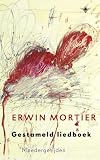
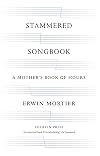
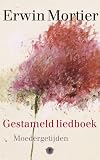
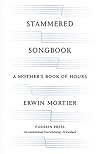
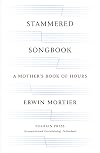
Stammered Songbook: A Mother's Book of Hours
by Erwin Mortier
On This Page
Description
'What makes me saddest, is the double silence of her being. Language has packed its bags and jumped over the railing of the capsizing ship, but there is also another silence in her or around her. I can no longer hear the music of her soul.' One day, the author's mother no longer remembers the word for 'book'. This seemingly innocuous moment of distraction is the first sign of the slow disintegration of her mind. As Alzheimer's disease sets in and language increasingly escapes her, her son show more attempts to gather the fragments of what she has become, writing a moving, loving chronicle of the gradual descent into dementia of someone who 'no longer knows who she is, where she is or what will happen'. show lessTags
Recommendations






























Member Reviews
We don't have here a medical case narrated by an objective observer. We do not have a consistent description of the disease, its progression, its horrifying stages. We do not have a stoic witness of a disintegration, a caregiver who despite all his love and devotion cannot take it any longer. We've heard these stories elsewhere...
What we have here are fragments, snippets of anguish, broken pieces of song, an ode to a person who is gradually receding until no soul is left but only a shell. This is a love poem from a son to his mother, to her memories, to her painful disappearing act that lasts years and wrecks havoc on anyone close.
What we have here is a book that will prominently feature on my shelf and to which I will often return for show more an exquisite turn of phrase, a precise remark on the nature of aging, dying, coping, on the nature of life itself, a word we sometimes spell differently. A reminder that life=love.
What we have here is something that perhaps touches so deeply because I see my parents embarking on their own descent into personal darkness, brought on by old age, hastened by war. My mom - still at the beginning of this sad journey, my dad - much further along the steepening decline. show less
What we have here are fragments, snippets of anguish, broken pieces of song, an ode to a person who is gradually receding until no soul is left but only a shell. This is a love poem from a son to his mother, to her memories, to her painful disappearing act that lasts years and wrecks havoc on anyone close.
What we have here is a book that will prominently feature on my shelf and to which I will often return for show more an exquisite turn of phrase, a precise remark on the nature of aging, dying, coping, on the nature of life itself, a word we sometimes spell differently. A reminder that life=love.
What we have here is something that perhaps touches so deeply because I see my parents embarking on their own descent into personal darkness, brought on by old age, hastened by war. My mom - still at the beginning of this sad journey, my dad - much further along the steepening decline. show less
Mortier describes his mother's struggle with dementia, and his family's attempts to deal with this.
In short chapters we are given short scenes of the life of a patient with dementia. We see the struggles to make sense of the world, the confusion and fear, but also the good moments. We also see the ways in which the family tries to deal with the loss of a loved one, who isn't dead yet, but who also isn't really there anymore.
Mortier writes in a way that gives a very powerful image of the disease and it's consequences. His descriptions of his mother are sometimes funny and sometimes sad, but always loving and caring. His descriptions of his father's concerns and problems are beautiful and heartbreaking.
A lovely portrait, and a great show more image of what dementia is really like, and what it's like for the next of kin of patients. show less
In short chapters we are given short scenes of the life of a patient with dementia. We see the struggles to make sense of the world, the confusion and fear, but also the good moments. We also see the ways in which the family tries to deal with the loss of a loved one, who isn't dead yet, but who also isn't really there anymore.
Mortier writes in a way that gives a very powerful image of the disease and it's consequences. His descriptions of his mother are sometimes funny and sometimes sad, but always loving and caring. His descriptions of his father's concerns and problems are beautiful and heartbreaking.
A lovely portrait, and a great show more image of what dementia is really like, and what it's like for the next of kin of patients. show less
In Gestameld liedboek. Moedergetijden the Belgian writer Erwin Mortier has written a loving portrait of his mother's final years of aging and suffering from Alzheimer and dementia. Almost all of Mortier's early work is devoted to writing about his childhood and the early years of family life. Although this is not what interests me so much, Mortier's exquisite style of writing makes these books wonderfully poetic. Morier has a fine eye for the natural world and longingly writes about past times, traditions and a lifestyle that has all but passed.
I loved this sad but beautiful book written by Erwin Mortier to chronicle his mother's decline from Alzheimer's and its effect on his father and himself. Mortier is a Flemish poet, and Stammered Songbook is a prose poem more than a memoir. The publisher, in its description, provides a hint of the gorgeous language, the unexpected yet perfect metaphors, wielded by Mortier as he tries to make sense of the loss and grief which are the unavoidable by-products of this cruel disease, but I want to offer a few of my own favorite passages:
"This is the mouth I gazed at for heaven knows how long in the cradle. This is the mouth whose gymnastics of caressing, whisper and lullaby must have pulled me upright on the slippery surface of words. This is show more the mouth that is now shedding its language, stripping the words vowel by vowel into puffs of breath, gnashing of the teeth, smacking of the lips."
"It is as if reverse birth pangs are passing through your cells and each wave is taking something else of you with it."
". . . what probably matters most as long as we're breathing: that love is attention. That they are two words for the same thing. That it isn't necessary to try to clear up every typo and obscure passage that we come across when we read the other person attentively - that a human being is difficult poetry, which you must be able to listen to without always demanding clarification[.]"
"She is now a glacial valley - an ice field has scraped over her, and the earth has been scoured away by the masses of ice. In the bare stone, wide furrows are legible. Every relief has been smoothed flat."
Mortier reveals the perversity at the core of Alzheimer's disease - that it steals the mind while leaving the body intact, even healthy - before desperately asking, "When does care become another word for torture?"
Stammered Songbook is short - I read its 176 pages in a single sitting, surrounded by soggy Kleenex - but its emotional depth surpasses that of books three times its size. Everyone, whether concerned with Alzheimer's disease, loss, grief, love, family, language, the soul, or what it means to be human and alive, will find a melody to savor and reflect upon in Stammered Songbook.
I received a free copy of Stammered Songbook from the publisher in exchange for an honest review. show less
"This is the mouth I gazed at for heaven knows how long in the cradle. This is the mouth whose gymnastics of caressing, whisper and lullaby must have pulled me upright on the slippery surface of words. This is show more the mouth that is now shedding its language, stripping the words vowel by vowel into puffs of breath, gnashing of the teeth, smacking of the lips."
"It is as if reverse birth pangs are passing through your cells and each wave is taking something else of you with it."
". . . what probably matters most as long as we're breathing: that love is attention. That they are two words for the same thing. That it isn't necessary to try to clear up every typo and obscure passage that we come across when we read the other person attentively - that a human being is difficult poetry, which you must be able to listen to without always demanding clarification[.]"
"She is now a glacial valley - an ice field has scraped over her, and the earth has been scoured away by the masses of ice. In the bare stone, wide furrows are legible. Every relief has been smoothed flat."
Mortier reveals the perversity at the core of Alzheimer's disease - that it steals the mind while leaving the body intact, even healthy - before desperately asking, "When does care become another word for torture?"
Stammered Songbook is short - I read its 176 pages in a single sitting, surrounded by soggy Kleenex - but its emotional depth surpasses that of books three times its size. Everyone, whether concerned with Alzheimer's disease, loss, grief, love, family, language, the soul, or what it means to be human and alive, will find a melody to savor and reflect upon in Stammered Songbook.
I received a free copy of Stammered Songbook from the publisher in exchange for an honest review. show less
Alzheimer's progresses, this novel doesn't
I can't really recommend this novel because even though the prose was wonderful, there was no progression or story-line. It is about a son's memory of his mother's failied memory and loss of personality. But unlike the Alzheimer's disease that the mother is experiencing, it does not progress. It starts and ends at the end.
The only glimpse that we get of the mother's personality is through the son's recollections of her. The "story" is set in the never-ending Alzheimer's presence or in the past.. Nothing connects them.
So much so that I didn't know I was at the end of the book when I turned to a new page - blank apart from the words "Pushkin Press" - I actually thought It was the title and start show more of a new chapter.
Forgettable - pun intended. show less
I can't really recommend this novel because even though the prose was wonderful, there was no progression or story-line. It is about a son's memory of his mother's failied memory and loss of personality. But unlike the Alzheimer's disease that the mother is experiencing, it does not progress. It starts and ends at the end.
The only glimpse that we get of the mother's personality is through the son's recollections of her. The "story" is set in the never-ending Alzheimer's presence or in the past.. Nothing connects them.
So much so that I didn't know I was at the end of the book when I turned to a new page - blank apart from the words "Pushkin Press" - I actually thought It was the title and start show more of a new chapter.
Forgettable - pun intended. show less
Erwin Mortier, a Belgian writer, wrote 'Gestameld liedboek : Moedergetijden' in an attempt to capture the effects of Alzheimer's on his mother and his family. Recreating his youth and the life of his mother through snippets of memories, he tries to give his mother a fitting farewell.
And did he succeed. 'Gestameld liedboek' is absolutely stunning. It's one of the best books I've ever read stylistically speaking - Mortier has a way with words that sets him apart in Dutch writing. Ironically, the first thing his mother loses due to her disease is her ability to use words. This creates a beautiful tension, but also a sadness that is almost too sad to describe. This book is, sincerely, heartbreaking and extremely beautiful.
Now if you'll show more excuse me while I go grab something to eat and think of a present for my mother. Perhaps it will we this book. But I do know this - time is short, and one should always use it. Even if it's just to create more memories than any illness can take away. show less
And did he succeed. 'Gestameld liedboek' is absolutely stunning. It's one of the best books I've ever read stylistically speaking - Mortier has a way with words that sets him apart in Dutch writing. Ironically, the first thing his mother loses due to her disease is her ability to use words. This creates a beautiful tension, but also a sadness that is almost too sad to describe. This book is, sincerely, heartbreaking and extremely beautiful.
Now if you'll show more excuse me while I go grab something to eat and think of a present for my mother. Perhaps it will we this book. But I do know this - time is short, and one should always use it. Even if it's just to create more memories than any illness can take away. show less
Prachtig geschreven boek over een zeer demente moeder en wat dat doet met haar zoon. Het is prachtig, maar het boek greep me niet echt aan (waarom niet?). Wel een heftig onderwerp natuurlijk.
Members
- Recently Added By
Published Reviews
ThingScore 100
De verwoestende ziekte laat haar sporen na bij iedereen in haar omgeving, maar de grootste tragiek spreekt uit de rol van die vader, ‘pa’. Naarmate zij tot minder in staat is en meer professionele verzorging nodig heeft, moet hij gefaseerd afscheid van haar nemen. Mortier laat hem niet veel aan het woord, maar wát hij zegt is, neemt met het groeiende bewustzijn van verlies toe aan show more invoelbare pijn. Doordat hij zo weinig zegt kan een zin als ‘Ze tast nog altijd naar mijn hand als ik kom slapen’ een werkelijk hartverscheurende impact hebben. Zonder te veel te mikken op het sentiment demonstreert Mortier de aangrijpende kracht die literatuur kan hebben; een diep indrukwekkende prestatie. show less
added by PGCM
Lists

Books Read in 2016
4,666 works; 197 members
Author Information

37+ Works 1,683 Members
Erwin Mortier was born on November 28, 1965. He is a Dutch-language Belgian author. He became city poet in Ghent in 2005. He wrote as a columnist for newspapers like De Morgen. He also wrote several novels including Marcel, My Fellow Skin, Shutter Speed, and While the Gods Were Sleeping. In 2002 he won the C. Buddingh' prize for his debut in show more poetry, and in 2009 the AKO Literatuurprijs for While the Gods Were Sleeping. He also made the shortlist for the Independent Foreign Fiction Prize 2015 with this same title. (Bowker Author Biography) show less
Awards and Honors
Awards
Common Knowledge
- Canonical title
- Stammered Songbook: A Mother's Book of Hours
- Original title
- Gestameld liedboek - Moedergetijden
- Original publication date
- 2011 (Dutch) (Dutch)
- First words*
- Mijn moeder heeft me vandaag een stofbeurt gegeven, ze meende dat ik een meubel was. Misschien een ladekast of een oud fornuis. Ze ging met een helgeel doekje over de knopen in mijn hemd, naar mijn hals toe, wimpelde ermee ro... (show all)nd mijn oren, stofte mijn oren, stofte mijn kin af. Toen gaf ze teken dat ik mijn mond moest openen - en propte daar de stoflap is en vergat ons.
- Last words*
- (Click to show. Warning: May contain spoilers.)Ik zag haar met die andere kinderen in het onderhout verdwijnen, hoorde hun gelach vervagen en ik dacht: het is goed zo.
*Some information comes from Common Knowledge in other languages. Click "Edit" for more information.
Classifications
- Genres
- Biography & Memoir, Fiction and Literature
- DDC/MDS
- 839.318 — Literature & rhetoric German & related literatures Other Germanic literatures Netherlandish literatures Dutch Miscellaneous Dutch writings
- LCC
- PT6466.23 .O676 .G47 — Language and Literature German, Dutch and Scandinavian literatures Flemish literature since 1830 Individual authors or works
- BISAC
Statistics
- Members
- 141
- Popularity
- 231,920
- Reviews
- 16
- Rating
- (4.11)
- Languages
- Danish, Dutch, English
- Media
- Paper, Ebook
- ISBNs
- 6
- ASINs
- 1