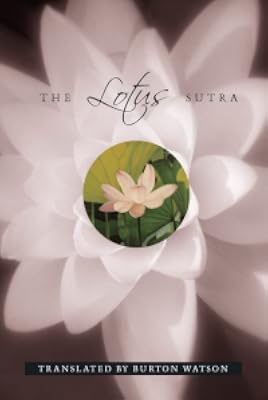
The Lotus Sutra
by Burton Watson
On This Page
Description
Since its appearance in China in the third century, the Lotus Sutra has been regarded as one of the most illustrious scriptures in the Mahayana Buddhist canon. The object of intense veneration among generations of Buddhists in China, Korea, Japan, and other parts of East Asia, it has attracted more commentary than any other Buddhist scripture and has had a profound impact on the great works of Japanese and Chinese literature. Conceived as a drama of colossal proportions, the text takes on show more new meaning in Burton Watson's translation. Depicting events in a cosmic world that transcends ordinary concepts of time and space, the Lotus Sutra presents abstract religious concepts in concrete terms and affirms that there is a single path to enlightenment - that of the bodhisattva - and that the Buddha is not to be delimited in time and space. Filled with striking imagery. memorable parables, and countless revelations concerning the universal accessibility of Buddhahood, the Lotus Sutra has brought comfort and wisdom to devotees over the centuries and stands as a pivotal text in world literature. As Watson notes, "The Lotus Sutra is not so much an integral work as a collection of religious texts, an anthology of sermons, stories and devotional manuals, some speaking with particular force to persons of one type or in one set of circumstances, some to those of another type or in other circumstances. This is no doubt one reason why it has had such broad and lasting appeal over the ages and has permeated so deeply into the cultures that have been exposed to it." show lessTags
Recommendations









Member Reviews
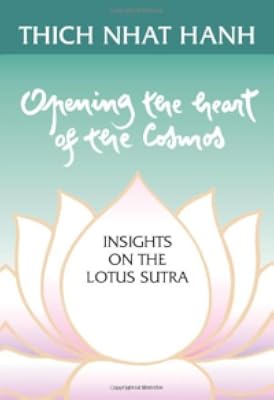
After many years of meditation and mindfulness practice, training with my teachers, and offering the dharma, I finally was able to study and read the complete Lotus Sutra. This important and key text from the Buddhist canon is very deep and lovely. The translation offered in this text is easy and clear to read. I read this in conjunction with Thich Nhat Hanh's commentary "Opening The Heart of the Cosmos" and this greatly deepened my understanding.
This is a translation into English prose and verse, from the Chinese, of The Lotus Sutra (Sanskrit: Saddharma Puṇḍarīka Sūtra, Chinese: Miaofa Lianhua Jing). It is a literary translation. There is a Translator's Introduction and Translator's Note. There are no footnotes or bibliography. (There is a short list of "other complete English translations" in the Translator's Note.) There is a marginally adequate glossary,
Burton Watson's translation is, as is to be expected, graceful and eloquent. I am not linguistically able to comment on its accuracy. I found the verse portions both more cogent and more attractive than the prose. I do not know whether to credit the original or the translator for this. If you have not previously read a show more Buddhist sutra, you must prepare yourself for a great amount of repetition, as well as, in this case as in many others, frequent passages of egregious hyperbole. This is a characteristic of the genre, and presents a challenge to the translator, which Mr. Watson handles about as well as can be hoped for.
The Lotus Sutra is a fundamental text of East Asian Buddhism. It is central to the Chinese Tientai School (Japanese: Tendai) and to the Japanese Nichiren School. But it wields enormous influence throughout Mahayana Buddhism.
Although there are frequent narrative passages, the sutra as a whole does not have a narrative structure. It presents itself as a description of an occasion at which the Buddha is to preach The Lotus Sutra, which leads the reader (at least the Western reader) to expect a clearly delineated preaching event. That does not occur. There are many conversations, parables, and ad hoc remarks by the Buddha and many others, frequently adverting to the upcoming preaching of the Lotus Sutra, and at the end it is noted in passing that the sutra has been preached, but it is not at all clear what part of the text is supposed to be the actual Lotus Sutra. Sort of a Modernist feeling. What is clear at the end is that several deeply important Mahayana Buddhist doctrines have been expressed and explored in the process of the many conversational episodes. Numerous explanatory commentaries have been produced throughout the centuries, including the twentieth and possibly the twenty-first. show less
Burton Watson's translation is, as is to be expected, graceful and eloquent. I am not linguistically able to comment on its accuracy. I found the verse portions both more cogent and more attractive than the prose. I do not know whether to credit the original or the translator for this. If you have not previously read a show more Buddhist sutra, you must prepare yourself for a great amount of repetition, as well as, in this case as in many others, frequent passages of egregious hyperbole. This is a characteristic of the genre, and presents a challenge to the translator, which Mr. Watson handles about as well as can be hoped for.
The Lotus Sutra is a fundamental text of East Asian Buddhism. It is central to the Chinese Tientai School (Japanese: Tendai) and to the Japanese Nichiren School. But it wields enormous influence throughout Mahayana Buddhism.
Although there are frequent narrative passages, the sutra as a whole does not have a narrative structure. It presents itself as a description of an occasion at which the Buddha is to preach The Lotus Sutra, which leads the reader (at least the Western reader) to expect a clearly delineated preaching event. That does not occur. There are many conversations, parables, and ad hoc remarks by the Buddha and many others, frequently adverting to the upcoming preaching of the Lotus Sutra, and at the end it is noted in passing that the sutra has been preached, but it is not at all clear what part of the text is supposed to be the actual Lotus Sutra. Sort of a Modernist feeling. What is clear at the end is that several deeply important Mahayana Buddhist doctrines have been expressed and explored in the process of the many conversational episodes. Numerous explanatory commentaries have been produced throughout the centuries, including the twentieth and possibly the twenty-first. show less
From : LibraryThing
After many years of meditation and mindfulness practice, training with my teachers, and offering the dharma, I finally was able to study and read the complete Lotus Sutra. This important and key text from the Buddhist canon is very deep and lovely. The translation offered in this text is easy and clear to read. I read this in conjunction with Thich Nhat Hanh's commentary "Opening The Heart of the Cosmos" and this greatly deepened my understanding.
>>>>>>>>>>>>>>>>>
Since its appearance in China in the third century, The Lotus Sutra has been regarded as one of the most illustrious scriptures in the Mahayana Buddhist canon. The object of intense veneration among generations of Buddhists in China, Korea, Japan, and other show more parts of the world, it has had a profound impact on the great works of Japanese and Chinese literature, attracting more commentary than any other Buddhist scripture. As Watson notes in the introduction to his remarkable translation, " The Lotus Sutra is not so much an integral work as a collection of religious texts, an anthology of sermons, stories, and devotional manuals, some speaking with particular force to persons of one type or in one set of circumstances, some to those of another type or in other circumstances. This is no doubt why it has had such broad and lasting appeal over the ages and has permeated so deeply into the cultures that have been exposed to it." show less
After many years of meditation and mindfulness practice, training with my teachers, and offering the dharma, I finally was able to study and read the complete Lotus Sutra. This important and key text from the Buddhist canon is very deep and lovely. The translation offered in this text is easy and clear to read. I read this in conjunction with Thich Nhat Hanh's commentary "Opening The Heart of the Cosmos" and this greatly deepened my understanding.
>>>>>>>>>>>>>>>>>
Since its appearance in China in the third century, The Lotus Sutra has been regarded as one of the most illustrious scriptures in the Mahayana Buddhist canon. The object of intense veneration among generations of Buddhists in China, Korea, Japan, and other show more parts of the world, it has had a profound impact on the great works of Japanese and Chinese literature, attracting more commentary than any other Buddhist scripture. As Watson notes in the introduction to his remarkable translation, " The Lotus Sutra is not so much an integral work as a collection of religious texts, an anthology of sermons, stories, and devotional manuals, some speaking with particular force to persons of one type or in one set of circumstances, some to those of another type or in other circumstances. This is no doubt why it has had such broad and lasting appeal over the ages and has permeated so deeply into the cultures that have been exposed to it." show less
Since its appearance in China in the third century, The Lotus Sutra has been regarded as one of the most illustrious scriptures in the Mahayana Buddhist canon. The object of intense veneration among generations of Buddhists in China, Korea, Japan, and other parts of the world, it has had a profound impact on the great works of Japanese and Chinese literature, attracting more commentary than any other Buddhist scripture. As Watson notes in the introduction to his remarkable translation, " The Lotus Sutra is not so much an integral work as a collection of religious texts, an anthology of sermons, stories, and devotional manuals, some speaking with particular force to persons of one type or in one set of circumstances, some to those of show more another type or in other circumstances. This is no doubt why it has had such broad and lasting appeal over the ages and has permeated so deeply into the cultures that have been exposed to it." show less
only read about half of this
only read about half of this
> Babelio : https://www.babelio.com/livres/Watson-Le-Sutra-du-Lotus/721284
> TRADUCTION MAGNIFIQUE À LA FOIS LITTÉRAIRE ET POÉTIQUE. — Si la version de Jean-Noel ROBERT (ici) reste une référence en matière de traduction et commentaires du Sutra du Lotus, celle proposée par Burton Watson lui est à mon sens supérieure, non pas dans l'exactitude des expressions ou de l'interprétation du texte de Kumarajiva ; les chapitres comparés vont dans le même sens.
Cette supériorité du rendu du texte tient à la poésie et au rythme choisis, auxquels ont évidemment remarquablement contribué en français Sylvie Servan-Schreiber et Marc Albert.
Une traduction diffère toujours d'un auteur à un autre, et si l'idée reste identique, show more parfois le choix d'un mot ou la construction d'une phrase font toute la différence.
Celle de Burton Watson permettra une lecture plus simple et plus fluide du sens profond de ce texte incontournable du Bouddhisme Mahayana.
L'aide technique apportée par le NSCI de Tokyo lié à la Soka Gakkai Internationale peut gêner sur le plan éthique, mais force est de reconnaître aux adeptes de Nichiren une grande connaissance de ce Sutra, au vu de ce travail rigoureux.
Le résultat en est un livre magnifique. (Daniel ROBERT)
—le 2 sept. 2011 (Sur Amazon.fr) 5/5 show less
> TRADUCTION MAGNIFIQUE À LA FOIS LITTÉRAIRE ET POÉTIQUE. — Si la version de Jean-Noel ROBERT (ici) reste une référence en matière de traduction et commentaires du Sutra du Lotus, celle proposée par Burton Watson lui est à mon sens supérieure, non pas dans l'exactitude des expressions ou de l'interprétation du texte de Kumarajiva ; les chapitres comparés vont dans le même sens.
Cette supériorité du rendu du texte tient à la poésie et au rythme choisis, auxquels ont évidemment remarquablement contribué en français Sylvie Servan-Schreiber et Marc Albert.
Une traduction diffère toujours d'un auteur à un autre, et si l'idée reste identique, show more parfois le choix d'un mot ou la construction d'une phrase font toute la différence.
Celle de Burton Watson permettra une lecture plus simple et plus fluide du sens profond de ce texte incontournable du Bouddhisme Mahayana.
L'aide technique apportée par le NSCI de Tokyo lié à la Soka Gakkai Internationale peut gêner sur le plan éthique, mais force est de reconnaître aux adeptes de Nichiren une grande connaissance de ce Sutra, au vu de ce travail rigoureux.
Le résultat en est un livre magnifique. (Daniel ROBERT)
—le 2 sept. 2011 (Sur Amazon.fr) 5/5 show less
Nov 19, 2016 (Edited)French
Members
- Recently Added By
Lists

Philip Ward's Lifetime Reading Plan
592 works; 22 members

Books About Non-Abrahamic Religions
91 works; 2 members

el
1,139 works; 1 member
Author Information

36+ Works 2,039 Members
Burton DeWitt Watson was born in New Rochelle, New York on June 13, 1925. When he was 17 years old, he dropped out of high school and joined the Navy. He experienced Japan through his weekly shore leaves while stationed at Yokosuka Naval Base in 1945. After returning to the United States, he received a bachelor's degree in Chinese in 1949 and a show more master's degree in Chinese in 1951 from Columbia University. He spent time learning Japanese as a graduate student at Kyoto University before receiving a doctorate in Chinese in 1956 from Columbia. He has taught English at Doshisha University in Kyoto and Chinese at Stanford University and Columbia. He became a translator of Chinese and Japanese literature and poetry. His numerous translations included Cold Mountain: 100 Poems by the Tang Poet Han-shan, Han Fei Tzu: Basic Writings, The Complete Works of Chuang Tzu, and The Tso Chuan: Selections from China's Oldest Narrative History. His collections included Early Chinese Literature, Chinese Lyricism: Shih Poetry from the Second to the Twelfth Century, From the Country of Eight Islands: An Anthology of Japanese Poetry, and The Columbia Book of Chinese Poetry: From Early Times to the 13th Century. He received Columbia University's Translation Center's Gold Medal Award in 1979, the PEN Translation Prize in 1981 and 1995, and the Ralph Manheim Medal for Translation in 2015. He died on April 1, 2017 at the age of 91. show less
Series
Belongs to Publisher Series
Common Knowledge
- Original title
- Saddharma Puṇḍarīka Sūtra
- Canonical DDC/MDS
- 294.38
Classifications
Statistics
- Members
- 397
- Popularity
- 78,471
- Reviews
- 7
- Rating
- (3.94)
- Languages
- English, French, Italian
- Media
- Paper
- ISBNs
- 5
- ASINs
- 2