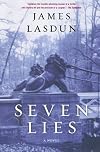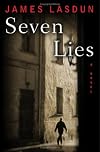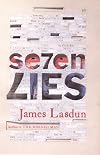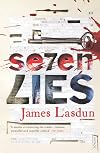
Seven Lies
by James Lasdun
On This Page
Description
Part political thriller, part meditation on the nature of desire and betrayal, Seven Lies tells the story of Stefan Vogel, a young man growing up in the former East Germany, whose yearnings for love, glory and freedom express themselves in a lifelong fantasy of going to America. The hopeless son of an ambitious mother and a kind but unlucky diplomat, Stefan lurches between his budding, covert interests - girls and Romantic poetry - to find himself embroiled in dissident politics, which oddly show more seems to offer both. In time, by a series of blackly comic and increasingly dangerous manoeuvres, he contrives to make his fantasy come true, finding himself not only in the country of his dreams, but also married to the woman he idolises. America seems everything he expected, and meanwhile his secrets are safely locked away behind the Berlin Wall. A new life of unbounded bliss seems to have been granted to him. And then that life begins to fall apart...Exquisitely written and brilliantly imagined, James Lasdun's second novel is a terrifying plummet into anxiety, as complacency yields to an edgy paranoia. Pitching the furtive, shabby world of Communist Berlin against the glassy superficiality of contemporary New York, Seven Lies is an examination of the architecture of deceit - how deceit builds on itself until life is little more than an accretion of falsehood; how hope turns to fear, and dreams to nightmares. show lessTags
Recommendations












Member Reviews
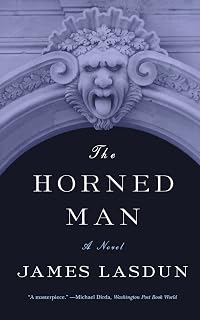
Seven Lies is my first introduction to James Lasdun, and I like him as a writer. I will look for his first book, The Horned Man which I see was well reviewed by Michael Dirda whom I like as a reviewer. In fact, reading the novel Seven Lies at the end of the month provided a nice bookend to the non-fiction Stasiland which I read earlier. Seven Lies portrays very nicely lives lived under, and twisted by, the GDR and, in particular, the pervasive atmosphere of suspicion and betrayal, and thwarted dreams, hopes and desires that characterized so many of the lives of those citizens.
The novel is the story of the coming-of-age of Stefan Vogel who, as an adult, finally realizes his dream of emigrating to the USA, but whose past as an informer show more for the Stasi catches up and destroys his life, as it did many others. There is a strong irony in the fact that the freedom so devotedly hoped for by so many in the GDR, the freedom of expression and information, became a nemesis for many when the Stasi files were opened. Stefan's life is, in many ways, a metaphor for the political system; both built on falsehoods, lies, and subterfuges that can explode like a delayed-release bomb that will poison relationships and undermine foundations of faith in people and systems. Lasdun is good on the split personalities that everyone had to adapt to survive: living reality versus the charades of the system that demanded at least lip service in obeisance. It was like living in a Ptomekin village all the time and publically, having to embrace it as reality. This is one of the startling contrasts with life in the USA where Stefan discovers, "the sense that one's inner desires and dreams could actually be transformed into material realities in this miraculous new universe".
Lasdun describes well the small adjustments and compromises that so many, including Stefan, had to make to get along; little things that in and of themselves might be excused or understood, but which accumulated into betrayal that could not be forgiven. And underlying it all is a sense of transience in human and political affairs. Stefan notes, referring to the leaders of the GDR, that they were, "Illustrious names once; names to conjure with, their mere utterance sufficient to induce that sensation of awe reserved for remote, solemn powers–all gone now, disgraced, ridiculed, forgotten".
Lasdun draws his characters, their actions and their motivations well. Here he is describing Stefan's domineering mother: "She was no beauty with her sturdy little frame clad always in the drabbest brown and gray clothes, her crooked, slightly jagged-looking front teeth that dominated one's initial impression of her face, and made even her oldest acquaintances prefer to shake hands with her than exchange kisses. But there was something forceful even magnetic in her appearance. Her dark brown, slightly protuberant eyes, encased in folded, lashless lids, possessed an unusual mobility and expressiveness. As they narrowed attentively, tilted to admit a faint sardonic lightness, gathered into their corners the traces of a codified smile, flashed with anger or coldly averted themselves from your gaze, drawing behind them an almost visible portcullis, one felt–with the fascination of seeing anything naked–that one was observing the fluctuating movements of the very organism to which the names Frieda, Frau Vogel, Mother, all referred. For as long as I can remember, there was a patch of pure white in her grayish hair brown hair, such as you see in certain city pigeons, and this too seemed the mark or brand of some quality that set her apart, thought I was always uncertain whether it represented something done to her, or something she was liable to do unto others".
A well-written, well-constructed novel that I would recommend.
(March/06) show less
The novel is the story of the coming-of-age of Stefan Vogel who, as an adult, finally realizes his dream of emigrating to the USA, but whose past as an informer show more for the Stasi catches up and destroys his life, as it did many others. There is a strong irony in the fact that the freedom so devotedly hoped for by so many in the GDR, the freedom of expression and information, became a nemesis for many when the Stasi files were opened. Stefan's life is, in many ways, a metaphor for the political system; both built on falsehoods, lies, and subterfuges that can explode like a delayed-release bomb that will poison relationships and undermine foundations of faith in people and systems. Lasdun is good on the split personalities that everyone had to adapt to survive: living reality versus the charades of the system that demanded at least lip service in obeisance. It was like living in a Ptomekin village all the time and publically, having to embrace it as reality. This is one of the startling contrasts with life in the USA where Stefan discovers, "the sense that one's inner desires and dreams could actually be transformed into material realities in this miraculous new universe".
Lasdun describes well the small adjustments and compromises that so many, including Stefan, had to make to get along; little things that in and of themselves might be excused or understood, but which accumulated into betrayal that could not be forgiven. And underlying it all is a sense of transience in human and political affairs. Stefan notes, referring to the leaders of the GDR, that they were, "Illustrious names once; names to conjure with, their mere utterance sufficient to induce that sensation of awe reserved for remote, solemn powers–all gone now, disgraced, ridiculed, forgotten".
Lasdun draws his characters, their actions and their motivations well. Here he is describing Stefan's domineering mother: "She was no beauty with her sturdy little frame clad always in the drabbest brown and gray clothes, her crooked, slightly jagged-looking front teeth that dominated one's initial impression of her face, and made even her oldest acquaintances prefer to shake hands with her than exchange kisses. But there was something forceful even magnetic in her appearance. Her dark brown, slightly protuberant eyes, encased in folded, lashless lids, possessed an unusual mobility and expressiveness. As they narrowed attentively, tilted to admit a faint sardonic lightness, gathered into their corners the traces of a codified smile, flashed with anger or coldly averted themselves from your gaze, drawing behind them an almost visible portcullis, one felt–with the fascination of seeing anything naked–that one was observing the fluctuating movements of the very organism to which the names Frieda, Frau Vogel, Mother, all referred. For as long as I can remember, there was a patch of pure white in her grayish hair brown hair, such as you see in certain city pigeons, and this too seemed the mark or brand of some quality that set her apart, thought I was always uncertain whether it represented something done to her, or something she was liable to do unto others".
A well-written, well-constructed novel that I would recommend.
(March/06) show less
First: if you want something straightforward and no-brains required for reading, don't pick up this book. It is small, certainly, but you're going to have to think about this one while you're reading it. So if you're expecting a standard narrative-type story, forget it. However, if you pick this up and start reading it, you'll be rewarded by the time the end comes, and you do have to stay with it, because all is not revealed until the very end. Actually, let me rephrase that: while the main thrust of the novel is not revealed until the end, there are hints all through the book as to what's happening, but really, you don't pick up on their meaning until the final chapters.
Would I recommend this book? Most definitely. Lasdun's writing show more itself was worth the full price of the book. Even in spots where the story tended to lag (fortunately not often), the writing carried the moment. And the story was unputdownable (if there is such a word) from the start. I would recommend this book to serious readers -- it's not a beach read by any stretch of the imagination.
Brief synopsis:
As the story opens, a former dissident from East Germany named Stefan Vogel is at a high-level party in New York when a woman asks if he is Stefan Vogel, he says yes, and she showers him with a glass of wine. Thus begins Stefan's need to chronicle his life story, because he senses a change not for the good coming for him. So the rest of the book is Stefan's tale about his life from growing up in East Germany before the Wall came down to the present and how he came to be in New York with his wife, also prior to the end of the Cold War, up to modern times. But...let the reader beware...as the title notes, the story is based on lies, pure and simple, so your task is to decide whether or not you can trust this narrator. I can't go into the story more without ruining things, but you as the reader find yourself wondering if you're being snowed or you should just accept things as status quo considering Stefan's background here. That's why I note above that it's not a passive kind of book; you have to be fully engaged while you're reading it.
This is the first of the group of the books I've selected from this year's Booker Longlist; I'd move it on to the shortlist if I was on the panel. And if you haven't tried his novel "The Horned Man," go get a copy right now. This author's writing is astounding. show less
Would I recommend this book? Most definitely. Lasdun's writing show more itself was worth the full price of the book. Even in spots where the story tended to lag (fortunately not often), the writing carried the moment. And the story was unputdownable (if there is such a word) from the start. I would recommend this book to serious readers -- it's not a beach read by any stretch of the imagination.
Brief synopsis:
As the story opens, a former dissident from East Germany named Stefan Vogel is at a high-level party in New York when a woman asks if he is Stefan Vogel, he says yes, and she showers him with a glass of wine. Thus begins Stefan's need to chronicle his life story, because he senses a change not for the good coming for him. So the rest of the book is Stefan's tale about his life from growing up in East Germany before the Wall came down to the present and how he came to be in New York with his wife, also prior to the end of the Cold War, up to modern times. But...let the reader beware...as the title notes, the story is based on lies, pure and simple, so your task is to decide whether or not you can trust this narrator. I can't go into the story more without ruining things, but you as the reader find yourself wondering if you're being snowed or you should just accept things as status quo considering Stefan's background here. That's why I note above that it's not a passive kind of book; you have to be fully engaged while you're reading it.
This is the first of the group of the books I've selected from this year's Booker Longlist; I'd move it on to the shortlist if I was on the panel. And if you haven't tried his novel "The Horned Man," go get a copy right now. This author's writing is astounding. show less
I was living in Munich when the old Stasi (East German secret police) files were opened. It was a wrenching experience for many, and fought against for many years. People went and looked at their files and discovered which of their friends and even family members had informed on them. Many others didn't want to know, still others watched their lives collapse as it was revealed that they'd been Stasi informers. The numbers were staggering and it seemed as if half of the DDR had been carefully watching the other half.
Seven Lies by James Lasdun takes place first in East Berlin in the seventies and then in New York in the early nineties. Stefan Vogel grew up in the family of man rising through the diplomatic service. There begin to be show more whispers that he and his family will be sent to New York. Stefan's mother is proud and ambitious and her husband's rise justifies her feeling that they are a cut above everybody else. Then, a small error derails everything and Stefan's family falls from the higher reaches of the political elite. The father grows passive, his mother becomes ambitious now for her sons and Stefan, now an outcast at school, will do what he needs to do to fall in with her vision of him as a poet.
The book begins with Stefan's attendance at a party in New York where a young woman approaches him and throws a glass of wine in his face. From that moment, Stefan is unmoored from his pleasant, quiet life in New York state with his wife, Inge, and forced to come to terms with his childhood and what happened that allowed him and his wife to leave East Germany so many years earlier. show less
Seven Lies by James Lasdun takes place first in East Berlin in the seventies and then in New York in the early nineties. Stefan Vogel grew up in the family of man rising through the diplomatic service. There begin to be show more whispers that he and his family will be sent to New York. Stefan's mother is proud and ambitious and her husband's rise justifies her feeling that they are a cut above everybody else. Then, a small error derails everything and Stefan's family falls from the higher reaches of the political elite. The father grows passive, his mother becomes ambitious now for her sons and Stefan, now an outcast at school, will do what he needs to do to fall in with her vision of him as a poet.
The book begins with Stefan's attendance at a party in New York where a young woman approaches him and throws a glass of wine in his face. From that moment, Stefan is unmoored from his pleasant, quiet life in New York state with his wife, Inge, and forced to come to terms with his childhood and what happened that allowed him and his wife to leave East Germany so many years earlier. show less
Seven Lies, by James Lasdun, tells the story of Stefan Vogel, a young man who grew up in East Germany, but is now living in the United States.
When the novel opens, Stefan is at a party in New York. A woman says to him, " Excuse me, are you Stefan Vogel?" When he confirms his identity, the woman throws a glass of wine in his face. Stefan is stunned and confused. Who is this woman? Why did she throw her wine in his face? As Stefan ponders these questions, he looks back on his life in the GDR and on the events that brought him to America.
Stefan grew up in East Berlin in a privileged family. His father was in the diplomatic service, negotiating the Friendship Treaties between the GDR and other Eastern Bloc countries. His work took him to show more New York frequently, and he often brought back exotic foreign presents for his family - Slinkies, diving watches, perfumes, bottles of Schaad-Neumann aquavit, Stefan's mother had an ostentatious pretension about her, and made it known to anyone who would listen that at any moment, her family will be posted to New York City.
When this plan falls through due to the father's ineptitude, she hurriedly recasts the family as intellectuals, desperate to assert the family's superiority over others. She gathers artists, writers, and actors into the family's bosom, and begins to host salons. At one of these events, Stefan's mother begins to introduce him as their "literary man" and the family's "poet-intellectual." Stefan doesn't question the lie; indeed, he supports it, bribing their building superintendent with a bottle of aquavit to let him into the family's basement storage locker, where he copies out a poem from a volume of World Poetry in Translation. At the next salon, he presents this forgery as his own work:
I celebrate myself, myself I sing
And my beliefs are yours, as
everything
I have is yours, each atom. So
we laze -
My soul and I - passing the
summer days
Observing spears of grass...
This establishes Stefan as a liar, and he observes:
"It seems to me that at the age of thirteen, I had already developed the cynicism of a seventy-year-old dictator."
Stefan continues his pattern of lying one day when he arrives home from school to find his mother accusing his brother Otto of stealing on of the bottles of aquavit that Stefan has been using to bribe the building superintendent. Instead of rightfully taking the blame, Stefan lets Otto take the fall, and in the process, assists in the breakdown of the relationship between Otto and his mother.
Stefan falls out of favor with his classmates, who tease him mercilessly and call him "sloth." He becomes depressed and lethargic, and turns inward, describing himself in this way:
"During this period I formed the idea that every phenomenon that comes into being represents a victory in a struggle against a force willing it not to come into being. I pictured this opposing force as a kind of Chinese Dragon, a Dragon of Stability, jealously guarding the status quo. It patrolled the borders between occupied and unoccupied space, and it lay curled and scowling at the threshold of every possible action. In order to open a window one must first slay the dragon posted to ensure that the closed window remain forever closed. The fire these dragons breathed took the form of waves of paralyzing inertia, a breath of which was enough to overcome you unless you had extraordinary vitality as well as unshakable belief in the importance of what you wanted to do. More and more I found myself defeated before I could even move. Was it worth the almighty struggle, the expenditure of limited energy, to open that window, when after all nothing material would be changed by doing so, and when, even if I succeeded, another dragon would immediately be posted to ensure the now-open window would now remain forever open? Increasingly, it seemed not."
After attending Humboldt University, Stefan goes to work for a government organization, where his job is to create propaganda that promotes "Peace, Friendship and Anti-Imperialist Solidarity." He discovers that he is surprisingly good at this.
One evening, Stefan attends a performance of an avant-garde play in the Prenzlauer Berg, a region of East Berlin resembling the East Village. The play is called Macbrecht, and is a farcical rendition of Shakespeare's Macbeth. Walter and Clara, friends of Stefan's mother with whom he attends the play, pronounce it banal, and leave early. Stefan, however, is captivated by the actress Inge, and returns to see the play alone a few nights later. Stefan describes that Inge's "allure for me had something to do with the suggestion of a violently destructive power at her disposal." While Stefan is observing Inge, men in dark clothes rush the stage and march off some of the actors, who Stefan belatedly notices are wearing anti-government badges of a swords-to-plowshares insignia.
The crowd disperses, and as he is leaving, Stefan is randomly invited to a party at somewhere called Menzer's place by Margarete, a stranger and Menzer's sister. The party is located in a bohemian squat, and is filled with political rebels and various artists. The group is rowdy and vocal, criticizing art and the government in equal measures. Menzer even has his own Stasi member tailing him, and is on such good terms with him that he invites him up to the party.
Stefan meets Inge at the party, and after this first encounter, he goes back repeatedly, attempting to win her love, although she has a fiance. Again, he misrepresents himself, asserting to Menzer's crowd that he is a poet, and stretching the truth even further, that his poems will be published by the literary magazine Sinn und Form. He ends up trying to pull strings with his Uncle Heinrich to support this lie.
Eventually, after Inge's fiance supposedly rejects her, Stefan declares his love for her and tempts her into being with him in exchange for the promise of exit visas to America for the pair of them.
Their fantasy materializes. Stefan's Uncle Heinrich assists with the exit visas. They fly to New York City, and live in the East Village, in an apartment above a homeless shelter, where they work in exchange for their lodging. Stefan, through a connection of his father's, makes a useful contact and begins to work at her magazine. Inge finds acting work. They move to upstate New York and acquire a dog. Their carefully contrived life seems to be idyllic and perfect, until that moment at the party where a woman throws her wine in Stefan's face. The fastidiously constructed lies seem to come tumbling down around him.
This is an elegant and well-constructed novel. Lasdun has an ear for language, and his descriptions have a precise detail that one might expect from a published poet"
"The lobby was floored with polished slabs made of a pink and white agglomerate, like slices of vitrified mortadella."
Though Stefan is not particularly likeable - how can one really trust a compulsive liar as a narrator? - Lasdun's writing enables the reader to ignore that fact and continue reading. The author does an impeccable job of showing what life must have been like in the world of the GDR, where everyone informs on everyone else, and where you never know if your best friend or acquaintance is actually working for the Stasi. These details make the novel compelling, and it is easy to see why it was optioned for a movie before it was even published. It is a very worthy novel for the Booker longlist! show less
When the novel opens, Stefan is at a party in New York. A woman says to him, " Excuse me, are you Stefan Vogel?" When he confirms his identity, the woman throws a glass of wine in his face. Stefan is stunned and confused. Who is this woman? Why did she throw her wine in his face? As Stefan ponders these questions, he looks back on his life in the GDR and on the events that brought him to America.
Stefan grew up in East Berlin in a privileged family. His father was in the diplomatic service, negotiating the Friendship Treaties between the GDR and other Eastern Bloc countries. His work took him to show more New York frequently, and he often brought back exotic foreign presents for his family - Slinkies, diving watches, perfumes, bottles of Schaad-Neumann aquavit, Stefan's mother had an ostentatious pretension about her, and made it known to anyone who would listen that at any moment, her family will be posted to New York City.
When this plan falls through due to the father's ineptitude, she hurriedly recasts the family as intellectuals, desperate to assert the family's superiority over others. She gathers artists, writers, and actors into the family's bosom, and begins to host salons. At one of these events, Stefan's mother begins to introduce him as their "literary man" and the family's "poet-intellectual." Stefan doesn't question the lie; indeed, he supports it, bribing their building superintendent with a bottle of aquavit to let him into the family's basement storage locker, where he copies out a poem from a volume of World Poetry in Translation. At the next salon, he presents this forgery as his own work:
I celebrate myself, myself I sing
And my beliefs are yours, as
everything
I have is yours, each atom. So
we laze -
My soul and I - passing the
summer days
Observing spears of grass...
This establishes Stefan as a liar, and he observes:
"It seems to me that at the age of thirteen, I had already developed the cynicism of a seventy-year-old dictator."
Stefan continues his pattern of lying one day when he arrives home from school to find his mother accusing his brother Otto of stealing on of the bottles of aquavit that Stefan has been using to bribe the building superintendent. Instead of rightfully taking the blame, Stefan lets Otto take the fall, and in the process, assists in the breakdown of the relationship between Otto and his mother.
Stefan falls out of favor with his classmates, who tease him mercilessly and call him "sloth." He becomes depressed and lethargic, and turns inward, describing himself in this way:
"During this period I formed the idea that every phenomenon that comes into being represents a victory in a struggle against a force willing it not to come into being. I pictured this opposing force as a kind of Chinese Dragon, a Dragon of Stability, jealously guarding the status quo. It patrolled the borders between occupied and unoccupied space, and it lay curled and scowling at the threshold of every possible action. In order to open a window one must first slay the dragon posted to ensure that the closed window remain forever closed. The fire these dragons breathed took the form of waves of paralyzing inertia, a breath of which was enough to overcome you unless you had extraordinary vitality as well as unshakable belief in the importance of what you wanted to do. More and more I found myself defeated before I could even move. Was it worth the almighty struggle, the expenditure of limited energy, to open that window, when after all nothing material would be changed by doing so, and when, even if I succeeded, another dragon would immediately be posted to ensure the now-open window would now remain forever open? Increasingly, it seemed not."
After attending Humboldt University, Stefan goes to work for a government organization, where his job is to create propaganda that promotes "Peace, Friendship and Anti-Imperialist Solidarity." He discovers that he is surprisingly good at this.
One evening, Stefan attends a performance of an avant-garde play in the Prenzlauer Berg, a region of East Berlin resembling the East Village. The play is called Macbrecht, and is a farcical rendition of Shakespeare's Macbeth. Walter and Clara, friends of Stefan's mother with whom he attends the play, pronounce it banal, and leave early. Stefan, however, is captivated by the actress Inge, and returns to see the play alone a few nights later. Stefan describes that Inge's "allure for me had something to do with the suggestion of a violently destructive power at her disposal." While Stefan is observing Inge, men in dark clothes rush the stage and march off some of the actors, who Stefan belatedly notices are wearing anti-government badges of a swords-to-plowshares insignia.
The crowd disperses, and as he is leaving, Stefan is randomly invited to a party at somewhere called Menzer's place by Margarete, a stranger and Menzer's sister. The party is located in a bohemian squat, and is filled with political rebels and various artists. The group is rowdy and vocal, criticizing art and the government in equal measures. Menzer even has his own Stasi member tailing him, and is on such good terms with him that he invites him up to the party.
Stefan meets Inge at the party, and after this first encounter, he goes back repeatedly, attempting to win her love, although she has a fiance. Again, he misrepresents himself, asserting to Menzer's crowd that he is a poet, and stretching the truth even further, that his poems will be published by the literary magazine Sinn und Form. He ends up trying to pull strings with his Uncle Heinrich to support this lie.
Eventually, after Inge's fiance supposedly rejects her, Stefan declares his love for her and tempts her into being with him in exchange for the promise of exit visas to America for the pair of them.
Their fantasy materializes. Stefan's Uncle Heinrich assists with the exit visas. They fly to New York City, and live in the East Village, in an apartment above a homeless shelter, where they work in exchange for their lodging. Stefan, through a connection of his father's, makes a useful contact and begins to work at her magazine. Inge finds acting work. They move to upstate New York and acquire a dog. Their carefully contrived life seems to be idyllic and perfect, until that moment at the party where a woman throws her wine in Stefan's face. The fastidiously constructed lies seem to come tumbling down around him.
This is an elegant and well-constructed novel. Lasdun has an ear for language, and his descriptions have a precise detail that one might expect from a published poet"
"The lobby was floored with polished slabs made of a pink and white agglomerate, like slices of vitrified mortadella."
Though Stefan is not particularly likeable - how can one really trust a compulsive liar as a narrator? - Lasdun's writing enables the reader to ignore that fact and continue reading. The author does an impeccable job of showing what life must have been like in the world of the GDR, where everyone informs on everyone else, and where you never know if your best friend or acquaintance is actually working for the Stasi. These details make the novel compelling, and it is easy to see why it was optioned for a movie before it was even published. It is a very worthy novel for the Booker longlist! show less
A short, uncomfortable novel that relates the story of Stefan Vogel, who left East Germany with his wife in 1986 to go live in the United States. The story starts in 2003 or so, then goes back to his childhood up to the time leading up to his departure, describing the circumstances that led up to it. The characters aren't very likeable, not even in a love-to-hate way - throughout I just felt a kind of contemptuous pity. They are all, unfortunately, the products of living under an oppressive regime. Still, the book had an interesting structure and was quite powerful - I think it may be one that would reward rereading and I will definitely look out for Lasdun's other novel The Horned Man.
I'd never heard of James Lasdun before buying this book, but chose it because it was described as "sparsly written" and that matched my mood at the time.
This is an amazingly good book that I strongly recommend. It is the story of Stefan Vogel whose past as a Stasi informer catches up to him after he emigrates to America.
The author tells the story of Stefan's childhood and early adulthood in a way that portrays the atmosphere of supression and betrayal in the GDR. Supression and betrayal are both personal and political, and Mr. Lasdun does a remarkable job of creating characters who you quickly come to understand and care about.
Don't miss this one!
This is an amazingly good book that I strongly recommend. It is the story of Stefan Vogel whose past as a Stasi informer catches up to him after he emigrates to America.
The author tells the story of Stefan's childhood and early adulthood in a way that portrays the atmosphere of supression and betrayal in the GDR. Supression and betrayal are both personal and political, and Mr. Lasdun does a remarkable job of creating characters who you quickly come to understand and care about.
Don't miss this one!
Seven Lies is not the easiest book to read. While many I'm sure, myself occasionally included, will trip from time to time over the vocabulary used to write this book I find what makes the book hardest to read it the attitude of the main character whose perspective the story is told from. In parts of this book he seems to be just alive not diminishing not improving not happy nor sad just there and in his period of just existing I find myself easily distracted still reading but off in my head somewhere else and I'll be two or three paragraphs ahead before I realize I'm not really reading the book but instead thinking of things I should do today or that I need to get something in particular done at work today. And that may not seem show more uncommon to some but when I read I forget the entire world and everything in it and all that exists is the words written on the pages so for me to be easily distracted while reading is rare with the exception of reading textbooks for classes I'm not in love with.
Yet despite the struggle to continue to read and focus that comes every so often in this book I find I still enjoyed it. This book is what it was meant to be and if written any different would not portray what I feel it was meant to portray. I feel this is one of those books that the more times you read it the more you see, understand, and are able to take from it. I also feel that with multiple reads I will more enjoy it more and will have to improve my rating of it.
I recommend this book to people looking for something different. If you buy all of your books from the shelves of a book section in a supermarket(and there is nothing wrong with that) then this is not the book for you. If you read nothing but high action and adventure books, fantasy, or paranormal this book is not for you. Now if you enjoy a specific genre of books but still read bits of other things and are open minded to different types of books then I think you should give this book a shot. I would love to tell you that if you like book A and B then you should read this book but I have yet to read a book quite like this one. show less
Yet despite the struggle to continue to read and focus that comes every so often in this book I find I still enjoyed it. This book is what it was meant to be and if written any different would not portray what I feel it was meant to portray. I feel this is one of those books that the more times you read it the more you see, understand, and are able to take from it. I also feel that with multiple reads I will more enjoy it more and will have to improve my rating of it.
I recommend this book to people looking for something different. If you buy all of your books from the shelves of a book section in a supermarket(and there is nothing wrong with that) then this is not the book for you. If you read nothing but high action and adventure books, fantasy, or paranormal this book is not for you. Now if you enjoy a specific genre of books but still read bits of other things and are open minded to different types of books then I think you should give this book a shot. I would love to tell you that if you like book A and B then you should read this book but I have yet to read a book quite like this one. show less
Members
- Recently Added By
Published Reviews
It’s a taut transnational thriller, as told by Vogel. But can we trust his version? According to James Lasdun, an eminent writer with no known history of dishonesty (a lecturer at Princeton, no less), the novel is a study of lies told by a liar; in a world of unreliable narrators, Herr Vogel tops the list.
added by paradoxosalpha
Lists

Booker Prize
491 works; 62 members

Man Booker Prize Longlist 2006
19 works; 2 members
Author Information

Awards and Honors
Awards
Common Knowledge
- Canonical title
- Seven Lies
- Original publication date
- 2005
- People/Characters
- Stefan Vogel
- Important places
- German Democratic Republic; New York, New York, USA
- Epigraph
- Every lie must beget seven more lies if it to resemble the truth and adopt truth's aura.
--Martin Luther - First words
- September 14
A woman threw her glass of wine at me. - Last words
- (Click to show. Warning: May contain spoilers.)I can say in all truth that it has been burning there steadily ever since; my own figure of Liberty standing sentinel at the threshold of my own incorruptible America.
Classifications
Statistics
- Members
- 178
- Popularity
- 183,360
- Reviews
- 8
- Rating
- (3.18)
- Languages
- 5 — Dutch, English, Italian, Spanish, Turkish
- Media
- Paper, Ebook
- ISBNs
- 11
- ASINs
- 2