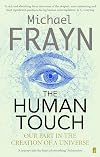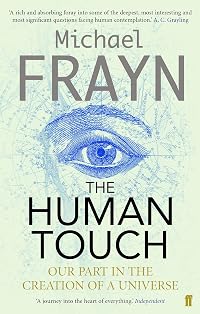
The Human Touch: Our Part in the Creation of a Universe
by Michael Frayn
On This Page
Description
What do we really know? What are we in relation to the world around us? Playwright and novelist Frayn takes on the great questions of his career--and of our lives. Humankind, scientists agree, is an insignificant speck in the impersonal vastness of the universe. But what would that universe be like if we were not here to say something about it? Would there be numbers if there were no one to count them? With wit, charm, and brilliance, this epic work of philosophy sets out to make sense of show more our place in the scheme of things. Our contact with the world around us, Michael Frayn shows, is always fleeting and indeterminate, yet we have nevertheless had to fashion a comprehensible universe in which action is possible. But how do we distinguish our subjective experience from what is objectively true and knowable?--From publisher description. show lessTags
Recommendations






Member Reviews
I wish I remembered who recommended this to me so I could hide a dead fish in their car.
Not only is he repeatedly dismissive of the ideas of better thinkers (and writers), this has to be one of the most tedious books I have ever read. He actually mocks the reader in some sections by pointing out his own tediousness! On the rare occasions that he is not tedious, he sounds suspiciously like he is high. To whit, some mighty philosophy:
No forget it. I was going to type a quote from the book, but I fell asleep two words in.
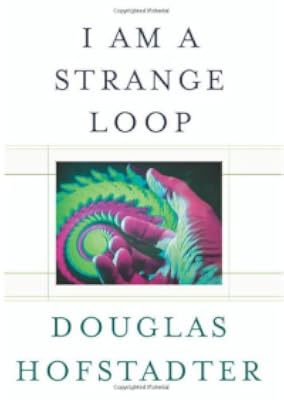
Someone like Hofstadter can talk about a concept like "rules" and keep me mesmerized for fifty pages. Frayn would lose me every two, as I put his book down at every opportunity to get a drink of water, something to eat, show more check to make sure the oven was off, clip my toenails, write this review with a couple chapters still to go... I even did laundry.
I have about seventy pages left. When I finally reach that zenith of accomplishment that is finishing this lobotomy, I am going to throw a party and invite all of my friends to ask each one of them what they think of Michael Frayn... and when I find the person who did this to me... show less
Not only is he repeatedly dismissive of the ideas of better thinkers (and writers), this has to be one of the most tedious books I have ever read. He actually mocks the reader in some sections by pointing out his own tediousness! On the rare occasions that he is not tedious, he sounds suspiciously like he is high. To whit, some mighty philosophy:
No forget it. I was going to type a quote from the book, but I fell asleep two words in.
Someone like Hofstadter can talk about a concept like "rules" and keep me mesmerized for fifty pages. Frayn would lose me every two, as I put his book down at every opportunity to get a drink of water, something to eat, show more check to make sure the oven was off, clip my toenails, write this review with a couple chapters still to go... I even did laundry.
I have about seventy pages left. When I finally reach that zenith of accomplishment that is finishing this lobotomy, I am going to throw a party and invite all of my friends to ask each one of them what they think of Michael Frayn... and when I find the person who did this to me... show less
I enjoyed the beginning of this more than the end. He starts out by giving a very understandable critique of modern physics. What it's about, where it seems to be going, and whether it makes any difference to the rest of us. It was clear to me that he follows physics better than I do, although I do try to read about advances.
Eventually he moves into the area of language. Here I can follow him more knowledgeably, and agree with most of his points. I wish he had wasted less time disagreeing with Chomsky. I first read Chomsky several decades ago, and quickly came to the same conclusions Frayn does - There is no way of proving it one way or the other, and even if we could prove it true, it only moves the problem one stage further away. So show more say that once or twice, and then ignore him. Other than that I enjoyed listening to someone with wonderful language skills thinking about language.
Finally he moves to the area of 'self'. Here he gives a good description of the problem, but as he has no answer, he could have stopped at that and left a better impression on the reader. The last few chapters are just painful repetition.
It does occur to me that the whole point of Copenhagen was repetition. He got away with it there, brilliantly. But here it doesn't work. show less
Eventually he moves into the area of language. Here I can follow him more knowledgeably, and agree with most of his points. I wish he had wasted less time disagreeing with Chomsky. I first read Chomsky several decades ago, and quickly came to the same conclusions Frayn does - There is no way of proving it one way or the other, and even if we could prove it true, it only moves the problem one stage further away. So show more say that once or twice, and then ignore him. Other than that I enjoyed listening to someone with wonderful language skills thinking about language.
Finally he moves to the area of 'self'. Here he gives a good description of the problem, but as he has no answer, he could have stopped at that and left a better impression on the reader. The last few chapters are just painful repetition.
It does occur to me that the whole point of Copenhagen was repetition. He got away with it there, brilliantly. But here it doesn't work. show less
Wide-ranging, ambitious and of course witty. But he rambles and wanders. Tries to address questions of philosophy, language and physics, much of which he did more successfully in his play "Copenhagen". Could have been improved by an editor to cut it to size. But I did laugh out loud and read to the end
Frayn must be the first author of a serious book of philosophy who has also written a hugely successful farce. Though not an easy read, this is very convincing on how deeply subjective assumptions are built into science. I found his analysis of physics more interesting and original than his discussion of academic philosophy.
Overall, this book is hard going. Some parts are quite profound. Other parts seem to be just deliberate obfuscation by playing with "smart" use of language. It doesn't really get anywhere, but it traverses some very interesting territory not getting there.
I can't imagine reading this book, having lived through Manny's reading of it. It was awful, having to listen to him talk about how completely Frayn had misunderstood everything in science and philosophy he talked about. When he did come to actual interesting content by Frayn he couldn't stand the round about, waffling way in which he wrote, peppering everything with asides which were sometimes entertaining and generally irrelevant. Somehow Bill Bryson writing mostly of irrelevancies is okay, but not Frayn. Maybe he isn't good enough a writer.
Having started this book some years ago, I am certainly never going to read it now. I don't have the discerning eye resulting from knowledge of the fields to be able to read it in a discriminating show more way. But I want to make a few points which come from my understanding of Frayn which explain the failure of this book.
The first is that this book is the consequence of a shambles - Frayn's mulling over the world for a great many years. So when, for example, he discusses some point of AI which has been obsolete for decades, or a Chomsky theory which he himself abandoned before the old queen died, this is, I suspect, because that his ideas came from that period. We happen to be reading them now.
The second is that this book undoubtedly reflects something Frayn talks about in Stage Directions - he found it very hard to go back to novels after working as a dramatist for a long period because writing plays was writing in a highly disciplined limited way, whereas novel writing was like open countryside compared with the city. Limitless. He found it necessary to create ways to give the novel limits. One can see that, for example, in one of my favourites, The Trick of It. In this context, what could be more unbounded, less able to be disciplined, than the subject of The Human Touch?
The third is that Frayn - and again this comes from reading Stage Directions - is obsessed with the notion of the audience and in particular with is ability to change the thing it is watching. Nothing is objective. The meaning of everything and anything comes from its audience.
Rest is here:
http://alittleteaalittlechat.wordpress.com/2014/07/09/the-human-touch-by-michael... show less
Having started this book some years ago, I am certainly never going to read it now. I don't have the discerning eye resulting from knowledge of the fields to be able to read it in a discriminating show more way. But I want to make a few points which come from my understanding of Frayn which explain the failure of this book.
The first is that this book is the consequence of a shambles - Frayn's mulling over the world for a great many years. So when, for example, he discusses some point of AI which has been obsolete for decades, or a Chomsky theory which he himself abandoned before the old queen died, this is, I suspect, because that his ideas came from that period. We happen to be reading them now.
The second is that this book undoubtedly reflects something Frayn talks about in Stage Directions - he found it very hard to go back to novels after working as a dramatist for a long period because writing plays was writing in a highly disciplined limited way, whereas novel writing was like open countryside compared with the city. Limitless. He found it necessary to create ways to give the novel limits. One can see that, for example, in one of my favourites, The Trick of It. In this context, what could be more unbounded, less able to be disciplined, than the subject of The Human Touch?
The third is that Frayn - and again this comes from reading Stage Directions - is obsessed with the notion of the audience and in particular with is ability to change the thing it is watching. Nothing is objective. The meaning of everything and anything comes from its audience.
Rest is here:
http://alittleteaalittlechat.wordpress.com/2014/07/09/the-human-touch-by-michael... show less
I can't imagine reading this book, having lived through Manny's reading of it. It was awful, having to listen to him talk about how completely Frayn had misunderstood everything in science and philosophy he talked about. When he did come to actual interesting content by Frayn he couldn't stand the round about, waffling way in which he wrote, peppering everything with asides which were sometimes entertaining and generally irrelevant. Somehow Bill Bryson writing mostly of irrelevancies is okay, but not Frayn. Maybe he isn't good enough a writer.
Having started this book some years ago, I am certainly never going to read it now. I don't have the discerning eye resulting from knowledge of the fields to be able to read it in a discriminating show more way. But I want to make a few points which come from my understanding of Frayn which explain the failure of this book.
The first is that this book is the consequence of a shambles - Frayn's mulling over the world for a great many years. So when, for example, he discusses some point of AI which has been obsolete for decades, or a Chomsky theory which he himself abandoned before the old queen died, this is, I suspect, because that his ideas came from that period. We happen to be reading them now.
The second is that this book undoubtedly reflects something Frayn talks about in Stage Directions - he found it very hard to go back to novels after working as a dramatist for a long period because writing plays was writing in a highly disciplined limited way, whereas novel writing was like open countryside compared with the city. Limitless. He found it necessary to create ways to give the novel limits. One can see that, for example, in one of my favourites, The Trick of It. In this context, what could be more unbounded, less able to be disciplined, than the subject of The Human Touch?
The third is that Frayn - and again this comes from reading Stage Directions - is obsessed with the notion of the audience and in particular with is ability to change the thing it is watching. Nothing is objective. The meaning of everything and anything comes from its audience.
Rest is here:
http://alittleteaalittlechat.wordpress.com/2014/07/09/the-human-touch-by-michael... show less
Having started this book some years ago, I am certainly never going to read it now. I don't have the discerning eye resulting from knowledge of the fields to be able to read it in a discriminating show more way. But I want to make a few points which come from my understanding of Frayn which explain the failure of this book.
The first is that this book is the consequence of a shambles - Frayn's mulling over the world for a great many years. So when, for example, he discusses some point of AI which has been obsolete for decades, or a Chomsky theory which he himself abandoned before the old queen died, this is, I suspect, because that his ideas came from that period. We happen to be reading them now.
The second is that this book undoubtedly reflects something Frayn talks about in Stage Directions - he found it very hard to go back to novels after working as a dramatist for a long period because writing plays was writing in a highly disciplined limited way, whereas novel writing was like open countryside compared with the city. Limitless. He found it necessary to create ways to give the novel limits. One can see that, for example, in one of my favourites, The Trick of It. In this context, what could be more unbounded, less able to be disciplined, than the subject of The Human Touch?
The third is that Frayn - and again this comes from reading Stage Directions - is obsessed with the notion of the audience and in particular with is ability to change the thing it is watching. Nothing is objective. The meaning of everything and anything comes from its audience.
Rest is here:
http://alittleteaalittlechat.wordpress.com/2014/07/09/the-human-touch-by-michael... show less
Members
- Recently Added By
Lists

John Carey's Sunday Best
82 works; 3 members
Author Information

86+ Works 9,676 Members
Michael Frayn is the author of the award-winning "Copenhagen" & twelve other plays, including "Noises Off". The most recent of his nine novels is "Headlong", a New York Times Editor's Choice & Booker Prize finalist. He lives in London. (Bowker Author Biography)
Common Knowledge
- Important places
- Universe
- First words
- You look up at the stars on a calm, clear night, and you're awed by the tranquil vastness of it all.
- Last words
- (Click to show. Warning: May contain spoilers.)Look up at the stars on a calm, clear night...
Classifications
Statistics
- Members
- 368
- Popularity
- 85,369
- Reviews
- 11
- Rating
- (3.20)
- Languages
- English
- Media
- Paper, Ebook
- ISBNs
- 4
- ASINs
- 3