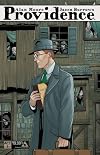
Providence: Act 1
by Alan Moore (Author), Jacen Burrows (Illustrator)
Providence {2015-2017 comic} (Collections and Selections — 1-4)
On This Page
Description
Alan Moore's quintessential horror series has set the standard for a terrifying examination of the works of H.P. Lovecraft. It is being universally hailed as one of Moore's most realized works in which the master scribe has controlled every iota of the story, art, and presentation. The result has been a masterpiece like no other, unparalleled in tone and content, and a true must have addition to his essential works in the field.Tags
Recommendations





Member Reviews
In 1919, Robert Black, a young journalist who wants to be a writer, decides to investigate the “concealed country” inside, or, to use the book’s metaphor, underneath the USA. He gathers material by gathering information on an occult society called the Stella Sapinete and the alchemical text, called in English “The Book of the Wisdom of the Stars.” His journey takes him from New York City to the docks of Salem to an isolated farm in north central Massachusetts.
This is a graphic novel and most of it is told in paneled drawings. But the reader is also favored with the contents of Robert Black’s commonplace book: his musings on what he (and the reader) experienced, his feelings, bisexual and otherwise, his dreams, documents he show more picks up on the way, the most memorable being the parish newsletter of the Church of St. Jude.
And, as you must have been waiting for, he includes his ideas for novels and stories. Like so many of us, he has no trouble thinking of great ideas, he just can’t figure how to provide the flesh and bone. He has the most success with an idea about a doughty young investigator following a trail of clues until he uncovers a horror that devours him. He shakes his head in his notes. Of course, the writer and the reader would want the character to continue to the end, but any believable character would turn tail and run the moment he realized where he was headed. The only reason he wouldn’t would be if he was in denial about the weird stuff he was seeing and if he became too invested in solving the mystery to quit. Yes, Robert Black thinks, that would solve his problem.
At which point, like most of my fellow readers, I hooted and sneered. Poor little character, who has read Guillot and Robert Chambers but never heard of H.P. Lovecraft. By the time this collection has ended, our hero has encountered one of the master’s few heroes and nine of his vilest villains. He has been in a super-cooled apartment and an underground lair complete with altar and demon and a waterfront full of people who look like fish and a deranged inbred family who talk to an invisible son and nothing has clicked.
Robert Black is not a very admirable young man so I have no reservations about watching him stick his head in the mouths of fiends. I do like how the great Alan Moore is making Lovecraft’s universe his own and I do like how he and artist Jacen Burrows are reimagining his people(s). show less
This is a graphic novel and most of it is told in paneled drawings. But the reader is also favored with the contents of Robert Black’s commonplace book: his musings on what he (and the reader) experienced, his feelings, bisexual and otherwise, his dreams, documents he show more picks up on the way, the most memorable being the parish newsletter of the Church of St. Jude.
And, as you must have been waiting for, he includes his ideas for novels and stories. Like so many of us, he has no trouble thinking of great ideas, he just can’t figure how to provide the flesh and bone. He has the most success with an idea about a doughty young investigator following a trail of clues until he uncovers a horror that devours him. He shakes his head in his notes. Of course, the writer and the reader would want the character to continue to the end, but any believable character would turn tail and run the moment he realized where he was headed. The only reason he wouldn’t would be if he was in denial about the weird stuff he was seeing and if he became too invested in solving the mystery to quit. Yes, Robert Black thinks, that would solve his problem.
At which point, like most of my fellow readers, I hooted and sneered. Poor little character, who has read Guillot and Robert Chambers but never heard of H.P. Lovecraft. By the time this collection has ended, our hero has encountered one of the master’s few heroes and nine of his vilest villains. He has been in a super-cooled apartment and an underground lair complete with altar and demon and a waterfront full of people who look like fish and a deranged inbred family who talk to an invisible son and nothing has clicked.
Robert Black is not a very admirable young man so I have no reservations about watching him stick his head in the mouths of fiends. I do like how the great Alan Moore is making Lovecraft’s universe his own and I do like how he and artist Jacen Burrows are reimagining his people(s). show less
This one is a mixed bag for me. I liked it, don't get me wrong but in general there are elements that are so common for artistic-oriented graphic novels that just .... annoy me personally.
So, to start with what I liked.
Main character, journalist Robert Black, starts investigation (because his newspaper needs fresh stories) into mysterious book "Sous le Monde" that drives everyone who reads it into madness and suicide.
While researching the subject Black (who is very strange character himself willing to accept all the weird things as "oh, right, it must be breakfast this morning that causes these sights of headless corpses") comes into contact with rather mysterious doctor who tells him of an even more mysterious book that might hold show more secret to eternal life.
Considering it ridiculous that such a book could ever exist, Black gets introduced into the world of strange small esoteric cults based on the very similar lore that migrated to America from Europe. This intrigues Black so much he decides to devote his talent and time to finding more about this awkward groups and write stories about them.
And so it starts. He finds himself traveling to many sites in pursuit of the book. Events that transpire would scare anyone but our good mister Black. To be honest, just witnessing some of the things would make me jump 8 feet high with high pitched shriek but our mister Black is very good at handling it - he just says to himself that people here are completely different and others are looking at them from high and that is the cause of all of the misunderstandings. I mean what the ... He enters the bus where he is basically only one looking remotely human and speaking in normal voice.... Just weird.
Scare here is always at subliminal level - what we as readers see might not be what Black sees from his perspective (which I guess would explain some of his behavior) - in the background you see some conversations in very small letters and weird things going on (shapes, visions, things people are moving from one point to other, their comments, ominous titles and behavior). It all builds the atmosphere very well and stage for act 2 gets set beautifully by the end.
Art is beautiful, very to the point and very cinematic.
In between issues there are excerpts from Black's journal where we can see both Black's view of things. Sometimes it matches what reader saw on panels, sometimes not. Very often journal pages contain a lot of Black's denial of what he did see bulked with Black scolding himself how he can so misinterpret things around him. Sometimes journal part is a little bit of radical-slow to the story pace but it has its value.
It feels like Black is walking through a dream - bloody scary dream though - and just like in a dream whatever he sees he takes as normal and does not get agitated much with rather scary element of the environment.
Now what I did not like.
Whenever I take artistic graphic novels like this I hope they wont do the things artistic graphic novels usually do. For some reason in artistic view ultimate fear is always shown as seeing people nude and horrific scenes including forced or kinky sex. Here same thing happens - everything comes down to some weird sex thing between humans and it (horror from beyond). I mean, imagine that you are millennia old creature wandering the starts and ruining civilizations and you come to Earth and your only idea is to make them crazy (so they worship you and eventually kill themselves out) and then have sex with them in every perverse way. I mean, come on. Lovecraft's stories were about what goes inside people's heads, question what is real and what is not and shere pressure of something unspeakable and explainable driving people mad - it was never about hedonistic space creatures going down on human populations like set of sex toys.
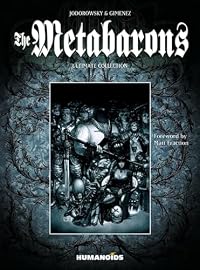
This could be limitations of the medium ... maybe. Written word relies on you to imagine situations while graphic novels need to show you the scene. But again why do the graphic novel authors decide to go this way when portraying horrendous things is beyond me. Just take Metabaron series - it is all about incest, in-breeding, cutting ones genitals and doing pervert things with it - in one of the stories Metabaron even controls his spacecraft with appendage coming from his loins after losing his genitals to treachery. I will never understand why authors of these types of novels decide to move in this way.
All in all Providence act #1 is slow, suspense building story.
Recommended to fans of horror and Lovecraft lore. show less
So, to start with what I liked.
Main character, journalist Robert Black, starts investigation (because his newspaper needs fresh stories) into mysterious book "Sous le Monde" that drives everyone who reads it into madness and suicide.
While researching the subject Black (who is very strange character himself willing to accept all the weird things as "oh, right, it must be breakfast this morning that causes these sights of headless corpses") comes into contact with rather mysterious doctor who tells him of an even more mysterious book that might hold show more secret to eternal life.
Considering it ridiculous that such a book could ever exist, Black gets introduced into the world of strange small esoteric cults based on the very similar lore that migrated to America from Europe. This intrigues Black so much he decides to devote his talent and time to finding more about this awkward groups and write stories about them.
And so it starts. He finds himself traveling to many sites in pursuit of the book. Events that transpire would scare anyone but our good mister Black. To be honest, just witnessing some of the things would make me jump 8 feet high with high pitched shriek but our mister Black is very good at handling it - he just says to himself that people here are completely different and others are looking at them from high and that is the cause of all of the misunderstandings. I mean what the ... He enters the bus where he is basically only one looking remotely human and speaking in normal voice.... Just weird.
Scare here is always at subliminal level - what we as readers see might not be what Black sees from his perspective (which I guess would explain some of his behavior) - in the background you see some conversations in very small letters and weird things going on (shapes, visions, things people are moving from one point to other, their comments, ominous titles and behavior). It all builds the atmosphere very well and stage for act 2 gets set beautifully by the end.
Art is beautiful, very to the point and very cinematic.
In between issues there are excerpts from Black's journal where we can see both Black's view of things. Sometimes it matches what reader saw on panels, sometimes not. Very often journal pages contain a lot of Black's denial of what he did see bulked with Black scolding himself how he can so misinterpret things around him. Sometimes journal part is a little bit of radical-slow to the story pace but it has its value.
It feels like Black is walking through a dream - bloody scary dream though - and just like in a dream whatever he sees he takes as normal and does not get agitated much with rather scary element of the environment.
Now what I did not like.
Whenever I take artistic graphic novels like this I hope they wont do the things artistic graphic novels usually do. For some reason in artistic view ultimate fear is always shown as seeing people nude and horrific scenes including forced or kinky sex. Here same thing happens - everything comes down to some weird sex thing between humans and it (horror from beyond). I mean, imagine that you are millennia old creature wandering the starts and ruining civilizations and you come to Earth and your only idea is to make them crazy (so they worship you and eventually kill themselves out) and then have sex with them in every perverse way. I mean, come on. Lovecraft's stories were about what goes inside people's heads, question what is real and what is not and shere pressure of something unspeakable and explainable driving people mad - it was never about hedonistic space creatures going down on human populations like set of sex toys.
This could be limitations of the medium ... maybe. Written word relies on you to imagine situations while graphic novels need to show you the scene. But again why do the graphic novel authors decide to go this way when portraying horrendous things is beyond me. Just take Metabaron series - it is all about incest, in-breeding, cutting ones genitals and doing pervert things with it - in one of the stories Metabaron even controls his spacecraft with appendage coming from his loins after losing his genitals to treachery. I will never understand why authors of these types of novels decide to move in this way.
All in all Providence act #1 is slow, suspense building story.
Recommended to fans of horror and Lovecraft lore. show less
This was, like Neonomicon before it, just okay.
Once again, Moore is phenomenal at stitching together various Lovecraft stories, then weaving them into the characters he presents, or into the history, or sometimes even just walk-on cameos. So, it's fun to pick out all the easter eggs, even if some of them, once again, are just tossed in for the sake of one more easter egg.
But we're also still treated to awkward info-dump conversations. Strangers meet and become best friends in moments, and bend over backward to help each other. Maybe it was a much more polite generation that constantly opened their homes to complete strangers and then trusted them to be in the home by themselves. Maybe.
And there is a remarkably constant undercurrent of show more sex running throughout the story that often feels thrown in just so Moore can put a checkmark beside things like, straight sex? Check. Homosexuals? Check. Tits? Check. Dicks? Check.
Seems a little gratuitous at this point.
But what of the story? Well, the premise is solid: a young, ambitious, idealistic man—possibly gay, possibly bisexual—sets out to discover the alternative America and write about it.
But after some of his experiences, I don't understand how there can be an additional eight issues of this. Why doesn't he simply run screaming back to New York, thumb tucked firmly in mouth (okay, okay, I know. It's hard to scream with your thumb in your gob, but you catch my meaning).
So, it's an interesting, if hyper-sexualized reimagining of Lovecraft's mythos, but for now, I remain a touch underwhelmed. show less
Once again, Moore is phenomenal at stitching together various Lovecraft stories, then weaving them into the characters he presents, or into the history, or sometimes even just walk-on cameos. So, it's fun to pick out all the easter eggs, even if some of them, once again, are just tossed in for the sake of one more easter egg.
But we're also still treated to awkward info-dump conversations. Strangers meet and become best friends in moments, and bend over backward to help each other. Maybe it was a much more polite generation that constantly opened their homes to complete strangers and then trusted them to be in the home by themselves. Maybe.
And there is a remarkably constant undercurrent of show more sex running throughout the story that often feels thrown in just so Moore can put a checkmark beside things like, straight sex? Check. Homosexuals? Check. Tits? Check. Dicks? Check.
Seems a little gratuitous at this point.
But what of the story? Well, the premise is solid: a young, ambitious, idealistic man—possibly gay, possibly bisexual—sets out to discover the alternative America and write about it.
But after some of his experiences, I don't understand how there can be an additional eight issues of this. Why doesn't he simply run screaming back to New York, thumb tucked firmly in mouth (okay, okay, I know. It's hard to scream with your thumb in your gob, but you catch my meaning).
So, it's an interesting, if hyper-sexualized reimagining of Lovecraft's mythos, but for now, I remain a touch underwhelmed. show less
Comicsová velebichle, ve které se Moore podrobně věnuje Lovecraftovi a jejíž kostru tvoří příběh bývalého novináře a aspirujícího spisovatele, který cestuje mírně alternativními Spojenými státy 20. let 20. století a setkává se s jednotlivými aspekty Lovecraftova díla (jaký je vztah mezi nimi a Lovecraftem samotným rozvádět nebudu, to už by byl spoiler). Kniha plně navazuje na předchozí comicsy Neonomicon a The Courtyard a jejich znalost je nutná k pochopení poslední kapitoly, stejně tak se očekává široká znalost Lovecraftova díla a optimálně i jeho dobového literárního kontextu. Tahle hutnost může někdy působit až poněkud úmorně, zejména když pozorujeme události stíhající show more hlavního hrdinu nejprve vždy optikou comicsu, převážně konverzačního, a posléze pak ještě prostřednictvím jeho deníkových záznamů, přičemž čtenář v základech obeznámený s Lovecraftem ví, o co při jednotlivých bizarních setkáních šlo, i když to hrdina nepochopil - a může si odškrtávat, která Lovecraftova díla už se objevila a která ještě bude muset absolvovat.
I přes tohle urputné pokládání kamenných desek s dílem klasikovým na pomyslný stůl je Moorovi ke cti samozřejmě nutno přičíst, že taková pozvolná stavba díla je promyšlená a vlastně i tvoří součást rovin sklánějících se k pointě, a že přistupuje ke klasikovi zároveň s úctou a zároveň ho různými způsoby dekonstruuje a modernizuje. Není to nicméně dárek pro někoho, kdo "má rád horrory a comics", spíš košatý útvar, který je možno dlouho do hloubky rozebírat, ale který je trochu jako pozdně gotická katedrála - je to hodnotné, úctyhodné, zvláště propracované a obrovské, shrnuje to veškeré znalosti doby a chápe jejich metaroviny, ale nové moderní inspirace Lovecraftem možná už raší někde jinde. show less
I přes tohle urputné pokládání kamenných desek s dílem klasikovým na pomyslný stůl je Moorovi ke cti samozřejmě nutno přičíst, že taková pozvolná stavba díla je promyšlená a vlastně i tvoří součást rovin sklánějících se k pointě, a že přistupuje ke klasikovi zároveň s úctou a zároveň ho různými způsoby dekonstruuje a modernizuje. Není to nicméně dárek pro někoho, kdo "má rád horrory a comics", spíš košatý útvar, který je možno dlouho do hloubky rozebírat, ale který je trochu jako pozdně gotická katedrála - je to hodnotné, úctyhodné, zvláště propracované a obrovské, shrnuje to veškeré znalosti doby a chápe jejich metaroviny, ale nové moderní inspirace Lovecraftem možná už raší někde jinde. show less
They's a hindrance, thuh both of 'um. On'y reason they's heeyuh is cuz it's haow the story's gotta be. In the 'deemer story, s'gotta be thuh crazy granpappy, un' thuh whaht-faced wummum, un' thuh bad-lookin' bwoy. Thet's whah ah ain't wamin' tuh yu. Yur aht uv a diff'run' story awlduhgethuh.
In the end, I have to agree with Willard Wheatley .That is, Wilbur Whateley from [b:The Dunwich Horror|20877339|The Dunwich Horror|H.P. Lovecraft|https://s.gr-assets.com/assets/nophoto/book/50x75-a91bf249278a81aabab721ef782c4a74.png|49451783]. I can't decide if the slight tweaking of names and places from Lovecraft's arsenal throughout this book is pleasantly persuasive or really, really annoying. I'm leaning toward the latter. Robert Black goes show more traipsing through the conglomerate world of Lovecraft's stories, pursuing a story that is arguably interesting in its own right, making observations of Lovecraft's world that would arguably be interesting in their own right, but Mr. Black unfortunately opens his mouth diary commonplace book, and it spoils the interesting parts entirely. (I was going to subject you to excerpts of the excerpts of pamphlets that Black also crams into his diary which spoil the interesting parts even more, but I've decided I don't have the energy.) That said, there's enough promise here that I'm going to try the next collection in the series and see if it gets any better. show less
In the end, I have to agree with Willard Wheatley .
https://nwhyte.livejournal.com/2961592.html
Collecting the first four issues of Alan Moore's Providence series, itself apparently both prequel and sequel to his Neonomicon (which I haven't read) and very much tied in to the Lovecraft mythos (with which I am familiar but not expert). It's the story of Robert Black, a young New York journalist in 1919, Jewish and gay and hiding both, who travels to Rhode Island to investigate a mysterious cult. (But this is not our 1919, exactly.) Each of these four issues ties to a specific Lovecraft story - "Cool Air", "The Horror at Red Hook", "The Shadow over Innsmouth" and "The Dunwich Horror"; I knew the last two but not the first two.
As you expect with Moore, it's a layered text with many knowing show more references to 1919, 2015, Lovecraft and occultism in general, not to mention sexuality and race. I don't think I had come across Jacen Burrows before, but he successfully conveys 1919 both in our reality and when the moments of Lovecraftian horror come. I enjoyed it but did not really get into it enough to feel that I want to get into the rest of the series. show less
Collecting the first four issues of Alan Moore's Providence series, itself apparently both prequel and sequel to his Neonomicon (which I haven't read) and very much tied in to the Lovecraft mythos (with which I am familiar but not expert). It's the story of Robert Black, a young New York journalist in 1919, Jewish and gay and hiding both, who travels to Rhode Island to investigate a mysterious cult. (But this is not our 1919, exactly.) Each of these four issues ties to a specific Lovecraft story - "Cool Air", "The Horror at Red Hook", "The Shadow over Innsmouth" and "The Dunwich Horror"; I knew the last two but not the first two.
As you expect with Moore, it's a layered text with many knowing show more references to 1919, 2015, Lovecraft and occultism in general, not to mention sexuality and race. I don't think I had come across Jacen Burrows before, but he successfully conveys 1919 both in our reality and when the moments of Lovecraftian horror come. I enjoyed it but did not really get into it enough to feel that I want to get into the rest of the series. show less
Sinceramente avevo aspettative altissime su questo titolo ma sono rimasto davvero deluso. Non è una trasposizione fumetti dei racconti di Lovecraft ma una serie di storie ispirate ai racconti del solitario di Providence che vengono accennate a disegni per poi essere concluse in forma scritta attraverso una raccolta di lettere in forma testuale. Infine, sicuramente per limite mio, non ho per niente apprezzato il disegno e lo stile.
Members
- Recently Added By
Lists

70 of the Best Horror Comics
178 works; 5 members

Books Read By artturnerjr - 2016
30 works; 1 member
Author Information

Multiple award-winning author Alan Moore is universally considered the best writer of graphic novels in the medium's history. Among his many awards are the Hugo Award, the Bram Stoker Award, the Eisner Award, and the International Horror Guild Award

Series

Work Relationships
Common Knowledge
- Canonical title
- Providence: Act 1
- Original title
- The Courtyard #1-2; Alan Moore's Neonomicon #1-4; Providence #1-12
- Original publication date
- 2003; 2010-2011; 2015-2017
- People/Characters
- Robert Black; H. P. Lovecraft
- Important places
- Providence, Rhode Island, USA; Rhode Island, USA
- Important events
- 1910s
- Original language*
- Inglés
*Some information comes from Common Knowledge in other languages. Click "Edit" for more information.
Classifications
- Genres
- Horror, Graphic Novels & Comics, Fiction and Literature
- DDC/MDS
- 741.5942 — Arts & recreation Drawing & decorative arts Drawing Comic books, graphic novels, fotonovelas, cartoons, caricatures, comic strips History, geographic treatment, biography European England & Wales
- LCC
- PN6737 .M6 .P768 — Language and Literature Literature (General) Literature (General) Collections of general literature Comic books, strips, etc.
- BISAC
Statistics
- Members
- 313
- Popularity
- 101,695
- Reviews
- 10
- Rating
- (3.73)
- Languages
- 6 — Czech, English, French, German, Italian, Spanish
- Media
- Paper
- ISBNs
- 12
- ASINs
- 1