
The Kandy-Kolored Tangerine-Flake Streamline Baby
by Tom Wolfe
On This Page
Description
The trends and idiosyncrasies characterizing America's status-seeking new cultures are observed in this collection of articles.Tags
Recommendations




















Member Reviews
Eccezionale ritratto della cultura USA degli anni '60 e a venire. Benché la traduzione italiana non le renda giustizia, la penna di Wolfe è tagliente, divertita, creativa. I ritratti di Phil Spector, Bob Scull, Hefner e McLuhan (una spanna sopra la recente biografia scritta da Coupland), insieme agli scritti sulle gare di distruzione d'auto, sulle radio, sull'etichetta e sui seni al silicone valgono più di qualsiasi saggio di sociologia.
Nem gondolom, hogy ez egy inkoherens kötet volna. Wolfe könyvének minden sora egy nagyon is eredeti elméletre van felfűzve: arra, hogy a művészetben a mecénási szerepet mindig az arisztokrácia töltötte be, aki a maga meghatározott hagyományokra épülő igényeivel természetesen folyamatosan befolyásolta is azt. Ám a második világháború utáni Amerikában eljött a sosemvolt pillanat: először a kultúra történetében a nem-arisztokraták, a művészeti tradícióktól mentes prolik és gengszterek jutottak vagyonhoz, aminek következtében át is vállalták ezt a szerepet. És nem mellesleg a gazdaság robbanásszerű növekedése azzal járt, hogy hirtelen tömegeknek lett elkölthető pénze, tehát milliók show more váltak piaci célcsoporttá az autógyártók szemében éppúgy, mint a művészek számára – azzal pedig, hogy így történt, egyszeriben már nem csak a felső tízezer ízlése lett mérvadó, hanem gyakorlatilag majd mindenkié. Ez pedig egy elképesztően sokszínű kulturális univerzumot eredményezett, amiben ott a helye Cary Grantnek éppúgy, mint Mick Jaggernek vagy Andy Warholnak, sőt: akár Cassius Claynek is. Egy ilyen sokszínű és sokformájú rendszert egyszerűen képtelenség a hagyományos publicisztika módszereivel és nyelvén leírni – mert valami, ami úgy néz ki, mint egy kandírozott mandarinzselészínű áramvonal, a szokott szavakkal nem megragadható. Új szavakat, új megközelítéseket kell kikísérletezni, fel kell adni a linearitást, a tárgyszerűséget, a teljességre törekvést, szubjektívnek és szándékosan széttördeltnek kell lenni… és Wolfe-nak ez sikerült. Merem állítani: kötete a legautentikusabb beszámolók egyike a ’60-as évek Amerikájáról, a helyről és időről, ahol és amikor a fogyasztói társadalom megtanult a maga lábán (vagy a miénken) járni.
(A fordításról nem lehet nem beszélni. Nem irigylem Bartos Tibort – egy forradalmian újító szöveget kellett úgy megmagyarítania, hogy az akárhány év után, akár napjainkban olvasva is újnak hasson. Ez nem sikerült. Tudom, rohadt nehéz dolga volt – de mondjuk az a gyakorlata, hogy egyes kifejezéseket, amelyeket Wolfe egyértelmű újdonságként hozott be az irodalomba*, ő tájnyelvi vagy régies elemekre fordít át… nos, ezért én mindenképpen kárhoztatnám.)
* Itt van például a „srófkocsi” kifejezés, ami már az első fejezetben szembejött, és hát mellbe is vágott rendesen. (Amúgy ma tuningoltnak mondanánk az ilyen autót.) Lövésem sincs, hogy az eredetiben mi szerepelt, következésképpen Bartos eljárásáról sincs jogom bővebben nyilatkozni, de hát marha avétosan hangzik. show less
(A fordításról nem lehet nem beszélni. Nem irigylem Bartos Tibort – egy forradalmian újító szöveget kellett úgy megmagyarítania, hogy az akárhány év után, akár napjainkban olvasva is újnak hasson. Ez nem sikerült. Tudom, rohadt nehéz dolga volt – de mondjuk az a gyakorlata, hogy egyes kifejezéseket, amelyeket Wolfe egyértelmű újdonságként hozott be az irodalomba*, ő tájnyelvi vagy régies elemekre fordít át… nos, ezért én mindenképpen kárhoztatnám.)
* Itt van például a „srófkocsi” kifejezés, ami már az első fejezetben szembejött, és hát mellbe is vágott rendesen. (Amúgy ma tuningoltnak mondanánk az ilyen autót.) Lövésem sincs, hogy az eredetiben mi szerepelt, következésképpen Bartos eljárásáról sincs jogom bővebben nyilatkozni, de hát marha avétosan hangzik. show less
Isn't Wolfe's thing that he writes a book on American society for every decade, or something? Well, if so, this seems to be the late 50s to mid-60s. Phil Spector is at this peak and The Rolling Stones make a quick, ghost-like cameo. A proto-hippied crash pad pot den is another foreshadow of what the rest of the decade has in store. Celebrated is Ed Roth and teen car culture customizations, the birth of stock car racing and the demolition derby. It's this car stuff and the colors and "boomerang" signs of the roadside attractions that has the most life in this book. Cassius Clay at the time of the first Liston-Clay fight on February 25, 1964 get an article in this compendium of short pieces. A lot of verbiage is given over to New York show more topics like the one-man attack on abstract expressionism by Huntington Hartford, doormen, cartoons of NYC citizen caricatures, Fashion Avenue foot traffic, and more. It is the Manhattan matters this seem the least relevant and most vapid. As if still touched by the 50s himself, Wolfe writes in a glib, post-Beat rap that is entertaining and easy to read kept pseudo-intellectual by Wolfe's ejactulations of cultural allusions. show less
This was a fun and interesting read, from a 2014 perspective. (Although if I ever read the word "artherosclerotic" again I think I'll scream.) These essays/articles all came from the early 1960's and they showcase a world I hadn't a clue about.
For instance, the nanny mafia in New York? I wondered, is there still a nanny mafia? (I googled it, yes, apparently there is.) And who is Baby Jane Holzer? Had to do some research and asking around about her. I loved visiting Las Vegas in the early 1960's. It was great to be on the Strip that long ago. So much has changed, some things haven't. And Confidential magazine? Never heard of it. Boy, it sounded interesting, though! What with the publisher shooting his wife and then himself in the cab. . show more . .
New York society circa 1963. Wow.
I read this book primarily for the story on the southern California car culture. Hard to imagine anyone thinking a hot rods and customs car show would be all about punk kids and rock and roll. Ah, times have changed. So much that was on the fringe is now just mainstream. I go to car shows all the time and it seems like it's all old guys going!
I'd like to see an update on some of this - what's it like NOW? I want to be there RIGHT NOW. I like feeling the excitement of being right there in the moment, but then I realize I don't have a clue what Tom Wolfe is talking about. Words he uses to describe people and fashions and life - references no longer understandable in 2014 (if you haven't lived it in the 1960's). It would be fun to see essays like this on the 80's or the 90's. show less
For instance, the nanny mafia in New York? I wondered, is there still a nanny mafia? (I googled it, yes, apparently there is.) And who is Baby Jane Holzer? Had to do some research and asking around about her. I loved visiting Las Vegas in the early 1960's. It was great to be on the Strip that long ago. So much has changed, some things haven't. And Confidential magazine? Never heard of it. Boy, it sounded interesting, though! What with the publisher shooting his wife and then himself in the cab. . show more . .
New York society circa 1963. Wow.
I read this book primarily for the story on the southern California car culture. Hard to imagine anyone thinking a hot rods and customs car show would be all about punk kids and rock and roll. Ah, times have changed. So much that was on the fringe is now just mainstream. I go to car shows all the time and it seems like it's all old guys going!
I'd like to see an update on some of this - what's it like NOW? I want to be there RIGHT NOW. I like feeling the excitement of being right there in the moment, but then I realize I don't have a clue what Tom Wolfe is talking about. Words he uses to describe people and fashions and life - references no longer understandable in 2014 (if you haven't lived it in the 1960's). It would be fun to see essays like this on the 80's or the 90's. show less
Mr. Wolfe is a stylist, and he is completely devoted to it. This set of essays have a basic theme: That there is a genuine Working Class American culture separate from that of its bourgeoisie, and it is almost certainly based on the automobile. This is its primary artefact, and much stems from it being based on an artefact of mobility, and public display. Considering, unless this group buys into the idea of moderating Climate change, there will be a very hard struggle ahead for the world. But this is the defining study of that culture, and thus still bears the rereading. I read this first in 1966.
I truly enjoyed this collection of essays and articles initially published throughout the sixties.
Somehow, I felt that the reader could really sense that here was a young Wolf at work. One who did not yet bother restraining his enthusiasm. Who let himself get carried away and often ended up with an almost satirical view on his subjects. Depicting NASCAR-drivers as the last of the American heroes e.g. Just loved it a lot.
Somehow, I felt that the reader could really sense that here was a young Wolf at work. One who did not yet bother restraining his enthusiasm. Who let himself get carried away and often ended up with an almost satirical view on his subjects. Depicting NASCAR-drivers as the last of the American heroes e.g. Just loved it a lot.
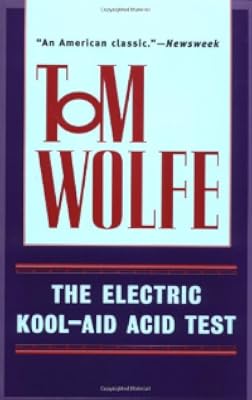
I knew from reviews this book was a documentary about the mid 1960's, the social scene in Las Vegas and California, hotrods, custom built cars, and pop music. But it was not what I expected. I love Tom Wolfe's writing style and he did live up to his reputation of capturing the essence of the era, but unlike THE ELECTRIC KOOL-AID ACID TEST (which I really loved) this book is more like a series of short stories focusing on specific cultural topics. Unfortunately, the majority of the topics I could not relate to....at all, even though I was in my late teens during that era. The chapters on the Beatles, Rolling Stones, and Cassius Clay were great. But chapters on hotrods, custom cars, and drag racing were definitely written for the male show more reader. And topics like nannies in Central Park, and Hartford (who?), and Jane Holzer (girl of the year...but I never heard of her), and the art gallery society were just plain boring. I was expecting more the middle class main street America scene. show less
Members
- Recently Added By
Lists

A Rainbow of Books: Colors in the Title
570 works; 24 members
Author Information

40+ Works 39,917 Members
Thomas Kennerly Wolfe Jr. was born in Richmond, Virginia on March 2, 1930. He received bachelor's degree in English from Washington and Lee University in 1951 and a Ph.D in American studies from Yale University in 1957. He started his journalism career as a general-assignment reporter at The Springfield Union. While he was working for The show more Washington Post, he was assigned to cover Latin America and won the Washington Newspaper Guild's foreign news prize for a series on Cuba in 1961. In 1962, he became a reporter for the New York Herald Tribune and a staff writer for New York magazine. His work also appeared in Harper's and Esquire. His first book, a collection of articles about the flamboyant Sixties written for New York and Esquire entitled The Kandy-Kolored Tangerine-Flake Streamline Baby, was published in 1968. His other collections included Radical Chic and Mau-Mauing the Flak Catchers and Hooking Up. His non-fiction works included The Pump House Gang; The Electric Kool-Aid Acid Test; The Painted Word; Mauve Gloves and Madmen, Clutter and Vine; In Our Time; and From Bauhaus to Our House. The Right Stuff won the American Book Award for nonfiction, the National Institute of Arts and Letters Harold Vursell Award for prose style, and the Columbia Journalism Award. It was adapted into a film in 1983. His fiction books included The Bonfire of the Vanities, Ambush at Fort Bragg, A Man in Full, The Kingdom of Speech, I Am Charlotte Simmons, and Back to Blood. He was also a contributing artist at Harper's from 1978 to 1981. Many of his illustrations were collected in In Our Time. He died on May 14, 2018 at the age of 88. (Bowker Author Biography) show less
Some Editions
Awards and Honors
Distinctions
Notable Lists
Series
Belongs to Publisher Series
Cuadernos ínfimos (37)
Work Relationships
Common Knowledge
- Canonical title*
- The kandy-kolored tangerine-flake streamline baby
- Original title
- The kandy-kolored tangerine-flake streamline baby
- Original publication date
- 1965
- Related movies
- The Last American Hero (1973 | IMDb)
- Last words
- (Click to show. Warning: May contain spoilers.)Well, Hugh Troy has taken one big-leaguer out of the action - but there are so many millions to go.
*Some information comes from Common Knowledge in other languages. Click "Edit" for more information.
Classifications
Statistics
- Members
- 1,137
- Popularity
- 22,299
- Reviews
- 13
- Rating
- (3.61)
- Languages
- 7 — Danish, English, French, German, Hungarian, Italian, Spanish
- Media
- Paper, Audiobook, Ebook
- ISBNs
- 25
- ASINs
- 35