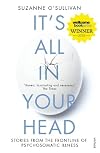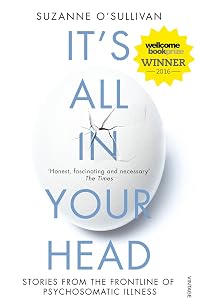
It's All in Your Head: True Stories of Imaginary Illness
by Suzanne O'Sullivan
On This Page
Description
It's happened to all of us: our cheeks flush red when we say the wrong thing, or our hearts skip a beat when a certain someone walks by. But few of us realize how much more dramatic and extreme our bodies' reactions to emotions can be. Many people who see their doctor have medically unexplained symptoms, and in the vast majority of these cases, a psychosomatic cause is suspected. And yet, the diagnosis of a psychosomatic disorder can make a patient feel dismissed as a hypochondriac, a faker, show more or just plain crazy. Neurologist Suzanne O'Sullivan, MD, takes us on a journey through the world of psychosomatic illness, where we meet patients such as Rachel, a promising young dancer now housebound by chronic fatigue syndrome, and Mary, whose memory loss may be her mind's way of protecting her from remembering her husband's abuse. O'Sullivan reveals the hidden stresses behind their mysterious symptoms, approaching a sensitive topic with patience and understanding. She addresses the taboos surrounding psychosomatic disorders, teaching us that "it's all in your head" doesn't mean that something isn't real, as the body is often the stand-in for the mind when the latter doesn't possess the tools to put words to its sorrow. She encourages us to look with compassion at the ways in which our brains act out, and to question our failure to credit the intimate connection between mind and body. show lessTags
Recommendations









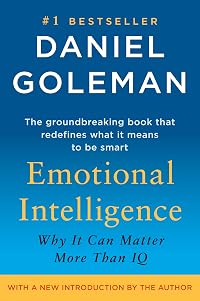
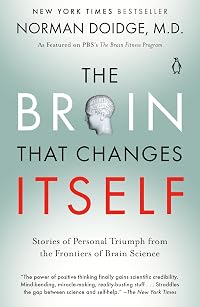
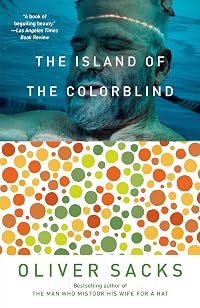
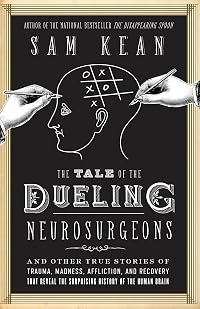
Member Recommendations
Member Reviews
I think everyone should read this book, not just health professionals. As someone whose body ALWAYS reacts to stress, I have learnt over the past 30 years that what is going on in our heads rules our bodies. The unconscious is a strange thing and our epidemic of chronic mystery illnesses has much to do with it.
But as the writer says, the stigma associated with psychological issues means that most people aren't willing to accept the idea. It's much easier to tell family and colleagues that you have a physical disease than that you have psychological issues to deal with - although we ALL have them. If you enjoy this book, try something by Dr John Sarno about chronic pain - he is saying the same thing in a different way.
But as the writer says, the stigma associated with psychological issues means that most people aren't willing to accept the idea. It's much easier to tell family and colleagues that you have a physical disease than that you have psychological issues to deal with - although we ALL have them. If you enjoy this book, try something by Dr John Sarno about chronic pain - he is saying the same thing in a different way.
Dr. Suzanne O'Sullivan is a London-based neurologist and a clinical neurophysiologist (someone who "carries out specialist investigations on the nerves and brain"). She addresses a sensitive and controversial topic in her book, "Is It All in Your Head?" Most of us know that the mind and body are interrelated, but even the most skilled scientists do not fully understand the mechanisms that link them. Through narratives about men and women whose identities are disguised, the author demonstrates just how serious the suffering that arises from subconscious emotions can be. Certain individuals may experience seizures, fainting spells, heart palpitations, paralysis, vision loss, tremors, excruciating pain, and/or fatigue that have no obvious show more physical cause. They may wind up in wheelchairs, cared for by family members who are convinced that their loved ones' maladies are entirely physical in nature. The doctors who care for these men and women generally conduct tests and scans, and may even prescribe antibiotics and anti-seizure medications.
What happens when a patient with severe physical discomfort undergoes tests that come back negative? They will sometimes visit other medical professionals, hoping that their claims of having a particular disease will be confirmed. By the time they arrive at O'Sullivan's office, and she runs tests that subsequently come back normal, she has the unenviable task of telling them what they do not want to hear—that they should consult a psychiatrist to identify what their minds are trying to express. What are they gaining by being incapacitated? These individuals, it should be emphasized, are not malingerers. The latter consciously fake physical symptoms in order to shirk their responsibilities or, in some cases, obtain financial compensation fraudulently.
"Is It All in Your Head?" is an enlightening and lucid exploration of the history, effects, cost, and public attitude towards psychosomatic illnesses. Although O'Sullivan explains the meaning of quite a few technical terms, such as dissociative seizures, conversion disorders, and hypochondriasis ("health anxiety"), it is her real-life examples that drive home the lesson that our subliminal emotions and thoughts may affect us in tragic ways. O'Sullivan urges her fellow physicians to make their diagnoses with care and compassion; communicate with patients and their families tactfully; and be prepared to handle the common reactions of fury and disbelief. Sometimes, it is a thankless but necessary task to treat people who are hurting for reasons that they are unwilling or unable to accept. show less
What happens when a patient with severe physical discomfort undergoes tests that come back negative? They will sometimes visit other medical professionals, hoping that their claims of having a particular disease will be confirmed. By the time they arrive at O'Sullivan's office, and she runs tests that subsequently come back normal, she has the unenviable task of telling them what they do not want to hear—that they should consult a psychiatrist to identify what their minds are trying to express. What are they gaining by being incapacitated? These individuals, it should be emphasized, are not malingerers. The latter consciously fake physical symptoms in order to shirk their responsibilities or, in some cases, obtain financial compensation fraudulently.
"Is It All in Your Head?" is an enlightening and lucid exploration of the history, effects, cost, and public attitude towards psychosomatic illnesses. Although O'Sullivan explains the meaning of quite a few technical terms, such as dissociative seizures, conversion disorders, and hypochondriasis ("health anxiety"), it is her real-life examples that drive home the lesson that our subliminal emotions and thoughts may affect us in tragic ways. O'Sullivan urges her fellow physicians to make their diagnoses with care and compassion; communicate with patients and their families tactfully; and be prepared to handle the common reactions of fury and disbelief. Sometimes, it is a thankless but necessary task to treat people who are hurting for reasons that they are unwilling or unable to accept. show less
The title of this book is somewhat strange because it contradicts the overall thrust of the book: that psychosomatic disorders are NOT imaginary. The physical symptoms caused by emotional distress are real and have sometimes debilitating effects on the people who experience them. Unfortunately, society as a whole diminishes the experiences of people with these disorders, thinking that people are “faking it”. And society stigmatizes mental health care so that people avoid seeing a psychiatrist to figure out the emotional root of the problem causing physical symptoms.
The case histories in this book were interwoven with general medical history, and the case histories themselves did not all have happy endings or even an ending that we show more knew of either way. Some reviewers expressed dissatisfaction with the book for that reason, but I am not sure that the author could have gone poking into the patients’ medical records to find out the conclusion if she did not have permission to.
I was disappointed to see some ableist language in this book: stating that some patients were “confined to a wheelchair” or “wheelchair-bound”. It would have been more appropriate to state simply that the person used a wheelchair. This language, plus the cramped-looking font, made the book feel a lot older than it is.
The stories are interesting, although of O’Sullivan’s two books, I would give the edge to Brainstorming, which focuses specifically on seizure disorders. The parts of “All in Your Head” that talked about seizures were the strongest, in my opinion, for that reason. show less
The case histories in this book were interwoven with general medical history, and the case histories themselves did not all have happy endings or even an ending that we show more knew of either way. Some reviewers expressed dissatisfaction with the book for that reason, but I am not sure that the author could have gone poking into the patients’ medical records to find out the conclusion if she did not have permission to.
I was disappointed to see some ableist language in this book: stating that some patients were “confined to a wheelchair” or “wheelchair-bound”. It would have been more appropriate to state simply that the person used a wheelchair. This language, plus the cramped-looking font, made the book feel a lot older than it is.
The stories are interesting, although of O’Sullivan’s two books, I would give the edge to Brainstorming, which focuses specifically on seizure disorders. The parts of “All in Your Head” that talked about seizures were the strongest, in my opinion, for that reason. show less
Brill, ace, other positive adjectives, read it. It's very well written and informative.
As someone who has now been ill for years and has only started to improve in the last few months having finally accepted the psychological factors in my illness this has been a very helpful book. Though that's still seems very embarrassing to say, so to clarify, my illness has a purely physical external cause and is in no way influenced by my mind, goddammit. ffs, zomg, this author knows nothing, 1 star, how dare she mock me and my illness by saying I'm mad. etc. the internet says there is some obscure misunderstood science that will absolve me of all responsibility, why has my Dr not seen it.
As someone who has now been ill for years and has only started to improve in the last few months having finally accepted the psychological factors in my illness this has been a very helpful book. Though that's still seems very embarrassing to say, so to clarify, my illness has a purely physical external cause and is in no way influenced by my mind, goddammit. ffs, zomg, this author knows nothing, 1 star, how dare she mock me and my illness by saying I'm mad. etc. the internet says there is some obscure misunderstood science that will absolve me of all responsibility, why has my Dr not seen it.
Suzanne O'Sullivan is a neurologist consultant based in the UK. In It's All in Your Head: True Stories of Imaginary Illness she details the case histories of various patients who present with neurological symptoms. However, these patients have normal neurological test results, no organic cause can be found for their illness, but they still suffer from e.g. dissociative seizures or have lost the ability to move a limb. They suffer from a psychosomatic disorder. The cause of this is attributed to the patients' subconscious, their emotional well-being relating to present or past emotional stress and/or trauma. As psychosomatic illness is still "a socially unacceptable disorder", many of O'Sullivan's patients react in a defensive, show more sceptical, or even furious manner when faced with the suggestion to consult a psychiatrist, "so I'm crazy (mad)/a psycho now?"
I was really interested in reading this book because the best and most useful internship I spent during my training were four months in a psychosomatic clinic. In the end, it took me forever to finish this book. That's not to say that it wasn't good, but Ms O'Sullivan isn't a natural storyteller. In addition, the structure of the book made it really difficult to stay with it. The case studies, which I was most interested in, are interrupted by long passages providing historical background covering Charcot, Freud etc.
By the time the author returned to talking about a particular patient again, I often had trouble remembering who that patient was. Ok, maybe my problem as well for having a rubbish memory, but I wish the book had been structured differently.
In general, this is an informative introduction to psychosomatic disorders, especially if you are also interested in gaining some insight into the history of medicine/psychology, but I was keen to find out more about how these patients fared once they were transferred to a psychiatrist and how they dealt with their diagnosis. But I guess that doesn't fall within Dr O'Sullivan's remit, so I appreciate that some information was missing.
Some chapters, as shown by some reviews of this book, are controversial depending on your opinion regarding psychosomatic illness. Overall, I found O'Sullivan's stance respectful and empathetic. She comes across as a compassionate and honest medical professional. The title of the book isn't particularly helpful because the point is that these are not "imaginary" illnesses, as O'Sullivan points out herself, but very real for the tormented patients.
Recommended if you're interested in finding out about the power of the mind over the body and you like a solid introduction to psychosomatic disorders.
I received an ARC via NetGalley. show less
I was really interested in reading this book because the best and most useful internship I spent during my training were four months in a psychosomatic clinic. In the end, it took me forever to finish this book. That's not to say that it wasn't good, but Ms O'Sullivan isn't a natural storyteller. In addition, the structure of the book made it really difficult to stay with it. The case studies, which I was most interested in, are interrupted by long passages providing historical background covering Charcot, Freud etc.
By the time the author returned to talking about a particular patient again, I often had trouble remembering who that patient was. Ok, maybe my problem as well for having a rubbish memory, but I wish the book had been structured differently.
In general, this is an informative introduction to psychosomatic disorders, especially if you are also interested in gaining some insight into the history of medicine/psychology, but I was keen to find out more about how these patients fared once they were transferred to a psychiatrist and how they dealt with their diagnosis. But I guess that doesn't fall within Dr O'Sullivan's remit, so I appreciate that some information was missing.
Some chapters, as shown by some reviews of this book, are controversial depending on your opinion regarding psychosomatic illness. Overall, I found O'Sullivan's stance respectful and empathetic. She comes across as a compassionate and honest medical professional. The title of the book isn't particularly helpful because the point is that these are not "imaginary" illnesses, as O'Sullivan points out herself, but very real for the tormented patients.
Recommended if you're interested in finding out about the power of the mind over the body and you like a solid introduction to psychosomatic disorders.
I received an ARC via NetGalley. show less
Los casos más sorprendentes y perturbadores de los males que el cerebro puede infligir a nuestro propio cuerpo
La Oliver Sacks de las enfermedades psicosomáticas. Desde su consulta, asistiremos a los casos más sorprendentes y perturbadores de los males que el cerebro puede infligir a nuestro propio cuerpo. La mayoría aceptamos sin problema que el corazón palpite con fuerza cuando vemos a la persona que amamos secretamente, o la sudoración que brota en nuestra frente ante el nerviosismo que nos provoca tener que hablar en público. Pero lo que no llegamos a imaginar es cuán dramática y exagerada puede llegar a ser la reacción de nuestro cuerpo ante según que emociones. Un tercio de la gente que acude a su médico de cabecera show more tiene síntomas sin ninguna explicación médica, si bien la gran mayoría de ellos se sospecha que tiene causas emocionales. No obstante, «todo está en tu cabeza» es lo último que queremos escuchar cuando acudimos a la consulta médica. «Nadie me entiende» suele ser entonces la queja más habitual. show less
La Oliver Sacks de las enfermedades psicosomáticas. Desde su consulta, asistiremos a los casos más sorprendentes y perturbadores de los males que el cerebro puede infligir a nuestro propio cuerpo. La mayoría aceptamos sin problema que el corazón palpite con fuerza cuando vemos a la persona que amamos secretamente, o la sudoración que brota en nuestra frente ante el nerviosismo que nos provoca tener que hablar en público. Pero lo que no llegamos a imaginar es cuán dramática y exagerada puede llegar a ser la reacción de nuestro cuerpo ante según que emociones. Un tercio de la gente que acude a su médico de cabecera show more tiene síntomas sin ninguna explicación médica, si bien la gran mayoría de ellos se sospecha que tiene causas emocionales. No obstante, «todo está en tu cabeza» es lo último que queremos escuchar cuando acudimos a la consulta médica. «Nadie me entiende» suele ser entonces la queja más habitual. show less
Apr 12, 2016Spanish
Ratings
Members
- Recently Added By
Author Information
4 Works 550 Members
Suzanne O'Sullivan is an Irish neurologist. She works in Britain and earned an MA in creative writing at Birkbeck College , University of London (2015). Her first book, It's All in Your Head: True Stories of Imaginary Illness, won the Wellcome Book Prize in 2016. (Bowker Author Biography)
Some Editions
Awards and Honors
Series
Belongs to Publisher Series
Elav teadus (Argo) (18)
Classifications
Statistics
- Members
- 221
- Popularity
- 147,293
- Reviews
- 6
- Rating
- (3.76)
- Languages
- English, Estonian, Spanish
- Media
- Paper, Audiobook, Ebook
- ISBNs
- 16
- ASINs
- 7