The Year of Lear: Shakespeare in 1606
by James Shapiro
On This Page
Description
"Preeminent Shakespeare scholar James Shapiro shows how the tumultuous events in England in 1606 affected Shakespeare and shaped the three great tragedies he wrote that year--King Lear, Macbeth, and Antony and Cleopatra. In the years leading up to 1606, since the death of Queen Elizabeth and the arrival in England of her successor, King James of Scotland, Shakespeare's great productivity had ebbed, and it may have seemed to some that his prolific genius was a thing of the past. But that show more year, at age forty-two, he found his footing again, finishing a play he had begun the previous autumn--King Lear--then writing two other great tragedies, Macbeth and Antony and Cleopatra. It was a memorable year in England as well--and a grim one, in the aftermath of a terrorist plot conceived by a small group of Catholic gentry that had been uncovered at the last hour. The foiled Gunpowder Plot would have blown up the king and royal family along with the nation's political and religious leadership. The aborted plot renewed anti-Catholic sentiment and laid bare divisions in the kingdom. It was against this background that Shakespeare finished Lear, a play about a divided kingdom, then wrote a tragedy that turned on the murder of a Scottish king, Macbeth. He ended this astonishing year with a third masterpiece no less steeped in current events and concerns: Antony and Cleopatra. The Year of Lear sheds light on these three great tragedies by placing them in the context of their times, while also allowing us greater insight into how Shakespeare was personally touched by such events as a terrible outbreak of plague and growing religious divisions. For anyone interested in Shakespeare, this is an indispensable book"-- "Pre-eminent Shakespeare scholar James Shapiro shows how the tumultuous events in England in 1606 affected Shakespeare and influenced three of his greatest tragedies written that year - King Lear, Macbeth, and Antony and Cleopatra"-- show lessTags
Recommendations

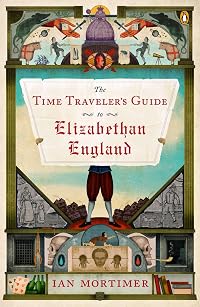
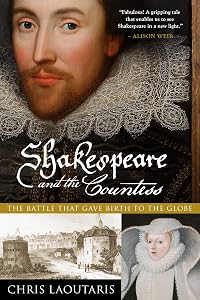
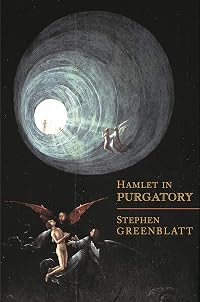
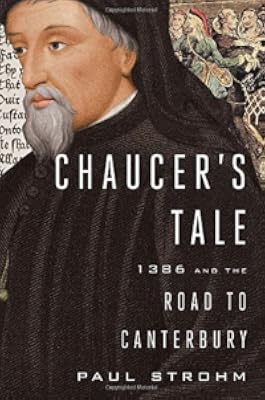
Member Recommendations

Crypto-Willobie Another recent book that examines Shakespeare's 1606 but with a different approach.
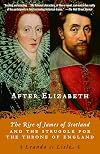
After Elizabeth: The Rise of James of Scotland and the Struggle for the Throne of England by Leanda De Lisle
nessreader Both about the political mood in london when james I ascended the throne
Member Reviews
A rewarding book, putting King Lear, Macbeth, and Antony and Cleopatra into the context of James I's agenda for the Union of his kingdoms (not to be realized until Queen Anne's day, and in a completely different context) and the Gunpowder Plot of 1605.
It has been a commonplace for years that Macbeth is an extended act of attention towards James, both in his interest in the supernatural and as a Aeneid-style reference to an imperial future for Banquo's heirs (implying James == Augustus, which is pretty much how James liked to see himself, following in the footsteps of Elizabeth I as Astraea). Shapiro delves into this in detail, and into the ways in which the change in court environment (and patronage for Shakespeare's company) following show more James' accession on the death of Elizabeth shaped the plays Shakespeare was composing.
The discussion of Lear is enlightening, especially with regard to how the changes following the exposure of the Gunpowder Plot affected the two texts we have of Lear (Quarto and Folio), and the placing of Antony and Cleopatra into the context of how the monarchs' reflections in the plays affected what was acceptable (Elizabeth - Cleopatra and James - Octavius) at various times.
Like his earlier book on 1599, this is "old" historicism at its best -- allowing the environment of the time to cast light on the works produced. It effects no revolution in our understanding of Shakespeare, but deepens our understanding of critical details in the works. show less
It has been a commonplace for years that Macbeth is an extended act of attention towards James, both in his interest in the supernatural and as a Aeneid-style reference to an imperial future for Banquo's heirs (implying James == Augustus, which is pretty much how James liked to see himself, following in the footsteps of Elizabeth I as Astraea). Shapiro delves into this in detail, and into the ways in which the change in court environment (and patronage for Shakespeare's company) following show more James' accession on the death of Elizabeth shaped the plays Shakespeare was composing.
The discussion of Lear is enlightening, especially with regard to how the changes following the exposure of the Gunpowder Plot affected the two texts we have of Lear (Quarto and Folio), and the placing of Antony and Cleopatra into the context of how the monarchs' reflections in the plays affected what was acceptable (Elizabeth - Cleopatra and James - Octavius) at various times.
Like his earlier book on 1599, this is "old" historicism at its best -- allowing the environment of the time to cast light on the works produced. It effects no revolution in our understanding of Shakespeare, but deepens our understanding of critical details in the works. show less
http://nwhyte.livejournal.com/2508685.html
The excellent Brussels English-language bookshop, Sterling Books (on Rue du Fosse aux Loups / Wolvengrachtstraat, behind the Munt/Monnaie) had the excellent notion the other day of offering ARCs to interested customers (thanks to Aoife for alerting me). I had previously very much enjoyed two of Shapiro's other Shakespeare books, 1599 and Contested Will (the latter provoking one of the more rancorous comment threads I have had here), so I eagerly grabbed 1606. It will be published in October, and I recommend it to fans of Shakespeare and of Jacobean history. The coming year is going to see a lot of Shakespeariana, with the 400th anniversary of his death next April, and this is a good place to show more start.
Shapiro looks in great detail at the state of London and England three years into the reign of the new Scottish king, and how this can be demonstrated to have affected Shakespeare's choice of material and approach to King Lear, Macbeth and Antony and Cleopatra. Chapters of historical scene-setting, on politics, religion, and the economics of the theatre, more or less alternate with chapters about Shakespeare.
Of the three plays, I know only Macbeth well, or thought I did. Of course, a play that starts and ends with the off-stage killings of two Scottish kings has to be seen as a reaction to the Gunpowder Plot the previous year; but Shapiro very impressively threads together Shakespeare's own Warwickwhire connections to the plotters. He also looks at the play's links to witchcraft, including King James' own writings on the subject, and its reflection of the moral panic around "equivocation", the 1606 equivalent of worrying about teenagers running away to join ISIS.
His strongest section, however, is the first chunk about King Lear as a reaction to James' plans to unify Scotland and England (which did not become formal for another century) and also as a reflection of Shakespeare's own economic independence and ability to pursue new dramatic paths, though rooted firmly in his own immediate artistic environment. The division of Britain (ie England and Scotland combined) is a fundamental error which King James is now, by implication, planning to overcome. King Lear is just one of many Shakespeare works to rip off an earlier work by someone else, but in this case he took much more liberty with the plot, in particular giving it a tragic ending. Shapiro convinced me to go and give King Lear another try.
I was less convinced that there is all that much that is interesting to say about Antony and Cleopatra. Shapiro makes a more than valiant effort, looking at the complex politics around marriage in the Jacobean court and also at how Shakespeare tended to write sequels almost immediately, rather than leave them several years as he did in this case (if you consider Antony and Cleopatra a sequel to Julius Cæsar). But basically, it's a less engaging play than the other two.
Shapiro's core case is that we neglect the reign of James VI and I unfairly, as a footnote between the Virgin Queen and the Civil War. There was a lot going on in England in the years after 1603, and that includes some of the greatest works of England's greatest writer. I'm convinced. show less
The excellent Brussels English-language bookshop, Sterling Books (on Rue du Fosse aux Loups / Wolvengrachtstraat, behind the Munt/Monnaie) had the excellent notion the other day of offering ARCs to interested customers (thanks to Aoife for alerting me). I had previously very much enjoyed two of Shapiro's other Shakespeare books, 1599 and Contested Will (the latter provoking one of the more rancorous comment threads I have had here), so I eagerly grabbed 1606. It will be published in October, and I recommend it to fans of Shakespeare and of Jacobean history. The coming year is going to see a lot of Shakespeariana, with the 400th anniversary of his death next April, and this is a good place to show more start.
Shapiro looks in great detail at the state of London and England three years into the reign of the new Scottish king, and how this can be demonstrated to have affected Shakespeare's choice of material and approach to King Lear, Macbeth and Antony and Cleopatra. Chapters of historical scene-setting, on politics, religion, and the economics of the theatre, more or less alternate with chapters about Shakespeare.
Of the three plays, I know only Macbeth well, or thought I did. Of course, a play that starts and ends with the off-stage killings of two Scottish kings has to be seen as a reaction to the Gunpowder Plot the previous year; but Shapiro very impressively threads together Shakespeare's own Warwickwhire connections to the plotters. He also looks at the play's links to witchcraft, including King James' own writings on the subject, and its reflection of the moral panic around "equivocation", the 1606 equivalent of worrying about teenagers running away to join ISIS.
His strongest section, however, is the first chunk about King Lear as a reaction to James' plans to unify Scotland and England (which did not become formal for another century) and also as a reflection of Shakespeare's own economic independence and ability to pursue new dramatic paths, though rooted firmly in his own immediate artistic environment. The division of Britain (ie England and Scotland combined) is a fundamental error which King James is now, by implication, planning to overcome. King Lear is just one of many Shakespeare works to rip off an earlier work by someone else, but in this case he took much more liberty with the plot, in particular giving it a tragic ending. Shapiro convinced me to go and give King Lear another try.
I was less convinced that there is all that much that is interesting to say about Antony and Cleopatra. Shapiro makes a more than valiant effort, looking at the complex politics around marriage in the Jacobean court and also at how Shakespeare tended to write sequels almost immediately, rather than leave them several years as he did in this case (if you consider Antony and Cleopatra a sequel to Julius Cæsar). But basically, it's a less engaging play than the other two.
Shapiro's core case is that we neglect the reign of James VI and I unfairly, as a footnote between the Virgin Queen and the Civil War. There was a lot going on in England in the years after 1603, and that includes some of the greatest works of England's greatest writer. I'm convinced. show less
A story of suicidal bombers inspired by religious zealotry*, brutal public executions**, religious leaders inspiring followers to treason*** and nationalists versus immigrants****.
No, this isn't about ISIS in Iraq & Syria and immigrant-phobia in 2016, this was Jacobean England in 1606!
Even if James Shapiro wasn't thinking of these modern day parallels while writing “The Year of Lear: Shakespeare in 1606” it is impossible to read it now and not think about them. Regardless of Shapiro’s speculations on when and where Shakespeare wrote “King Lear”, “Macbeth” and “Antony and Cleopatra” there is no getting away from the post-Gunpowder Plot atmosphere of England in 1606 which is generally accepted as the latest year they show more were written. Add a July 1606 Plague outbreak in London to the mix and then think of modern day pandemic fears to further complete the parallel.
Shapiro can certainly be accused of wide-ranging speculation. A group of Oxfordians even wrote a rebuttal to the present book with "Contested Year: Errors, Omissions and Unsupported Statements in James Shapiro's "The Year of Lear: Shakespeare in 1606", which would also seem to serve as payback for Shapiro's "Contested Will: Who Wrote Shakespeare?" which debunked the case for Edward de Vere, Earl of Oxford as the writer of Shakespeare).
Still, this is an entertaining story of life in England in 1606 and the atmosphere during which Shakespeare lived and worked in the latter part of his career.
* The Gunpowder Plot was a Catholic plan to blow up the Protestant King James I (and James VI of Scotland) and the Houses of Parliament with 36 barrels of gunpowder hidden in the cellar. It was foiled on Nov. 5, 1605 with the capture of Guy Fawkes, who was to set off the gunpowder.
** To be hanged, drawn and quartered sounds bad enough. That description actually leaves out the parts about castration and disembowelment.
*** Henry Garnet, the Jesuit superior of England, was tried and executed for treason for complicity in the Gunpowder Plot and for writing a treatise on equivocation, which instructed Catholics on how to lie under oath by omitting details of the truth.
**** “To blow you Scotch beggars back to your native mountains.” was Guy Fawkes’ reported response to his interrogators as to what he planned to do with all that gunpowder. show less
No, this isn't about ISIS in Iraq & Syria and immigrant-phobia in 2016, this was Jacobean England in 1606!
Even if James Shapiro wasn't thinking of these modern day parallels while writing “The Year of Lear: Shakespeare in 1606” it is impossible to read it now and not think about them. Regardless of Shapiro’s speculations on when and where Shakespeare wrote “King Lear”, “Macbeth” and “Antony and Cleopatra” there is no getting away from the post-Gunpowder Plot atmosphere of England in 1606 which is generally accepted as the latest year they show more were written. Add a July 1606 Plague outbreak in London to the mix and then think of modern day pandemic fears to further complete the parallel.
Shapiro can certainly be accused of wide-ranging speculation. A group of Oxfordians even wrote a rebuttal to the present book with "Contested Year: Errors, Omissions and Unsupported Statements in James Shapiro's "The Year of Lear: Shakespeare in 1606", which would also seem to serve as payback for Shapiro's "Contested Will: Who Wrote Shakespeare?" which debunked the case for Edward de Vere, Earl of Oxford as the writer of Shakespeare).
Still, this is an entertaining story of life in England in 1606 and the atmosphere during which Shakespeare lived and worked in the latter part of his career.
* The Gunpowder Plot was a Catholic plan to blow up the Protestant King James I (and James VI of Scotland) and the Houses of Parliament with 36 barrels of gunpowder hidden in the cellar. It was foiled on Nov. 5, 1605 with the capture of Guy Fawkes, who was to set off the gunpowder.
** To be hanged, drawn and quartered sounds bad enough. That description actually leaves out the parts about castration and disembowelment.
*** Henry Garnet, the Jesuit superior of England, was tried and executed for treason for complicity in the Gunpowder Plot and for writing a treatise on equivocation, which instructed Catholics on how to lie under oath by omitting details of the truth.
**** “To blow you Scotch beggars back to your native mountains.” was Guy Fawkes’ reported response to his interrogators as to what he planned to do with all that gunpowder. show less
This is a fascinating way to look at Shakespeare. Shapiro looks at what was going on around Shakespeare as he was working on this three works. From the political world to the obsession with witches. I, personally, have never thought about the why of Shakespeare's writing outside of himself. But of course he would have been not only aware of what was going on, he would use it for his craft. Shakespeare did not write in a vacuum and Shapiro really brings that home. The writing is excellent and the notes are easy to follow for research is desired. It has changed the way that I see Shakespeare's plays and now I want to know more about what was going on when he was writing his other works as well.
I give this book a Five out of Five stars. I show more get nothing for my review and I borrowed this book from my local library. show less
I give this book a Five out of Five stars. I show more get nothing for my review and I borrowed this book from my local library. show less
An excellent book; Shapiro has made the case elsewhere that Shakespeare should be considered as much a Jacobean writer as an Elizabethan one. This is of course true, and in 1606, Shapiro expertly weaves together the historical and contextual threads that made the 3 plays written, or at least probably first performed in 1606, such an essential part of the canon.
King Lear, the plot appropriated from the work of a rival company, but a play turned upside down to illuminate the discussions and fears of an impending act of union (which ultimately didn't happen) and with an ending that for many years was too harsh for the average play goer to cope with.
Macbeth, the Scottish play, in which James i actually appears, with its many references to show more the Gunpowder Plot of 1605 (incidentally killing yet again the nonsensical idea that the dead Edward de Vere could somehow have written these plays) and particularly to the worrying Popish concept of "equivocation" with its potential to undermine dealings between honest men. Shapiro's chapter on equivocation may be the best thing he has ever written.
And Antony and Cleopatra, a lesser play in every way to the above, and one in which although Shakespeare deals in interesting ways with the main characters romance (they never appear alone on stage, soliloquies are few and far between) still feels out of step with his development as a playwright
This is an engrossing book. Shapiro is hampered by a problem that will probably never now be resolved; the fact that there is very little information on about Shakespeare's personal life, politics, or motivations. Noone at the time thought it was worth recording - or if they did, that documentation hasn't survived. So Shapiro is forced to make circumstantial arguments; The Gunpowder Plot could have touched his life - many of the principals had connections to the Warwickshire area, and he probably knew at least some of them. He could have been touched by plague; there is a strong possibility that plague made it to the house he was lodging in. He may have been touched by religious controversy; his daughter Susana appears in the records as not appearing in church. Yet we will never have good answers to any questions about the personal Will. Shapiro does his best, and makes some interesting suggestions, but the book is at its strongest when it focuses on the text of the plays, and in this area Shapiro is a master forensic analyst.
An excellent book show less
King Lear, the plot appropriated from the work of a rival company, but a play turned upside down to illuminate the discussions and fears of an impending act of union (which ultimately didn't happen) and with an ending that for many years was too harsh for the average play goer to cope with.
Macbeth, the Scottish play, in which James i actually appears, with its many references to show more the Gunpowder Plot of 1605 (incidentally killing yet again the nonsensical idea that the dead Edward de Vere could somehow have written these plays) and particularly to the worrying Popish concept of "equivocation" with its potential to undermine dealings between honest men. Shapiro's chapter on equivocation may be the best thing he has ever written.
And Antony and Cleopatra, a lesser play in every way to the above, and one in which although Shakespeare deals in interesting ways with the main characters romance (they never appear alone on stage, soliloquies are few and far between) still feels out of step with his development as a playwright
This is an engrossing book. Shapiro is hampered by a problem that will probably never now be resolved; the fact that there is very little information on about Shakespeare's personal life, politics, or motivations. Noone at the time thought it was worth recording - or if they did, that documentation hasn't survived. So Shapiro is forced to make circumstantial arguments; The Gunpowder Plot could have touched his life - many of the principals had connections to the Warwickshire area, and he probably knew at least some of them. He could have been touched by plague; there is a strong possibility that plague made it to the house he was lodging in. He may have been touched by religious controversy; his daughter Susana appears in the records as not appearing in church. Yet we will never have good answers to any questions about the personal Will. Shapiro does his best, and makes some interesting suggestions, but the book is at its strongest when it focuses on the text of the plays, and in this area Shapiro is a master forensic analyst.
An excellent book show less
Intriguing picture of the tensions in early Jacobean England and how closely WS was linked to the Gunpowder Plot (geographically not conspiratorially). Slightly less satisfying than some of Shapiro's other books (1599 and Contested Will were better). Too much detail about the Plot and the grisly punishment of the plotters, bit too much textual analysis that doesn't move the social/literary nexus forward; too much "WS may have thought... may have done..."
A Good Year for Shakespeare but an Awful One for England: “1606: William Shakespeare and the Year of Lear” by James Shapiro Published 2015.
“Faith, here’s an equivocator, that could swear in both the scales against either scale, who committed treason enough for God’s sake, yet could not equivocate to heaven.”
In Macbeth, “1606: William Shakespeare and the Year of Lear” by James Shapiro
In the last 2 years I've been thinking a lot about Shakespeare. One of the things that always bothers me is this: "If all of Shakespeare's works and words somehow disappeared from the Earth today (due to a Bard-targeting virus or something), it would be as if his works still existed."
I'll try not to be snarky, but please read show more this in your nicest teacher's voice.
The answer to the conundrum is yes. He'd still exist because his words exist in everything we have. By contrast, if Nicholas Sparks were to disappear tomorrow, along with all his books and the movies directly made from his books, future generations would never know he existed. His influence on humanity, culture, and history has been, let's say, minimal.
If you're into Shakespeare and his influence on what it means to be human, read on. show less
“Faith, here’s an equivocator, that could swear in both the scales against either scale, who committed treason enough for God’s sake, yet could not equivocate to heaven.”
In Macbeth, “1606: William Shakespeare and the Year of Lear” by James Shapiro
In the last 2 years I've been thinking a lot about Shakespeare. One of the things that always bothers me is this: "If all of Shakespeare's works and words somehow disappeared from the Earth today (due to a Bard-targeting virus or something), it would be as if his works still existed."
I'll try not to be snarky, but please read show more this in your nicest teacher's voice.
The answer to the conundrum is yes. He'd still exist because his words exist in everything we have. By contrast, if Nicholas Sparks were to disappear tomorrow, along with all his books and the movies directly made from his books, future generations would never know he existed. His influence on humanity, culture, and history has been, let's say, minimal.
If you're into Shakespeare and his influence on what it means to be human, read on. show less
Members
- Recently Added By
Lists

Top Five Books of 2016
795 works; 228 members

Works concerning William Shakespeare
75 works; 4 members

Non-Fiction Worth Reading
1,016 works; 262 members

In Our Time books
4,934 works; 2 members
Author Information

10+ Works 4,012 Members
Some Editions
Awards and Honors
Awards
Distinctions
Work Relationships
Common Knowledge
- Alternate titles
- The year of Lear: Shakespeare in 1606 (USA ed.) (USA ed.)
- Original publication date
- 2015
- People/Characters
- William Shakespeare
- Dedication
- For Mary and Luke
- Blurbers
- Eyre, Richard
Classifications
- Genres
- Literature Studies and Criticism, Nonfiction, Poetry, History, Biography & Memoir, Fiction and Literature
- DDC/MDS
- 822.3 — Literature & rhetoric English & Old English literatures English drama 1558-1625 Elizabethan period
- LCC
- PR2983 .S467 — Language and Literature English English Literature English renaissance (1500-1640)
- BISAC
Statistics
- Members
- 660
- Popularity
- 43,795
- Reviews
- 9
- Rating
- (3.99)
- Languages
- English, Spanish
- Media
- Paper, Audiobook, Ebook
- ISBNs
- 13
- ASINs
- 6