On This Page
Description
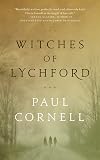
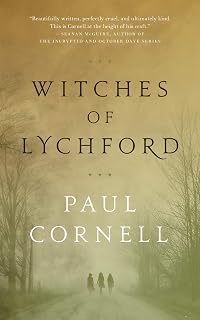
Traveler, Cleric, Witch. The villagers in the sleepy hamlet of Lychford are divided. A supermarket wants to build a major branch on their border. Some welcome the employment opportunities, while some object to the modernization of the local environment. Judith Mawson (local crank) knows the truth—that Lychford lies on the boundary between two worlds, and that the destruction of the border will open wide the gateways to malevolent beings beyond imagination. But if she is to have her voice show more heard, she's going to need the assistance of some unlikely allies.... show less
Tags
Recommendations



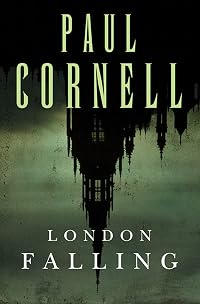

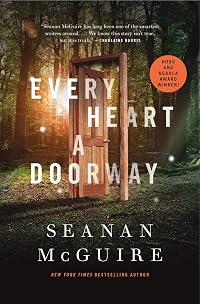
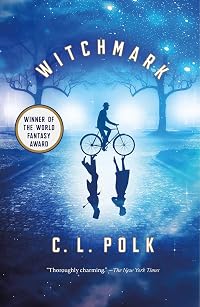
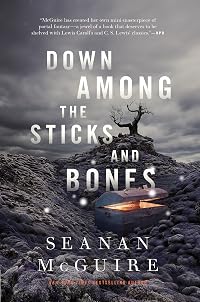



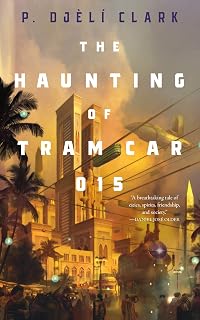



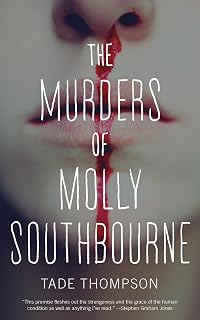
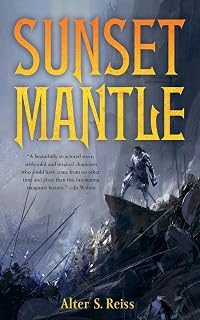
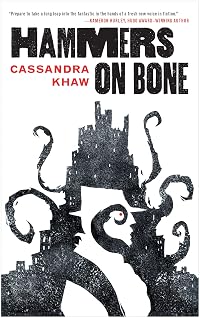

Member Recommendations
Member Reviews
I'm not sure what to make of this novella.
I ought to be singing its praises and reaching for the next in the series. The three main female characters are intriguing. The themes in the story fold over one another in intricate patterns through which malice spreads like wine staining linen. Magic transforms the everyday world of a Cotswold village so that normal life seems illusory and less substantial than the shadow worlds that the witches of the title hold at bay.
That's a lot to pull off in a novella but in the end it disappointed rather than satisfied me.
It felt like an song with not enough lyrics. I could feel what it might have been and so was disappointed by what it actually was.
i think, perhaps, it was all just a little too easy. show more Victory should cost more. The ending felt too neat and too bloodless. Not uninteresting or unbelievable, just not enough. show less
I ought to be singing its praises and reaching for the next in the series. The three main female characters are intriguing. The themes in the story fold over one another in intricate patterns through which malice spreads like wine staining linen. Magic transforms the everyday world of a Cotswold village so that normal life seems illusory and less substantial than the shadow worlds that the witches of the title hold at bay.
That's a lot to pull off in a novella but in the end it disappointed rather than satisfied me.
It felt like an song with not enough lyrics. I could feel what it might have been and so was disappointed by what it actually was.
i think, perhaps, it was all just a little too easy. show more Victory should cost more. The ending felt too neat and too bloodless. Not uninteresting or unbelievable, just not enough. show less
Yes, so I did read two Cornell stories almost back to back—but they’re very different, for all that Cornell’s still in the dark and creepy side of the English folklore sandbox. There’s more heart in this one, I think, love of place and love of friends and strength in unity, and it has a slower pace even though it’s shorter (novella) and awful, exciting things still happen. The characters leap off the pages, though, and make you attached to Lychford’s troubles almost (almost) despite yourself. Am now looking forward to getting my hands on the sequel.
7/10
7/10
A delightful novella that is so English it has an opinion on custards creams vs Rich Tea biscuits. I'd call it urban fantasy, but there's no city in sight, and rural fantasy sounds a little too idyllic. Cosy paranormal? Maybe.
Lychford is divided between those who think a big supermarket moving in will provide jobs and affordable food, and those who think it will ruin the village. Judith knows it will destroy not only Lychford but possibly the whole world; but can she persuade anyone to believe her?
I loved this for its pastiche of English rural life and for taking a terribly familiar dilemma and pushing it to absurdity: Lychford sits at a crossing of worlds, so messing about with town planning will literally open a portal to Hell.
I also show more loved this for its protagonists: grumpy old Judith the hedge witch, with her terrible burdens; the grieving new vicar struggling with her crisis of faith; Autumn, the agnostic who runs a magic shop to try and help her fight her anxieties.
For such a small book, Cornell does wonders in bringing his characters to multi-faceted life and both setting up and resolving multiple plots. And - unusually - it didn't leave me feeling dissatisfied or under-served. It makes every page counts, and stands up under its own slight weight.
Delightful.
Full review. show less
Lychford is divided between those who think a big supermarket moving in will provide jobs and affordable food, and those who think it will ruin the village. Judith knows it will destroy not only Lychford but possibly the whole world; but can she persuade anyone to believe her?
I loved this for its pastiche of English rural life and for taking a terribly familiar dilemma and pushing it to absurdity: Lychford sits at a crossing of worlds, so messing about with town planning will literally open a portal to Hell.
I also show more loved this for its protagonists: grumpy old Judith the hedge witch, with her terrible burdens; the grieving new vicar struggling with her crisis of faith; Autumn, the agnostic who runs a magic shop to try and help her fight her anxieties.
For such a small book, Cornell does wonders in bringing his characters to multi-faceted life and both setting up and resolving multiple plots. And - unusually - it didn't leave me feeling dissatisfied or under-served. It makes every page counts, and stands up under its own slight weight.
Delightful.
Full review. show less
Needful Things with English mythology (fairies, stone circles, old Saxons, what have you) and overtones of Brexit. I like the setup a lot, but it sort of fizzles out over 140 pages, feeling more like the pilot episode of a TV series than a successful novella.
The people of Lychford are divided over something that could change their little town forever: a major supermarket chain wants to open up a storefront. Emotions run high on both sides--those who see it was a step forward for Lychford and those who feel like it goes against everything their town has become. But Judith Mawson, seen by many as the village crackpot, knows the truth: the threat is much bigger than anyone realizes. In order to do anything about it, however, she's going to need to enlist others. Enter Lizzie, the new vicar, still in mourning over a lost love, and Autumn, Lizzie's former friend, an agnostic-turned-mystic. Not only will Lizzie and Autumn learn the truth about Lychford, they will also learn the truth about why show more they lost touch years ago. By uniting with Judith to save Lychford, they may just find the healing they both need at the same time.
I really wasn't sure what to expect when I picked this one up, but I was pleasantly surprised. This is a complex, engaging, and well-developed urban (can I really call it "urban," though?) fantasy tale with some twists that will keep you on the edge of your seat. The backstory here is rich, and it's revealed over the course of the story in an almost seamless way. I can safely say this is one of my Hugo nominations for this year. show less
I really wasn't sure what to expect when I picked this one up, but I was pleasantly surprised. This is a complex, engaging, and well-developed urban (can I really call it "urban," though?) fantasy tale with some twists that will keep you on the edge of your seat. The backstory here is rich, and it's revealed over the course of the story in an almost seamless way. I can safely say this is one of my Hugo nominations for this year. show less
Paul Cornell's Witches of Lychford is the third of Tor.com's new line of novellas, and while I've thoroughly enjoyed the other two (Domnal and the Borrowed Child by Sylvia Spruck Wrigley and Binti by Nnedi Okorafor), so far this has been the best of the lot. Taking place in the English village of Lychford, we're introduced to Judith (witch), the local crazy lady; Lizzie (faithful), who has moved back to Lychford to take over as Reverend of the local church and escape her tragic past; and finally, Autumn (atheist), Lizzie's former best friend, who has opened a magic shop in hopes of discovering ways to deal with her supposed mental illness. These three unlikely friends are drawn together to do battle with a dark force that is trying to show more stake its claim in Lychford, which finds itself at the unlikely junction of several magical realms.
While infusing just a touch of social commentary on the evil's of mega-corporations, Witches of Lychford is lodged strongly in the world of faerie, and I would love to see more of the town and its lively inhabitants. This is my first time reading anything by Paul Cornell and I thoroughly enjoyed his style; I'll definitely be reading more from him in the future. show less
While infusing just a touch of social commentary on the evil's of mega-corporations, Witches of Lychford is lodged strongly in the world of faerie, and I would love to see more of the town and its lively inhabitants. This is my first time reading anything by Paul Cornell and I thoroughly enjoyed his style; I'll definitely be reading more from him in the future. show less
Three lonely, alienated women -- a hedge witch, the atheist owner of a New Age magic shop, and an Anglican rector -- come to realize that the campaign to build a modern super store in the middle of their small town is motivated by a demon intent on destroying one of the boundaries between worlds. Each woman is deeply touched by pain and loss, and each finds her own way to connect with power in order to fight off the threat.
The two major strengths of the book are the characters of the protagonists and the deft way the author interweaves the spiritual, magical, and mundane. Each of the women is smart, independent, and marked by pain, but there is no sentimentality about their wounded relationships. Magic is real but not flashy. And the show more church is an ally of witches in the fight to protect the supernatural boundaries.
Bonus points to author Cornell for creating believable supporting characters and having the mayor of his small town be a woman and the suitor of the hedge witch an Indian man who is never 'othered' by the narrative. show less
The two major strengths of the book are the characters of the protagonists and the deft way the author interweaves the spiritual, magical, and mundane. Each of the women is smart, independent, and marked by pain, but there is no sentimentality about their wounded relationships. Magic is real but not flashy. And the show more church is an ally of witches in the fight to protect the supernatural boundaries.
Bonus points to author Cornell for creating believable supporting characters and having the mayor of his small town be a woman and the suitor of the hedge witch an Indian man who is never 'othered' by the narrative. show less
Members
- Recently Added By
Lists

Best 21st Century Books (So Far)
670 works; 86 members

Speculative Fiction to Read
706 works; 32 members

2016 Hugo Eligible Novellas
12 works; 9 members

Books Read in 2016
4,666 works; 199 members

Books Read in 2018
4,360 works; 110 members

Books Read in 2020
4,379 works; 124 members

Literature About Women and Girls
394 works; 39 members

Short and Sweet
246 works; 24 members
SFF standalone novellas with female protagonists
101 works; 4 members

Witchy Fiction
253 works; 126 members
Book Worlds We'd Like To Visit
322 works; 158 members

Top Five Books of 2025
954 works; 303 members
Author Information

301+ Works 8,813 Members
All Editions
Awards and Honors
Series

Work Relationships
Is contained in
Is abridged in
Common Knowledge
- Original publication date
- 2015-09-08
- People/Characters
- Judith Mawson; Autumn Blunstone; Lizzie Blackmore
- Important places
- Lychford, England, UK (fictional)
- Dedication
- For the Wonderful Folk of Fairford
- First words
- Judith Mawson was seventy-one years old, and she knew what people said about her: that she was bitter about nothing in particular, angry all the time, that the old cow only listened when she wanted to.
- Quotations
- “But the other windows will stay as they are, but this window could be replaced by … a big set of French windows, when science catches up with magic.”
Judith rolled her eyes. “I’m trying to show you somethin... (show all)g ineffable and you’re planning an extension.” - Last words
- (Click to show. Warning: May contain spoilers.)"Goodbye, Joe," she said.
- Blurbers
- McGuire, Seanan; Colgan, Jenny
- Original language
- English
- Canonical DDC/MDS
- 823.92
Classifications
Statistics
- Members
- 524
- Popularity
- 57,229
- Reviews
- 35
- Rating
- (3.74)
- Languages
- English
- Media
- Paper, Audiobook, Ebook
- ISBNs
- 6
- ASINs
- 4