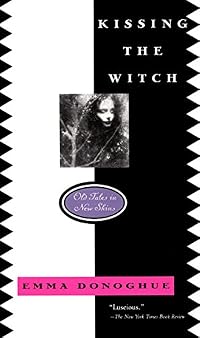
Kissing the Witch: Old Tales in New Skins
by Emma Donoghue
On This Page
Description
A collection of thirteen interconnected stories that give old fairy tales a new twist.Tags
Recommendations
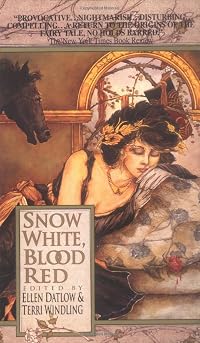
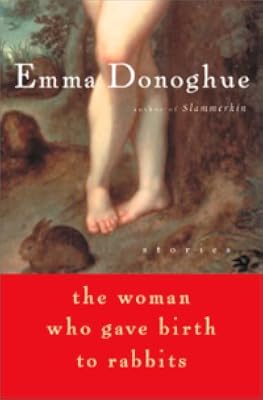
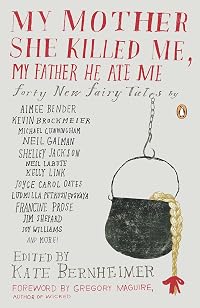
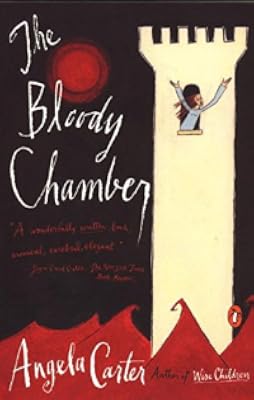



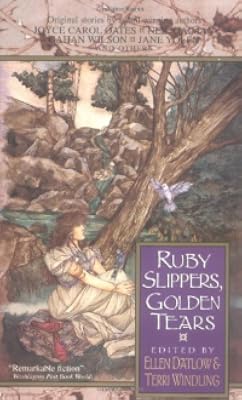
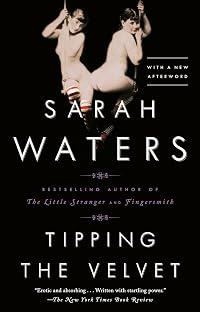
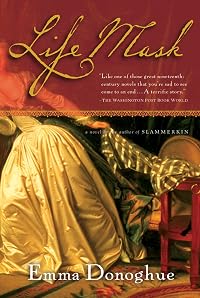
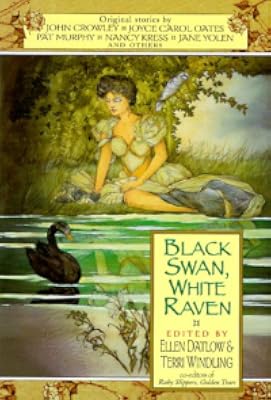


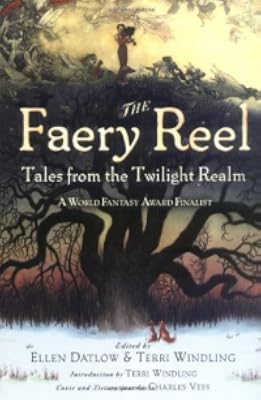
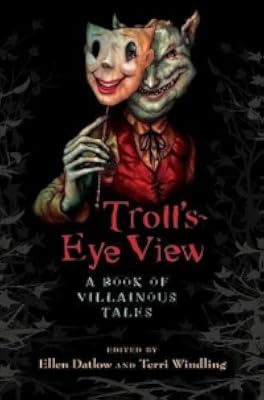
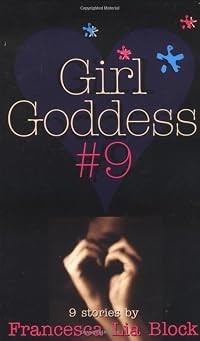
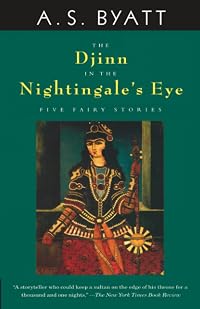

Member Recommendations
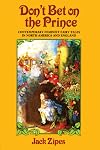
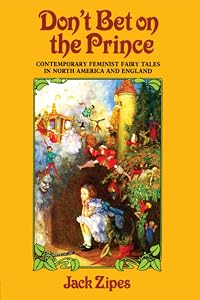
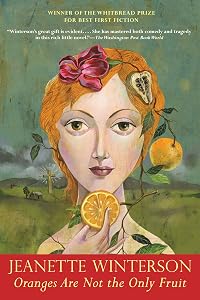
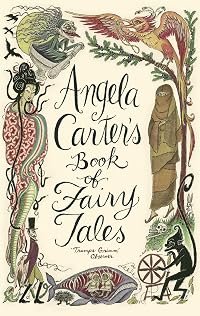
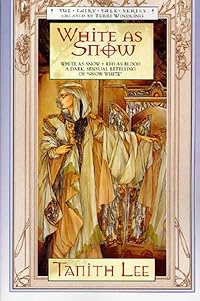
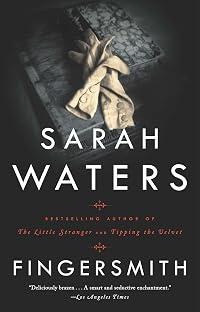
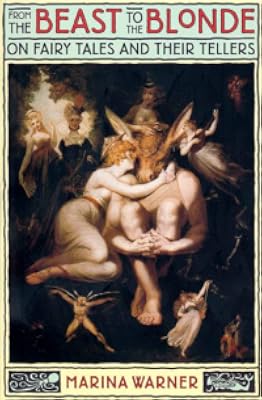
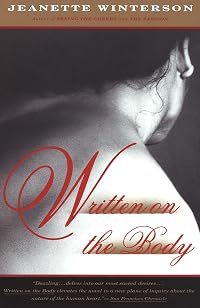
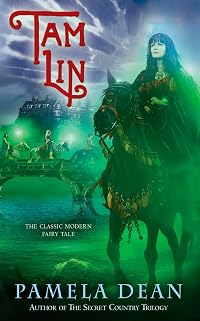
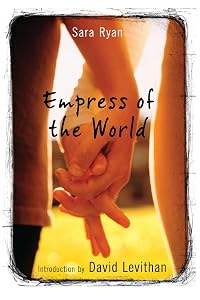
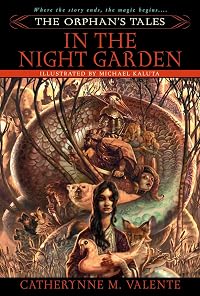
Don't Bet on the Prince: Contemporary Feminist Fairy Tales in North America and England by Jack David Zipes
the_awesome_opossum Don't Bet on the Prince is also a collection of fairy tales retold. It has a more feminist vibe, and I think is a stronger collection of stories.
20
Member Reviews
Even though most fairy tales are about women, they are rarely about women. Princesses in fairy tales wait to be rescued and feel passion only for their prince. Even rarer are there complex relationships between women. Emma Donoghue sets out to change this in Kissing the Witch, a collection of thirteen stories that draw on the rhythm and beauty of traditional fairy tales. Except Donoghue takes the age-old stories and reworks them so that the women in them are bright, clever, sad, vicious, real.
It’s a slim book, easily read in one sitting. But it packs a lot of power. I’m a huge fan of fairy tales and I love to see them redone like this. Donoghue’s writing reminds me of Francesca Lia Block’s; if you like Block and her otherworldly show more prose, especially in The Rose and the Beast, you will enjoy this. Donoghue’s stories are short and sparse but every word is carefully chosen for its potential. The stories are interwoven too, with one woman calling out to another, asking each other questions, telling each other stories.
There are also lesbian aspects to these stories. Instead of the princess finding the prince, women find each other. I think that’s where Donoghue truly makes her mark. Feminist fairy tales aren’t so uncommon these days but it’s rare to see relationships between women explored like this as opposed to the will and strength of a sole female protagonist. It’s kind of strange to think that by changing the genitals of a few characters one can add such new depth, but Donoghue does. If only by making you realize that a woman can be both Beauty and the Beast. show less
It’s a slim book, easily read in one sitting. But it packs a lot of power. I’m a huge fan of fairy tales and I love to see them redone like this. Donoghue’s writing reminds me of Francesca Lia Block’s; if you like Block and her otherworldly show more prose, especially in The Rose and the Beast, you will enjoy this. Donoghue’s stories are short and sparse but every word is carefully chosen for its potential. The stories are interwoven too, with one woman calling out to another, asking each other questions, telling each other stories.
There are also lesbian aspects to these stories. Instead of the princess finding the prince, women find each other. I think that’s where Donoghue truly makes her mark. Feminist fairy tales aren’t so uncommon these days but it’s rare to see relationships between women explored like this as opposed to the will and strength of a sole female protagonist. It’s kind of strange to think that by changing the genitals of a few characters one can add such new depth, but Donoghue does. If only by making you realize that a woman can be both Beauty and the Beast. show less
I wanted to turn the book over and start reading it again. What I liked most was how the stories brought me to edge of knowing what to expect and then delivered something else. Which made me realize (again and again) that the things I've been taught to expect are culturally ingrained and more often than not, lame.
‘’There are some tales not for telling, whether because they are too long, too precious, too laughable, too painful, too easy to need telling or too hard to explain.’’
I feel that this quote describes the essence of Donoghue's book in a poignant and clear way. This isn’t a collection of short stories in the traditional sense of the word. It is a series of tales closely linked to each other. The stories of women who loved, yearned, who were hurt by others, who sought revenge, justice, comfort. Each story is narrated by a woman to the female protagonist of the previous tale and the legends pass from one woman to another. If nothing else, this shows that those we have come to regard as the ‘’good’’ or the ‘’bad’’ show more characters of a tale are not very different from each other.
If you read my reviews, you’ll notice that Emma Donoghue is a writer I swear by. I may sound as a fangirl, but she can do no wrong in my book. Everything I’ve read of her has left me speechless, has moved me beyond words. Her books are in my all-time top 10 and I hereby unashamedly admit I would read her shopping list. She is on a pedestal, along with Jeanette Winterson, Hannah Kent and a few selected others whose books I’d read even if they’d come without front cover, title or synopsis. ‘’Kissing the Witch’’ is a book that contains the best retellings of the most well- known and beloved fairy tales of our childhood. Yes, in Donoghue’s hands a story about 4-5 pages at most becomes better than major retellings struggling to come through out of an entire book of normal length. This is why there are authors who create sentences that enclose the world. The world Donoghue has chosen is the one of fairy tales passed down from generation to generation.
Each story bears the title ‘’The Kiss of…’’. I found the choice of the word ‘’kiss’’ particularly interesting. A kiss is an act of tenderness, affection and love. However, the kiss also carries the connotation of betrayal and treachery, bringing to mind Jesus’ betrayal by Judas with a kiss. So,a kiss is a highly ambiguous symbol. In the book, there are many ‘’kisses’’. The kiss of the Bird, the Rose (a beautiful reimagining of ‘’Beauty and the Beast’’), the Apple, the Handkerchief, the Hair, the Brother, the Spinster, the Skin (a tale as disturbing and dark as it is beautiful), the Needle, the Voice. The story named simply ‘’The Kiss’’ brings us full circle.
Cinderella, Beauty, Aurora, the Goose Girl, the Little Mermaid, Rapunzel, Rumpelstiltskin, all the fairytales we grew up with are present in a volume that talks about Otherness and Alienation. Donoghue uses the legends of the past to show how society transformed women who refused to follow the norms and the rules of patriarchy into witches, monsters, creatures that must be exiled in order not to defile the others and, especially, the younger women. Women who love women and were regarded as ‘’anomalies of nature’’, women who sought justice and revenge, equal opportunities to power and respect for their abilities, women who could heal and help others were brought to scorn, to persecution and, eventually, to a pyre or a noose because they were deemed too dangerous to the foundations of a world built by narrow mindedness and utter lack of education.
The way Donoghue writes is nothing short of astonishing. When I read one of her books, I recognise her voice in the text and yet, each one of her works is so different and so unique. ‘’Kissing the Witch’’ falls into so many categories. Fantasy, Fairytales, LGBT Literature, Feminism. These are not just retellings of the stories of princesses and witches. There are themes under the allegories relevant to the discrepancies against women in the past and in the present. Because, let’s face it. For some people, we’ll never stop being the ‘’evil witches’’ of their own little stories. Of course, they probably don’t know that many of us would carry the title proudly knowing its true meaning…
‘’This is the story you asked for. I leave it in your mouth.’’ show less
I feel that this quote describes the essence of Donoghue's book in a poignant and clear way. This isn’t a collection of short stories in the traditional sense of the word. It is a series of tales closely linked to each other. The stories of women who loved, yearned, who were hurt by others, who sought revenge, justice, comfort. Each story is narrated by a woman to the female protagonist of the previous tale and the legends pass from one woman to another. If nothing else, this shows that those we have come to regard as the ‘’good’’ or the ‘’bad’’ show more characters of a tale are not very different from each other.
If you read my reviews, you’ll notice that Emma Donoghue is a writer I swear by. I may sound as a fangirl, but she can do no wrong in my book. Everything I’ve read of her has left me speechless, has moved me beyond words. Her books are in my all-time top 10 and I hereby unashamedly admit I would read her shopping list. She is on a pedestal, along with Jeanette Winterson, Hannah Kent and a few selected others whose books I’d read even if they’d come without front cover, title or synopsis. ‘’Kissing the Witch’’ is a book that contains the best retellings of the most well- known and beloved fairy tales of our childhood. Yes, in Donoghue’s hands a story about 4-5 pages at most becomes better than major retellings struggling to come through out of an entire book of normal length. This is why there are authors who create sentences that enclose the world. The world Donoghue has chosen is the one of fairy tales passed down from generation to generation.
Each story bears the title ‘’The Kiss of…’’. I found the choice of the word ‘’kiss’’ particularly interesting. A kiss is an act of tenderness, affection and love. However, the kiss also carries the connotation of betrayal and treachery, bringing to mind Jesus’ betrayal by Judas with a kiss. So,a kiss is a highly ambiguous symbol. In the book, there are many ‘’kisses’’. The kiss of the Bird, the Rose (a beautiful reimagining of ‘’Beauty and the Beast’’), the Apple, the Handkerchief, the Hair, the Brother, the Spinster, the Skin (a tale as disturbing and dark as it is beautiful), the Needle, the Voice. The story named simply ‘’The Kiss’’ brings us full circle.
Cinderella, Beauty, Aurora, the Goose Girl, the Little Mermaid, Rapunzel, Rumpelstiltskin, all the fairytales we grew up with are present in a volume that talks about Otherness and Alienation. Donoghue uses the legends of the past to show how society transformed women who refused to follow the norms and the rules of patriarchy into witches, monsters, creatures that must be exiled in order not to defile the others and, especially, the younger women. Women who love women and were regarded as ‘’anomalies of nature’’, women who sought justice and revenge, equal opportunities to power and respect for their abilities, women who could heal and help others were brought to scorn, to persecution and, eventually, to a pyre or a noose because they were deemed too dangerous to the foundations of a world built by narrow mindedness and utter lack of education.
The way Donoghue writes is nothing short of astonishing. When I read one of her books, I recognise her voice in the text and yet, each one of her works is so different and so unique. ‘’Kissing the Witch’’ falls into so many categories. Fantasy, Fairytales, LGBT Literature, Feminism. These are not just retellings of the stories of princesses and witches. There are themes under the allegories relevant to the discrepancies against women in the past and in the present. Because, let’s face it. For some people, we’ll never stop being the ‘’evil witches’’ of their own little stories. Of course, they probably don’t know that many of us would carry the title proudly knowing its true meaning…
‘’This is the story you asked for. I leave it in your mouth.’’ show less
I read this when it was new and it is one of my favorite books. It is a collection of retellings of well-known fairy tales, which don't always go as you expect them to, with a focus on female roles and relationships. The writing is sublime.
"On the whole I am inclined to think that a witch should not kiss. Perhaps it is the not being kissed that makes her a witch; perhaps the source of her power is the breath of loneliness around her. She who takes a kiss can also die of it, can wake into something unimaginable, having turned herself into some new species."
Not at all what I expected. Instead of a collection of short stories retelling separate fairy tales, Kissing the Witch: Old Tales in New Skins links each story by having the protagonist tell their story to the protagonist of the previous story. The effect, in a way, is of one continuous tale. Is this meant to say that one woman is every woman; our stories are each other's stories?
At first I kept stopping in an attempt to show more keep track (mentally) of who was from the previous tale. I quickly gave up on that; it interfered with my connection to the story itself. Each tale flowed into the next much better when I just read them as they were. Only when I was finished did I go back through and trace each character. The collection as a whole showed how women's stories (lives?) are intertwined.
3.5 stars
The following are the notes I took after I'd finished. If you don't want any SPOILERS, don't click to show the spoiler.
The Tale of the Shoe - Cinderella. She's not made to slave, she chooses to. She falls in love with her fairy godmother.
The Tale of the Bird - The Fairy Godmother. Not sure of the exact tale this one's retelling. The bird gives hope of freedom to the housebound pregnant wife.
The Tale of the Rose - The bird (from above) is the beauty in a Beauty and the Beast tale. Although it wasn't her choice to go to the "beast" eventually she wants to be there. The "beast" turns out to be a woman, the queen of the castle.
The Tale of the Apple - The beast is Snow White. She was close to her father; they'd walk together through his orchards. (This is where the apple comes from.) Her stepmother killed her father because she was sterile and feared the king's punishment. Snow White ran away.
The Tale of the Handkerchief - The stepmother/queen. She wanted to kill Snow White to stay queen because she was the maid from The Goose Girl who was impersonating the true princess. Her treachery in that tale was never revealed rather she lost her throne in that kingdom because her husband/the prince die of illness.
The Tale of the Hair - The decapitated horse from the Goose Girl who tells its tale of its former life as a woman, Rapunzel. But in this version Rapunzel was blind since childhood, and she asked to be in the tower because she was scared of the dangers in the outside world. When she finally built up the courage to leave, the old woman broke down, Rapunzel stayed.
The Tale of the Brother - The "witch" from Rapunzel. She was an orphan with her brother who was taken by the Snow Queen.
The Tale of the Spinster - Snow Queen. She explains her early life, spinning until she had too much work to handle by herself, she hires a young woman (Little Sister) to help her out. She becomes pregnant with an illegitimate child. When she doesn't take proper care of him, Little Sister takes the baby away. A definite Rumpelstiltskin vibe.
The Tale of the Cottage - Little Sister is Gretel of Hansel and Gretel. They stumble on a cottage with a woman who the brother seems to make advances at then attempts to rape the woman so the woman puts him in a cage. Gretel frees him, tells him to leave, she stays with the woman.
The Tale of the Skin - The angry woman from the cottage is the princess from Donkeyskin. But this version the prince never realizes its her. When she goes home her father's dead. She goes to live with the old flower-woman in her cottage on the outskirts of her kingdom.
The Tale of the Needle - The flower-woman born to parents who through themselves barren she was made to wear gold mesh gloves from birth. Overprotected, spoiled. She's curious about the tower beyond the bramble hedge (planted by her parents to keep out danger). Old woman in the tower, singing. Sleeping Beauty wakes up to her privilege.
The Tale of the Voice - Little Mermaid. The "witch" locked up in the tower with the spinning wheel tells Sleeping Beauty her story. The sea witch attempts to talk Little Mermaid out of it but she won't listen. The guy cheats on her. No happily ever after there.
The Tale of the Kiss - The sea witch's story. Barren from an early age. Red-haired. She built power through mystery and the villagers' assumptions. Ends with "And what happened next, you ask? Never you mind. There are some tales not for telling...my secrets are all I have left to chew on in the night. This is the story you asked for. I leave it in your mouth."
show less
Not at all what I expected. Instead of a collection of short stories retelling separate fairy tales, Kissing the Witch: Old Tales in New Skins links each story by having the protagonist tell their story to the protagonist of the previous story. The effect, in a way, is of one continuous tale. Is this meant to say that one woman is every woman; our stories are each other's stories?
At first I kept stopping in an attempt to show more keep track (mentally) of who was from the previous tale. I quickly gave up on that; it interfered with my connection to the story itself. Each tale flowed into the next much better when I just read them as they were. Only when I was finished did I go back through and trace each character. The collection as a whole showed how women's stories (lives?) are intertwined.
3.5 stars
The following are the notes I took after I'd finished. If you don't want any SPOILERS, don't click to show the spoiler.
The Tale of the Bird - The Fairy Godmother. Not sure of the exact tale this one's retelling. The bird gives hope of freedom to the housebound pregnant wife.
The Tale of the Rose - The bird (from above) is the beauty in a Beauty and the Beast tale. Although it wasn't her choice to go to the "beast" eventually she wants to be there. The "beast" turns out to be a woman, the queen of the castle.
The Tale of the Apple - The beast is Snow White. She was close to her father; they'd walk together through his orchards. (This is where the apple comes from.) Her stepmother killed her father because she was sterile and feared the king's punishment. Snow White ran away.
The Tale of the Handkerchief - The stepmother/queen. She wanted to kill Snow White to stay queen because she was the maid from The Goose Girl who was impersonating the true princess. Her treachery in that tale was never revealed rather she lost her throne in that kingdom because her husband/the prince die of illness.
The Tale of the Hair - The decapitated horse from the Goose Girl who tells its tale of its former life as a woman, Rapunzel. But in this version Rapunzel was blind since childhood, and she asked to be in the tower because she was scared of the dangers in the outside world. When she finally built up the courage to leave, the old woman broke down, Rapunzel stayed.
The Tale of the Brother - The "witch" from Rapunzel. She was an orphan with her brother who was taken by the Snow Queen.
The Tale of the Spinster - Snow Queen. She explains her early life, spinning until she had too much work to handle by herself, she hires a young woman (Little Sister) to help her out. She becomes pregnant with an illegitimate child. When she doesn't take proper care of him, Little Sister takes the baby away. A definite Rumpelstiltskin vibe.
The Tale of the Cottage - Little Sister is Gretel of Hansel and Gretel. They stumble on a cottage with a woman who the brother seems to make advances at then attempts to rape the woman so the woman puts him in a cage. Gretel frees him, tells him to leave, she stays with the woman.
The Tale of the Skin - The angry woman from the cottage is the princess from Donkeyskin. But this version the prince never realizes its her. When she goes home her father's dead. She goes to live with the old flower-woman in her cottage on the outskirts of her kingdom.
The Tale of the Needle - The flower-woman born to parents who through themselves barren she was made to wear gold mesh gloves from birth. Overprotected, spoiled. She's curious about the tower beyond the bramble hedge (planted by her parents to keep out danger). Old woman in the tower, singing. Sleeping Beauty wakes up to her privilege.
The Tale of the Voice - Little Mermaid. The "witch" locked up in the tower with the spinning wheel tells Sleeping Beauty her story. The sea witch attempts to talk Little Mermaid out of it but she won't listen. The guy cheats on her. No happily ever after there.
The Tale of the Kiss - The sea witch's story. Barren from an early age. Red-haired. She built power through mystery and the villagers' assumptions. Ends with "And what happened next, you ask? Never you mind. There are some tales not for telling...my secrets are all I have left to chew on in the night. This is the story you asked for. I leave it in your mouth."
Review by L. Timmel Duchamp
1. The key to the story.
I had keys to every room in the castle except the one where the beast slept. The first book I opened said in gold letters: You are the mistress: ask for whatever you wish.
I didn't know what to ask for. I had a room of my own, and time and treasures at my command. I had everything I could want except the key to the story. ("Tale of the Rose," p. 34)
The key to the story, the key to all the stories that Emma Donoghue (re)tells in Kissing the Witch: Old Tales in New Skins (HarperCollins, 1997), is what could never be in the versions we were told as children, viz., that a woman can like a woman, that a woman can love a woman, that women are only occasional, rather than necessary and show more essential, enemies. Princes, in these stories, tend to be the problem rather than the solution (except when they turn out to be women in disguise). Princesses and maids and goose girls can be interchanged, being not essentially, beneath their exterior appearances, one or the other (as the old versions of the tales generally had it). In every case, the conflict and solution in these tales hinge on what in the old versions tended to be relegated to the periphery. So the princess-- or the poor maiden-- marries the prince? That's never an end to the story, but simply one (mis)step along the way to the end.
In "The Tale of the Apple," (a re-versioned "Snow White,"), the stepmother and then king's daughter are both deeply ambivalent in their feelings for one another. Very similar in appearance and age, they share a natural attraction; but three obstacles make them mutually distrustful and keep them apart. The princess, who narrates the tale, says
I know now that I would have liked her if we could have met as girls, ankle deep in a river. I would have taken her hand in mine if I had not found it weighted down by the ruby stolen from my mother's cooling finger. I could have loved her if, if, if. (46)
Several things work to make them enemies rather than friends. First, there is "common sense," conveyed by the stories that teach children the limits of their possible roles and relationships in life:
I knew from the songs that a stepmother's smile is like a snake's, so I shut my mind to her from that very first day when I was rigid with the letting of first blood. (46)
Then there is the powerful male, in this case the king, playing the two women off against one another to encourage them in jealousy and competition for his (and every other male's) favor:
My father was cheered to see us so close. Once when he came to her room at night he found us both there, cross-legged on her bed under a sea of velvets and laces, trying how each earring looked against the other's ear. He put his head back and laughed to see us. Two such fair ladies, he remarked, have never been seen on one bed. But which of you is the fairest of them all?
We looked at each other, she and I, and chimed in the chorus of his laughter. Am I imagining in retrospect that our voices rang a little out of tune? (47)
..................................................
He let out another guffaw. Tell me, he asked, how am I to judge between two such beauties? (48)
The stepmother is barren. When the king dies, she wants his throne and is determined that the king's daughter will not have it. The king's daughter flees for her life. Later, after keeping house for seven woodsmen, the princess is found by the queen, courted and wooed. The third obstacle between them, the personal history of the queen and her driving ambition and insecurity, is revealed only after the story ends, when the princess asks her about her life before marrying the king. The queen tells "The Tale of the Handkerchief" that follows, relating how she had been born to the maid of the queen and had herself been maid to the queen's daughter who was supposed to marry a king. Rather than accepting her fate, she wrote her own story (and forcibly rewrote that of the princess she was supposed to serve). Consequently she is wracked by the sense of being an impostor and the longing for security in her position. Her best hope is that
Once I had the crown settled on my head and a baby or two on my lap, who knew what kind of woman I might turn out to be? (79)
Though the queen never gets to have a baby or two on her lap, she discovers what kind of woman she can be when she yields to (and trusts) her desire for the princess and lets go of her insecurity.
2. What do women want?
The old versions of these fairy tales omitted not only affectionate and sexual relations between women, but any consideration of women's want, will, and desire. In many of Donoghue's versions, the princess or maid assumes, without question, that she wants what the usual stories about princesses and maids have said they want, and must learn the hard way that she wants something altogether different. In "The Tale of the Voice," the hard-working adult daughter of fishers sees the son of a merchant "like an angel come down to earth" (p.186) and decides he's "worth any price." She asks the witch, whom she goes to for assistance in catching his eye, to "make me like a woman he could love" (p.192). The witch tells her that he's not worth what she'll have to pay for it.
No matter how greedy he may be you'll think everything belongs to him by right. No matter how stupid he is you'll think he converses like an angel. Am I right?
I have to have him, I told her coldly.
Good, good, she said, a girl who knows what she wants. (191)
When the witch advises her simply to dance for him, and the narrator insists that the witch make her "better," "right," "like a woman he could love," the witch says,
Change for your own sake, if you must, not for what you imagine another will ask of you. (192)
The narrator doesn't understand and insists that she's asking the witch to help her do just that. The witch warns her that it will cost her her voice.
You won't be able to laugh or answer a question, to shout when something spills on you or cry out with delight at the full moon. You will neither be able to speak your love nor sing it with that famous voice of yours. (193)
The witch also warns her that there will be pain, "like a sword cutting you in half." The narrator expects to lose her voice at once-- as a tradeoff for the witch's deployment of power, but of course it's more mundane than that. She loses her voice as she's packing her bundle and her mother asks her what she is doing.
So she goes to the city, finds the merchant's son, throws herself at him and lets him do as he wishes with her.
After a while I would have liked to ask when we were going to be married. My eyes put the question, but all he did was kiss them shut. That was the first time I felt the loss of my voice.
But I was coming to realize that my predicament was not unique. At the balls he took me to there were many beautiful young women who didn't say a word. They answered every question with a shrug or a smile. If champagne got spilt down their dresses they only sighed; when the full moon slid out from behind the castle they watched it in silence. I could not understand it. Had they sold their voices too? (197-198)
Her greatest shock comes when she discovers her lover is unfaithful. And the narrator-- writing from the future perspective of one who understands her mistake-- reflects that she can't blame him.
How was he to know what mattered to me? Perhaps we get, not what we deserve, but what we demand. His sweet dumb little foundling asked so little of him, and that little was so easy for the flesh to give, why should she get anything more? (200)
Defeated, the narrator returns to the witch's cave. The witch tells her that she can find her songs "still out there on the clifftop, hanging in the air."
Wish to speak and you will speak, girl. Wish to die and you can do it. (202)
What do women want? This tale tells us that the girls and young women who think the old and infinitely repeated stories of happily-ever-after submission tell them what they want are simply walking into a trap. By giving up their voices for merely the attention of a man, they're giving up all chance of even being able to say what it is they want. And wanting to be wanted, as the witch notes, is not the same as willing or desiring.
3. Making the connections.
Every tale in this book is connected to every other tale in a sort of Farmer-in-the-Dell logic until we reach the last tale, the tale of the witch, the witch who can say "there are some tales not for telling" (p.227-228), and who ends the book
This is the story you asked for. I leave it in your mouth. (228)
She leaves the story in the listener's mouth (the listener being the teller of the penultimate tale) rather than her ear, so (for the reader) to pass on. Every other story, however, ends with the narrator becoming the audience of the next tale. And thus when the narrator of the first tale (a re-versioned Cinderella) queries her lover (who, rather than the prince, had turned out to be the narrator's main interest) "Who were you before you walked into my kitchen?", the lover replies, "Will I tell you my own story? It is a tale of a bird." And so it is that every story is linked to every other. Some of the connections are apparent, namely lovers or friends telling one another their stories, or an older woman telling a younger woman her history. Other connections are less than obvious, when antagonists are joined by story-- granting insight and understanding and generating an empathy that had not been. And isn't this the point of telling stories? Donoghue seems to be saying. If we don't tell the real stories of our lives, we won't find a way to break out of the traditional stories that trap us into not asking for what we want-- or even not recognizing that we might want something different than the old stories tell us it's natural for us to want.
And so this linkage of tales, this tissue of connections, gives the reader a sense of a textured continuity of the stories that haven't gotten told. We see at the end of each story that though the narrator's (in)sight of a previously invisible reality was hard-won, in fact a person very close to her has had her own (in)sight of a different piece of that invisible reality that fits with her own like pieces in a jigsaw. Not that the book is a completed jigsaw puzzle! One "finishes" it with a sense of having glimpsed a small section of a great mosaic work, a tantalizing clue to the larger picture. As though Donoghue has cleaned oil and dust off a few pieces of the mosaic, allowing us to see the brilliance and unexpected vision of a fragment granting our imaginations a glimpse of what the whole might be like. And so it is she leaves us with the last tale in our mouths, an inspiration to imagination she invites us to explore.
4. The magic of fairy tales
In the course of reading these stories, I found myself reflecting on the elements of fairy tales that made them so magically appealing and emotionally satisfying for me as a child and concluded that what appealed to and satisfied me as a child differs significantly from what appeals to and satisfies me as an adult. Donoghue's book of fairy tales succeeds with me as an adult, succeeds so wonderfully that the writer in me wants to know how that can be. These are fairy tales for adult women not because they have a content not fit for children (something I don't think is true), but because they conjure up a response that ordinary fairy tales (the ones people-- often unsuitably-- tell children) are unlikely to provoke in adults.
So what are the elements of successful fairy tales? A mixture of the prosaic with the magical, the archetypal with the arbitrary, the familiar with the unexpected. Disguise. Chance as well as fate, justice as well as undeserved rewards or punishment. Bad judgment and second chances. Individual initiative, human ingenuity, and assistance from unexpected quarters. The individual either triumphing and living happily ever after, or suffering a comeuppance and ending up with nothing.
In children's tales, characters are either essentially good or evil, essentially princesses or essentially beggarmaids. The endings always put everyone and everything neatly into their proper place, exposed for what they are. In Donoghue's re-versioning, however, good and evil aren't essences producing causality, but the result of a concatenation of circumstances and actions. In her world, hierarchy is not merely a matter of proper placement of true essences--- the boy who proves himself a prince by performing three impossible tasks to win the princess, the drudge who has the heart and beauty of a princess just waiting to be discovered for what she is--- but is, rather, evidence that no one is essentially anything that can be appropriately identified by one's social and financial status. In Donoghue's world, the servant of the princess can switch places with her because (a) she's physically and psychologically stronger than the princess and (b) neither of them is essentially a servant or a princess. The servant forces the princess to strip, and when they are both naked, asks her "Where is the difference between us now?" (p. 69) She steps into the princess's dress and rides the princess's wonderful horse and wields the princess's fan (having only to take care that she wears gloves to conceal the history of work written on her hands). The servant-now-princess notes, "I found that I knew how to behave like a princess, from my short lifetime of watching... At times I forgot for a moment that I was acting." (p. 72)
The magic in Donoghue's tales lies in her taking such familiar, worn stories and illuminating the previously invisible that, in her hands, seems always to have been present, in the background, overshadowed by the masculinist agenda that characterizes the old versions. She gives us just as much of a mixture of the prosaic and the archetypal, loads of disguise, chance and fate, and a world of bad judgment and second chances. The individuals that are the heroes of these stories, though, are all women, and their happily-ever-after endings neither involve marrying a prince nor are ever the last word. The ultimate magic is Donoghue's promise, that there always is another story that will illuminate the one just told. Happily-ever-after, for the reader, is knowing there's always another story from another angle, if one only thinks to ask for it. show less
1. The key to the story.
I had keys to every room in the castle except the one where the beast slept. The first book I opened said in gold letters: You are the mistress: ask for whatever you wish.
I didn't know what to ask for. I had a room of my own, and time and treasures at my command. I had everything I could want except the key to the story. ("Tale of the Rose," p. 34)
The key to the story, the key to all the stories that Emma Donoghue (re)tells in Kissing the Witch: Old Tales in New Skins (HarperCollins, 1997), is what could never be in the versions we were told as children, viz., that a woman can like a woman, that a woman can love a woman, that women are only occasional, rather than necessary and show more essential, enemies. Princes, in these stories, tend to be the problem rather than the solution (except when they turn out to be women in disguise). Princesses and maids and goose girls can be interchanged, being not essentially, beneath their exterior appearances, one or the other (as the old versions of the tales generally had it). In every case, the conflict and solution in these tales hinge on what in the old versions tended to be relegated to the periphery. So the princess-- or the poor maiden-- marries the prince? That's never an end to the story, but simply one (mis)step along the way to the end.
In "The Tale of the Apple," (a re-versioned "Snow White,"), the stepmother and then king's daughter are both deeply ambivalent in their feelings for one another. Very similar in appearance and age, they share a natural attraction; but three obstacles make them mutually distrustful and keep them apart. The princess, who narrates the tale, says
I know now that I would have liked her if we could have met as girls, ankle deep in a river. I would have taken her hand in mine if I had not found it weighted down by the ruby stolen from my mother's cooling finger. I could have loved her if, if, if. (46)
Several things work to make them enemies rather than friends. First, there is "common sense," conveyed by the stories that teach children the limits of their possible roles and relationships in life:
I knew from the songs that a stepmother's smile is like a snake's, so I shut my mind to her from that very first day when I was rigid with the letting of first blood. (46)
Then there is the powerful male, in this case the king, playing the two women off against one another to encourage them in jealousy and competition for his (and every other male's) favor:
My father was cheered to see us so close. Once when he came to her room at night he found us both there, cross-legged on her bed under a sea of velvets and laces, trying how each earring looked against the other's ear. He put his head back and laughed to see us. Two such fair ladies, he remarked, have never been seen on one bed. But which of you is the fairest of them all?
We looked at each other, she and I, and chimed in the chorus of his laughter. Am I imagining in retrospect that our voices rang a little out of tune? (47)
..................................................
He let out another guffaw. Tell me, he asked, how am I to judge between two such beauties? (48)
The stepmother is barren. When the king dies, she wants his throne and is determined that the king's daughter will not have it. The king's daughter flees for her life. Later, after keeping house for seven woodsmen, the princess is found by the queen, courted and wooed. The third obstacle between them, the personal history of the queen and her driving ambition and insecurity, is revealed only after the story ends, when the princess asks her about her life before marrying the king. The queen tells "The Tale of the Handkerchief" that follows, relating how she had been born to the maid of the queen and had herself been maid to the queen's daughter who was supposed to marry a king. Rather than accepting her fate, she wrote her own story (and forcibly rewrote that of the princess she was supposed to serve). Consequently she is wracked by the sense of being an impostor and the longing for security in her position. Her best hope is that
Once I had the crown settled on my head and a baby or two on my lap, who knew what kind of woman I might turn out to be? (79)
Though the queen never gets to have a baby or two on her lap, she discovers what kind of woman she can be when she yields to (and trusts) her desire for the princess and lets go of her insecurity.
2. What do women want?
The old versions of these fairy tales omitted not only affectionate and sexual relations between women, but any consideration of women's want, will, and desire. In many of Donoghue's versions, the princess or maid assumes, without question, that she wants what the usual stories about princesses and maids have said they want, and must learn the hard way that she wants something altogether different. In "The Tale of the Voice," the hard-working adult daughter of fishers sees the son of a merchant "like an angel come down to earth" (p.186) and decides he's "worth any price." She asks the witch, whom she goes to for assistance in catching his eye, to "make me like a woman he could love" (p.192). The witch tells her that he's not worth what she'll have to pay for it.
No matter how greedy he may be you'll think everything belongs to him by right. No matter how stupid he is you'll think he converses like an angel. Am I right?
I have to have him, I told her coldly.
Good, good, she said, a girl who knows what she wants. (191)
When the witch advises her simply to dance for him, and the narrator insists that the witch make her "better," "right," "like a woman he could love," the witch says,
Change for your own sake, if you must, not for what you imagine another will ask of you. (192)
The narrator doesn't understand and insists that she's asking the witch to help her do just that. The witch warns her that it will cost her her voice.
You won't be able to laugh or answer a question, to shout when something spills on you or cry out with delight at the full moon. You will neither be able to speak your love nor sing it with that famous voice of yours. (193)
The witch also warns her that there will be pain, "like a sword cutting you in half." The narrator expects to lose her voice at once-- as a tradeoff for the witch's deployment of power, but of course it's more mundane than that. She loses her voice as she's packing her bundle and her mother asks her what she is doing.
So she goes to the city, finds the merchant's son, throws herself at him and lets him do as he wishes with her.
After a while I would have liked to ask when we were going to be married. My eyes put the question, but all he did was kiss them shut. That was the first time I felt the loss of my voice.
But I was coming to realize that my predicament was not unique. At the balls he took me to there were many beautiful young women who didn't say a word. They answered every question with a shrug or a smile. If champagne got spilt down their dresses they only sighed; when the full moon slid out from behind the castle they watched it in silence. I could not understand it. Had they sold their voices too? (197-198)
Her greatest shock comes when she discovers her lover is unfaithful. And the narrator-- writing from the future perspective of one who understands her mistake-- reflects that she can't blame him.
How was he to know what mattered to me? Perhaps we get, not what we deserve, but what we demand. His sweet dumb little foundling asked so little of him, and that little was so easy for the flesh to give, why should she get anything more? (200)
Defeated, the narrator returns to the witch's cave. The witch tells her that she can find her songs "still out there on the clifftop, hanging in the air."
Wish to speak and you will speak, girl. Wish to die and you can do it. (202)
What do women want? This tale tells us that the girls and young women who think the old and infinitely repeated stories of happily-ever-after submission tell them what they want are simply walking into a trap. By giving up their voices for merely the attention of a man, they're giving up all chance of even being able to say what it is they want. And wanting to be wanted, as the witch notes, is not the same as willing or desiring.
3. Making the connections.
Every tale in this book is connected to every other tale in a sort of Farmer-in-the-Dell logic until we reach the last tale, the tale of the witch, the witch who can say "there are some tales not for telling" (p.227-228), and who ends the book
This is the story you asked for. I leave it in your mouth. (228)
She leaves the story in the listener's mouth (the listener being the teller of the penultimate tale) rather than her ear, so (for the reader) to pass on. Every other story, however, ends with the narrator becoming the audience of the next tale. And thus when the narrator of the first tale (a re-versioned Cinderella) queries her lover (who, rather than the prince, had turned out to be the narrator's main interest) "Who were you before you walked into my kitchen?", the lover replies, "Will I tell you my own story? It is a tale of a bird." And so it is that every story is linked to every other. Some of the connections are apparent, namely lovers or friends telling one another their stories, or an older woman telling a younger woman her history. Other connections are less than obvious, when antagonists are joined by story-- granting insight and understanding and generating an empathy that had not been. And isn't this the point of telling stories? Donoghue seems to be saying. If we don't tell the real stories of our lives, we won't find a way to break out of the traditional stories that trap us into not asking for what we want-- or even not recognizing that we might want something different than the old stories tell us it's natural for us to want.
And so this linkage of tales, this tissue of connections, gives the reader a sense of a textured continuity of the stories that haven't gotten told. We see at the end of each story that though the narrator's (in)sight of a previously invisible reality was hard-won, in fact a person very close to her has had her own (in)sight of a different piece of that invisible reality that fits with her own like pieces in a jigsaw. Not that the book is a completed jigsaw puzzle! One "finishes" it with a sense of having glimpsed a small section of a great mosaic work, a tantalizing clue to the larger picture. As though Donoghue has cleaned oil and dust off a few pieces of the mosaic, allowing us to see the brilliance and unexpected vision of a fragment granting our imaginations a glimpse of what the whole might be like. And so it is she leaves us with the last tale in our mouths, an inspiration to imagination she invites us to explore.
4. The magic of fairy tales
In the course of reading these stories, I found myself reflecting on the elements of fairy tales that made them so magically appealing and emotionally satisfying for me as a child and concluded that what appealed to and satisfied me as a child differs significantly from what appeals to and satisfies me as an adult. Donoghue's book of fairy tales succeeds with me as an adult, succeeds so wonderfully that the writer in me wants to know how that can be. These are fairy tales for adult women not because they have a content not fit for children (something I don't think is true), but because they conjure up a response that ordinary fairy tales (the ones people-- often unsuitably-- tell children) are unlikely to provoke in adults.
So what are the elements of successful fairy tales? A mixture of the prosaic with the magical, the archetypal with the arbitrary, the familiar with the unexpected. Disguise. Chance as well as fate, justice as well as undeserved rewards or punishment. Bad judgment and second chances. Individual initiative, human ingenuity, and assistance from unexpected quarters. The individual either triumphing and living happily ever after, or suffering a comeuppance and ending up with nothing.
In children's tales, characters are either essentially good or evil, essentially princesses or essentially beggarmaids. The endings always put everyone and everything neatly into their proper place, exposed for what they are. In Donoghue's re-versioning, however, good and evil aren't essences producing causality, but the result of a concatenation of circumstances and actions. In her world, hierarchy is not merely a matter of proper placement of true essences--- the boy who proves himself a prince by performing three impossible tasks to win the princess, the drudge who has the heart and beauty of a princess just waiting to be discovered for what she is--- but is, rather, evidence that no one is essentially anything that can be appropriately identified by one's social and financial status. In Donoghue's world, the servant of the princess can switch places with her because (a) she's physically and psychologically stronger than the princess and (b) neither of them is essentially a servant or a princess. The servant forces the princess to strip, and when they are both naked, asks her "Where is the difference between us now?" (p. 69) She steps into the princess's dress and rides the princess's wonderful horse and wields the princess's fan (having only to take care that she wears gloves to conceal the history of work written on her hands). The servant-now-princess notes, "I found that I knew how to behave like a princess, from my short lifetime of watching... At times I forgot for a moment that I was acting." (p. 72)
The magic in Donoghue's tales lies in her taking such familiar, worn stories and illuminating the previously invisible that, in her hands, seems always to have been present, in the background, overshadowed by the masculinist agenda that characterizes the old versions. She gives us just as much of a mixture of the prosaic and the archetypal, loads of disguise, chance and fate, and a world of bad judgment and second chances. The individuals that are the heroes of these stories, though, are all women, and their happily-ever-after endings neither involve marrying a prince nor are ever the last word. The ultimate magic is Donoghue's promise, that there always is another story that will illuminate the one just told. Happily-ever-after, for the reader, is knowing there's always another story from another angle, if one only thinks to ask for it. show less
I would probably give this 3.5 stars overall. I bumped it up since I couldn't give a half star and the last couple of stories in particular were really excellent. I also really loved the transitions in between each story, linking the woman from the current story to the woman telling the next. It highlighted this interweaving of lives and the interconnectedness of the female experience, despite the vastly different tales being told.
I really loved this book. I loved the twists on familiar fairy tales, and trying to figure out which story correlated to which fairy tale. I also really appreciated the honesty of each character who told her story. Each of the women telling her tale was flawed--not all good not all evil--and they were all show more perceived very differently by outsiders than they saw themselves. This was a really refreshing take on fairy tales, full of empowered, real women. show less
I really loved this book. I loved the twists on familiar fairy tales, and trying to figure out which story correlated to which fairy tale. I also really appreciated the honesty of each character who told her story. Each of the women telling her tale was flawed--not all good not all evil--and they were all show more perceived very differently by outsiders than they saw themselves. This was a really refreshing take on fairy tales, full of empowered, real women. show less
Members
- Recently Added By
Published Reviews
ThingScore 100
It would seem impossible to retell such well-known tales in a manner that can make them fresh again, but Donaghue has done it thirteen times. More fascinating still, she's woven them together in such a way that the threads of what I've always known as disparate stories have become whole cloth.
added by Shortride
Lists

Favorite Fairy Tale Retellings
210 works; 61 members

Best Lesbian Fiction (And Narrative Non-Fiction)
155 works; 36 members

Cinderella Stories
111 works; 15 members

GLBT+ Fairy Tale Anthologies
14 works; 3 members

LGBTQ+ Speculative Fiction
821 works; 51 members
Beauty and the Beast Tales
80 works; 7 members

HarperCollins Publishers
144 works; 3 members

infjsarah's wishlist
408 works; 2 members

Books Read in 2014
2,343 works; 86 members
Favorite Fairy Tales
269 works; 103 members

Queer Fiction (Owned TBR)
142 works; 1 member
Author Information

42+ Works 34,690 Members
Emma Donoghue was born on October 24, 1969 in Dublin, Ireland. She received her BA degree from the University College Dublin and PhD in English from University of Cambridge. Her first novel was Stir. Her next novel was Hood which won the 1997 American Library Association's Gay, Lesbian and Bisexual Book Award for Literature. Her novel Slammerkin show more was a finalist in the 2001 Irish Times Irish Literature Prize for Fiction. The Sealed Letter, published in 2008, is a work of historical fiction. This work was the joint winner of the 2009 Lambda Literary Award for Lesbian Fiction. She continued writing several award winning novels including Room which was shortlisted for the Man Booker Prize in September 2010. Some of her other works include Astray, Three and a Half Deaths, and Frog Music. (Bowker Author Biography) show less
Awards and Honors
Work Relationships
Contains
Common Knowledge
- Original title
- Kissing the Witch
- Original publication date
- 1997
- Dedication
- To Frances,
my mother and first storyteller,
who read me Andrew Lang's
"Pinkerel and the Witch"
more times than she can bear
to remember,
this book is dedicated
with gratitude and love. - First words
- Till she came it was all cold. Ever since my mother died the feather bed felt hard as stone. Every word that came out of my mouth limped away like a toad.
- Quotations
- Taking leave on the steps, the beast said, I must tell you before you go: I am not a man.
- Last words
- (Click to show. Warning: May contain spoilers.)This is the story you asked for. I leave it in your mouth.
- Blurbers
- Block, Francesca Lia
Classifications
Statistics
- Members
- 1,275
- Popularity
- 19,205
- Reviews
- 42
- Rating
- (3.76)
- Languages
- Catalan, Dutch, English, Italian
- Media
- Paper, Audiobook, Ebook
- ISBNs
- 18
- UPCs
- 1
- ASINs
- 3