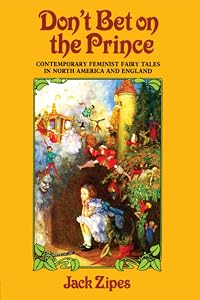
Don't Bet on the Prince: Contemporary Feminist Fairy Tales in North America and England
by Jack David Zipes (Editor)
On This Page
Description
A collection of fairy tales and essays written to break with the classical tradition of fairy tales with dominant males.Tags
Recommendations








Member Reviews
As much as I love fairy tales, the feminist in me found it terribly frustrating that none of the heroines were ever particularly strong, intelligent, or even relatable. So finding this collection of short stories, contemporary fairy tales with a zing of feminism, was very affirming for me. It's not that the men in the stories are all buffoons, or should be gotten rid of (the worst sort of "feminism"). But the women in these updated fairy tales are much more likeable than the fragile archetypes in the classic fairy tales.
And even without any ideology attached, this is just a great book of short stories. My favorites were Briar Rose (Sleeping Beauty is now an insomniac), Wolfland (an adaptation of Little Red Riding Hood), and the final show more story Bluebeard's Egg, by Margaret Atwood show less
And even without any ideology attached, this is just a great book of short stories. My favorites were Briar Rose (Sleeping Beauty is now an insomniac), Wolfland (an adaptation of Little Red Riding Hood), and the final show more story Bluebeard's Egg, by Margaret Atwood show less
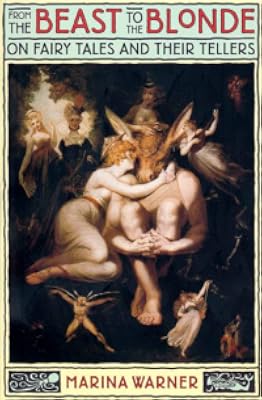
If I were to recommend Don't Bet on the Prince that recommendation would be primarily for its small collection of contemporary fairy tales, only two of which I'd read before. The analyses and criticisms, while interesting and potentially educational for newbies, read somewhat like old news. This was first published in 1986 so the outdated vibe is understandable, though I would be curious what a revised edition might offer this century's readers. Plus, the criticisms in Don't Bet on the Prince lacked any mention of historical context which, having recently completed From the Beast to the Blonde: On Fairy Tales and Their Tellers by Marina Warner, left the former's arguments feeling less informed and even more antiquated.
My favorite story show more from Part I: Feminist Fairy Tales for Young (and Old) Readers was "The Moon Ribbon" by Jane Yolen (1976). My favorite story from Part II: Feminist Fairy Tales for Old (and Young) Readers was a tie between "The Green Woman" by Meghan B. Collins (1982) and "Wolfland" by Tanith Lee (1983).
4 stars show less
My favorite story show more from Part I: Feminist Fairy Tales for Young (and Old) Readers was "The Moon Ribbon" by Jane Yolen (1976). My favorite story from Part II: Feminist Fairy Tales for Old (and Young) Readers was a tie between "The Green Woman" by Meghan B. Collins (1982) and "Wolfland" by Tanith Lee (1983).
4 stars show less
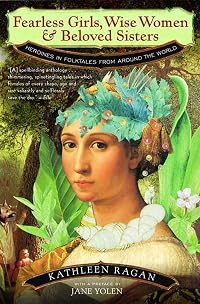
Did I actually read this? Well, I read all the tales. None made an impression upon me. I skimmed some of the intro. and the criticisms, but since I'm not the kind of feminist who takes 'Women's Studies' courses, or the kind of mother who bought into the notions of Bruno Bettleheim, I didn't get anything out of them. I recommend, instead, Not One Damsel in Distress: World Folktales for Strong Girls ed. by Jane Yolen, or The Serpent Slayer and Other Stories of Strong Women ed. by Katrin Hyman Tchana or (maybe, as I've not read it yet) Fearless Girls, Wise Women, and Beloved Sisters: Heroines in Folktales from Around the World ed. by Kathleen Ragan.
Book Description: New Paperback. Published by Routledge. . New, not a used item
Reprint. 8vo - over 7¾" - 9¾" tall.
Reprint. 8vo - over 7¾" - 9¾" tall.
Ratings
Members
- Recently Added By
Author Information

Jack Zipes is Professor of German at the University of Minnesota
All Editions
Work Relationships
Contains
Common Knowledge
- Original publication date
- 1987
- People/Characters
- Red Riding Hood; Snow White; Rapunzel
- Dedication
- For Carol
With Hope for a Better Future - First words
- Preface
It is obviously difficult to define the feminist fairy tale.
Introduction
Jack Zipes
For centuries now theologians, educators, literary critics, psychologists, and librarians have debated the pros and cons of reading fairy tales to children. - Last words
- (Click to show. Warning: May contain spoilers.)As long as we are encouraged to point our finger at Little Red Riding Hood as willing conspirator in her own downfall and assign male guardians of law and order to kill the wolf, our minds and bodies will be prevented from grasping the fundamental issues of sexuality at stake in the story and our lives.
Classifications
- Genres
- Literature Studies and Criticism, Fiction and Literature
- DDC/MDS
- 813.01 — Literature & rhetoric American literature in English American fiction in English By type Short fiction
- LCC
- PS648 .F4 .D66 — Language and Literature American literature American literature Collections of American literature Prose (General)
- BISAC
Statistics
- Members
- 513
- Popularity
- 58,609
- Reviews
- 4
- Rating
- (4.04)
- Languages
- English
- Media
- Paper, Ebook
- ISBNs
- 11
- ASINs
- 2