
About the Author
Susan Gubar was awarded, with Sandra M. Gilbert, the Ivan Sandrof Lifetime Achievement Award by the National Book Critics Circle. She writes the monthly online New York Times column "Living with Cancer" and lives in Bloomington, Indiana.
Image credit: newsinfo.iu.edu
Series
Works by Susan Gubar
The Madwoman in the Attic: The Woman Writer and the Nineteenth-Century Literary Imagination (1979) — Author — 1,509 copies, 6 reviews
The Norton Anthology of Literature by Women: The Tradition in English (1985) — Editor — 937 copies, 2 reviews
No Man's Land: The Place of the Woman Writer in the Twentieth Century, Volume 1: The War of the Words (1988) 112 copies
No Man's Land: The Place of the Woman Writer in the Twentieth Century, Volume 2: Sexchanges (1989) 105 copies
No Man's Land: The Place of the Woman Writer in the Twentieth Century, Volume 3: Letters from the Front (1994) 45 copies
For Adult Users Only: The Dilemma of Violent Pornography (Everywoman: Studies in History, Literature, and Culture) (1989) 29 copies
Judas: A Biography 4 copies
Teaching with the Norton Anthology of Literature by Women: The Traditions in English (1996) — Editor — 3 copies
Associated Works
The Story and Its Writer: An Introduction to Short Fiction (1976) — Contributor — 1,215 copies, 3 reviews
Literature: An Introduction to Fiction, Poetry, and Drama (1995) — Contributor, some editions — 1,017 copies, 7 reviews
Don't Bet on the Prince: Contemporary Feminist Fairy Tales in North America and England (1987) — Contributor — 513 copies, 4 reviews
Tagged
Common Knowledge
- Birthdate
- 1944-11-30
- Gender
- female
- Occupations
- author
professor - Organizations
- Indiana University
- Nationality
- USA
- Associated Place (for map)
- USA
Members
Reviews
THE MADWOMAN IN THE ATTIC. The Woman Writer and the Nineteenth-Century Literary Imagination by Sandra M. Gilbert

Yes, it's dated, but for my generation this was so exciting. This made going to grad school feel like punk rock (for grad students, so, y'know, not that punk). We were going to change the academy & then the world & Gilbert & Gubar were showing us how.
Try to read this book as if it's the first or at most second piece of feminist criticism you've ever read. Imagine Austen & the Brontes and Dickinson constantly trivialized and George Eliot lauded for her masculine writing in everything you've show more seen before. Try to think about Bertha Rochester's life as completely unproblematic. Then read this book and you'll get a sense of what we felt. show less
Try to read this book as if it's the first or at most second piece of feminist criticism you've ever read. Imagine Austen & the Brontes and Dickinson constantly trivialized and George Eliot lauded for her masculine writing in everything you've show more seen before. Try to think about Bertha Rochester's life as completely unproblematic. Then read this book and you'll get a sense of what we felt. show less
The madwoman in the attic : the woman writer and the nineteenth-century literary imagination by Sandra M. Gilbert

Another university textbook I've been meaning to read cover-to-cover for a long time. Famous enough that everyone ignores the clever title and just calls it "Gilbert & Gubar", over 600 pages long, and with in-depth studies of half a dozen of the biggest names in nineteenth-century literature, it's a daunting prospect. Happily it turns out to be eminently readable, much more so than I remember from when I was writing essays - maybe my standards have changed?
The really important thing about show more it, of course, is that it's one of the books that made respectable the idea that we need to look at the work of women writers in terms of their role as women in the society of the time, and also bearing in mind that they were writing for a largely female audience. (G&G appeared in 1979, about the same time as Elaine Showalter's A literature of their own.) Where more recent feminist critique tends to mix in other theoretical approaches, G&G look almost exclusively at how women writers deal with and aare influenced by the situation of women in the society of their times, and their own role as women writers in particular. How do you deal with the assertive act of speaking out in print in a society where the ideal of feminine behaviour is supposed to be passive and silent? Despite the famous, aggressively Freudian, opening line, there is little or no recourse to the usual male authority-figures of lit-crit (Marx, Freud, Derrida, Barthes, Foucault...). Virginia Woolf, of course, is quoted heavily, and G&G have quite a bit to say about how 19th century women writers saw each others' work.
One part I found especially interesting was the discussion of how women writers engaged with Milton: maybe an obvious question to pose for Frankenstein and Middlemarch, but not at all self-evident for Wuthering Heights until you've seen their analysis.
With hindsight, one of the surprising things about the book is the way it sticks to the narrowly-defined "canon" of 19th century English writing - there is only the very briefest discussion of Victorian popular novelists who have since fallen out of favour (Mrs Oliphant, Charlotte M. Yonge, Harriet Beecher Stowe, etc.), and apart from Emily Dickinson there is nothing about women writers who were relatively unknown in their own time. Obviously the reason for this is that they want to concentrate their energy on the writers who have received the lioness's share of critical attention and show how looking at them as women can change our perception of their work and what it is trying to say. Rediscovering writers who were unfairly neglected isn't part of their remit. But it does mean that you shouldn't try to use this book on its own to get a view of women's writing in 19th century England (and New England...). Let alone anywhere else. show less
The really important thing about show more it, of course, is that it's one of the books that made respectable the idea that we need to look at the work of women writers in terms of their role as women in the society of the time, and also bearing in mind that they were writing for a largely female audience. (G&G appeared in 1979, about the same time as Elaine Showalter's A literature of their own.) Where more recent feminist critique tends to mix in other theoretical approaches, G&G look almost exclusively at how women writers deal with and aare influenced by the situation of women in the society of their times, and their own role as women writers in particular. How do you deal with the assertive act of speaking out in print in a society where the ideal of feminine behaviour is supposed to be passive and silent? Despite the famous, aggressively Freudian, opening line, there is little or no recourse to the usual male authority-figures of lit-crit (Marx, Freud, Derrida, Barthes, Foucault...). Virginia Woolf, of course, is quoted heavily, and G&G have quite a bit to say about how 19th century women writers saw each others' work.
One part I found especially interesting was the discussion of how women writers engaged with Milton: maybe an obvious question to pose for Frankenstein and Middlemarch, but not at all self-evident for Wuthering Heights until you've seen their analysis.
With hindsight, one of the surprising things about the book is the way it sticks to the narrowly-defined "canon" of 19th century English writing - there is only the very briefest discussion of Victorian popular novelists who have since fallen out of favour (Mrs Oliphant, Charlotte M. Yonge, Harriet Beecher Stowe, etc.), and apart from Emily Dickinson there is nothing about women writers who were relatively unknown in their own time. Obviously the reason for this is that they want to concentrate their energy on the writers who have received the lioness's share of critical attention and show how looking at them as women can change our perception of their work and what it is trying to say. Rediscovering writers who were unfairly neglected isn't part of their remit. But it does mean that you shouldn't try to use this book on its own to get a view of women's writing in 19th century England (and New England...). Let alone anywhere else. show less
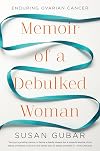
A quick Amazon.com search using key words “Breast Cancer Memoirs” brings up 277 results. Change “Breast” to “Ovarian” and you get only 20. True, a woman’s chances of getting breast cancer sometime during her life are 1 in 8, while her lifetime risk of ovarian cancer is approximately 1 in 67. But as Susan Gubar makes abundantly clear in Memoir of a Debulked Woman, ovarian cancer goes places other cancers do not, often tangling up with the intestines. Bowel obstructions are not show more uncommon; neither are ostomies, and these are things that polite women do not speak of. The survival rate for those diagnosed with ovarian cancer has not changed in years, primarily because the majority of those diagnosed are in the late stages of the disease. Ovarian cancer’s approach is insidious, its signs and symptoms so easily confused with a myriad other conditions.
Gubar, a noted feminist English professor and author (with Sandra Gilbert) of The Madwoman in the Attic, provides us with a memoir of “enduring” late-stage ovarian cancer. Her experiences, not unlike those of many other ovarian cancer patients, are harrowing—from the debulking (radical excision of all tissue that looks to be cancerous) to the abscess that results from a bowel perforation, and the chemotherapy, which is supposed to check further growth of the cancer. Her telling makes for very sober reading. This, as Gubar apologetically acknowledges, is not a feel-good sort of book. Rather, it represents her effort to name what many will not discuss, to blast away the euphemisms that surround the horror of this disease. Gubar wryly notes the reason there are no ovarian cancer activists [and, by extension, so few memoirs]: few women survive long enough to become activists. One could argue, however, that the writing of this book is a piece of activism in itself.
Though called a memoir, the text is actually something of a hybrid. It includes a medical/cultural history of the ovary, an examination of the many metaphors applied to cancer, as well as a substantive number of relevant excerpts and reflections from other illness narratives. The most compelling part of Memoir of a Debulked Woman is, of course, Gubar’s own story. She describes the debulking, the pain of a resistant abdominal abscess--the by-product of surgery, doctors' failed attempts to drain the abscess through tubes essentially bored through the muscles of the buttock, her huddling on the floor of the bathroom after chemotherapy...and it is grim. ( I should warn here that it may indeed not be the best reading for someone newly diagnosed, who may be coping with enough fear and anxiety as it is). But Gubar also conveys the love of family--her husband and daughters--and muses with a certain astonishment at opting for yet more invasive procedures when the cancer recurs--something she said she'd never do.
I greatly appreciated her efforts to place ovarian cancer within a historical and cultural context and her including the reflections of others. My complaints concern the too lengthy, rather academic discussions of the work of Frida Kahlo (especially without reproductions of Kahlo’s paintings appearing in the actual text) and the occasionally clunky academic writing. But these are niggling criticisms. Gubar’s, memoir is, more often than not, a no-holds-barred piece of writing. She dares to go where few have gone before. The cancer memoir, she notes dryly, is supposed to cheer others on, offer hope, tell them they too can beat it. This she does not do. She has much to offer all of us in her painfully truthful bearing witness to the many indignities an ovarian cancer patient is subject to. We need to demand better tools for detection; we need to know more and do better than we're currently doing.
How many of us know that women are suffering like this? How many of us are brave enough even to read this book and think about the issues around death and dying that it raises? That’s the question. show less
Gubar, a noted feminist English professor and author (with Sandra Gilbert) of The Madwoman in the Attic, provides us with a memoir of “enduring” late-stage ovarian cancer. Her experiences, not unlike those of many other ovarian cancer patients, are harrowing—from the debulking (radical excision of all tissue that looks to be cancerous) to the abscess that results from a bowel perforation, and the chemotherapy, which is supposed to check further growth of the cancer. Her telling makes for very sober reading. This, as Gubar apologetically acknowledges, is not a feel-good sort of book. Rather, it represents her effort to name what many will not discuss, to blast away the euphemisms that surround the horror of this disease. Gubar wryly notes the reason there are no ovarian cancer activists [and, by extension, so few memoirs]: few women survive long enough to become activists. One could argue, however, that the writing of this book is a piece of activism in itself.
Though called a memoir, the text is actually something of a hybrid. It includes a medical/cultural history of the ovary, an examination of the many metaphors applied to cancer, as well as a substantive number of relevant excerpts and reflections from other illness narratives. The most compelling part of Memoir of a Debulked Woman is, of course, Gubar’s own story. She describes the debulking, the pain of a resistant abdominal abscess--the by-product of surgery, doctors' failed attempts to drain the abscess through tubes essentially bored through the muscles of the buttock, her huddling on the floor of the bathroom after chemotherapy...and it is grim. ( I should warn here that it may indeed not be the best reading for someone newly diagnosed, who may be coping with enough fear and anxiety as it is). But Gubar also conveys the love of family--her husband and daughters--and muses with a certain astonishment at opting for yet more invasive procedures when the cancer recurs--something she said she'd never do.
I greatly appreciated her efforts to place ovarian cancer within a historical and cultural context and her including the reflections of others. My complaints concern the too lengthy, rather academic discussions of the work of Frida Kahlo (especially without reproductions of Kahlo’s paintings appearing in the actual text) and the occasionally clunky academic writing. But these are niggling criticisms. Gubar’s, memoir is, more often than not, a no-holds-barred piece of writing. She dares to go where few have gone before. The cancer memoir, she notes dryly, is supposed to cheer others on, offer hope, tell them they too can beat it. This she does not do. She has much to offer all of us in her painfully truthful bearing witness to the many indignities an ovarian cancer patient is subject to. We need to demand better tools for detection; we need to know more and do better than we're currently doing.
How many of us know that women are suffering like this? How many of us are brave enough even to read this book and think about the issues around death and dying that it raises? That’s the question. show less
A compelling and beautiful written memoir, extensively researched and refreshingly honest. This grueling personal account by one of the top feminists in academia details the horrors an ovarian cancer patient usually undergoes and reveals how little progress has been made in the treatment and detection of ovarian cancer over the past few years. Gubar takes the reader to the depths of her despair and then back up to the heights of her joy and gratitude at the life she's been given, and show more especially her beloved husband Don. This is, above all else, a love story that is real, poignant and a must read. Highly recommend. show less
Lists
Awards


You May Also Like


Associated Authors
Statistics
- Works
- 22
- Also by
- 14
- Members
- 3,236
- Popularity
- #7,904
- Rating
- 4.1
- Reviews
- 17
- ISBNs
- 60
- Languages
- 2
- Favorited
- 2