
Susan Griffin (1943–2025)
Author of Woman and Nature: The Roaring Inside Her
About the Author
Susan Griffin is an award-winning writer, playwright, filmmaker, and poet. She has written nineteen books, including A Chorus of Stones, which was a finalist for the National Book Award and the Pulitzer Prize.
Image credit: via author's website
Works by Susan Griffin
Shameless hussy review number 5 2 copies
Griffin, Susan Archive 1 copy
the wild iris 1 copy
Letter [1973] 1 copy
Associated Works
Sisters of the Earth: Women's Prose and Poetry About Nature (1991) — Contributor — 441 copies, 6 reviews
Cries of the Spirit: A Celebration of Women's Spirituality (2000) — Contributor — 404 copies, 2 reviews
Weaving the Visions: New Patterns in Feminist Spirituality (1989) — Contributor — 387 copies, 2 reviews
No More Masks: An Anthology of Twentieth-Century American Women Poets (1993) — Contributor, some editions — 226 copies, 3 reviews
The Writer on Her Work, Volume I: Contemporary Women Writers Reflect on their Art and Situation (1980) — Contributor — 199 copies, 1 review
Gay and Lesbian Poetry in Our Time (Stonewall Inn Editions) (1988) — Contributor — 189 copies, 1 review
She Rises Like the Sun: Invocations of the Goddess by Contemporary American Women Poets (1989) — Contributor — 71 copies
Single Woman of a Certain Age: 29 Women Writers on the Unmarried Midlife--Romantic Escapades, Empty Nests, Shifting Shapes, and Serene Independence (2005) — Contributor — 32 copies, 1 review
Peace or perish : a crisis anthology — Contributor — 4 copies
Tagged
Common Knowledge
- Birthdate
- 1943-01-26
- Date of death
- 2025-09-30
- Gender
- female
- Education
- University of California, Berkeley
San Francisco State University (BA|Creative writing)
San Francisco State University (Mx) - Occupations
- eco-feminist
writer
playwright
poet
essayist
memoirist - Awards and honors
- MacArthur Foundation grant
Emmy - Relationships
- Dimondstein, Geraldine (adoptive parent)
Dimondstein, Morton (adoptive parent)
Rosner, Elizabeth (mentee, friend) - Cause of death
- assisted death
Parkinson's disease - Nationality
- USA
- Birthplace
- Los Angeles, California, USA
- Places of residence
- California, USA (birth)
Berkeley, California, USA - Place of death
- Berkeley, California, USA
- Associated Place (for map)
- California, USA
Members
Reviews
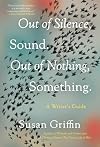
Susan Griffin is a professional author who's written more than twenty books since before the dawn of popular Internet. This book is about her writing process. She tells us about what's important, about avenues to discover, the importance of letting go of pre-conceived notions about writing, etc.
I've read many how-to guides on how to write. Swedish author Bodil Malmsten wrote a book about how she wrote, which is named *Så gör jag*, which roughly translates to *How I do it*. The important show more thing about the book, she said, was that the book dealt with how *she* wrote, not how anybody else should write. I mention this because Griffin's writing is similar to that from Malmsten.
> The idea of a blank page can be daunting, frightening enough to stop you in your tracks. But, fortunately, the blank page is not really where most writers begin. With a few exceptions, that page usually appears much further along in the process, when you are better prepared to meet the challenge.
Griffin's forté is her ability to carefully craft short sentences that, per paragraph, pack considerable punch; she nearly leads the reader by means of Socratic method: she doesn't tell us how to do something: she opens a door to waft us into a sea of possibilities.
The worst kind of guide is the one that is written as though the author is God: they know all, you know very little, and the author's tone is from up-on-high. Griffin is clearly aware of this kerfuffle and has completely side-stepped all of that by playing with open cards.
Her writing not only pulls the reader in but engages them by constantly showing examples of what she thinks is important to do or not do, as seen in this paragraph that touches on inspiration.
> It may begin inauspiciously. A neighbor’s front porch light is always on at night, for instance, and two nights in a row, at three in the morning, you see a young man sitting on the steps. After a while, you find this observation turning into a story. Or perhaps you just have a hunch, an outlier notion, about a current minor political issue, in which no one else seems to be as interested as you are and to which, nevertheless, despite all your attempts to abandon this idea, your attention keeps returning. Bit by bit you find yourself formulating an argument. Then again it may start with a compelling dream. Or even with what seems like a fleeting observation, except that it stays in your mind, like the grain of sand that irritates an oyster (and let’s hope this results in a pearl). Or it might be a story you heard as a child and only dimly remembered until one day this tale suddenly comes to the surface, carrying with it a host of new insights. Or is it a story you come across when you are looking for something else? Yet again, perhaps you are obsessed with a celebrity, a film, a novel, a painting. (More than one book or film or story or poem has been inspired by previous works such as Jane Austen’s Pride and Prejudice or Billy Wilder’s Sunset Boulevard.) But perhaps it is not just a memory that moves you but instead a sensation, the taste, for instance, of a particular cookie, called a madeleine, dipped into a cup of tea.
I mentioned that Griffin touches on what's important to *not* do. Here's an example of this:
> It used to be, and probably still is in many classrooms, a common practice to chastise and humiliate any student who is caught looking out the window, fixed in a rapt gaze at seemingly nothing at all. But with all due sympathy to any teacher who wishes her or his lessons to be heard, such moments of reverie are known to yield many creative insights.
Griffin clearly has collected many of her points over time, and it's easy for even the most experienced writers to find themselves in her advice.
> You might eventually discard anything you write. You may produce only a sentence or two. Or nothing at all. What is important is that you are present to the process. Being there, while focusing on nothing else, will ignite your creative mind. The results may not appear immediately. Yet somehow out of sight, your mind will be working. The delay resembles those times when you are asked a question for which you cannot think of an answer until hours later, when the perfect response comes to you. If you keep showing up, eventually what you are seeking will show up too.
I think Griffin's advice is at its very finest when touching on how writing works from a human, psychological angle. I'm glad she hasn't spouted off business-like advice. An example of what I mean:
> As long as you are paying attention to your thoughts, be aware of your own mood too. Do you feel like Lillian Hellman, as she was portrayed in the film Julia, when, in exasperation, she threw her typewriter out the window? Then again, your own writing may be putting you to sleep. Whatever you are feeling as you write—whether you are bored, exhilarated, rapturous, solemn, studious, fascinated, angry, sad—will somehow make its way onto the page, and as a result the reader will feel what you are feeling as you write. Take time to find the words and images or ideas that please and excite you in some way. Don’t settle for less.
> Of course, you can try to think through what your true feelings are (as you will inevitably find yourself doing in any case). But writing itself can help you locate deeper and often less-than-conscious emotions. As you look for the right words to express this inner experience, you must become an exacting master. Instead of searching analytically, listen to the sound of your words to find out if they resonate. Let your inner experience be the tuning fork. You are not looking for the most pleasing or impressive words. You are searching for what rings true.
There are many beautiful paragraphs found throughout this book. Griffin draws from personal experience and paints pictures that are clear and sometimes funny, for the benefit of the book.
My only grumble about this book is not really a grumble: it's focused on fiction and not as much on non-fiction, but that's just personal. Most of the advice is, in some ways, applicable to non-fiction as well.
This book contains plenty of technical writing tips that are both tangible and helpful. Griffin radiantly casts off examples to clarify what she means.
> It’s easy to use common phrases when you write, and even at times preferable, where they fit or are accurate. (If you are constantly striving to be inventive, not only will you wear yourself out, your reader will soon get tired too.) And, speaking of “fresh,” it’s important that as you write, you listen to the language you are using with fresh ears. Recently linguist George Lakoff suggested to activists regarding the issue of student debts that they forgo the habitual phrase, which is to forgive debts, and use the phrase cancel debts instead. While this campaign argues that students should not be forced to incur debt in order to be educated, the use of the word forgive implies that having debt is a sin. Employing a habitual phrase, the organizers had failed to really hear what their words implied.
All in all, this is a wondrous book that deserves a spot next to those by Verlyn Klinkenborg, Joe Moran, William Zinsser, Robert Graves, and Peter Ginna. show less
I've read many how-to guides on how to write. Swedish author Bodil Malmsten wrote a book about how she wrote, which is named *Så gör jag*, which roughly translates to *How I do it*. The important show more thing about the book, she said, was that the book dealt with how *she* wrote, not how anybody else should write. I mention this because Griffin's writing is similar to that from Malmsten.
> The idea of a blank page can be daunting, frightening enough to stop you in your tracks. But, fortunately, the blank page is not really where most writers begin. With a few exceptions, that page usually appears much further along in the process, when you are better prepared to meet the challenge.
Griffin's forté is her ability to carefully craft short sentences that, per paragraph, pack considerable punch; she nearly leads the reader by means of Socratic method: she doesn't tell us how to do something: she opens a door to waft us into a sea of possibilities.
The worst kind of guide is the one that is written as though the author is God: they know all, you know very little, and the author's tone is from up-on-high. Griffin is clearly aware of this kerfuffle and has completely side-stepped all of that by playing with open cards.
Her writing not only pulls the reader in but engages them by constantly showing examples of what she thinks is important to do or not do, as seen in this paragraph that touches on inspiration.
> It may begin inauspiciously. A neighbor’s front porch light is always on at night, for instance, and two nights in a row, at three in the morning, you see a young man sitting on the steps. After a while, you find this observation turning into a story. Or perhaps you just have a hunch, an outlier notion, about a current minor political issue, in which no one else seems to be as interested as you are and to which, nevertheless, despite all your attempts to abandon this idea, your attention keeps returning. Bit by bit you find yourself formulating an argument. Then again it may start with a compelling dream. Or even with what seems like a fleeting observation, except that it stays in your mind, like the grain of sand that irritates an oyster (and let’s hope this results in a pearl). Or it might be a story you heard as a child and only dimly remembered until one day this tale suddenly comes to the surface, carrying with it a host of new insights. Or is it a story you come across when you are looking for something else? Yet again, perhaps you are obsessed with a celebrity, a film, a novel, a painting. (More than one book or film or story or poem has been inspired by previous works such as Jane Austen’s Pride and Prejudice or Billy Wilder’s Sunset Boulevard.) But perhaps it is not just a memory that moves you but instead a sensation, the taste, for instance, of a particular cookie, called a madeleine, dipped into a cup of tea.
I mentioned that Griffin touches on what's important to *not* do. Here's an example of this:
> It used to be, and probably still is in many classrooms, a common practice to chastise and humiliate any student who is caught looking out the window, fixed in a rapt gaze at seemingly nothing at all. But with all due sympathy to any teacher who wishes her or his lessons to be heard, such moments of reverie are known to yield many creative insights.
Griffin clearly has collected many of her points over time, and it's easy for even the most experienced writers to find themselves in her advice.
> You might eventually discard anything you write. You may produce only a sentence or two. Or nothing at all. What is important is that you are present to the process. Being there, while focusing on nothing else, will ignite your creative mind. The results may not appear immediately. Yet somehow out of sight, your mind will be working. The delay resembles those times when you are asked a question for which you cannot think of an answer until hours later, when the perfect response comes to you. If you keep showing up, eventually what you are seeking will show up too.
I think Griffin's advice is at its very finest when touching on how writing works from a human, psychological angle. I'm glad she hasn't spouted off business-like advice. An example of what I mean:
> As long as you are paying attention to your thoughts, be aware of your own mood too. Do you feel like Lillian Hellman, as she was portrayed in the film Julia, when, in exasperation, she threw her typewriter out the window? Then again, your own writing may be putting you to sleep. Whatever you are feeling as you write—whether you are bored, exhilarated, rapturous, solemn, studious, fascinated, angry, sad—will somehow make its way onto the page, and as a result the reader will feel what you are feeling as you write. Take time to find the words and images or ideas that please and excite you in some way. Don’t settle for less.
> Of course, you can try to think through what your true feelings are (as you will inevitably find yourself doing in any case). But writing itself can help you locate deeper and often less-than-conscious emotions. As you look for the right words to express this inner experience, you must become an exacting master. Instead of searching analytically, listen to the sound of your words to find out if they resonate. Let your inner experience be the tuning fork. You are not looking for the most pleasing or impressive words. You are searching for what rings true.
There are many beautiful paragraphs found throughout this book. Griffin draws from personal experience and paints pictures that are clear and sometimes funny, for the benefit of the book.
My only grumble about this book is not really a grumble: it's focused on fiction and not as much on non-fiction, but that's just personal. Most of the advice is, in some ways, applicable to non-fiction as well.
This book contains plenty of technical writing tips that are both tangible and helpful. Griffin radiantly casts off examples to clarify what she means.
> It’s easy to use common phrases when you write, and even at times preferable, where they fit or are accurate. (If you are constantly striving to be inventive, not only will you wear yourself out, your reader will soon get tired too.) And, speaking of “fresh,” it’s important that as you write, you listen to the language you are using with fresh ears. Recently linguist George Lakoff suggested to activists regarding the issue of student debts that they forgo the habitual phrase, which is to forgive debts, and use the phrase cancel debts instead. While this campaign argues that students should not be forced to incur debt in order to be educated, the use of the word forgive implies that having debt is a sin. Employing a habitual phrase, the organizers had failed to really hear what their words implied.
All in all, this is a wondrous book that deserves a spot next to those by Verlyn Klinkenborg, Joe Moran, William Zinsser, Robert Graves, and Peter Ginna. show less

This is a considered and detailed feminist takedown of pornography. Focus is made on European and modern writings with some special emphasis on Histoire d'O Story of O. Some that don't get reviled are Song of Solomon and The Kama Sutra of Vatsyayana.
Some say pornography, and I suppose violent imagery in games and films, cannot influence viewers. An interesting point made by this author is that that contradicts corporate money spent on advertising. This also is refuted by the interest and show more controversy around subliminal advertising. Also recounted is successful self-improvement techniques involving creative visualization.
I like the idea of science emerging from a cultural matrix.
The author connects the pornographer to the chauvinist to the bigot to Hitler.
Some say pornography, and I suppose violent imagery in games and films, cannot influence viewers. An interesting point made by this author is that that contradicts corporate money spent on advertising. This also is refuted by the interest and show more controversy around subliminal advertising. Also recounted is successful self-improvement techniques involving creative visualization.
If the social scientist who found no correlation between violence and pornography believes his studies to have proved that pornography does not cause violence, then we must wonder why he does not begin to examine pornography as a strange and extraordinary exception to all other imagery. For in this case, if he has discovered a form of culture which does not affect behavior, he ought to study this form to discover what is exceptional in it, and what it might tell us about the mind.
Both the social scientist and the pornographer collaborate on the assumption that pornographic imagery does in fact affect behavior. Millions of dollars are spent on research, which not only documents but discovers techniques by which an association between sexual desire and any activity encourages behavior. This research is financed by an advertising industry which used pornographic photographs of women and sublimi- nally embedded images of penises and breasts in the belief that showing these images in proximity to a given product, a kind of Scotch, or a brand of cigarettes, will cause the viewer to buy these products. Here research suggests that the pornographic image has such a powerful effect on behavior that it is worth millions of dollars a year. See Wilson Bryan Key, Media Sexploitation (New York, 1977) and Vance Packard, The Hidden Persuaders (New York, 1957).
I like the idea of science emerging from a cultural matrix.
As Ruth Hubbard has written of Darwin's thought: "There is no such thing as objective, value-free science. An era's science is part of its politics, economics and sociology: it is generated by them and in turn helps to generate them." In short, science is not fact: it is culture; and so science's definition of instinct can perhaps tell us more about culture's will and belief than about the natural limits of our behavior, more about our minds than about nature.
And indeed, a large body of scientific data exists to disprove the ideas of Freud and Lorenz and Stekel and Hobbes and Spencer regarding human nature. In his massive study of both instinct and our culture's biased view of nature, The Anatomy of Human Destructiveness, Erich Fromm writes: "The anthropological data have demonstrated that the instinctivistic interpretation of human destructiveness is not tenable. While we find in all cultures that men defend themselves. destructiveness and cruelty are so minimal in so many that these great differences could not be explained if we were dealing with an 'innate passion.'
The author connects the pornographer to the chauvinist to the bigot to Hitler.
There are two kinds of delusion which it is possible for the civilized mind to embrace. The first delusion is a private one. The mind possessed by such a delusion is often perceived as mad. Certainly as strange. For the private delusion sets the one who believes in it apart from the rest of humanity. But exactly the opposite is true of the second delusion. This is the mass delusion: it consists of a shared set of beliefs which are untrue and which distort reality. A whole nation, for example, decides to believe that "the Jew" is evil. This type of delusion brings the man or woman who believes in it into a common circle of humanity. And because the mass delusion is a shared delusion, the mind which shares it is perceived as normal, while the same society perceives as mad the mind which sees reality.show less
Pornography is a mass delusion and so is racism. In certain periods of history, both of these mass delusions have been accepted as sane views of the world, by whole societies or certain sectors of society. The pornographic ideology, for instance, is perceived as a reasonable world view by parts of American and European societies today. And various forms of racism have been the official ideologies of societies, political parties, and even governments. Most notably, we remember the official racism of the Third Reich.
...
We know that the sufferings women experience in a pornographic culture are different in kind and quality from the sufferings of black people in a racist society, or of Jewish people under anti-Semitism. (And we know that the hatred of homosexuality has again another effect on the lives of women and men outside of the traditional sexual roles.*) But if we look closely at the portrait which the racist draws of a man or a woman of color, or that the anti-Semite draws of the Jew, or that the pornographer draws of a woman, we begin to see that these fantasized figures resemble one another. For they are the creations of one mind. This is the chauvinist mind, a mind which projects all it fears in itself onto another: a mind which defines itself by what it hates.
...
Hannah Arendt has observed precisely this pattern in Nazi propaganda. She tells us that the announcements of the Third Reich consistently contradicted themselves. Even within the same statement, contradictory assertions were to be found. Moreover, continually, with almost no attempt to conceal the divergence between fact and statement, the pronouncements of the Third Reich contradicted what the German people could see with their own eyes. But here we are at the heart of both the experience and the raison d'être of Nazi propaganda. Like pornography, the medium of propaganda itself speaks, gives us a message, and this message is that the knowledge of culture and of authority is to be trusted over direct sensual knowledge. "The effectiveness of this kind of propaganda demonstrates one of the chief characteristics of modern masses," Hannah Arendt writes; the masses "do not believe in anything visible, in the reality of their own experience, they do not trust their own eyes and ears but only their imaginations."
...
In every detail, the concentration camp resembled an enacted porno- graphic fantasy. Even the hardware of sadomasochism was present. Men and women were chained and shackled; and the SS officer, who wore high leather boots, carried a whip. And just as in a pornographic fantasy, the Jew was beaten. He was "disciplined." A man who at- tempted to escape, for example, was "beaten to a pulp." And then he was made to stand for hours in this beaten state under a hot sun or in rain before being lashed again or "thrown into a dungeon for further torture, or hanged before the assembled camp."

My primary response to this work was gratitude - it's easy to forget, forty years later, the monumental nature of the silence that was broken by second wave feminism, and this torrent of well-chosen words is the sound of the dam breaking. Much of it should be read aloud, I think, for full impact. "Because we know we are of this earth" - Griffin's work will only cease to be relevant when and if this realization fully dawns on humanity.

Susan Griffin's collection of Poetry, fiction, one plays, essays, reviews, etc. written from 1967-1982 is necessarily a hodgepodge. One poem stands out, "The Song of a Woman with Her Parts Coming Out". I would like to hear it as a song by Diamanda Galás. Her prose is poetical" allusive, descriptive without being direct. Her poetry is prose-like. The initial material of first-person interviews really stands out. This includes women recalling abortions including when they were illegal and show more woman recalling rape. In one case, these were part of the same event. show less
Lists
Awards


You May Also Like


Associated Authors
Statistics
- Works
- 25
- Also by
- 24
- Members
- 1,993
- Popularity
- #12,910
- Rating
- 3.7
- Reviews
- 15
- ISBNs
- 58
- Languages
- 4
- Favorited
- 3