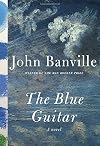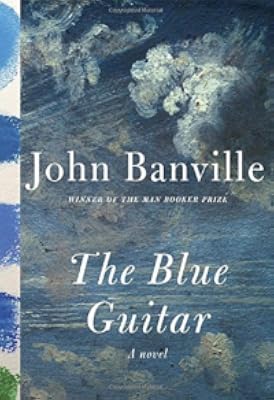
The Blue Guitar
by John Banville
On This Page
Description
Oliver Otway Orme, a semi-famous artist and petty thief, despairing of limits in his talents, flees when his latest theft is discovered and sequesters himself in his childhood home, where he struggles to understand how he reached his current state.Tags
Recommendations




Member Reviews
“How the past does cling, raking us lovingly with its tender claws.”
Introspective novel that focuses on the life of the narrator, Oliver Otway Orme, an acclaimed artist, and self-proclaimed thief. He feels blocked in his art due to an inability to capture anything meaningful beneath the surface of his subjects. Oliver comes across as a narcissist. The people around him serve as diversions for his whims. He thinks he is fooling everyone, but he may be in for a surprise or two. He “steals” his best friend’s wife to be his mistress. He and his wife grieve the death of their daughter. These two elements serve as the basis of a very slim plotline.
"Everything seemed hollow, hollow and weightless, like those brittle casings of show more themselves that dead wasps leave on window-sills at the dusty end of summer. Grief was flat, in other words, a flat dull empty ache."
Oliver delivers an inner dialogue of his thoughts and feelings about his relationships, family, friendships, and artistic pursuits, while the reader infers his less than admirable qualities. Subtle humor is embedded into the narrative. It is a story of aging, regret, and memory. Oliver’s life has become a big ball of yarn, and through his musings, he tries to untangle it. The primary attraction of this novel is the beautifully crafted language. John Banville is a wonderful wordsmith.
“It’s as if I had been standing for all my life in front of a full-length mirror, watching the people passing by, behind and in front of me, and now someone had taken me roughly by the shoulders and spun me about, and behold! There it was, the unreflected world, of people and things, and I nowhere to be seen in it.” show less
Introspective novel that focuses on the life of the narrator, Oliver Otway Orme, an acclaimed artist, and self-proclaimed thief. He feels blocked in his art due to an inability to capture anything meaningful beneath the surface of his subjects. Oliver comes across as a narcissist. The people around him serve as diversions for his whims. He thinks he is fooling everyone, but he may be in for a surprise or two. He “steals” his best friend’s wife to be his mistress. He and his wife grieve the death of their daughter. These two elements serve as the basis of a very slim plotline.
"Everything seemed hollow, hollow and weightless, like those brittle casings of show more themselves that dead wasps leave on window-sills at the dusty end of summer. Grief was flat, in other words, a flat dull empty ache."
Oliver delivers an inner dialogue of his thoughts and feelings about his relationships, family, friendships, and artistic pursuits, while the reader infers his less than admirable qualities. Subtle humor is embedded into the narrative. It is a story of aging, regret, and memory. Oliver’s life has become a big ball of yarn, and through his musings, he tries to untangle it. The primary attraction of this novel is the beautifully crafted language. John Banville is a wonderful wordsmith.
“It’s as if I had been standing for all my life in front of a full-length mirror, watching the people passing by, behind and in front of me, and now someone had taken me roughly by the shoulders and spun me about, and behold! There it was, the unreflected world, of people and things, and I nowhere to be seen in it.” show less
"Painting, like stealing, was an endless effort at possession, and endlessly I failed."
"I will stop at a landing window and press my forehead to the glass and look out over the sleeping town and think what a Byronic figure I must cut, perched up here, solitary and tragic-seeming, no more to go a-roving. This is the way it is with me, always looking in or looking out, a chilly pane of glass between me and a remote and longed-for world."
"But take that last thing I was working on, the unfinished piece that finished me for good: look at the blimp-coloured guitar [...] the world I chose to paint was not my own."
"I confess I'm quietly at one with [Cezanne] in certain matters, such as his insistence that emotion and what-have-you cannot be show more expressed directly in the work but must exude, like a fragrance, from form at its purest....They called me cold because they were too dense to feel the heat." [Maybe a note applicable to Banville himself?]
Another of Banville's middle-aged isolates, nose to paper, ruminating on his messy, misbegotten life. Gorgeously written, as always, but I'm dropping half a point for its familiarity. (Vaublin, from Ghosts, resurfaces here, the painter the narrator refers to as his "twin.")
Banville has said that he's not interested in psychology and has distanced himself from his earlier works. Language is the thing, the sentence, finding the perfect description of light, of sea, of sky. Notions of character and plot, then, are just that--notions--for him. Maybe nothing more than the necessary frame and canvas on which to paint the prose. show less
"I will stop at a landing window and press my forehead to the glass and look out over the sleeping town and think what a Byronic figure I must cut, perched up here, solitary and tragic-seeming, no more to go a-roving. This is the way it is with me, always looking in or looking out, a chilly pane of glass between me and a remote and longed-for world."
"But take that last thing I was working on, the unfinished piece that finished me for good: look at the blimp-coloured guitar [...] the world I chose to paint was not my own."
"I confess I'm quietly at one with [Cezanne] in certain matters, such as his insistence that emotion and what-have-you cannot be show more expressed directly in the work but must exude, like a fragrance, from form at its purest....They called me cold because they were too dense to feel the heat." [Maybe a note applicable to Banville himself?]
Another of Banville's middle-aged isolates, nose to paper, ruminating on his messy, misbegotten life. Gorgeously written, as always, but I'm dropping half a point for its familiarity. (Vaublin, from Ghosts, resurfaces here, the painter the narrator refers to as his "twin.")
Banville has said that he's not interested in psychology and has distanced himself from his earlier works. Language is the thing, the sentence, finding the perfect description of light, of sea, of sky. Notions of character and plot, then, are just that--notions--for him. Maybe nothing more than the necessary frame and canvas on which to paint the prose. show less
Ever ask yourself this question: which contemporary English language writer has the most extensive vocabulary? If you read anything by John Banville, you would not ask, you would know the answer. Other wordy writers admit it. Ruth, the main protagonist of Niall Williams's 'History of the Rain', when describing the sound of a voice, has this to say: "He just made this low thrum. John Banville would know the word for it, I don’t".
Banville's word usage is precise. Granted, it is a bit extravagant, many would say unnecessarily complicated, but it creates a distinct voice, immediately recognizable, his own. Not everyone enjoys Banville's style, you would hear people referring to his vocabulary as obscure, self-indulgent, exasperating, show more labored, pretentious, snobbish, etc. Thus, a fair warning: don't read his books if you are not ready to peruse a dictionary once in a while, if you are happy with the shrinking vocabulary of the modern world.
Here is how this particular book starts:
"Call me Autolycus. Well, no, don't. Although I am, like that unfunny clown, a picker-up of unconsidered trifles. Which is a fancy way of saying I steal things... The objects, the artefacts, that I purloin - there is a nice word, prim and pursed - are of scant value for the most part. Oftentimes their owners don't even miss them. This upsets me, puts me in a dither..."
Oliver Orme does not strike you as a charming person from that very first paragraph, he becomes even less likable as we learn more of his story. Self-absorbed, insensitive to others, cowardly, he is not only an unreliable narrator, he is also not a reliable human being.
Did I really say a human being, a person? Oh yes, I know, he is a fictional creation, he is not of flesh and blood, but he is somehow more real than your neighbor, more real than your colleague, possibly more real than your friend. This is what Banville is capable of- his character is there with you in your living room shuddering with fear and writhing in pain. And "pain compels eloquence".
"... out there is the world and in here is the picture of it, and between the two yawns the man-killing crevasse". Orme, a former painter disillusioned with his art, steps into this yawning crevasse quite readily and tells us the story of his fall.
The fall is not scary at first, it is just another affair, he's had many behind the back of his grieving wife. He likes to self indulge in his quest for love. "Poor old love, what a frail and tremulous flower it is." However, this time he finds it hard to extricate himself. Even the tale is difficult to tell: "Damn it, here's another digression: there must surely be something or somewhere I don't want to get to, hence all these seemingly innocent meanderings down dusty by-roads". Orme keeps turning to his childhood, to his past: "... how the past does cling, raking us lovingly with its tender claws", to his dreams: "... after all, why should my dream life have a meaning, when my waking one does not?"
Is it not a moral story after all? Is this what Banville is getting to, that despite all the complexity of life simple choices we make are evident in their consequences? And that the responsibility for these outcomes rests with us? I won't tell you how the book ends and will let you decide for yourself.
Ultimately, it is not the plot or moral questions that make this book stand out. It's the palette of the painter, dominated by various shades of blue, it's the sudden transformations of prose into near-poetry, it is the pangs of sadness, moments of grief, which are never far away. It is the search for home, a place where we intimately belong: "where might that rare place be found, pale Ramon"? show less
Banville's word usage is precise. Granted, it is a bit extravagant, many would say unnecessarily complicated, but it creates a distinct voice, immediately recognizable, his own. Not everyone enjoys Banville's style, you would hear people referring to his vocabulary as obscure, self-indulgent, exasperating, show more labored, pretentious, snobbish, etc. Thus, a fair warning: don't read his books if you are not ready to peruse a dictionary once in a while, if you are happy with the shrinking vocabulary of the modern world.
Here is how this particular book starts:
"Call me Autolycus. Well, no, don't. Although I am, like that unfunny clown, a picker-up of unconsidered trifles. Which is a fancy way of saying I steal things... The objects, the artefacts, that I purloin - there is a nice word, prim and pursed - are of scant value for the most part. Oftentimes their owners don't even miss them. This upsets me, puts me in a dither..."
Oliver Orme does not strike you as a charming person from that very first paragraph, he becomes even less likable as we learn more of his story. Self-absorbed, insensitive to others, cowardly, he is not only an unreliable narrator, he is also not a reliable human being.
Did I really say a human being, a person? Oh yes, I know, he is a fictional creation, he is not of flesh and blood, but he is somehow more real than your neighbor, more real than your colleague, possibly more real than your friend. This is what Banville is capable of- his character is there with you in your living room shuddering with fear and writhing in pain. And "pain compels eloquence".
"... out there is the world and in here is the picture of it, and between the two yawns the man-killing crevasse". Orme, a former painter disillusioned with his art, steps into this yawning crevasse quite readily and tells us the story of his fall.
The fall is not scary at first, it is just another affair, he's had many behind the back of his grieving wife. He likes to self indulge in his quest for love. "Poor old love, what a frail and tremulous flower it is." However, this time he finds it hard to extricate himself. Even the tale is difficult to tell: "Damn it, here's another digression: there must surely be something or somewhere I don't want to get to, hence all these seemingly innocent meanderings down dusty by-roads". Orme keeps turning to his childhood, to his past: "... how the past does cling, raking us lovingly with its tender claws", to his dreams: "... after all, why should my dream life have a meaning, when my waking one does not?"
Is it not a moral story after all? Is this what Banville is getting to, that despite all the complexity of life simple choices we make are evident in their consequences? And that the responsibility for these outcomes rests with us? I won't tell you how the book ends and will let you decide for yourself.
Ultimately, it is not the plot or moral questions that make this book stand out. It's the palette of the painter, dominated by various shades of blue, it's the sudden transformations of prose into near-poetry, it is the pangs of sadness, moments of grief, which are never far away. It is the search for home, a place where we intimately belong: "where might that rare place be found, pale Ramon"? show less
The Blue Guitar by John Banville is a recommended novel about petty thief, former painter, and aging lothario Oliver Otway Orme.
Olly is having a mid-life crisis. In The Blue Guitar he is sharing his thoughts and observations with us. As a narrator Olly is equal parts pretentious and self-effacing. As a man he is nearly fifty, short, stout, and married. He was a painter of some renown at one time but no longer paints, having given it up for existential reasons. He is also a thief. He lets us know right away that this is so and tells us: "The objects, the artefacts, that I purloin - there is a nice word, prim and pursed - are of scant value for the most part. Oftentimes their owners don’t even miss them." Olly has never been caught.
Now show more Olly is stealing Polly, the wife of his friend Marcus. He comments, "Believe me, when it comes to first times, stealing and love have a lot in common." When their affair is discovered, Olly runs away to his family home to hide, although the fact that he chose to go there was really never a secret since it is the first place both Polly and his wife look. Olly truly is a man filled with regret who wants to be rescued from himself.
Olly is an unlikeable and unreliable narrator, but Banville does such an excellent job describing scenes, creating this farcical character Oliver Otway Orme (O.O.O.) that you will follow all of Olly's narcissistic prose and catch the humor embedded in the descriptions and situations. The novel is set in the Victorian Era and the language of the book reflects this.
Banville is an excellent, accomplished writer, which is what saves The Blue Guitar. His vocabulary, descriptions, and observations are insightful and intelligent. The plot is very simple, though, so the majority of the book is Olly's ruminating. The plot in the first part is especially slowed paced.
Disclosure: My Kindle edition was courtesy of Knopf Doubleday for review purposes. show less
Olly is having a mid-life crisis. In The Blue Guitar he is sharing his thoughts and observations with us. As a narrator Olly is equal parts pretentious and self-effacing. As a man he is nearly fifty, short, stout, and married. He was a painter of some renown at one time but no longer paints, having given it up for existential reasons. He is also a thief. He lets us know right away that this is so and tells us: "The objects, the artefacts, that I purloin - there is a nice word, prim and pursed - are of scant value for the most part. Oftentimes their owners don’t even miss them." Olly has never been caught.
Now show more Olly is stealing Polly, the wife of his friend Marcus. He comments, "Believe me, when it comes to first times, stealing and love have a lot in common." When their affair is discovered, Olly runs away to his family home to hide, although the fact that he chose to go there was really never a secret since it is the first place both Polly and his wife look. Olly truly is a man filled with regret who wants to be rescued from himself.
Olly is an unlikeable and unreliable narrator, but Banville does such an excellent job describing scenes, creating this farcical character Oliver Otway Orme (O.O.O.) that you will follow all of Olly's narcissistic prose and catch the humor embedded in the descriptions and situations. The novel is set in the Victorian Era and the language of the book reflects this.
Banville is an excellent, accomplished writer, which is what saves The Blue Guitar. His vocabulary, descriptions, and observations are insightful and intelligent. The plot is very simple, though, so the majority of the book is Olly's ruminating. The plot in the first part is especially slowed paced.
Disclosure: My Kindle edition was courtesy of Knopf Doubleday for review purposes. show less
The greatest joy is happening to read about the world as you yourself see it and feel it. For me, John Banville provides that experience to a tee. His writing is perfect. He bathes the everyday and the ordinary in an extraordinary light - lifting people and objects to their fullest potential in such a way as for the reader to truly appreciate and marvel at them and their existence.
Another tale of forbidden love and ill-matched lovers. Again, like the other Banville novels I have read, it is bleak and stormy but there is beauty and humour in the darkness.
I found the narrator and protagonist of this story, Oliver Orme, at first rather unlikeable. But I warmed to him through his playful self-deprecating explanations and descriptions. show more Although done in a very self-conscious and purposeful way, this side of his character outweighs the selfishness and you can't help but empathise with his reasonings and torments.
Polly - his mistress, his lover, his best friends wife - is loveable and charming in her girlish and unassuming way. I could understand how Oliver came to fall in love with her from the sense of feeling her character projects.
Surprisingly for me, I was slow to take to this book. I think my concentration was off. But once I was in, I was in. And I didn't want to get out. show less
Another tale of forbidden love and ill-matched lovers. Again, like the other Banville novels I have read, it is bleak and stormy but there is beauty and humour in the darkness.
I found the narrator and protagonist of this story, Oliver Orme, at first rather unlikeable. But I warmed to him through his playful self-deprecating explanations and descriptions. show more Although done in a very self-conscious and purposeful way, this side of his character outweighs the selfishness and you can't help but empathise with his reasonings and torments.
Polly - his mistress, his lover, his best friends wife - is loveable and charming in her girlish and unassuming way. I could understand how Oliver came to fall in love with her from the sense of feeling her character projects.
Surprisingly for me, I was slow to take to this book. I think my concentration was off. But once I was in, I was in. And I didn't want to get out. show less
At first glance this book's starting point is not promising - a mid-life crisis novel told by an unsympathetic, unreliable and self-pitying narrator, but Banville is too good a writer to be limited by cliche.
The narrator is Oliver Orme, a painter who has stopped painting and a petty thief, looking back at a series of events triggered by an affair with his friend's wife. Banville shows a painterly eye for detail, he is an expert at capturing moods and emotions, and there is plenty of dry humour. It is not always an easy read - Banville's classical education is often evident and some of the vocabulary is arcane* (though always deployed with precision).
Perhaps not the best place to start with Banville, but a stimulating and enjoyable show more read.
* I made a list of the words I looked up (in a few cases these were vaguely familiar but I wanted a precise definition): asportation, autochthon, bibelot, bleb, borborygmic, claustral, consistory, cullion, finical, foulard, glair, haruspicate, hypnogeny, imbricated, instauration, jorum, losel, oxter, phthisic, seriatim, soughing, volute show less
The narrator is Oliver Orme, a painter who has stopped painting and a petty thief, looking back at a series of events triggered by an affair with his friend's wife. Banville shows a painterly eye for detail, he is an expert at capturing moods and emotions, and there is plenty of dry humour. It is not always an easy read - Banville's classical education is often evident and some of the vocabulary is arcane* (though always deployed with precision).
Perhaps not the best place to start with Banville, but a stimulating and enjoyable show more read.
* I made a list of the words I looked up (in a few cases these were vaguely familiar but I wanted a precise definition): asportation, autochthon, bibelot, bleb, borborygmic, claustral, consistory, cullion, finical, foulard, glair, haruspicate, hypnogeny, imbricated, instauration, jorum, losel, oxter, phthisic, seriatim, soughing, volute show less
“I’m tired of the past, of the wish to be there and not here,” John Banville writes, and yet the book oozes its history. These are the dusty figures of midnight wanderings. The artist as a thief, and a far less subtle one than Siken's The War of the Foxes imagines. John Banville's novel is one of self-reflection and regret, the slow slip into complacency that we all eventually fall into and the wondering over whether there is another way. Is all art thievery? Is it possible to get something we desire without it losing its lustre? For that matter, what do we truly want? One person I spoke with heard me say John Banville's name and replied in a huff "Oh, that pretentious boor." Yes, to some he would be just that.
This is the story of show more Olly Orme, a painter and petty thief who has lost his inspiration to paint but gained his best friend's wife. The narrative begins with him having sequestered himself in his childhood home to avoid both his mistress and his own wife and reminisce over his own history. Slowly, the writing moves away from this focused plot to instead focus upon the intricacies of art and language itself. Why should we be shackled down by our own expectations? Why can't we show things as they truly are, but instead as we want them to be? Or in showing things as we want them to be are we truly showing them as they are? These heady thoughts tangle with the plot until the ultimate focus of the reader is on the words, the melody, the rhythm of the story itself.
The book was difficult to get through for me, but it was beautiful. I didn't enjoy it quite as much as The Sea, for to me The Sea is a true masterpiece and I enjoyed its more subtle approach. All the same, Banville is a glorious writer and one that I would recommend without hesitation to anyone looking for something a bit more difficult. I would caution, however, to focus more on the poeticism of his writing than much else. show less
This is the story of show more Olly Orme, a painter and petty thief who has lost his inspiration to paint but gained his best friend's wife. The narrative begins with him having sequestered himself in his childhood home to avoid both his mistress and his own wife and reminisce over his own history. Slowly, the writing moves away from this focused plot to instead focus upon the intricacies of art and language itself. Why should we be shackled down by our own expectations? Why can't we show things as they truly are, but instead as we want them to be? Or in showing things as we want them to be are we truly showing them as they are? These heady thoughts tangle with the plot until the ultimate focus of the reader is on the words, the melody, the rhythm of the story itself.
The book was difficult to get through for me, but it was beautiful. I didn't enjoy it quite as much as The Sea, for to me The Sea is a true masterpiece and I enjoyed its more subtle approach. All the same, Banville is a glorious writer and one that I would recommend without hesitation to anyone looking for something a bit more difficult. I would caution, however, to focus more on the poeticism of his writing than much else. show less
Members
- Recently Added By
Published Reviews
ThingScore 75
Novels with plots that are slight or familiar-seeming tend to compensate by pumping up the idiosyncrasy of the narrative voice. Even the most humdrum events become interesting, if the person telling us about them is a “character” of some definite kind: amusing, monstrous, self-deceiving, knowingly unreliable, even just quirky.
added by ozzer
Lists

International Dublin Literary Award Longlist 2017
147 works; 3 members

Dublin Literary Award Longlist 2017
147 works; 2 members
Kirkus Starred Fiction Reviews of Books Published in 2015
310 works; 6 members

Books Read in 2018
4,360 works; 110 members
Author Information

91+ Works 28,103 Members
Some Editions
Awards and Honors
Awards
Notable Lists
Series
Belongs to Publisher Series
L'eclèctica (257)
Common Knowledge
- Canonical title
- The Blue Guitar
- Original title
- The Blue Guitar
- Original publication date
- 2015
- People/Characters*
- Orme, Oliver; Gloria; Marcus; Polly; La pequeña Pip
- Important places
- Ireland
- Epigraph*
- "Las cosas como son cambian en la guitarra azul" Wallace Stevens
- First words*
- Llamadme Autólico.
- Original language
- English
*Some information comes from Common Knowledge in other languages. Click "Edit" for more information.
Classifications
Statistics
- Members
- 369
- Popularity
- 85,462
- Reviews
- 17
- Rating
- (3.35)
- Languages
- 8 — Catalan, Dutch, English, French, German, Italian, Portuguese, Spanish
- Media
- Paper, Audiobook, Ebook
- ISBNs
- 30
- ASINs
- 6