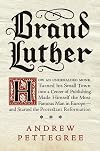
Brand Luther: 1517, Printing, and the Making of the Reformation
by Andrew Pettegree
On This Page
Description
When Martin Luther posted his "theses" on the door of the Wittenberg church in 1517, protesting corrupt practices, he was virtually unknown. Within months, his ideas spread across Germany, then all of Europe; within years, their author was not just famous, but infamous, responsible for catalyzing the violent wave of religious reform that would come to be known as the Protestant Reformation and engulfing Europe in decades of bloody war. Luther came of age with the printing press, and the path show more to glory of neither one was obvious to the casual observer of the time. Printing was, and is, a risky business--the questions were how to know how much to print and how to get there before the competition. Pettegree illustrates Luther's great gifts not simply as a theologian, but as a communicator, indeed, as the world's first mass-media figure, its first brand. He recognized the power of pamphlets, written in the colloquial German of everyday people, to win the battle of ideas. But that wasn't enough--not just words, but the medium itself was the message. Fatefully, Luther had a partner in the form of artist and businessman Lucas Cranach, who together with Wittenberg's printers created the distinctive look of Luther's pamphlets. Together, Luther and Cranach created a product that spread like wildfire--it was both incredibly successful and widely imitated. Soon Germany was overwhelmed by a blizzard of pamphlets, with Wittenberg at its heart; the Reformation itself would blaze on for more than a hundred years. This book fuses the history of religion, of printing, and of capitalism--the literal marketplace of ideas--into one enthralling story, revolutionizing our understanding of one of the pivotal figures and eras in human history.--Adapted from book jacket. "A revolutionary look at Martin Luther, the Reformation, and the birth of publishing, on the eve of the Reformation's 500th anniversary, "--Amazon.com. show lessTags
Recommendations
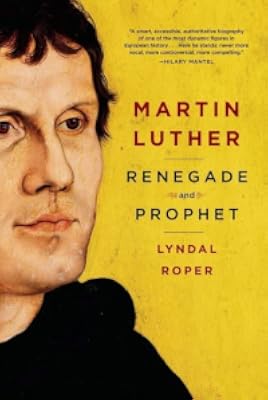


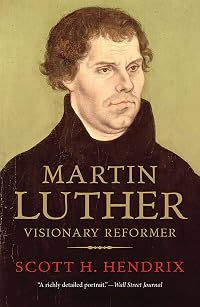
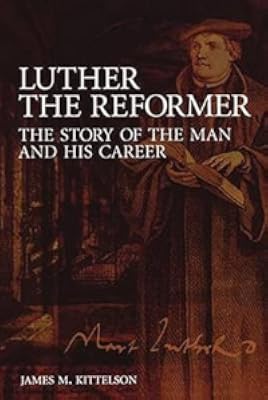
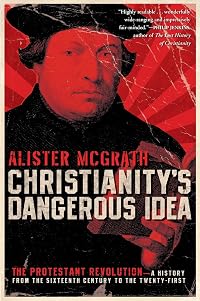









Member Recommendations
lhungsbe 1517, Printing, and the Making of the Reformation
Member Reviews
This is the best thing on the Reformation I've read for some time. In the past, for those who might only read one thing on Luther, I've recommended Oberman's "Luther: Man between God and the Devil". But now, I'd have to offer them a choice between Oberman and this book of Pettegree's.
It's Luther chiefly through the eyes of the print, the medium that made the Reformation. And equally, it's the (primarily German) print industry that this reformed monk made. Alert to Luther's strengths and weakness (sometimes the very same things), the book traces the career and impact of Luther with wonderful insights both historical and technical.
It's Luther chiefly through the eyes of the print, the medium that made the Reformation. And equally, it's the (primarily German) print industry that this reformed monk made. Alert to Luther's strengths and weakness (sometimes the very same things), the book traces the career and impact of Luther with wonderful insights both historical and technical.
This is a carefully sculpted and lucid biography of Martin Luther poised against the background of the printing press and books in Germany circa 1500. Luther, a bright intellectual and young Augustinian monk posted his thesis against indulgences and their abuse on the cathedral door at Wittenberg. It helped to churn an already current of criticism toward Rome, tapped into the rise of political power by the Princes in Germany and eventually unleashed a schism of doctrinal divisiveness that became known as the Protestant Reformation. Luther was a master of media manipulation through the printing press with the knowledge that the “oxygen of publicity was a matter of life and death.” He also paid attention to the education of girls, show more raising the level of literacy where his church took hold. His use of German rather than Latin reached out to the ordinary people of the land. Throughout the book there are illustrations of the fine woodcuts that helped popularize his writings. Luther read the political scene very well and was skilled at energizing market forces in his behalf. As one who participates in ecumenical dialogue, I found the book very helpful in gaining a clearer picture of Luther with human qualities rather than a rigid dogmatic figure of History. Pettegree’s book is a timely publication for the 500-year Commemoration of the Reformation in 2017.
I purchased this for my personal library. show less
I purchased this for my personal library. show less
I've read a lot of books on Reformation and on Luther, and this is a very good one. I'm also interested in written communication and business and this ties everything up so well. Pretty objective about Luther - both his good and his bad qualities. Clear and concise history of the Reformation and paints so well the drama of what took place, putting it in context and helping us understand what is happening. On rare occasions I didn't agree with the author's interpretation, but overall an outstanding book. "Printing was essential to the creation of Martin Luther; but Luther was also a determining, shaping force in the German printing industry. Many things conspired to ensure Luther's unlikely survival through the first years of the show more Reformation, but one of them was undoubtedly print. ...Luther could not have been a force in the German church without his instinctive, towering talent as a writer. ...After Luther, print and public communication would never be the same again. It was an extraordinary legacy for an extraordinary man." show less
Though a bit dry and academic, the book is well-written and worth reading. It is a fascinating, detailed overview of the Reformation along with the nascent printing business -- two topics that had a huge impact on history, and continue to be a vital part of the world today.
I wished for more definitions of terms for those of us who are not educated about church matters -- like liturgy, indulgences, and catechisms. A quick definition of those terms and a few others would have been helpful for this reader, and easy for the author to do. Also a brief definition of "Low Countries." (I assumed "low" as in "southern," but not so.)
A recommended read. This broader knowledge of the Reformation gave me a deeper understanding of 16th-century Europe show more and, in particular, Mary Queen of Scots and the Catholic / Protestant tensions she lived with till her death. Next, on to "The Tutors" by Peter Ackroyd. show less
I wished for more definitions of terms for those of us who are not educated about church matters -- like liturgy, indulgences, and catechisms. A quick definition of those terms and a few others would have been helpful for this reader, and easy for the author to do. Also a brief definition of "Low Countries." (I assumed "low" as in "southern," but not so.)
A recommended read. This broader knowledge of the Reformation gave me a deeper understanding of 16th-century Europe show more and, in particular, Mary Queen of Scots and the Catholic / Protestant tensions she lived with till her death. Next, on to "The Tutors" by Peter Ackroyd. show less
A fascinating and informative look at the Reformation from a technological perspective. Given the importance of music, both liturgical and domestic, to Luther himself as well as to the Reformation movement, it's unfortunate that the subject appears only briefly in the final part of the book. Nothing at all is said of the development of the sub-specialty of music printing.
Far be it from me to criticize the work of someone with the breadth of learning possessed by Andrew Pettigree; I've read his The Book in the Renaissance, which is great. This one is not: there's almost no narrative and almost too much about dozens of German printers whose names flee from one's memory after a page is turned.
Also--if you aren't familiar with Luther or what he did, this book won't help. Pettigree assumes you know about Tetzel, indulgences, justification by faith alone, etc. He also never gets into these ideas, instead offering ways in which Luther got out his word. We get the means of distribution but not what was distributed. The comparison to modern advertising--the "Brand" of the title--doesn't really work.
Also--if you aren't familiar with Luther or what he did, this book won't help. Pettigree assumes you know about Tetzel, indulgences, justification by faith alone, etc. He also never gets into these ideas, instead offering ways in which Luther got out his word. We get the means of distribution but not what was distributed. The comparison to modern advertising--the "Brand" of the title--doesn't really work.
3.6 Very good! Little dense with so many German names and towns. Fascinating to see how important the print industry was to the Reformation.
Members
- Recently Added By
Author Information

29+ Works 2,947 Members
Andrew Pettegree is Professor of Modern History and Founding Director of the Reformation Studies Institute at the University of St Andrews
Some Editions
Common Knowledge
- Canonical title
- Brand Luther: 1517, Printing, and the Making of the Reformation
- Alternate titles
- Brand Luther : how an unheralded monk turned his small town into a center of publishing, made himself the most famous man in Europe-- and started the Protestant Reformation. (cover title) (cover title)
- Original publication date
- 2015
- People/Characters
- Stephan Agricola (c. 1491-1547); Albrecht of Mainz, Archbishop (also Mains or Albert of Brandenburg, 1490-1545); Jerome Aleander (or Hieronymus, 1489-1542); Johann Heinrich Alsted (1588-1638); Nicolas von Amsdorf (1483-1565); Antichrist (show all 119); Aristotle (384-322); Augustine of Hippo (354-430); Benno of Meissen (Saint, c 1010 to 1106); Bartholomäus Bernhardi of Feldkirchen (1487 to 1551); Katharina von Bora; Johann von Botzheim (or John, 1480-1535); Johann Brenz (1499 to 1570); Johann Briesmann (1488-1549); Martin Bucer (1491-1551); Johannes Bugenhagen ("Pomeranus" 1485-1558); Johann Heinrich Bullinger (1504-1575); Hans Burgkmair the Elder (1472/1473 to 1531); Tommaso de Vio Cajetan, Cardinal (or Thomas Cajetan, Gaetano, c 1468 to 1534); John Calvin (1509-1564); Wolfgang Fabricius Capito (1478 to 1541); Charles V, Holy Roman Emperor (1500 to 1558); Francesco Chieregati (1479 to 1539); Christina of Saxony (1461-1521); Marcus Tullius Cicero; Johannes Cochlaeus (1479-1552); Lucas Cranach, the Elder (1472-1553); Lucas Cranach, the Younger (1515-1586); Daniel; Devil; Christian Döring (c 1480 to after 1533); John Duns Scotus (c 1265 to c 1308); Albrecht Dürer (1471-1528); Johann Eck; Johann Maier von der Ecken (1486-1543); Jerome Emser (or Hieronymus, 1477 to 1527); Desiderius Erasmus (c.1469-1536); Johann Fabri or Faber, Bishop of Vienna (b. Johannes Heigerlin, 1478 to 1541); Ferdinand II, Holy Roman Emperor (1578-1637); Frederick V, Elector Palatine (1596 to 1632); Frederick III the Wise, Elector of Saxony (1463 to 1525); Johann Froben (c. 1460-1527); Christoph Froschauer (ca. 1490 to 1564); Lukas Furtenagel (1505 to 1546); George, Duke of Saxony (The Bearded, 1471 to 1539); Nikolaus Gerbel (c. 1485 to 1560); Johannes Gutenberg (1394/99 to ca. 1468); Heinrich V, Duke of Brunswick-Wolfenbüttel (or Henry V, Duke of Brunswick-Luneburg, the Younger, 1489 to 1568); Henry VIII, King of England; Jan Hus (c. 1372 to 1415); Matthaeus Illyricus (Flacius, 1520 to 1575); John the Steadfast, Elector of Saxony (1468-1532); John Frederick I, Elector of Saxony (the Magnanimous, 1503-1554); Justus Jonas (1493 to 1555); Andreas Karlstadt (Andreas Rudolph Bodenstein Karlstadt, 1486 to 1541); Joseph Klug (ca. 1500 to 1552); Johann Knappe (active 1515); Martin Landsberg; John Lang (Johannes, 1487-1548); Leo X, Pope (Giovanni di Lorenzo de' Medici, 1475-1521); Wenzeslaus Linck (1482-1547); Melchior Lotter the Elder (active 1491 to 1522); Melchior Lotter the Younger (d. 1542); Michael Lotter; Hans Lufft (1495-1584); Hans Luther or Luder (Martin Luther's father); Martin Luther (1483-1546); Aldus Pius Manutius (1449/1452 to 1515); Nikolaus Marschalk (1460s to 1525); Maurice, Elector of Saxony (1521-1553); Maximilian I, Holy Roman Emperor; Silvestro Mazzolini da Prierio (Prierias, 1456/7 to 1527); Andreas Meinhardi (1475-1525); Philip Melanchthon (1497-1560); Martin Pollich (also von Mellerstadt, c. 1455 to 1513); Karl von Miltitz (c. 1490 to c. 1529); Thomas More (1478 to 1535); Petrus Mosellanus (1493 to 1524); Thomas Müntzer (c.1489 to 1525); Thomas Murner (1475 to c. 1537); Johann Oecolampadius (1482 to 1531); Andreas Osiander (1498 to 1552); Paul; Raymond Peraudi (1435 to 1505); Adam Petri (1454-1527); Petrus of Ravenna (or Peter, Pietro, 1448-1508); Philip I, Landgrave of Hesse (1504 to 1567); Willibald Pirckheimer (1470-1530); Johann Reuchlin (1455-1522); Georg Rhau (1488 to 1548); Johann Rhau-Grunenberg (d. 1523/25); Urbanus Henricus Rhegius (1489 to 1541); Christian Rödinger; Hans Sachs (Meistersinger, poet 1494-1576); Caspar Schatzgeyer (c. 1464 to 1527); Christoph Scheurl (von Scheurl, 1481 to 1542); Nickel Schirlentz (active 1521 to 1547); Schott, Johann, 16th century (p 123,162); Schumann, Valentin, fl. 1530s-1540s (p 221-223); Selfisch, Samuel, d. 1615 (p 330-331); Setzer, Johann, 16th century (p 183-184); Georg Spalatin (1484-1545); Speratus, Paul, 1484-1551 (p 202,205); Staupitz, Johann von, ca. 1469/70-1524 (p 28,33-35,37,39,42,46,48,62,91,94,168); Stifel, Michael, 1487-1567 (p 291-292); Stöckel, Wolfgang (p 221-224); Strauss, Jacob, ca. 1480/85-ca. 1533 (p 202,205); Johannes Tauler (c.1300-1361); Johann Tetzel (c.1465-1519); Jakob Thanner (1448-1528); Johann Toltz (1485-1523); Hermann Trebelius (1475-1515); Eva von Trott (1505-1567); Gabriel della Volta (16 century); Hans Weiss (16 century); Nikolaus Widemar (16 century); Nikolaus Wolrab (d. 1558/1559); Matthias Zell (1477-1548); Ulrich Zwingli (1484-1531)
- Important places
- Wittenberg, Saxony-Anhalt, Germany
- Important events
- Protestant Reformation
- First words
- In 2017 we mark the five-hundredth anniversary of one of the seminal moments in Western civilization: the inception of the Protestant Reformation. (Preface)
Like many of history's most commanding personalities, Martin Luther was gregarious by nature. - Quotations
- It is one of the real curiosities of the Reformation that Frederick the Wise, at the same time that he stubbornly protected Luther from the consequences of his criticisms of medieval spirituality, also continued to add to his... (show all) collection of relics. By 1520, when the latest inventory would be taken, it had reached 18.970 individual objects ans was one of the largest in Germany. [...] When laid out for the benefit of pilgrims, the collection crammed eight aisles of the castle church. There would have been little teaching on All Saints' Day, as pilgrims flocked to avail themselves of the 1.9 million days of indulgence that the assiduous visitor would gain from seeing them all. (Chapter 1, "A Small Town in Germany.")
If we are seeking an explanation of why so many Germans were drawn to Luther, despite the wild, extravagant denunciations of the established church and the bitter, angry polemic against his critics, we have to recognize that ... (show all)this was not the Luther that many readers saw. Rather they embraced the patient, gentle expositor whose explorations of the Christian life offered them comfort and peace. (Chapter 5, "Outlaw")
Luther was by this point [his mid-fifties] an old man, in almost constant pain, dosed by doctors, tended by an anxious wife, but beset always by constant work, the press of problems humdrum or acute that would inevitably be r... (show all)eferred to him so long as he drew breath. So if during these last years his judgement or his temper failed, we must bear in mind that like many in this era he lived his life in a constant state of low-level illness or debility, flaring up into acute episodes in which the agony was unbearable. At such time Luther longed for the death that would free him from these burdens. But it would, in fact, be another decade since his life was first despaired of in 1536 before his release would come. In this extra ten years much would be done to secure his movement, whatever the cost to its indispensable leader. (Chapter 11, "Endings")
Thus we return to the paradox with which we began this book: printing was essential to the creation of Martin Luther, but Luther was also a determining, shaping force in the German printing industry. Many things conspired t... (show all)o ensure Luther's unlikely survival through the first years of the Reformation, but one of them was undoubtedly print. Books, circulating with uncontrollable rapidity through the German towns, created at leas the appearance of a new consensus: that the settled will of the German people was that Luther should be heard. This intimidated and sometimes silenced opponents, and fortified Luther's far from numerous supporters in the German Estates. But Luther could not have been a force in the German church without his instinctive, towering talent as a writer. This was his most astonishing gift to the Reformation and to the German print industry. After Luther, print and public communication would never be the same again. It was an extraordinary legacy for an extraordinary man. (Chapter 12, "Legacy") - Last words
- (Click to show. Warning: May contain spoilers.)It was an extraordinary legacy for an extraordinary man.
- Blurbers
- MacCulloch, Diarmaid; Cameron, Euan; Gordon, Bruce; Burnett, Amy Nelson; Dixon, C. Scott; Spierling. Karen E. (show all 7); Maag, Karin
- Original language
- English
Classifications
- Genres
- Religion & Spirituality, Nonfiction, History, General Nonfiction, Biography & Memoir
- DDC/MDS
- 284.1092 — Religion Christian denominations Protestant denominations of Continental origin and related bodies Lutheran Reformed Biography And History Biography
- LCC
- BR325 .P48 — Philosophy, Psychology and Religion Christianity Christianity History By period Modern period Luther, Martin
- BISAC
Statistics
- Members
- 361
- Popularity
- 86,985
- Reviews
- 10
- Rating
- (4.16)
- Languages
- Dutch, English, German, Polish
- Media
- Paper, Audiobook, Ebook
- ISBNs
- 9
- ASINs
- 2