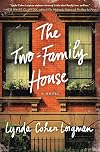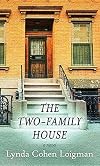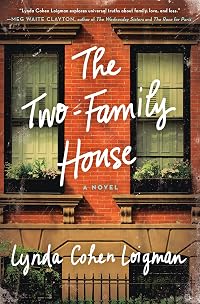
The Two-Family House
by Lynda Cohen Loigman
On This Page
Description
Brooklyn, 1947: In the midst of a blizzard, in a two-family brownstone, two babies are born, minutes apart. The mothers are sisters by marriage: dutiful, quiet Rose, who wants nothing more than to please her difficult husband; and warm, generous Helen, the exhausted mother of four rambunctious boys who seem to need her less and less each day. Raising their families side by side, supporting one another, Rose and Helen share an impenetrable bond forged before and during that dramatic winter show more night.When the storm passes, life seems to return to normal; but as the years progress, small cracks start to appear and the once deep friendship between the two women begins to unravel. No one knows why, and no one can stop it. One misguided choice; one moment of tragedy. Heartbreak wars with happiness and almost, but not quite, wins. Moving and evocative, Lynda Cohen Loigman's debut novel The Two-Family House is a heart-wrenching, gripping multigenerational story, woven around the deepest of secrets.
. show less
Tags
Recommendations
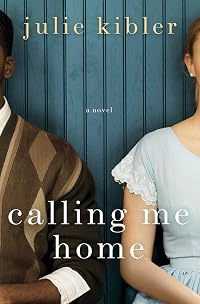
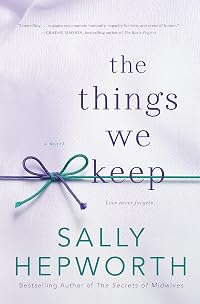
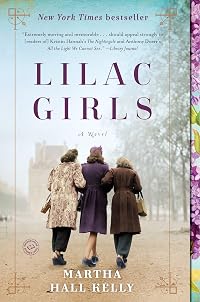
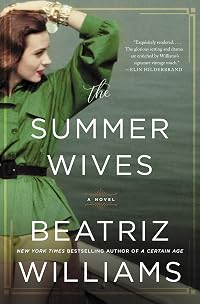
Member Recommendations
Member Reviews
Love this novel; hate at least one of the characters. That should tell you how good it is.
Pulls you in from the start.
Abe and Mort are brothers but so different. Abe is a mensch, and a loving husband and father. And his wife Helen is smart, optimistic and caring.
Mort is not like his brother at all. He is furious at his mother for a decision she made years ago. Not processing those feelings he takes out his anger on his wife, Rose and their daughters. Nothing Rose or the girls do is good enough. Thinking to appease him Helen and Rose make a quick life-changing decision of their own, setting into motion consequences no one could have predicted.
Realistic, absorbing, great dialogue, pacing, and incredibly well-written.
Read, definitely show more read this book. show less
Pulls you in from the start.
Abe and Mort are brothers but so different. Abe is a mensch, and a loving husband and father. And his wife Helen is smart, optimistic and caring.
Mort is not like his brother at all. He is furious at his mother for a decision she made years ago. Not processing those feelings he takes out his anger on his wife, Rose and their daughters. Nothing Rose or the girls do is good enough. Thinking to appease him Helen and Rose make a quick life-changing decision of their own, setting into motion consequences no one could have predicted.
Realistic, absorbing, great dialogue, pacing, and incredibly well-written.
Read, definitely show more read this book. show less
Two Family House, Linda Cohen Loigman, author; Barrie Kreinik, narrator
I loved this book, but I think you might have had to be there, you might have had to be Jewish, you might have had to be born in that era, and you probably should know something about Brooklyn, its two family houses and the Jewish ghetto and culture to really appreciate this book and identify with its characters and their way of life. If you were part of that era and that background, you can’t help but really enjoy the book’s walk down memory lane, apart and aside from the story itself.
The narrator may have overdone the Jewish inflection at times, but, otherwise, I think that she did a marvelous job of interpreting the attitudes and personalities of each of the show more characters, male and female, giving each an authentic voice, complete with the appropriate accent for each one, subtly showing that as they became upwardly mobile and successful, their Jewish intonation lessened, they moved out of Brooklyn into Long Island where the WASPS lived and their Barbra Streisand sound-alike accents diminished. Jews wanted to fit in, and they wanted to succeed. They wanted to achieve the American dream in spite of the ever present anti-Semitism.
I grew up in a two-family house in Brooklyn. I walked to the corner candy store to get a newspaper, to the local green grocer and vegetable store, the shoemaker, the pharmacy where the “druggist” subbed for the doctor in those days. I had relatives who lived so close by that my aunts and uncles were interchangeable with my own parents. My aunts shared a two family house around the corner from mine. There was always a safe space to go to if I found no one home. No door was ever locked. We had so many aunts and uncles and we often laughed at some while we praised others. Some were always baking but were so frugal they could serve 100 guests from a cake meant for 12 ( a bit of an exaggeration, lol). Some seemed cold and mean or teased us. Some brought us bubble gum every week with the groceries they delivered to us from their dairy store, and we loved them best. Some cheated each other, some were jealous of the success of others, some borrowed and didn’t return, but by and large, we were all one big, happy family. It was a far simpler life than today’s scene. Ethics and morality and rules were more clearly defined. There was a clear line between right and wrong, good and bad, that we were taught not to cross, while at the same time we might turn a blind eye and accept the wrongdoing of more successful relatives. Success was important, not so much how it was achieved. It was the culture. It was survival. The author caught its essence and put it on the page.
This story is basically about two brothers with entirely different personalities who work together in a family cardboard box business started by their father. It is about their wives who also have distinctly different personalities and it is about their children. It is about the house they all lived in and the way in which their relationships changed over the years because of certain choices, secrets and events. I totally recognized the sister-in-law’s and brother’s behavior, their customs, admonitions and expectations that were different for boys and girls. Girls got married, boys got jobs. Males were more desirable because they carried the family name into the future, females did not. Most mothers acquiesced to all of their husband's demands. Fathers made all of the decisions and rules. Mothers didn't defy them even if they didn't agree with them. Jewish guilt was then, and is today, alive and well. It was the way of life for Jewish families in those days. They were also on the move; they were aspiring to higher heights and were upwardly mobile. When they became more successful they actually did move to Long Island just like the Bermans. Often those moves disrupted families and petty jealousies rose up. Those who now had air conditioning wouldn't meet in the homes of those who didn't.
I loved the story for its nostalgia and the memories it evoked in me, even more than for its content, but I enjoyed that part too. I knew the streets and the neighborhoods. I loved the way the family interacted and the way the division of power was exposed. It accurately highlighted Jewish life in those days, expressing the devotion and loyalty of family members toward each other, showing their willingness to sacrifice their own needs in order to help someone in the family that was needier, in any way, while it also showed how grievances sometimes separated them.
Today, that lifestyle is essentially over. Families have dispersed far and wide and are not as close, in most cases, although those in family businesses do manage to sometimes stay in closer contact, but often with far more conflict. It was, in retrospect, a wonderful way of life, but if you didn't live it, the book might not have the same magical impact for you! For me, watching the family deal with what life threw at them was at the heart of the story and the heart of my memories. show less
I loved this book, but I think you might have had to be there, you might have had to be Jewish, you might have had to be born in that era, and you probably should know something about Brooklyn, its two family houses and the Jewish ghetto and culture to really appreciate this book and identify with its characters and their way of life. If you were part of that era and that background, you can’t help but really enjoy the book’s walk down memory lane, apart and aside from the story itself.
The narrator may have overdone the Jewish inflection at times, but, otherwise, I think that she did a marvelous job of interpreting the attitudes and personalities of each of the show more characters, male and female, giving each an authentic voice, complete with the appropriate accent for each one, subtly showing that as they became upwardly mobile and successful, their Jewish intonation lessened, they moved out of Brooklyn into Long Island where the WASPS lived and their Barbra Streisand sound-alike accents diminished. Jews wanted to fit in, and they wanted to succeed. They wanted to achieve the American dream in spite of the ever present anti-Semitism.
I grew up in a two-family house in Brooklyn. I walked to the corner candy store to get a newspaper, to the local green grocer and vegetable store, the shoemaker, the pharmacy where the “druggist” subbed for the doctor in those days. I had relatives who lived so close by that my aunts and uncles were interchangeable with my own parents. My aunts shared a two family house around the corner from mine. There was always a safe space to go to if I found no one home. No door was ever locked. We had so many aunts and uncles and we often laughed at some while we praised others. Some were always baking but were so frugal they could serve 100 guests from a cake meant for 12 ( a bit of an exaggeration, lol). Some seemed cold and mean or teased us. Some brought us bubble gum every week with the groceries they delivered to us from their dairy store, and we loved them best. Some cheated each other, some were jealous of the success of others, some borrowed and didn’t return, but by and large, we were all one big, happy family. It was a far simpler life than today’s scene. Ethics and morality and rules were more clearly defined. There was a clear line between right and wrong, good and bad, that we were taught not to cross, while at the same time we might turn a blind eye and accept the wrongdoing of more successful relatives. Success was important, not so much how it was achieved. It was the culture. It was survival. The author caught its essence and put it on the page.
This story is basically about two brothers with entirely different personalities who work together in a family cardboard box business started by their father. It is about their wives who also have distinctly different personalities and it is about their children. It is about the house they all lived in and the way in which their relationships changed over the years because of certain choices, secrets and events. I totally recognized the sister-in-law’s and brother’s behavior, their customs, admonitions and expectations that were different for boys and girls. Girls got married, boys got jobs. Males were more desirable because they carried the family name into the future, females did not. Most mothers acquiesced to all of their husband's demands. Fathers made all of the decisions and rules. Mothers didn't defy them even if they didn't agree with them. Jewish guilt was then, and is today, alive and well. It was the way of life for Jewish families in those days. They were also on the move; they were aspiring to higher heights and were upwardly mobile. When they became more successful they actually did move to Long Island just like the Bermans. Often those moves disrupted families and petty jealousies rose up. Those who now had air conditioning wouldn't meet in the homes of those who didn't.
I loved the story for its nostalgia and the memories it evoked in me, even more than for its content, but I enjoyed that part too. I knew the streets and the neighborhoods. I loved the way the family interacted and the way the division of power was exposed. It accurately highlighted Jewish life in those days, expressing the devotion and loyalty of family members toward each other, showing their willingness to sacrifice their own needs in order to help someone in the family that was needier, in any way, while it also showed how grievances sometimes separated them.
Today, that lifestyle is essentially over. Families have dispersed far and wide and are not as close, in most cases, although those in family businesses do manage to sometimes stay in closer contact, but often with far more conflict. It was, in retrospect, a wonderful way of life, but if you didn't live it, the book might not have the same magical impact for you! For me, watching the family deal with what life threw at them was at the heart of the story and the heart of my memories. show less
This book makes me question how much one would do for love. I appreciated the story being told from the different family members. The dynamic of how one incident affected each person in a different way allowed the reader to sympathize with each one. At first, I was angry with Rose and her attitude and mannerisms but then I saw it from her side. I didn't like Mort very much but getting more insight from him and seeing him develop changed that. At the end of the day, secrets will make and break a family even one so intertwined. Relationships will change. They'll grow or fall apart. The authors writing style allows for the reader to understand the story. Not too simplistic but not too complex. Makes for a very easy read.
3.5 Stars
A Touching story about two families living in Brooklyn in 1947. Its the sort of good old fashioned story that you just want to curl up on the couch with.
I really enjoyed this debut novel by Lynda Cohen Loigman. I listened to this one on audible and the narrator was excellent and I loved putting on my headphones and stepping into the lives of Abe, Mort, Helen and Rose and their families. And I really did feel like I was a fly on the wall in The Two family house in Brooklyn as the writing is so vivid and the characters so realistic.
I would describe this as a gentle book, its the sort of book I could recommend to anyone and know they will enjoy the read and come away with a smile on their faces. I really think author's strength show more is in her character development, I loved the characters in this book and I even found the ones I disliked at the beginning I had warmed to by the end.
A really enjoyable read and I think this would make a great book club discussion book. show less
A Touching story about two families living in Brooklyn in 1947. Its the sort of good old fashioned story that you just want to curl up on the couch with.
I really enjoyed this debut novel by Lynda Cohen Loigman. I listened to this one on audible and the narrator was excellent and I loved putting on my headphones and stepping into the lives of Abe, Mort, Helen and Rose and their families. And I really did feel like I was a fly on the wall in The Two family house in Brooklyn as the writing is so vivid and the characters so realistic.
I would describe this as a gentle book, its the sort of book I could recommend to anyone and know they will enjoy the read and come away with a smile on their faces. I really think author's strength show more is in her character development, I loved the characters in this book and I even found the ones I disliked at the beginning I had warmed to by the end.
A really enjoyable read and I think this would make a great book club discussion book. show less
3.75 stars
In New York City, brothers Abe and Mort run a business together and they bought a home together, though they both have large families. Abe & Helen and their sons live on the top floor; Mort & Rose and their daughters live on the bottom. Helen and Rose are also best friends. When they not only become pregnant at the same time, they have their babies on the same stormy night at home with the only person who could get to them to help, a midwife.
In the time after this, things become strained between Rose and Helen; mostly Rose seems irritated all the time as Helen tries to help when Rose seems overwhelmed. Eventually things blow up between them, though the brothers remain close and the cousins remain friends, especially Natalie show more and Teddy, born that same night in the early 1950s. This follows everyone for a few decades.
The audio was done well. Not sure if the narrator had a New York accent or did one well, but it was obvious where the book was set. Boy, did Rose annoy me! Initially, I thought post-partum depression, but she never came out of it. Later on, I briefly felt badly for her when I learned a secret, but it didn’t last long – only until the next time she blew up at Helen for something else. The story is slow-moving, but I still quite liked it. The secret (twist) did catch me off guard, but it made sense. show less
In New York City, brothers Abe and Mort run a business together and they bought a home together, though they both have large families. Abe & Helen and their sons live on the top floor; Mort & Rose and their daughters live on the bottom. Helen and Rose are also best friends. When they not only become pregnant at the same time, they have their babies on the same stormy night at home with the only person who could get to them to help, a midwife.
In the time after this, things become strained between Rose and Helen; mostly Rose seems irritated all the time as Helen tries to help when Rose seems overwhelmed. Eventually things blow up between them, though the brothers remain close and the cousins remain friends, especially Natalie show more and Teddy, born that same night in the early 1950s. This follows everyone for a few decades.
The audio was done well. Not sure if the narrator had a New York accent or did one well, but it was obvious where the book was set. Boy, did Rose annoy me! Initially, I thought post-partum depression, but she never came out of it. Later on, I briefly felt badly for her when I learned a secret, but it didn’t last long – only until the next time she blew up at Helen for something else. The story is slow-moving, but I still quite liked it. The secret (twist) did catch me off guard, but it made sense. show less
I requested Lynda Cohen Loigman's The Two-Family House after reading The Wartime Sisters. This is another book about complex family dynamics, where flawed characters really do mean well, but there's no super-happy magical moment where it all works out great, fade to credits.
Two brothers, Abe and Mort, and their two wives and two families share a two-family house. The brothers work together in the company their father started. For Abe, work is just what you do to support your real life, with family, while Mort had to drop out of school, losing his chance to study higher math, when their father died. Upstairs, Abe and Helen have rowdy boys, and downstairs, Mort is disappointed that he and his wife Rose only have daughters. The household show more is bustling, with constant visits up and down, as well as visits with the extended family and machatunim, but Mort's disappointment over his lot in life is a constant sour note.
The plot hinges on something so wildly unrealistic and contrived, it's almost like magical realism -- as you read, you just need to accept this completely crazy thing happened, and go on with the developed characters. For a little while, I couldn't accept the main event as realistic or reasonable, and then, like any shocking family secret, it just seemed to be part of the family story.
By the end, though, I felt like I knew this family, like I'd grown up down the street, and had seen the kids mature and the family relationships change. Even though there are a lot of cousins in this book, I rarely had to think about who was who, because their personalities are so developed and consistent (including one daughter whose personality is basically being a follower of stronger personalities around her). This is an engaging family drama about the connections of blood, proximity, and choice. show less
Two brothers, Abe and Mort, and their two wives and two families share a two-family house. The brothers work together in the company their father started. For Abe, work is just what you do to support your real life, with family, while Mort had to drop out of school, losing his chance to study higher math, when their father died. Upstairs, Abe and Helen have rowdy boys, and downstairs, Mort is disappointed that he and his wife Rose only have daughters. The household show more is bustling, with constant visits up and down, as well as visits with the extended family and machatunim, but Mort's disappointment over his lot in life is a constant sour note.
The plot hinges on something so wildly unrealistic and contrived, it's almost like magical realism -- as you read, you just need to accept this completely crazy thing happened, and go on with the developed characters. For a little while, I couldn't accept the main event as realistic or reasonable, and then, like any shocking family secret, it just seemed to be part of the family story.
By the end, though, I felt like I knew this family, like I'd grown up down the street, and had seen the kids mature and the family relationships change. Even though there are a lot of cousins in this book, I rarely had to think about who was who, because their personalities are so developed and consistent (including one daughter whose personality is basically being a follower of stronger personalities around her). This is an engaging family drama about the connections of blood, proximity, and choice. show less
Love is the most complex of all emotions, in my humble opinion, and that is made abundantly evident in The Two-Family House. Lynda Cohen Loigman takes us on a masterful journey into the relationships of two brothers, their wives, children and extended family, which, on the surface seems to be very simple and matter-of-fact. And for a day or so after I finished reading it, I thought that it was just that - a simple novel about a family with issues.
But I was wrong. I couldn't stop thinking about those people - how they thought and felt, and how they behaved, as a result of one feeling: love. Each character in Loigman's creation goes through gut-wrenchingly difficult situations, either prior to when we meet them or throughout the time we show more are privy to their reality. Choices are made by parents and siblings that effect every generation named in the book as well as those that will follow. And despite the fact that so many of those choices are made out of love, painful difficulties ensue and lives are complicated and very often, damaged in major ways.
As it is in life, we are not aware of the circumstances that were someone's reality before we are born or before we encounter them and it is so in this book. The parents of Abe, Mort, Helen and Rose are not part of the cast of characters but they play a strategically impactful role in each character's story line. And as it is in life, one would like to think that all parent’s actions/decisions are unselfish and come from unconditional love for their children – but that is not universally true and again, in my opinion, definitely not the case in this book. And the way in which Lynda Cohen Loigman goes about revealing this to us has made me realize that this author has a very special gift – she removes you from wherever you are at the moment you begin The Two-Family House and takes you on a venture into exploring the truly complex nature of love. show less
But I was wrong. I couldn't stop thinking about those people - how they thought and felt, and how they behaved, as a result of one feeling: love. Each character in Loigman's creation goes through gut-wrenchingly difficult situations, either prior to when we meet them or throughout the time we show more are privy to their reality. Choices are made by parents and siblings that effect every generation named in the book as well as those that will follow. And despite the fact that so many of those choices are made out of love, painful difficulties ensue and lives are complicated and very often, damaged in major ways.
As it is in life, we are not aware of the circumstances that were someone's reality before we are born or before we encounter them and it is so in this book. The parents of Abe, Mort, Helen and Rose are not part of the cast of characters but they play a strategically impactful role in each character's story line. And as it is in life, one would like to think that all parent’s actions/decisions are unselfish and come from unconditional love for their children – but that is not universally true and again, in my opinion, definitely not the case in this book. And the way in which Lynda Cohen Loigman goes about revealing this to us has made me realize that this author has a very special gift – she removes you from wherever you are at the moment you begin The Two-Family House and takes you on a venture into exploring the truly complex nature of love. show less
Members
- Recently Added By
Lists

Top Five Books of 2016
795 works; 229 members

I Could Live There
185 works; 12 members

wish list
61 works; 3 members

Which house?
423 works; 16 members

Books We Discovered On LibraryThing
530 works; 130 members
Author Information

4+ Works 1,710 Members
Awards and Honors
Distinctions
Common Knowledge
- Canonical title
- The Two-Family House
- Original title
- The Two-Family House
- Original publication date
- 2016-03-08
- People/Characters
- Rose Berman; Helen Berman; Mort Berman; Abe Berman; Judith Berman; Natalie Berman (show all 18); Mimi Berman; Dinah Berman; Harry Berman; Theodore "Teddy" Berman; Sam Berman; Joe Berman; George Berman; Sol; Arlene; Johnny; Faye; Stuart
- Important places
- Christopher Avenue, Brooklyn, New York, New York, USA; Long Island, New York, USA; Florida, USA
- Dedication
- For Bob, Ellie, and Charlie
- First words
- She walked down the stairs of the old two-family house in the dark, careful not to slip.
- Quotations
- Even the most skillful tailor couldn't hide a seam once a cloth was torn in two.
- Last words
- (Click to show. Warning: May contain spoilers.)For the first time, he decided to leave it open.
- Blurbers
- Schwarz, Christina; Clayton, Meg Waite; Leavitt, Caroline; Nathan, Amy Sue; Chamberlain, Diane; King, Cassandra (show all 7); Antalek, Robin
Classifications
Statistics
- Members
- 640
- Popularity
- 45,317
- Reviews
- 47
- Rating
- (3.77)
- Languages
- English
- Media
- Paper, Audiobook, Ebook
- ISBNs
- 8
- ASINs
- 2