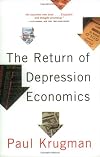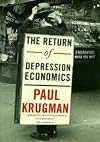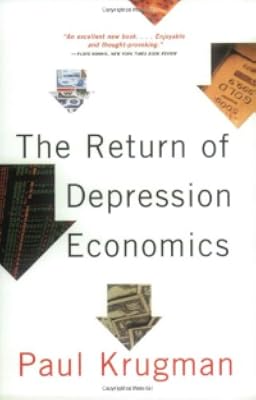
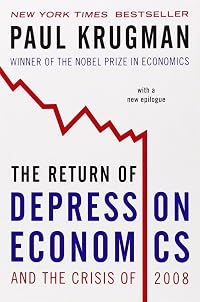
The Return of Depression Economics
by Paul R. Krugman
On This Page
Description
Surely the Great Depression could not happen again; our economists and policy makers simply have too many tools in their kit and too much experience applying them. Or could it? Paul Krugman gives us a sobering tour of the global economic crises of the last two years. In the 1930s policy makers realized that they had to limit the free market in order to save it. Today, when governments worldwide have spent decades lifting regulatory restraints on trade within and across their borders, show more interference in markets is completely out of favor as a policy tool. With his usual creativity and willingness to consider new ideas, Krugman suggests that a variety of capital restraints may well be in order. This book is for anyone with any level of economic background who wishes to understand the stunning events in today's global economy. show lessTags
Recommendations




Member Reviews
As usual, Krugman highlights the problem with dogmatic approaches to economics. He also illuminates some aspects of our own concern about inflation. Rather than worry about inflation, our current economic and financial guardians might need to look more at the possibility of deflation created during an economic downturn when lack of demand meets excess capacity.
Krugman not only makes the mechanics of cyclical economics clear (at least what we understand of it), he is also very forthright about saying what he thinks should be done about various economic situations. If you're having trouble understanding the current economic situation, any of Krugman's books will help.
경제,대공황
Ratings
Members
- Recently Added By
Published Reviews
ThingScore 75
Paul Krugman may think as hard as Keynes and write as well as Galbraith, but it's not his Nobel Prize in economics that gives this brisk analysis of the sources of our current plight its weight. Updated to discuss today's global turmoil, it has a salutary quote from another laureate, Robert Lucas. In 2003, he said: "the central problem of depression-prevention" had been solved.
added by mikeg2
Author Information

59+ Works 7,437 Members
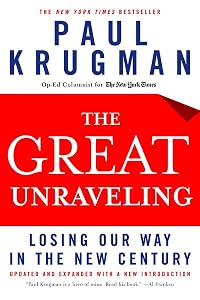
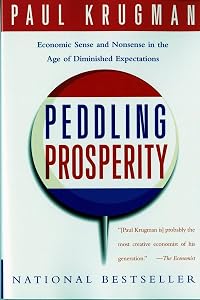
Paul Krugman was born on February 28, 1953. He received a B.S. in economics from Yale University in 1974 and a Ph.D from MIT in 1977. From 1982 to 1983, he worked at the Reagan White House as a member of the Council of Economic Advisers. He taught at numerous universities including Yale University, MIT, UC Berkeley, the London School of Economics, show more and Stanford University before becoming a professor of economics and international affairs at Princeton University in 2000. He has written over 200 scholarly papers and 20 books including Peddling Prosperity; International Economics: Theory and Policy; The Great Unraveling; and The Conscience of a Liberal. Since 2000, he has written a twice-weekly column for The New York Times. He received the 1991 John Bates Clark Medal and the 2008 Nobel Memorial Prize in Economic Sciences. His title End This Depression Now! made The New York Times Best Seller List for 2012. (Bowker Author Biography) show less
Work Relationships
Is expanded in
Common Knowledge
- Canonical title
- The Return of Depression Economics
- Original title
- The Return of Depression Economics
- Original publication date
- 1999-05
Classifications
- Genres
- Economics, Nonfiction, General Nonfiction, History
- DDC/MDS
- 338.542 — Society, government, & culture Economics Production Microeconomics Fluctuations Business Cycles
- LCC
- HB3716 .K76 — Social sciences Economic theory. Demography Economic theory. Demography Business cycles. Economic fluctuations
- BISAC
Statistics
- Members
- 253
- Popularity
- 128,517
- Reviews
- 4
- Rating
- (3.68)
- Languages
- English, German, Spanish
- Media
- Paper, Ebook
- ISBNs
- 8
- ASINs
- 5