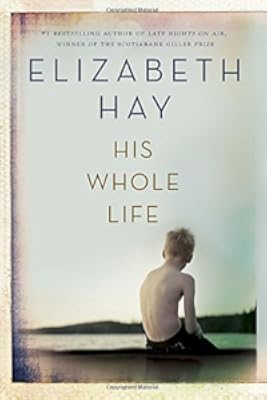
His Whole Life
by Elizabeth Hay
On This Page
Description
Starting with something as simple as a boy who wants a dog, His Whole Life takes us into a richly intimate world where everything that matters to him is at risk: family, nature, home. At the outset ten-year-old Jim and his Canadian mother and American father are on a journey from New York City to a lake in eastern Ontario during the last hot days of August. What unfolds is a completely enveloping story that spans a few pivotal years of his youth. Moving from city to country, summer to show more winter, wellbeing to illness, the novel charts the deepening bond between mother and son even as the family comes apart. Set in the mid-1990s, when Quebec is on the verge of leaving Canada, this captivating novel is an unconventional coming of age story as only Elizabeth Hay could tell it. It draws readers in with its warmth, wisdom, its vivid sense of place, its searching honesty, and nuanced portrait of the lives of one family and those closest to it. Hay explores the mystery of how members of a family can hurt each other so deeply, and remember those hurts in such detail, yet find openings that shock them with love and forgiveness. This is vintage Elizabeth Hay at the height of her powers. show lessTags
Recommendations









Member Recommendations
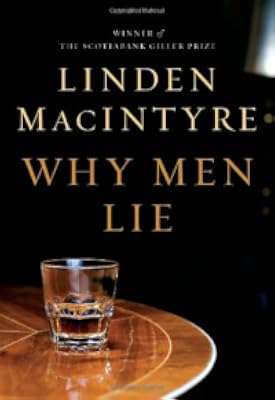
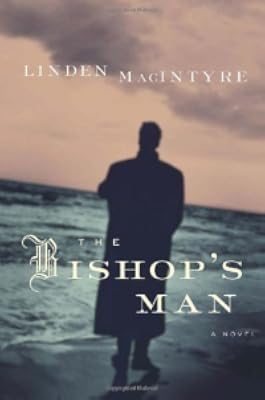
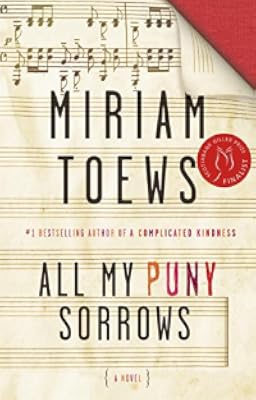
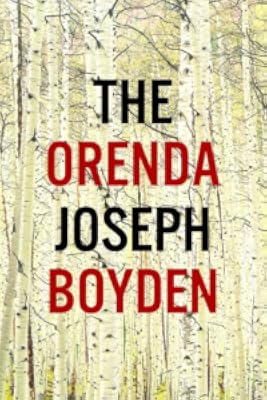
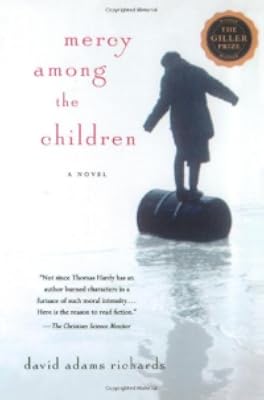
RidgewayGirl Both explore families and forgiveness.
Member Reviews
What’s the worst thing you’ve ever done?
That’s the question 10-year-old Jim asks his parents in 1995 on the way from New York to their cottage in eastern Ontario. His parents, Canadian-born Nan and American-born George, avoid answering but the question will encompass and define the characters and their actions throughout the book.
His Whole Life by author Elizabeth Hay is a coming-of-age tale set in both Canada and the US and told by both Jim and Nan. In many ways, it seems like a particularly Canadian novel. The Quebec Referendum in which Quebec voted whether to separate from the rest of the country acts both as a backdrop and a metaphor as Jim’s family is falling apart while Lulu, Nan’s out-of-work alcoholic actress friend, show more seeks to make amends to her brother, Guy. The bond between Jim and his mother is unbreakable while, although he loves his father, he has little respect for him.
But this novel has a kind of wisdom that defies borders. This is a beautifully written tale with universal themes – love, loss, separation, and then forgiveness and reconciliation. It is about what makes a family, like a country, strong, what will tear it apart, and what, if anything can heal it or, for that matter, does it need healing. It is about the small and big hurts that can separate and the small and big acts of kindness and forgiving that can bring us to together. The characters are very well-rounded and sympathetic; they may, at times, make the reader cringe, especially in the cases of George and Lulu, but they also make us care despite or perhaps because of their weaknesses. His Whole Life is a thoughtful, quiet story but one that draws the reader in and keeps their attention throughout. show less
That’s the question 10-year-old Jim asks his parents in 1995 on the way from New York to their cottage in eastern Ontario. His parents, Canadian-born Nan and American-born George, avoid answering but the question will encompass and define the characters and their actions throughout the book.
His Whole Life by author Elizabeth Hay is a coming-of-age tale set in both Canada and the US and told by both Jim and Nan. In many ways, it seems like a particularly Canadian novel. The Quebec Referendum in which Quebec voted whether to separate from the rest of the country acts both as a backdrop and a metaphor as Jim’s family is falling apart while Lulu, Nan’s out-of-work alcoholic actress friend, show more seeks to make amends to her brother, Guy. The bond between Jim and his mother is unbreakable while, although he loves his father, he has little respect for him.
But this novel has a kind of wisdom that defies borders. This is a beautifully written tale with universal themes – love, loss, separation, and then forgiveness and reconciliation. It is about what makes a family, like a country, strong, what will tear it apart, and what, if anything can heal it or, for that matter, does it need healing. It is about the small and big hurts that can separate and the small and big acts of kindness and forgiving that can bring us to together. The characters are very well-rounded and sympathetic; they may, at times, make the reader cringe, especially in the cases of George and Lulu, but they also make us care despite or perhaps because of their weaknesses. His Whole Life is a thoughtful, quiet story but one that draws the reader in and keeps their attention throughout. show less
There is so much that is admirable about Elizabeth Hay’s writing: her deft treatment of voice flitting across multiple first-person perspectives; her mastery of mood; her women, both the put upon, and the larger than life; her love of the Canadian woods and the way it serves character and action; her longing to tackle large political themes through the personal lives of her characters; her small turns of phrase that can immobilize you with wonder.
Here Hay follows a nine year span in the life of young Jim Bobak. So not his whole life, certainly, but events and moments and realizations that will last his whole life. They are eventful years for Jim and for his put upon mother, Nancy, smothered by a failed marriage to an ineffectual but show more often cruel man (as opposed to the more effectual and violently cruel man who was her first husband). They are also important years for Nancy’s friend from her youth, Lulu, a flamboyant actress, fierce sibling, and lush. Summers at the cottage in Eastern Ontario where Nancy can connect with her Canadian roots. The rest of the time in New York City, home of Jim’s father. And always in the background (and sometimes oppressively in the foreground) the battle for Canada’s identity and its future as it played out during the months leading up to the 1995 Quebec referendum. Loyalties divide both in the near breakup of Jim’s family as much as in the near breakup of Canada.
It is a heady mix that feels intruded upon by the overtly political. Hay is at her best in the close tracing of the rueful thoughts of her characters as they struggle to make sense of their lives to that point and to make sense of what their lives might yet become. She is on less sure ground when she loads her characters with the political allegiances of the time. Writing that is typically so light it is almost ethereal suddenly feels clunky. A related worry is the heavy handed references to specific Alice Munro stories or Joni Mitchell songs. It’s as though Hay loses faith in her readers, or herself, and wants to insist that we catch her import. We would. We do.
Of course I recommend this novel. There are scenes here so perfect that they might as well be poems. If I have reservations, they are small and should not impede delighting in Hay’s writing when it is at its best. show less
Here Hay follows a nine year span in the life of young Jim Bobak. So not his whole life, certainly, but events and moments and realizations that will last his whole life. They are eventful years for Jim and for his put upon mother, Nancy, smothered by a failed marriage to an ineffectual but show more often cruel man (as opposed to the more effectual and violently cruel man who was her first husband). They are also important years for Nancy’s friend from her youth, Lulu, a flamboyant actress, fierce sibling, and lush. Summers at the cottage in Eastern Ontario where Nancy can connect with her Canadian roots. The rest of the time in New York City, home of Jim’s father. And always in the background (and sometimes oppressively in the foreground) the battle for Canada’s identity and its future as it played out during the months leading up to the 1995 Quebec referendum. Loyalties divide both in the near breakup of Jim’s family as much as in the near breakup of Canada.
It is a heady mix that feels intruded upon by the overtly political. Hay is at her best in the close tracing of the rueful thoughts of her characters as they struggle to make sense of their lives to that point and to make sense of what their lives might yet become. She is on less sure ground when she loads her characters with the political allegiances of the time. Writing that is typically so light it is almost ethereal suddenly feels clunky. A related worry is the heavy handed references to specific Alice Munro stories or Joni Mitchell songs. It’s as though Hay loses faith in her readers, or herself, and wants to insist that we catch her import. We would. We do.
Of course I recommend this novel. There are scenes here so perfect that they might as well be poems. If I have reservations, they are small and should not impede delighting in Hay’s writing when it is at its best. show less
The whole life of this absorbing novel belongs to ten-year-old Jim, who lives in New York with his American father and Canadian mother but spends every summer at his uncle’s lakeside cabin in Canada. As in the author’s other novels, Canada and Canadian way of life is more than just the setting for the story but plays a central part in the narrative. Set in the mid-1990s when Quebec was on the verge of becoming independent from Canada, Jim’s mother Nan is very distressed at the thought of the Canada she loves being broken up. At the same time, her marriage to Jim’s father, her second and his third, is under strain, threatening that Jim’s family will similarly break up. The author weaves together the themes of political and show more emotional turmoil as seen from the perspective of a sensitive young boy with her extraordinarily spare but precise use of language. show less
Reading fiction from Canadian writer Elizabeth Hay inevitably leaves me at a loss for words. Her writing, her characters, her storytelling skills, are simply so damn good! And her latest novel, HIS WHOLE LIFE, is no exception. Set mostly in the mid 90s, when Quebec was debating declaring its independence from Canada, the setting shifts from the rural and remote lake country of Ontario across the provincial border into Quebec, and also back and forth to New York City. Hay's usual omniscient point of view gives us deep insight into all of the book's major characters, of which there are at least four. Nan Bobak, a Canadian now married to George, a NYC native; her son Jim, who we watch grow from ages ten to seventeen; and her lifelong show more friend, Lulu, an aging aspiring actress.
As the story unfolds, again, in Hay's engaging beautiful style, we learn of Nan's older son from another marriage, Blake, a bible school student in Philadelphia, who has written her and the rest of her family off. And her current husband, George, who seems to be a bitter loner, unable to properly connect even with his immediate family, especially a younger brother, Martin, who has lived for years in Peru. Lulu, an alcoholic free spirit, disinherited by her father and brother, has traveled the U.S. and Canada with various theater troupes for years, and turns up at Nan's lakeside house in the Ontario woods, and Nan gladly takes her in. Probably a poor analogy, but her appearance at Nan's place, bedraggled and bleeding, brought to mind Robert Frost's 'hired man,' Silas. Except Lulu is a much richer, more fully realized character.
Jim, the boy, probably mostly because of his name, but also because of his thoughtful nature, reminded me of Tony Earley's title character from his bestseller, JIM THE BOY. But while I liked Earley's novel very much, it doesn't begin to approach the richness of Hay's writing, the depth she affords her characters. And the intensity of the love between Jim and his mother, Nan, carries the narrative more than anything else. Oh yes, there is all the historical stuff about Quebec's failed referendum on independence, as well as a wealth of literary references that also add to the story, but it is, without question, that mother-son bond as Jim comes of age that forms the core of this touching novel. It is not the kind of book one can rush through, looking for an exciting conclusion. Because there is none, although there are some deep personal and family secrets revealed. No, this is a book about the importance of family - and lifelong friends too.
And there is that love of books and literature that threads its way throughout the narrative too, something you'll find in all of Hay's books. Here's a small sample, with Nan watching her teenage son sleep -
"While he slept, she sat on beside his bed. How had she been so lucky as to have a son like Jim? A boy who loved books, who not only listened when she read the ODYSSEY to him but made the request for it night after night ... It was the best sort of luck to have a boy like this. I love him for it, she thought."
And Jim was indeed that kind of boy, one who made up his own stories and illustrated them, and who pored over old POGO comic strips and stacks of old NEW YORKER magazines his deceased uncle had left behind. Who knew both Holden Caulfield and Duddy Kravitz well enough to differentiate between them by saying Holden was a "voice," while Duddy was a "character."
This is a novel rich in ideas and some of the most human characters you might find in contemporary letters; and, oddly, one that is almost equally Canadian and American all at the same time. Bravo, Ms. Hay! I loved this book - savored it, in fact. My highest recommendation. show less
As the story unfolds, again, in Hay's engaging beautiful style, we learn of Nan's older son from another marriage, Blake, a bible school student in Philadelphia, who has written her and the rest of her family off. And her current husband, George, who seems to be a bitter loner, unable to properly connect even with his immediate family, especially a younger brother, Martin, who has lived for years in Peru. Lulu, an alcoholic free spirit, disinherited by her father and brother, has traveled the U.S. and Canada with various theater troupes for years, and turns up at Nan's lakeside house in the Ontario woods, and Nan gladly takes her in. Probably a poor analogy, but her appearance at Nan's place, bedraggled and bleeding, brought to mind Robert Frost's 'hired man,' Silas. Except Lulu is a much richer, more fully realized character.
Jim, the boy, probably mostly because of his name, but also because of his thoughtful nature, reminded me of Tony Earley's title character from his bestseller, JIM THE BOY. But while I liked Earley's novel very much, it doesn't begin to approach the richness of Hay's writing, the depth she affords her characters. And the intensity of the love between Jim and his mother, Nan, carries the narrative more than anything else. Oh yes, there is all the historical stuff about Quebec's failed referendum on independence, as well as a wealth of literary references that also add to the story, but it is, without question, that mother-son bond as Jim comes of age that forms the core of this touching novel. It is not the kind of book one can rush through, looking for an exciting conclusion. Because there is none, although there are some deep personal and family secrets revealed. No, this is a book about the importance of family - and lifelong friends too.
And there is that love of books and literature that threads its way throughout the narrative too, something you'll find in all of Hay's books. Here's a small sample, with Nan watching her teenage son sleep -
"While he slept, she sat on beside his bed. How had she been so lucky as to have a son like Jim? A boy who loved books, who not only listened when she read the ODYSSEY to him but made the request for it night after night ... It was the best sort of luck to have a boy like this. I love him for it, she thought."
And Jim was indeed that kind of boy, one who made up his own stories and illustrated them, and who pored over old POGO comic strips and stacks of old NEW YORKER magazines his deceased uncle had left behind. Who knew both Holden Caulfield and Duddy Kravitz well enough to differentiate between them by saying Holden was a "voice," while Duddy was a "character."
This is a novel rich in ideas and some of the most human characters you might find in contemporary letters; and, oddly, one that is almost equally Canadian and American all at the same time. Bravo, Ms. Hay! I loved this book - savored it, in fact. My highest recommendation. show less
Oh Canada! In relation to a novel, Elizabeth Hay once wrote "Place is everything" but I didn't fully understand that until I read this book. It's a wonderful novel on so many levels and in so many aspects of the story. Hay really draws out the connection between people and their location through a focus on the contrast between the featured family's lives in Canada and in New York. The Quebec separatist issue - a matter about which I had no feelings and few thoughts - was brought alive and relevant. But to focus on place would do this story a grave injustice. To me the story was primarily about guilt and forgiveness; about relationships and the way people can damage each other and hence what they can do to ameliorate that damage. show more Elizabeth Hay is a marvellously perceptive and thoughtful person whose story draws on a rich variety of cultural connections. I have read all of Hay's novels and I bought an e-book version of this novel so I could get hold of it as soon as it was published, thinking I would try reading it on my phone. However the battery use issue that I hadn't thought about stopped me reading it (and I don't have a low-battery-use e-reader). So I had to wait until I could get a copy from my local library and I have only just read it. I'm now glad that I have an electronic copy, however, as I will treasure this book always and it will be one of those very rare books that I keep to re-read. show less
oh how i adore elizabeth hay! i found this to be a wonderful novel - sensitive, wise and poetic. i enjoyed how hay juxtaposed the potential fracturing of canada, through the quebec referendum of 1995, with the fracturing of family. it could come across as too ham-fisted, this contrast, but i feel hay did well with it. for me, even though the real life referendum outcome was known, the currents of anxiety hay created - would quebec separate? is nan's marriage over? can lulu and her brother, guy, ever reconcile? - were so good!! and i enjoyed the timing of this read in the context of our current political climate in canada. pierre trudeau is featured, and we have recently elected one of his sons, justin, as prime minister of canada. show more though our country is facing so many challenges, there is a feeling of hope tied to this new government that has been absent for a long time. (sorry for that wee tangent.)
covering 7 years, and split between cottage country of eastern ontario (not too far west of ottawa), and new york city, i felt hay did a great job with her time and settings; they were so vivid in their details and mood/feel. in this coming-of-age tale, the themes of identity and forgiveness are very strong. and if this novel works well for you it may leave you pondering many things about your own self or place within your family. "what's the worst thing you've done?" is the question posed by 10yo jim, to open the story. it's a question that arises again, and is explored often in the story. the characters are a contemplative lot with long memories. and i felt they were each well developed, save for blake. (whose storyline and character were really the only weakness for me in the book, and the reason for it not being a 5-star read.)
this is also a bookish novel: nan and jim are both big readers, and lulu is an actor. books and plays are mentioned and quoted throughout, and used as sources of comfort and escape - and i loved this!
overall - i really liked this book a lot. my in-person book club chose it for the january gathering, and it's a great choice for the many discussion topics it offers. though the book covers several years and the changing seasons, i think i would have loved to read this one in the summer... at the cottage. :)
aside, possibly spoiler-y:
there is a curiosity for me concerning animals in this novel. if you are a dog person, you may find a few scenes emotionally difficult (by the third occurrence, i let out some kind of audible 'OH NO!' which caused my husband to be worried about what i had just read in the book.). i am sure there is a deeper meaning going on, and the importance of a dog for a boy is conveyed a couple of times during the story. but, man! life is hard and reality sucks! bears, loons, otters, porcupines, fish, and a rumour of wolves feature too. most being the usual suspects in cottage country. show less
covering 7 years, and split between cottage country of eastern ontario (not too far west of ottawa), and new york city, i felt hay did a great job with her time and settings; they were so vivid in their details and mood/feel. in this coming-of-age tale, the themes of identity and forgiveness are very strong. and if this novel works well for you it may leave you pondering many things about your own self or place within your family. "what's the worst thing you've done?" is the question posed by 10yo jim, to open the story. it's a question that arises again, and is explored often in the story. the characters are a contemplative lot with long memories. and i felt they were each well developed, save for blake. (whose storyline and character were really the only weakness for me in the book, and the reason for it not being a 5-star read.)
this is also a bookish novel: nan and jim are both big readers, and lulu is an actor. books and plays are mentioned and quoted throughout, and used as sources of comfort and escape - and i loved this!
overall - i really liked this book a lot. my in-person book club chose it for the january gathering, and it's a great choice for the many discussion topics it offers. though the book covers several years and the changing seasons, i think i would have loved to read this one in the summer... at the cottage. :)
aside, possibly spoiler-y:
there is a curiosity for me concerning animals in this novel. if you are a dog person, you may find a few scenes emotionally difficult (by the third occurrence, i let out some kind of audible 'OH NO!' which caused my husband to be worried about what i had just read in the book.). i am sure there is a deeper meaning going on, and the importance of a dog for a boy is conveyed a couple of times during the story. but, man! life is hard and reality sucks! bears, loons, otters, porcupines, fish, and a rumour of wolves feature too. most being the usual suspects in cottage country. show less
Having read virtually all of Hay’s previous fiction, I rushed to the bookstore on the release date of this, her latest book. It did not disappoint.
Covering a period of about five years, the novel is set in the mid-1990s, around the time of the Quebec referendum. The protagonist is Jim Bobak who is 10 years old at the beginning. He lives in Manhattan, where his American father George feels most at home, but spends summers in the Ottawa Valley cottage country where his Canadian mother Nancy is most comfortable.
This is not a plot-driven novel. The major events are those encountered by most families some time in their lives: illness, happy times, rivalries, disputes, reconciliations. Familial relationships evolve. The feelings and show more motivations of the characters are those experienced by everyone: guilt and regret because of past actions, frustration with oneself and others, the need to be loved, the desire for forgiveness, conflicts between loyalties.
Conflicting choices serve as the framework of the novel: Quebec, “a place torn between staying and leaving, and therefore always dissatisfied” (226), must choose between sovereignty and unity; Nancy must choose living in Canada or living in the U.S.; Jim is torn between rural life and urban living; Nancy must decide whether to stay with George or to leave him; Lulu, Nancy’s best friend, and George must both choose between reconciling with a brother or continuing the estrangements.
The observations about family I found interesting. The relationship between a parent and a grown child: “Fragility itself, the construction of camaraderie between a parent and child after the child leaves home. Blown down by the least rebuff” (20). And the pain of family estrangement: “the old family loneliness – that immeasurable desolation – and looking for some way in” (136). Who wouldn’t agree with this comment: “How strange and unknowable families were. Relatives could be so savage with one another and so caring at the same time” (345)? So why do we love our family members? Maybe “People love others not because they are lovable necessarily but because it takes such a weight off the heart” (308).
Forgiveness in families is also touched on. Nancy quotes an Alice Munro story: “’”Forgiveness in families is a mystery to me, how it comes or how it lasts”’” (47). She makes the observation that apologies may take different forms: “’In the way he accepted your affection, he was saying he was sorry’” (234). Keeping faithful to the framework of the novel, the author even studies the dual nature of forgiveness: Nancy questions whether forgiveness is “in some terrible, overeager way a lack of curiosity. It was a big, powerful hose that washed everything away. . . . Forgiveness was the premature end to the story. She had skipped to the last page instead of reading the book through” (82). Or is forgiveness “a kind of movement in one’s chest that made it easier to breathe” (350)?
The novel examines how people make choices. It can be difficult to make choices because of divided loyalties. Nancy even says to George, “’you can be loyal to what disappoints you. . . . Who’s to say we can’t have many loves and many identities? We can hold more in our hearts than we think’” (193 – 194). And the novel also examines how people can move forward after they’ve made poor choices. Jim begins this theme by asking his parents, “’What’s the worst thing you’ve ever done?’” (3) on the opening page. Nancy understands that her son is asking what to do after doing something bad, though he chooses not to tell her what he did. Nancy also understands that decisions made with the best of intentions may turn out to be horribly wrong: “But what was admirable in the moment became inexcusably self-serving in hindsight. It must happen to others, she thought. You think you’re doing something brave. Only later does it seem so baldly wrong that it’s hard to understand what you were thinking at the time” (286). The answer seems to be “’Don’t rush’” (276) when making decisions, but it’s never too late to correct a bad choice (206). Most importantly, we should remember, “’Doing something terrible doesn’t define you for the rest of your life’” (300).
The characterization of Jim is wonderful. He is sensitive, intelligent, observant, and curious. He thinks about his own behaviour: “Jim knew he had the same effect on people sometimes, trying too hard and not knowing how to quit” (90). He wants to learn how to live: how to defend himself without being nasty (81). In this regard, the best advice he receives is, “’Be firm but don’t yank’” (236), just like when walking a dog on a leash. It is often Jim’s comments about the behaviour of adults which are most perceptive; for example, George makes a particularly nasty comment about Lulu in Jim’s hearing though shortly after he complains that Jim does not respect him. Jim thinks, “he respected [George] enough to believe he meant what he said, and if he meant what he said, then how could he respect him? A father who wants to be admired should think these things through” (292).
This is a book for readers who are willing, like Jim is advised, to be patient and not to rush. It resonates with issues about life and its complicated, conflicted, and confused relationships. It is definitely worth reading and probably more than just once.
Please check out my reader's blog: http://schatjesshelves.blogspot.ca/ show less
Covering a period of about five years, the novel is set in the mid-1990s, around the time of the Quebec referendum. The protagonist is Jim Bobak who is 10 years old at the beginning. He lives in Manhattan, where his American father George feels most at home, but spends summers in the Ottawa Valley cottage country where his Canadian mother Nancy is most comfortable.
This is not a plot-driven novel. The major events are those encountered by most families some time in their lives: illness, happy times, rivalries, disputes, reconciliations. Familial relationships evolve. The feelings and show more motivations of the characters are those experienced by everyone: guilt and regret because of past actions, frustration with oneself and others, the need to be loved, the desire for forgiveness, conflicts between loyalties.
Conflicting choices serve as the framework of the novel: Quebec, “a place torn between staying and leaving, and therefore always dissatisfied” (226), must choose between sovereignty and unity; Nancy must choose living in Canada or living in the U.S.; Jim is torn between rural life and urban living; Nancy must decide whether to stay with George or to leave him; Lulu, Nancy’s best friend, and George must both choose between reconciling with a brother or continuing the estrangements.
The observations about family I found interesting. The relationship between a parent and a grown child: “Fragility itself, the construction of camaraderie between a parent and child after the child leaves home. Blown down by the least rebuff” (20). And the pain of family estrangement: “the old family loneliness – that immeasurable desolation – and looking for some way in” (136). Who wouldn’t agree with this comment: “How strange and unknowable families were. Relatives could be so savage with one another and so caring at the same time” (345)? So why do we love our family members? Maybe “People love others not because they are lovable necessarily but because it takes such a weight off the heart” (308).
Forgiveness in families is also touched on. Nancy quotes an Alice Munro story: “’”Forgiveness in families is a mystery to me, how it comes or how it lasts”’” (47). She makes the observation that apologies may take different forms: “’In the way he accepted your affection, he was saying he was sorry’” (234). Keeping faithful to the framework of the novel, the author even studies the dual nature of forgiveness: Nancy questions whether forgiveness is “in some terrible, overeager way a lack of curiosity. It was a big, powerful hose that washed everything away. . . . Forgiveness was the premature end to the story. She had skipped to the last page instead of reading the book through” (82). Or is forgiveness “a kind of movement in one’s chest that made it easier to breathe” (350)?
The novel examines how people make choices. It can be difficult to make choices because of divided loyalties. Nancy even says to George, “’you can be loyal to what disappoints you. . . . Who’s to say we can’t have many loves and many identities? We can hold more in our hearts than we think’” (193 – 194). And the novel also examines how people can move forward after they’ve made poor choices. Jim begins this theme by asking his parents, “’What’s the worst thing you’ve ever done?’” (3) on the opening page. Nancy understands that her son is asking what to do after doing something bad, though he chooses not to tell her what he did. Nancy also understands that decisions made with the best of intentions may turn out to be horribly wrong: “But what was admirable in the moment became inexcusably self-serving in hindsight. It must happen to others, she thought. You think you’re doing something brave. Only later does it seem so baldly wrong that it’s hard to understand what you were thinking at the time” (286). The answer seems to be “’Don’t rush’” (276) when making decisions, but it’s never too late to correct a bad choice (206). Most importantly, we should remember, “’Doing something terrible doesn’t define you for the rest of your life’” (300).
The characterization of Jim is wonderful. He is sensitive, intelligent, observant, and curious. He thinks about his own behaviour: “Jim knew he had the same effect on people sometimes, trying too hard and not knowing how to quit” (90). He wants to learn how to live: how to defend himself without being nasty (81). In this regard, the best advice he receives is, “’Be firm but don’t yank’” (236), just like when walking a dog on a leash. It is often Jim’s comments about the behaviour of adults which are most perceptive; for example, George makes a particularly nasty comment about Lulu in Jim’s hearing though shortly after he complains that Jim does not respect him. Jim thinks, “he respected [George] enough to believe he meant what he said, and if he meant what he said, then how could he respect him? A father who wants to be admired should think these things through” (292).
This is a book for readers who are willing, like Jim is advised, to be patient and not to rush. It resonates with issues about life and its complicated, conflicted, and confused relationships. It is definitely worth reading and probably more than just once.
Please check out my reader's blog: http://schatjesshelves.blogspot.ca/ show less
Members
- Recently Added By
Published Reviews
ThingScore 75
After eight books, a couple of Governor General’s Literary Award nominations, and a Scotiabank Giller Prize (for 2007’s Late Nights on Air) to her credit, readers have come to expect a certain level of excellence from Hay, and fans of her previous work will be well satisfied with this latest effort. Hay’s prose is as fluid and surprising as ever. Settings come alive through her signature show more combination of poetry and simplicity. ...While interweaving the referendum and Nancy’s personal life (and the effects of both on Jim) sometimes feels forced, there is more than enough in His Whole Life – themes of permanence, identity, forgiveness, and hope – to carry readers through the slower-moving sections. Read this book for the unmitigated beauty of Hay’s language, and the quality of her storytelling.
show less
show less
added by vancouverdeb
Hay’s compassionate and nuanced rendering of George is perhaps the book’s greatest achievement. There are weaknesses, including clunky exposition through dialogue and occasional lapses into cliché – the lonely young protagonist who is destined to become a writer; the repeated conceit of Nan rubbing a scar on her forehead to allude to past trauma – but these are minor irritations. More show more wearing is the sometimes too-transparent approach of tracing the outlines of characters around mythical and political templates: “George … was ‘the rest of the family’ the way English Canada was ‘the rest of Canada.’ That summer Quebec seemed serene in its power, secure, as if all packed up and ready to leave.” For such an assured writer, Hay relies on this device surprisingly often.
Quibbles aside, His Whole Life is a moving reflection on nationhood and the evolution of an unbreakable mother-son bond. Like Jim’s question in the car, it inspires deeper questions of loyalty, forgiveness and maturity – and reassures us that growing up doesn’t always have to mean growing away. show less
Quibbles aside, His Whole Life is a moving reflection on nationhood and the evolution of an unbreakable mother-son bond. Like Jim’s question in the car, it inspires deeper questions of loyalty, forgiveness and maturity – and reassures us that growing up doesn’t always have to mean growing away. show less
added by vancouverdeb
Lists

Netgalley Reads
468 works; 3 members

Books recommended by Calgary Public Library staff
1,588 works; 4 members

Books Read in 2025
4,128 works; 98 members
Author Information

12+ Works 2,517 Members
Elizabeth Hay was born in Owen Sound, Ontario on October 22, 1951. She attended Victoria College, University of Toronto. She worked for Canadian Broadcasting Corporation radio for ten years as a host, interviewer, and documentary maker. She has written several books including Small Change, A Student of Weather, Garbo Laughs, and The Only Snow in show more Havana. She won the 2007 Scotiabank Giller Prize for Late Nights on Air. In 2002, she received the Marian Engel Award for her body of work, which includes novels, short fiction, and creative non-fiction. (Bowker Author Biography) show less
Awards and Honors
Common Knowledge
- Canonical title
- His Whole Life
- Original publication date
- 2015
- People/Characters
- Jim Bobak; Nancy Bobak; George Bobak; Lulu Blake; Guy Blake
- Important places
- Ontario, Canada; Quebec, Canada
- Important events
- Quebec Referendum (1995)
- Epigraph
- ...It was cold
Was the point of the dream
And the snow was falling
Which must be an old dream of families
Dispersing into adulthood
--George Oppen - Dedication
- For my son and daughter, reluctant Canadians, with love and gratitude.
- First words
- From the back seat of the old Chevette, heading north, the boy asked his question into the restless air. He had on a T-shirt big enough for a big man and he was being cooked by the late-August sun streaming in on his side.
- Last words
- (Click to show. Warning: May contain spoilers.)Jim put his arm around her, closing briefly the space that was opening between them. All morning the leaves kept falling on their lake of bays.
- Original language
- English
Classifications
Statistics
- Members
- 154
- Popularity
- 211,835
- Reviews
- 18
- Rating
- (3.72)
- Languages
- English
- Media
- Paper, Audiobook, Ebook
- ISBNs
- 14
- ASINs
- 5