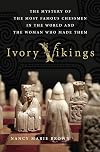
Ivory Vikings: The Mystery of the Most Famous Chessmen in the World and the Woman Who Made Them
by Nancy Marie Brown
On This Page
Description
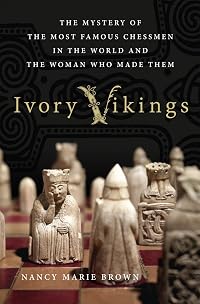
In the early 1800's, on a Hebridean beach in Scotland, the sea exposed an ancient treasure cache: 93 chessmen carved from walrus ivory. Norse netsuke, each face individual, each full of quirks, the Lewis Chessmen are probably the most famous chess pieces in the world. Who carved them? Where? Brown explores these mysteries by connecting medieval Icelandic sagas with modern archaeology, art history, forensics, and the history of board games.Tags
Recommendations




Member Reviews
Why do the publishers of popular history works so often insist on giving them titles which set up grand claims that the book can't possibly answer, and which often don't really convey what the text is about? This is one of the main flaws with Ivory Vikings: The Mystery of the Most Famous Chessmen in the World and the Woman Who Made Them. Nancy Marie Brown does suggest that a woman called Margret the Adroit, mentioned briefly in a medieval Icelandic text largely unknown even to most medievalists, may have been the craftsperson responsible for some or all of the pieces, but she doesn't come close to as specific a claim as the title makes.
In fact, given the paucity of the source material, Brown spends most of the book looking at the show more intercultural connections of northwestern Europe in the twelfth century, when the chess pieces were likely created, and the tangled (nationalist and often elitist) historiography surrounding their discovery in (perhaps) the early nineteenth century.
Brown writes well, fluidly and engagingly, and her enthusiasm about her source material is clear. Ivory Vikings was a pleasure to read. That said, there are points where it felt like she was padding a bit in order to reach the page length her publishers required of her. Knowing something of the genealogical snarls that accompanied the transfer of royal power in this period was necessary for Brown's argument, but some of it was superfluous (even if it did introduce me to characters like King Magnus Bare-Legs).
(Advancing a theory of origin for the Lewis Chessmen is outside of my wheelhouse, though I wouldn't be at all surprised to find that a female artist contributed to their manufacture. I will say, however, that the desire to find a single maker is a distinctly post-Enlightenment one and doesn't really fit with how medieval artistic workshops operated or how medieval people thought of ownership/art.) show less
In fact, given the paucity of the source material, Brown spends most of the book looking at the show more intercultural connections of northwestern Europe in the twelfth century, when the chess pieces were likely created, and the tangled (nationalist and often elitist) historiography surrounding their discovery in (perhaps) the early nineteenth century.
Brown writes well, fluidly and engagingly, and her enthusiasm about her source material is clear. Ivory Vikings was a pleasure to read. That said, there are points where it felt like she was padding a bit in order to reach the page length her publishers required of her. Knowing something of the genealogical snarls that accompanied the transfer of royal power in this period was necessary for Brown's argument, but some of it was superfluous (even if it did introduce me to characters like King Magnus Bare-Legs).
(Advancing a theory of origin for the Lewis Chessmen is outside of my wheelhouse, though I wouldn't be at all surprised to find that a female artist contributed to their manufacture. I will say, however, that the desire to find a single maker is a distinctly post-Enlightenment one and doesn't really fit with how medieval artistic workshops operated or how medieval people thought of ownership/art.) show less
Really enjoyed this look at the Lewis Chessmen and their cultural context. There's a bit of speculation and a small amount of padding here (see the subtitle), but overall I was completely drawn into Brown's wide-ranging narrative, and even the speculation is carefully done and well explained.
When ninety-three meticulously carved, 12th century, walrus ivory chessmen were discovered in the decidedly protestant sands of Scotland’s Isle of Lewis in 1831, a haul that included 16 alarmingly Catholic-looking bishops, no one knew where they had come from (Fairies?), and while we still aren’t sure of their origins today there are some passionately held theories, a subject that this book explores in fascinating detail.
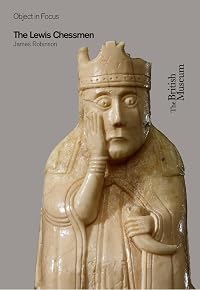
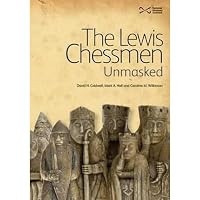
The chessmen themselves are fantastic looking, with distinct irresistible facial expressions and elaborate garments. The kings and queens sit on ornate thrones, the knights are astride pony-size horses--which were all they had in northern Europe at that time--and the rooks are wild-eyed berserkers biting their show more shields with crooked teeth. You’ve seen replicas of these chessmen if you watched Ron and Harry play wizard chess in the first Harry Potter movie. My edition of the book, a free advanced review copy supplied by the publisher, had just a few black and white photos. I don’t know if the finished book will have more, but it’s easy (and well worth it) to find images on the internet.
Ancient ‘‘sea roads” have long connected people who lived in what are now the British Isles and Scandinavia, and I greatly enjoyed reading about the interconnections, religious networks, and cultural exchanges this made possible. Origin contenders for the chessmen include Norway, Scotland, and--after extensive research author Nancy Marie Brown's favorite possibility--Iceland, where they may have been created by Margret the Adroit who is said to have carved walrus ivory “so skillfully that none in Iceland had ever seen such artistry before.” That line comes from the Saga of Bishop Pall, possibly written by Pall’s son Loft (friend of Icelandic saga master Snorri Sturluson) which would give it some historical credibility.
In exploring the genesis of the chessmen, Brown delves deeply into the stories, histories, and personalities of the past, both the 12th century when they were created and the 19th century when they were found, and she also reports on debates about the chessmen that continue to this day--some Scottish nationalists believe the The British Museum should return its 82 pieces to Scotland. I don’t have much personal investment in who exactly created the chessman, which meant that some of the more exacting details didn’t hold my attention, but most of the book completely captivated me. show less
The chessmen themselves are fantastic looking, with distinct irresistible facial expressions and elaborate garments. The kings and queens sit on ornate thrones, the knights are astride pony-size horses--which were all they had in northern Europe at that time--and the rooks are wild-eyed berserkers biting their show more shields with crooked teeth. You’ve seen replicas of these chessmen if you watched Ron and Harry play wizard chess in the first Harry Potter movie. My edition of the book, a free advanced review copy supplied by the publisher, had just a few black and white photos. I don’t know if the finished book will have more, but it’s easy (and well worth it) to find images on the internet.
Ancient ‘‘sea roads” have long connected people who lived in what are now the British Isles and Scandinavia, and I greatly enjoyed reading about the interconnections, religious networks, and cultural exchanges this made possible. Origin contenders for the chessmen include Norway, Scotland, and--after extensive research author Nancy Marie Brown's favorite possibility--Iceland, where they may have been created by Margret the Adroit who is said to have carved walrus ivory “so skillfully that none in Iceland had ever seen such artistry before.” That line comes from the Saga of Bishop Pall, possibly written by Pall’s son Loft (friend of Icelandic saga master Snorri Sturluson) which would give it some historical credibility.
In exploring the genesis of the chessmen, Brown delves deeply into the stories, histories, and personalities of the past, both the 12th century when they were created and the 19th century when they were found, and she also reports on debates about the chessmen that continue to this day--some Scottish nationalists believe the The British Museum should return its 82 pieces to Scotland. I don’t have much personal investment in who exactly created the chessman, which meant that some of the more exacting details didn’t hold my attention, but most of the book completely captivated me. show less
This book by Nancy Marie Brown is about the Lewis Chess Pieces and explores the circumstances of their creation: where, who, why. The narrative loops around a lot, revisiting bits of history and ideas in different chapters.
In general, I like the set-up of the book. It starts with an introduction, and then has a chapter named after each of the major pieces, Rook, Bishop, Queen, King, and Knight. The purposes of three of these chapters are very clear. The Rook chapter deals with the appearance of the pieces, some chess history and also looks at the history of walrus ivory. The Bishop chapter examines the reasons the bishops look as the do, adds to chess history and looks at Church history in relation to Iceland and other parts of show more Scandinavia. The Knight chapter tries to date the pieces based on the clothing of the Knights and the horses, looks at the stories about how the chess pieces were found, and discusses their acquisition by the British Museum and the National Museum of Scotland.
The Queen and King sections do much of the same things for their pieces but are generally are too long and repeat too many ideas and stories from the previous chapters. Generally, Brown is good at signposting, reminding readers where we have met a historical figure before. However, the Queen and King chapters do much too much of this retreading of old ground. One thing that I found particularly frustrating is there's a particular quote from The Saga of Bishop Pall that she quotes 4 separate times (often without acknowledging that the reader has seen this before.)
I liked learning about the Lewis Chess Pieces, and really enjoyed that Brown used Icelandic sagas as a basis of her research. (I wish more of them she mentioned were in translation.) Her scholarly argument is sound. However, my criticism of this book is one that I am finding that I put forth often for both fiction and non-fiction: it bogs down in the middle, and it needed a better editor. show less
In general, I like the set-up of the book. It starts with an introduction, and then has a chapter named after each of the major pieces, Rook, Bishop, Queen, King, and Knight. The purposes of three of these chapters are very clear. The Rook chapter deals with the appearance of the pieces, some chess history and also looks at the history of walrus ivory. The Bishop chapter examines the reasons the bishops look as the do, adds to chess history and looks at Church history in relation to Iceland and other parts of show more Scandinavia. The Knight chapter tries to date the pieces based on the clothing of the Knights and the horses, looks at the stories about how the chess pieces were found, and discusses their acquisition by the British Museum and the National Museum of Scotland.
The Queen and King sections do much of the same things for their pieces but are generally are too long and repeat too many ideas and stories from the previous chapters. Generally, Brown is good at signposting, reminding readers where we have met a historical figure before. However, the Queen and King chapters do much too much of this retreading of old ground. One thing that I found particularly frustrating is there's a particular quote from The Saga of Bishop Pall that she quotes 4 separate times (often without acknowledging that the reader has seen this before.)
I liked learning about the Lewis Chess Pieces, and really enjoyed that Brown used Icelandic sagas as a basis of her research. (I wish more of them she mentioned were in translation.) Her scholarly argument is sound. However, my criticism of this book is one that I am finding that I put forth often for both fiction and non-fiction: it bogs down in the middle, and it needed a better editor. show less
Fascinating story and I saw some of the pieces in a Canberra exhibition - still attributed to being from Norway
Some of the writing was rather dense with too much historical detail but skimming through the sections gave the gist.
Good to know archaeologists are still working on these dilemmas - the case for the Icelandic origin made here is strong.
Some of the writing was rather dense with too much historical detail but skimming through the sections gave the gist.
Good to know archaeologists are still working on these dilemmas - the case for the Icelandic origin made here is strong.
The Lewis Chessmen were discovered in Northern Scotland in the 1800s and have been fascinating people since. They were most likely crafted between 1100-1200 out of walrus tusk ivory but where, by whom, and for whom remain largely a mystery. Brown obviously likes the Iceland theory and the possibility that they were crafted by Icelander Margret the Adroit who is known to have made a beautiful ivory bishop's crozier during the time period the chessman were crafted.
Since there really isn't a ton to say about the chessmen themselves, Brown supplements this mystery by using each chesspiece (rook/berserk, bishops, kings, queens, and knights) to talk about the history, politics, and culture of the time. She uses them as a jumping off point to show more talk about Scandinavian history between 800-1300 (focusing mainly on 1000-1200). There are lots of interesting stories and tidbits of history and culture.
Overall I enjoyed this, but I thought the construction was a bit loose. She sort of lost her thesis and often didn't connect her stories very well to the chessmen. This meant that even though I was enjoying the things she was telling me, part of me was bothered that I couldn't see the over-arching point. As a result, this receives a middling grade from me. show less
Since there really isn't a ton to say about the chessmen themselves, Brown supplements this mystery by using each chesspiece (rook/berserk, bishops, kings, queens, and knights) to talk about the history, politics, and culture of the time. She uses them as a jumping off point to show more talk about Scandinavian history between 800-1300 (focusing mainly on 1000-1200). There are lots of interesting stories and tidbits of history and culture.
Overall I enjoyed this, but I thought the construction was a bit loose. She sort of lost her thesis and often didn't connect her stories very well to the chessmen. This meant that even though I was enjoying the things she was telling me, part of me was bothered that I couldn't see the over-arching point. As a result, this receives a middling grade from me. show less
While it kind of peters out in the end what Brown does in this book is examine how Iceland fit into the wider world at the time when the Lewis Chessmen were likely made, which was also the same time that the great Icelandic sagas were created. It is from one of the historical sagas that we know of Margret the Adroit, a local artistic prodigy who could possibly have had a hand in creating the famous chessmen; very speculative stuff, but fascinating all the same.
Members
- Recently Added By
Lists

al.vick-wishlist-history
70 works; 2 members

My Wishlist
40 works; 1 member

Europe
205 works; 6 members

2010s
241 works; 3 members

Books Read in 2017
4,249 works; 130 members

Club Read's Recommended Nonfiction Written by Women
618 works; 30 members
Author Information

10 Works 1,735 Members
Awards and Honors
Distinctions
Common Knowledge
- Canonical title
- Ivory Vikings: The Mystery of the Most Famous Chessmen in the World and the Woman Who Made Them
Classifications
- Genres
- Anthropology, Art & Design, History, Nonfiction, General Nonfiction
- DDC/MDS
- 736.6209411 — Arts & recreation Sculpture, ceramics & metalwork Carving and carvings Bone and Ivory Ivory
- LCC
- NK4696.2 .G7 .B76 — Fine Arts 3600-(9990) Other arts and art industries Decorative arts Other arts and art industries
- BISAC
Statistics
- Members
- 281
- Popularity
- 114,985
- Reviews
- 16
- Rating
- (3.45)
- Languages
- English
- Media
- Paper, Audiobook, Ebook
- ISBNs
- 5
- ASINs
- 4