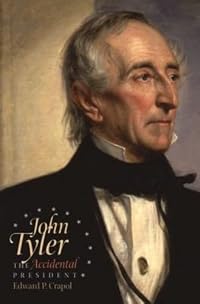
John Tyler, the Accidental President
by Edward P. Crapol
On This Page
Description
The first vice president to become president on the death of the incumbent, John Tyler (1790-1862) was derided by critics as "His Accidency." In this biography of the tenth president, Edward P. Crapol challenges depictions of Tyler as a die-hard advocate of states' rights, limited government, and a strict interpretation of the Constitution. Instead, he argues, Tyler manipulated the Constitution to increase the executive power of the presidency. Crapol also highlights Tyler's faith in show more America's national destiny and his belief that boundless territorial expansion would preserve the Union as a slaveholding republic. When Tyler sided with the Confederacy in 1861, he was branded as America's "traitor" president for having betrayed the republic he once led. show lessTags
Recommendations







Member Reviews
“He [Tyler] seemed oblivious to yet another contradiction in his ideology. Just as slavery mocked Tyler’s notion of free America’s global mission, the chase for national glory ultimately would clash with his traditional Jeffersonian view of limited government.”
This book is a biography of tenth US President, John Tyler (1790-1862). He is known as the first Vice President to assume the Presidency (after the death of William Henry Harrison), setting a precedent that still endures. He is not particularly well-remembered these days, and this book provides an informative series of essays on his key characteristics and accomplishments, including:
- Pro-slavery stance: John Tyler was a slave-owner. While he sought to eliminate the slave show more markets in Washington D.C., he was a plantation owner who believed in the “southern way of life” that “required” slaves.
- Non-recognition of Haiti: After Haiti gained independence (after a slave revolt), Tyler refused to recognize it as a country. This reluctance can be traced directly to racism.
- Recognition of Hawaii: In order to provide the US access to the Eastern hemisphere, Tyler recognized Hawaii as an independent territory.
- Diplomacy with China: He sent a diplomat to open trade discussions with China, along with a rather condescending letter that, fortunately for him, was not delivered until diplomatic relations had been established.
- Pre-annexation of Texas: He facilitated the preliminary negotiations that eventually led to the annexation of Texas (which occurred after his term ended).
- Joining the Confederacy: He is considered a “traitor president” due to voting for secession and joining the Confederacy in 1861 at the start of the American Civil War.
The primary advantage of this biography is the wealth of information provided on a lesser-known President. Tyler is not a particularly admirable person, nor does Crapol attempt to fully redeem him. It does not provide much about his personal life or his pre-presidential public service. His first wife died in 1842, he married his second wife during his presidency, and had a total of fifteen children. I enjoyed the thematic approach to this book, though it may be less effective for those who prefer a chronological account. I did not particularly care for the author’s continued use of the euphemism for slavery (i.e., “the peculiar institution”), but overall, this is an accessible, well-researched biography, and I learned a lot from reading it. show less
This book is a biography of tenth US President, John Tyler (1790-1862). He is known as the first Vice President to assume the Presidency (after the death of William Henry Harrison), setting a precedent that still endures. He is not particularly well-remembered these days, and this book provides an informative series of essays on his key characteristics and accomplishments, including:
- Pro-slavery stance: John Tyler was a slave-owner. While he sought to eliminate the slave show more markets in Washington D.C., he was a plantation owner who believed in the “southern way of life” that “required” slaves.
- Non-recognition of Haiti: After Haiti gained independence (after a slave revolt), Tyler refused to recognize it as a country. This reluctance can be traced directly to racism.
- Recognition of Hawaii: In order to provide the US access to the Eastern hemisphere, Tyler recognized Hawaii as an independent territory.
- Diplomacy with China: He sent a diplomat to open trade discussions with China, along with a rather condescending letter that, fortunately for him, was not delivered until diplomatic relations had been established.
- Pre-annexation of Texas: He facilitated the preliminary negotiations that eventually led to the annexation of Texas (which occurred after his term ended).
- Joining the Confederacy: He is considered a “traitor president” due to voting for secession and joining the Confederacy in 1861 at the start of the American Civil War.
The primary advantage of this biography is the wealth of information provided on a lesser-known President. Tyler is not a particularly admirable person, nor does Crapol attempt to fully redeem him. It does not provide much about his personal life or his pre-presidential public service. His first wife died in 1842, he married his second wife during his presidency, and had a total of fifteen children. I enjoyed the thematic approach to this book, though it may be less effective for those who prefer a chronological account. I did not particularly care for the author’s continued use of the euphemism for slavery (i.e., “the peculiar institution”), but overall, this is an accessible, well-researched biography, and I learned a lot from reading it. show less
I found Edward Crapol's book to be an extremely informative study of America's tenth president, though part of this was because I know so little about Tyler before I picked up this book. Still, Crapol did a fine job in arguing that Tyler's presidency was more significant than has been appreciated, particularly in terms of its foreign policy. Crapol's focus on this area (a sign of his own academic concentration and the book's origins as a study of the foreign policy of the Tyler administration) demonstrates Tyler's considerable achievements, yet without glossing over or downplaying Tyler's pro-slavery agenda. Because of its lack of detail about Tyler's pre-presidential years (which are addressed only in passing) this may not be the first show more book I recommend people read if they want to learn about Tyler, but it definitely is one that is essential for a complete understanding of his life and his presidency. show less
Before picking up John Tyler: The Accidental President, I didn't know much about Tyler - after all, he's generally considered a less than spectacular President and his main claim to fame is being the first Vice President to take over after the death of a President. Well, that and being the only "traitor President" given his involvement with the Confederacy later in life. After reading it, I still don't know all the much about Tyler. Instead of giving us a sense of the man, he chose to present the development of the major political issues and how Tyler responded to them. That's fine, but the discussion of a chapter per issue really missed the interconnections between the issues and became really repetitive. For instance, Crapol attempted show more to make similar points about Tyler's actions in say, the annexation of Texas just after addressing the same points in discussing relations with Hawaii. These two issues developed simultaneously, and a different presentation of events and Tyler's actions may well have resulted in a deeper understanding of the man.
I'll give Crapol this: he genuinely wants to give Tyler credit where it's due. I hadn't realized that he was so heavily involved in the opening of Asia and the expansion of US influence in the Pacific. I also didn't realize how much he was driven by preservation of the Union over the issue of slavery - as much as previous, more highly regarded Presidents such as Madison. And yet, he remained a slave owner and when the time came, supported the secession of VIrginia from the Union.
Honestly, part of the problem with Crapol's book may be the subject. I get the feeling that there's just not that much of Tyler worth writing about. Yes, he led the country, but that doesn't mean he was that difficult to understand or that there was much beyond what's presented here. He strikes me as a politician mostly concerned about preserving his way of life as a Southern gentleman farmer and his reputation in history. It may simply be that Tyler was no Lincoln and Crapol ran out of things to say about him. I suspect that I need to get another biography to find out. show less
I'll give Crapol this: he genuinely wants to give Tyler credit where it's due. I hadn't realized that he was so heavily involved in the opening of Asia and the expansion of US influence in the Pacific. I also didn't realize how much he was driven by preservation of the Union over the issue of slavery - as much as previous, more highly regarded Presidents such as Madison. And yet, he remained a slave owner and when the time came, supported the secession of VIrginia from the Union.
Honestly, part of the problem with Crapol's book may be the subject. I get the feeling that there's just not that much of Tyler worth writing about. Yes, he led the country, but that doesn't mean he was that difficult to understand or that there was much beyond what's presented here. He strikes me as a politician mostly concerned about preserving his way of life as a Southern gentleman farmer and his reputation in history. It may simply be that Tyler was no Lincoln and Crapol ran out of things to say about him. I suspect that I need to get another biography to find out. show less
John Tyler, the Accidental President by Edward P. Crapol is a biography of America’s 10th President. Mr. Carpol was a professor in the Department of History at the College of William and Mary.
John Tyler became America’s 10th President after President William Henry Harrison died in office after only 31 days. This was a first for the new republic, and Mr. Tyler set many precedents for the country, as well as for his successors.
President Tyler, a Virginian, is remembered as the first VP to become President after the elected official died. He was nicknamed “His Accidency” and worked hard to shape the system, as well as executive power, for future generations.
Like many other powerful people, Mr. Tyler was also full of hypocrisies show more once getting into a position of power. Once sitting being that big desk, in that round room, within the white mansion, he acted against his own ideology of advocating state’s rights, limited government, and his interpretation of the Constitution.
John Tyler, the Accidental President by Edward P. Crapol also addresses the subject of Tyler’s treason of siding with the Confederacy during the American Civil War. The only President to die while being a citizen of another country that was also at war with the United States.
The author, however, argues that Tyler’s presidency was groundbreaking in many ways. From the Annexation of Texas, to defining the role of a VP taking over the highest office in the land, from negotiating border agreements to policies advancing foreign policy with Asia.
Mr. Carpol is certainly sympathetic to his subject, and his arguments for Tyler’s accomplishments are convincing. However, his sympathy for slavery, and the Confederacy, has tarnished his reputation in American history for the foreseeable future.
Nevertheless, this is a capable, readable, and well-researched biography. I enjoyed reading it and learned a lot about a President whose name most Americans won’t even recognize. show less
John Tyler became America’s 10th President after President William Henry Harrison died in office after only 31 days. This was a first for the new republic, and Mr. Tyler set many precedents for the country, as well as for his successors.
President Tyler, a Virginian, is remembered as the first VP to become President after the elected official died. He was nicknamed “His Accidency” and worked hard to shape the system, as well as executive power, for future generations.
Like many other powerful people, Mr. Tyler was also full of hypocrisies show more once getting into a position of power. Once sitting being that big desk, in that round room, within the white mansion, he acted against his own ideology of advocating state’s rights, limited government, and his interpretation of the Constitution.
John Tyler, the Accidental President by Edward P. Crapol also addresses the subject of Tyler’s treason of siding with the Confederacy during the American Civil War. The only President to die while being a citizen of another country that was also at war with the United States.
The author, however, argues that Tyler’s presidency was groundbreaking in many ways. From the Annexation of Texas, to defining the role of a VP taking over the highest office in the land, from negotiating border agreements to policies advancing foreign policy with Asia.
Mr. Carpol is certainly sympathetic to his subject, and his arguments for Tyler’s accomplishments are convincing. However, his sympathy for slavery, and the Confederacy, has tarnished his reputation in American history for the foreseeable future.
Nevertheless, this is a capable, readable, and well-researched biography. I enjoyed reading it and learned a lot about a President whose name most Americans won’t even recognize. show less
I had trouble with this book and didn't finish it the first time I tried. This is why.
My problems:
1. Tells the reader what to think instead of presenting facts and guiding through the rough parts.
2. Overwrites.
3. Peats and repeats.
4. Gives many pointless facts, like a kid padding his term paper.
5. Confused narrative.
6. Seems more like a meditation than a biography.
It was expedient for John Tyler to become vice president. Expedient for himself and expedient for others. It didn’t matter that he was barely a Whig. Hell, that was everybody’s problem. He was just going to be vice president. Who cared what he thought?
Then William Henry Harrison stayed out too long in the cold, got sick, and died. Suddenly Tyler was the whole ball of show more wax. Oh, Henry Clay and a few others tried to hold him down but he shook them off like an old dog shakes off playful kittens.
He decided that he didn’t need the Whig Party because he controlled King Patronage and could buy his own party. So the man who had decried patronage in the past suddenly became the most draconian patron of all, firing everyone he didn’t trust and hiring only his cronies. As a strategy it didn’t work so well and by the time the next election rolled around nobody would vote for him.
He was a surprisingly effective president nonetheless. He made the acquisition of Texas inevitable, opened up trade routes to China, settled Maine’s boundary dispute with England, and used government money to secretly influence events more than any president before him. He did all the things he’d said he hated most about government.
Tyler also liked women, having more kids (white and black) than he could shake a stick at before courting a young woman soon after his wife died (taking her on one date for a boatride where her father was blown up by a gun called “Peacemaker”) and begetting a passel more. Who can’t get behind a president like that?
Afterward, he went back to Virginia and seceded with the rest of the South but died soon after the start of the war, a traitor to his country if not to his state.
Not the best written bio but there ain't much else out there. show less
My problems:
1. Tells the reader what to think instead of presenting facts and guiding through the rough parts.
2. Overwrites.
3. Peats and repeats.
4. Gives many pointless facts, like a kid padding his term paper.
5. Confused narrative.
6. Seems more like a meditation than a biography.
It was expedient for John Tyler to become vice president. Expedient for himself and expedient for others. It didn’t matter that he was barely a Whig. Hell, that was everybody’s problem. He was just going to be vice president. Who cared what he thought?
Then William Henry Harrison stayed out too long in the cold, got sick, and died. Suddenly Tyler was the whole ball of show more wax. Oh, Henry Clay and a few others tried to hold him down but he shook them off like an old dog shakes off playful kittens.
He decided that he didn’t need the Whig Party because he controlled King Patronage and could buy his own party. So the man who had decried patronage in the past suddenly became the most draconian patron of all, firing everyone he didn’t trust and hiring only his cronies. As a strategy it didn’t work so well and by the time the next election rolled around nobody would vote for him.
He was a surprisingly effective president nonetheless. He made the acquisition of Texas inevitable, opened up trade routes to China, settled Maine’s boundary dispute with England, and used government money to secretly influence events more than any president before him. He did all the things he’d said he hated most about government.
Tyler also liked women, having more kids (white and black) than he could shake a stick at before courting a young woman soon after his wife died (taking her on one date for a boatride where her father was blown up by a gun called “Peacemaker”) and begetting a passel more. Who can’t get behind a president like that?
Afterward, he went back to Virginia and seceded with the rest of the South but died soon after the start of the war, a traitor to his country if not to his state.
Not the best written bio but there ain't much else out there. show less
I have the same gripes that other reviewers mentioned: repeats, lack of chronological narrative (each chapter is rather an essay on specific aspect of Tyler's policy). I can't really call this book a biography since there are some aspects of John Tyler life that just are not covered. For example, there is a fleeting mention of his first wife, but we know nothing about her nor the circumstances they met. I found the description of each of policy challenges to be quite good, very well explained - I just wish each chapter wouldn't be so self-contained, with some things described anew in each chapter.
Well, this book was highly recommended, but was quite a disappointment. While I appreciated how well-researched it was there were many flaws, most of which are probably just subjective criticisms. First, the book was organized topically and not chronologically. The first and last chapters were chronological, but nothing in the middle was. There was much tumult in Tyler's cabinet and it would have been helpful to be able to place when everything was happening. Instead, each chapter just seemed to be cyclical and kept referring to upheaval, but I could never figure out when in his term things were actually happening. Along the same lines, parts of each chapter were repetitive. For instance, Crapol would reference in each chapter about show more Daniel Webster being Tyler's Secretary of State. I began to feel that each middle chapter would have made a better journal article than part of a book.
Also, while I greatly appreciated the endnotes which pointed to copious research, there were two problems I had with them. First, at the bottom of each page was the title of the chapter, not the actual chapter number; however, the endnotes were organized by chapter number, not the title of the chapter. This was extremely frustrating when I went to look at a particular endnote as it meant that I would first have to figure out the number of the chapter before I could reference the note. Too much work! Second, many notes I felt were incomplete. In several places, Crapol would reference "other historians" or "more recently, historians. . ." but when I went to look at the endnote to try to figure out which historians, Crapol only pointed to the primary sources (i.e. Tyler's letters or other official papers). Thus, other than relying on his word, I could never figure what other historians really felt or believed about Tyler, his presidency or legacy. show less
Also, while I greatly appreciated the endnotes which pointed to copious research, there were two problems I had with them. First, at the bottom of each page was the title of the chapter, not the actual chapter number; however, the endnotes were organized by chapter number, not the title of the chapter. This was extremely frustrating when I went to look at a particular endnote as it meant that I would first have to figure out the number of the chapter before I could reference the note. Too much work! Second, many notes I felt were incomplete. In several places, Crapol would reference "other historians" or "more recently, historians. . ." but when I went to look at the endnote to try to figure out which historians, Crapol only pointed to the primary sources (i.e. Tyler's letters or other official papers). Thus, other than relying on his word, I could never figure what other historians really felt or believed about Tyler, his presidency or legacy. show less
Members
- Recently Added By
Author Information
4 Works 229 Members
Common Knowledge
- People/Characters
- John Tyler
Classifications
- Genres
- History, Nonfiction, Biography & Memoir, General Nonfiction
- DDC/MDS
- 973.5 — History & geography History of North America United States Jacksonian Era (1809-1837)
- LCC
- E397 .C73 — History of the United States United States Revolution to the Civil War, 1775/1783-1861 By period Early nineteenth century, 1801/1809-1845 Tyler's administration, April 4, 1841-1845
- BISAC
Statistics
- Members
- 192
- Popularity
- 169,934
- Reviews
- 9
- Rating
- (3.34)
- Languages
- English
- Media
- Paper, Audiobook, Ebook
- ISBNs
- 6
- ASINs
- 2