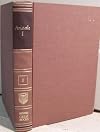
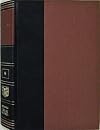
Britannica Great Books: Aristotle I
by Aristotle, Robert Maynard Hutchins (Editor)
On This Page
Description
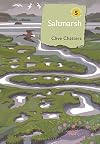
?Saltmarshes are often remote, inhospitable places, neither land nor sea, as hard to pin down as they are to navigate. In this saline odyssey, Clive Chatters has explored his favourite creeks, pools and mudflats to bring us an absorbing celebration of the ecology, biology, geology and history of this scarce and mysterious habitat. There are Tadpole Shrimps, and rare sedges, waders and Wild Celery ? even inland saltmarshes ? in this tour de force by a superb naturalist and writer.? BRETT show more WESTWOOD, naturalist, author and radio presenter Saltmarshes are among Britain's most diverse and dynamic landscapes. They abound around our shores but may also be found inland and at altitude ? wherever water, salt and vegetation combine. The species they support range from extreme rarities of specialised habitats to the less demanding denizens of coastal wetlands. Here is a landscape of international importance for migratory birds, endemic plants and an exceptional variety of invertebrates. Clive Chatters has a lifetime's affinity with saltmarshes. In this fifth volume of the British Wildlife Collection, he celebrates their natural history and diversity, from the highly distinctive marshes in the Scottish Highlands to the urban remnants of the Thames estuary now engulfed within the capital. By examining the past of these complex habitats, we can gain an insight into how they have developed, and an understanding of their relationship with people. In addition to their exceptionally diverse natural history, saltmarshes are sources of food and medicine, they play a pivotal role in flood defence and carbon sequestration, and have inspired artistic endeavour. show lessTags
Recommendations

























Member Reviews
I believe that herein lies, if not the answers to life, the universe, and everything, at least a minute and carefully specified description of it all. Sadly (or not) there is probably not enough time left in my life to read/comprehend it. Nice to know what he was about though. I skimmed mightily, read some, and enjoyed reading some, too.
The mind boggles at one man sitting down and writing this whole thing, let alone having students to teach and enemies to avoid. The reasoning of the workings of the world around him (reading specifically in the book "Atmosphere") is amazing. It is easy to think of these ancient peoples as being simple in their understanding because they lacked our scientific equipment, but they reasoned it out pretty show more well, considering!
I enjoyed reading his precise phrasing. He was not one to leave loopholes. Review is for both volumes. show less
The mind boggles at one man sitting down and writing this whole thing, let alone having students to teach and enemies to avoid. The reasoning of the workings of the world around him (reading specifically in the book "Atmosphere") is amazing. It is easy to think of these ancient peoples as being simple in their understanding because they lacked our scientific equipment, but they reasoned it out pretty show more well, considering!
I enjoyed reading his precise phrasing. He was not one to leave loopholes. Review is for both volumes. show less
Ratings
Members
- Recently Added By
Lists

Western Canon
206 works; 2 members
Author Information

2,090+ Works 57,450 Members

Robert Hutchins wrote widely about education and is best known for his support of liberal education, which he believed "prepares the young for anything that may happen; it has value under any circumstances. . . . It gets them ready for a lifetime of learning. It connects man with man. It introduces all men to the dialogue about the common good of show more their own country and of the world community. It frees their mind of prejudice. It lays the basis of practical wisdom." He believed that the increasing complexities of civilization did not justify any modification in this approach. "The more technological the society," he says in The Learning Society (1968), "the less ad hoc education can be. The reason is that the more technological the society is, the more rapidly it will change and the less valuable ad hoc education will become. It now seems safe to say that the best practical education is the best theoretical one." After serving as dean of Yale Law School in 1929, Hutchins became (at age 29) president and in 1949 chancellor of the University of Chicago, remaining there until 1951. During this period, he and Mortimer Adler introduced the Great Books program into the Chicago curriculum. They believed that the best education is achieved through reading and understanding the great minds of the past. Later he became associate director of the Ford Foundation and president of the Fund for the Republic. In the latter post, Hutchins faced the oppressive climate for free expression brought about by McCarthyism, but he saw to it that the fund's projects included studies of the federal loyalty-security program, of political blacklisting in the entertainment industries, and of the nature of communism in the United States. He retired as the chief executive officer of the Center for the Study of Democratic Institutions in Santa Barbara, California, a "community of scholars" under the aegis of the Ford Foundation. (Bowker Author Biography) show less
All Editions
Some Editions
Series
Belongs to Publisher Series
Work Relationships
Is contained in
Contains
Common Knowledge
- Canonical title
- Britannica Great Books: Aristotle I
- First words
- Things are said to be named 'equivocally' when, though they have a common name, the definition corresponding with the name differs for each.
Of the parts of animals some are simple: to wit, all such as divide into parts uniform with themselves, as flesh into flesh; others are composite, such as divide into parts not uniform with themselves, as, for instance, the h... (show all)and does not divide into hands nor the face into faces.
When I began the following work, my only object was to extend and explain more fully the memoir which I read at the public meeting of the Academy of Sciences in the month of April, 1787, on the necessity of reforming and comp... (show all)leting the nomenclature of chemistry. - Last words
- (Click to show. Warning: May contain spoilers.)For physicians of culture and refinement make some mention of natural science, and claim to derive their principles from it, while the most accomplished investigators into nature generally push their studies so far as to conclude with an account of medical principles.
(Click to show. Warning: May contain spoilers.)So much for Tragedy and Epic poetry—for these two arts in general and their species; the number and nature of their constituent parts; the causes of success and failure in them; the Objections of the critics, and the Solutions in answer to them. - Disambiguation notice
- The Britannica Great Books edition of Aristotle's works was printed as Volumes 8 and 9 of the first edition, and Volumes 7 and 8 of the second edition. The numbering overlap makes dividing the volumes uncertain
Classifications
- Genres
- Philosophy, Nonfiction, Science & Nature
- DDC/MDS
- 185 — Philosophy & psychology Ancient, medieval & eastern philosophy Aristotelian philosophy
- LCC
- AC1 .G72 — General Works Collections. Series. Collected works Collections. Series. Collected works Collections of monographs, essays, etc. American and English
- BISAC
Statistics
- Members
- 398
- Popularity
- 78,276
- Reviews
- 1
- Rating
- (2.50)
- Languages
- English, Portuguese
- Media
- Paper
- ISBNs
- 2
- UPCs
- 1
- ASINs
- 27