
W. D. Ross (1877–1971)
Author of Aristotle
About the Author
Works by W. D. Ross
Associated Works
The Complete Works of Aristotle: The Revised Oxford Translation (1984) — Translator, some editions — 788 copies, 4 reviews
The Pocket Aristotle: Selections from PHYSICS, PSYCHOLOGY, METAPHYSICS, NICOMACHEAN ETHICS, POLITICS and POETICS (1958) — Translator, some editions — 444 copies, 1 review
The Moral Life: An Introductory Reader in Ethics and Literature (1999) — Contributor — 205 copies, 2 reviews
The Student's Oxford Aristotle 13 copies
Rhetoric (Greek) 9 copies
The Works of Aristotle [Great Books of the Western World] — Editor — 6 copies
The Socratic Dialogues Middle Period, Volume 1: Symposium, Theaetetus, Phaedo (2017) — Narrator, some editions — 6 copies, 1 review
Aristotle's Metaphysics [Everyman's Library] (1956) — Introduction, some editions; Introduction, some editions — 4 copies
Aristotle's Physics: A Revised Text with Introduction and Commentary. Text in Greek and English 2 copies
De Anima. Edited with Introduction and Commentary, By Sir David Ross (1961) — Introduction, some editions — 1 copy
Tagged
Common Knowledge
- Legal name
- Ross, Sir William David
- Other names
- Ross, W. D.
Ross, David
Ross, W. David - Birthdate
- 1877-04-15
- Date of death
- 1971-05-05
- Gender
- male
- Education
- University of Edinburgh (BA - Classics)
University of Oxford (MA) - Occupations
- Provost, Oriel College, Oxford
Vice-Chancellor, Oxford University
General Editor of the Oxford Aristotle translation series - Awards and honors
- Order of the British Empire
Knight of the British Empire
Fellow of the British Academy - Nationality
- UK
- Birthplace
- Thurso, Scotland
- Place of death
- Oxford, Oxfordshire, England, UK
- Associated Place (for map)
- UK
Members
Reviews
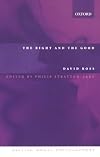
[The human mind] has in fact an a priori insight into certain broad principles of morality, and it can distinguish between a more and a less adequate recognition of these principles. [...] There is a system of moral truth, as objective as all truth must be, which, and whose implications, we are interested in discovering.
I would give five stars to the first two chapters on "the right," and three stars to the remaining chapters on "the good." Ross's insights into the nature of right action via show more prima facie duties is compelling and well-argued, but his complicated parsing of Moorean goodness left me as unconvinced and confused as reading Principia Ethica. show less
I would give five stars to the first two chapters on "the right," and three stars to the remaining chapters on "the good." Ross's insights into the nature of right action via show more prima facie duties is compelling and well-argued, but his complicated parsing of Moorean goodness left me as unconvinced and confused as reading Principia Ethica. show less

This 1930 edition reprinted ibn 1946, 1950, 1955. Some deontologists are moral absolutists, believing that certain actions are absolutely right or wrong, regardless of the intentions behind them as well as the consequences which ensue from them. For example, Immanuel Kant had argued that the only absolutely good thing is a good will, and thus, the single determining factor of whether an action is morally right is the will or volition of the action's agent, or the motive of the person doing show more the action. If such persons are acting on a bad (or false) maxim, e.g. "I will lie", then their action is morally wrong, even if some good consequences indeed proceed from performing the action. On the other hand, non-absolutist deontologists, such as William David Ross, hold that the consequences of SOME actions (such as lying or cheating or stealing or harming maliciously) may sometimes make lying the right thing to do. Jonathan Baron and Mark Spranca use the term "protected values" when referring to values governed by deontological rules. show less
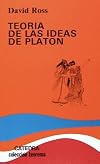
TEORÍA DE LAS IDEAS DE PLATÓN
En esta monografía, ya clásica, el gran helenista Sir William David Ross estudia el desarrollo de la teoría de las ideas en sus diversas formas, desde los diálogos de juventud a los de madurez y vejez. Los problemas fundamentales de la teoría: existencia separada de las ideas, su conexión con el mundo de las apariencias y la relación dialéctica que las ideas guardan entre sí, son tratados sobre la base de los principales textos platónicos y puestos en show more relación con problemas de la filosofía actual.
El capítulo último del libro ofrece una breve visión global de la teoría platónica de las ideas y sus implicaciones metafísicas. show less
En esta monografía, ya clásica, el gran helenista Sir William David Ross estudia el desarrollo de la teoría de las ideas en sus diversas formas, desde los diálogos de juventud a los de madurez y vejez. Los problemas fundamentales de la teoría: existencia separada de las ideas, su conexión con el mundo de las apariencias y la relación dialéctica que las ideas guardan entre sí, son tratados sobre la base de los principales textos platónicos y puestos en show more relación con problemas de la filosofía actual.
El capítulo último del libro ofrece una breve visión global de la teoría platónica de las ideas y sus implicaciones metafísicas. show less
You May Also Like


Associated Authors
Statistics
- Works
- 16
- Also by
- 52
- Members
- 588
- Popularity
- #42,663
- Rating
- 3.9
- Reviews
- 5
- ISBNs
- 43
- Languages
- 9
