
A. E. Taylor (1869–1945)
Author of Plato: The Man and His Work
About the Author
Image credit: Photo by Drummond Young at the University of Edinburgh
Works by A. E. Taylor
The faith of a moralist;: Gifford lectures delivered in the University of St. Andrews, 1926-1928, (1937) 21 copies
Aristotle on His Predecessors - Second Edition (The Open Court Library of Philosophy) (1962) 8 copies, 2 reviews
Aristotle 2 copies
Socrate 2 copies
El pensamiento de Sócrates 2 copies
SOCRATES Men Of Destiny 1 copy
Associated Works
Tagged
Common Knowledge
- Canonical name
- Taylor, A. E.
- Legal name
- Taylor, Alfred Edward
- Birthdate
- 1869-12-22
- Date of death
- 1945-10-31
- Gender
- male
- Education
- Kingswood School, Bath
University of Oxford (New College) - Occupations
- professor
- Organizations
- University of St Andrews
University of Edinburgh
British Academy (Fellow)
Aristotelian Society (President) - Relationships
- Taylor, Lydia Jutsum (wife)
- Nationality
- England
UK - Birthplace
- Oundle, North Northamptonshire, UK
- Map Location
- UK
Members
Reviews
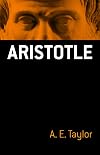
Taylor was an early 20th c. Platonist with a couple weird takes on Plato: he believed that no development took place in the ideas of this great thinker during his half century of writing; and he believed Plato never put an idea in his character Socrates’ mouth that didn’t belong to the historical Socrates. It’s hard to imagine how anyone familiar with the Platonic corpus and its context could hold these views. So Taylor was an intelligent, well-educated guy with weird judgment. In this show more book we find in numerous places that Taylor had something a lot like contempt for Aristotle. Let’s assume his weird views on Plato were considered plausible a century ago; why would he be asked to write a brief introduction to the thought of someone he disliked so much?
But he was and he did. And if you’re unfamiliar with Aristotle, this little book might seem like a serviceable survey of his thought. The bullet points are there – formal logic, the four causes, etc. But it’s written by someone with no real appreciation for Aristotle’s thought, who apparently never gave it careful consideration. Consequently it provides a simplistically inaccurate and overly negative picture of that thought. It’s true that Aristotle sometimes seems pedestrian or conservative in an unreflective way. But right when you’re starting to wonder where his reputation comes from, he bowls you over with something you really have to chew on. For years. At least that’s been my experience. Why not get an introduction from someone who’s done that rather than burning the book after passing the exam?
Adler’s Aristotle for Everyone is a decent, short introduction by someone who took Aristotle seriously. Lear’s Aristotle: The Desire to Understand is superb, but requires more time and effort (which are well worth it). Surely there are others. It’s a mystery why this book is still in print. show less
But he was and he did. And if you’re unfamiliar with Aristotle, this little book might seem like a serviceable survey of his thought. The bullet points are there – formal logic, the four causes, etc. But it’s written by someone with no real appreciation for Aristotle’s thought, who apparently never gave it careful consideration. Consequently it provides a simplistically inaccurate and overly negative picture of that thought. It’s true that Aristotle sometimes seems pedestrian or conservative in an unreflective way. But right when you’re starting to wonder where his reputation comes from, he bowls you over with something you really have to chew on. For years. At least that’s been my experience. Why not get an introduction from someone who’s done that rather than burning the book after passing the exam?
Adler’s Aristotle for Everyone is a decent, short introduction by someone who took Aristotle seriously. Lear’s Aristotle: The Desire to Understand is superb, but requires more time and effort (which are well worth it). Surely there are others. It’s a mystery why this book is still in print. show less
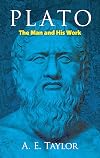
A serviceable introduction to the dialogues and synopsis of each, but Taylor maintains strenuously that the theory of forms, etc., were Socrates’ and that Plato never put anything into Socrates’ mouth that didn’t come from Socrates. So caveat emptor – this is a novel theory outside the mainstream of Platonic scholarship, which considers the early dialogues essentially Socratic, with transitional, mid and late ones becoming increasingly Platonic. It’s hard to take this theory show more seriously considering the picture of Socrates we get from Plato’s early dialogues combined with those of other Socratic dialogue writers, including Xenophon. If Plato’s epistemology, ontology and metaphysics came from Socrates, why don’t the other writers indicate anything about them? Oddly, this hardly mars the analysis and commentary. But if anyone (i.e., Pete) has a suggestion for another good overview of the dialogues, I’m all ears. show less

An idiosyncratic and thorough interpretation of Plato's thought. Using a review of the dialogues, Taylor covers a tremendous amount of ideas and concepts presented in the Platonic corpus. With contextual commentary this is a useful adjunct to any serious reading of Plato's dialogues.
This book is a good general introduction to the thoughts of Aristotle. It discusses the categories that he divided his philosophy into and gives an overview of each one. The similarities and differences between the thought of Aristotle and Plato are mentioned, and how the thinking of the former diverged from that of the latter with time.
The book does a good job of pointing out the strengths of Aristotles work, such as how his system of logic and ability to collect facts have influenced show more subsequent philosophers. Also noteworthy is quite how many things he was wrong about, things that Plato and other predecessors of Aristotle did not so seriously misunderstand. For example, Aristotle refused to believe that the earth moved, he thought that the heart not the brain was the organ of thought, that different types of matter did not gain their physical properties from different geometric arrangement of "corpuscles" or atoms (as Plato and the Pythagoreans believed, in line with modern chemistry), and that there could not be empty space between matter - only a qualitative rarefaction. He also favoured the Empedoclean elements of earth, water, air and fire, which were even considered out of date in the time of Aristotle by the rest of the Academy. One of the more profound observations of Aristotle, which is to this day a source of wonder for biochemists and biologists, is that there is no clear demarcation between what is living and what is not living. Living things exist from the immobile non-thinking barely sensitive and minute creature, to the large, mobile, conscious and thinking man, with millions of gradations of plant of animal between.
What comes across as curious is how wrong he could be about so many things which were correctly taught by his predecessors, while on the other hand he also wrote and taught well about an incomparable number of things across a large number of disciplines. He was of sorts the first scientist, who rigourously and actively collected facts and sought explanations of them. In this sense he was a good scientist, but he was also a bad scientist because most of his explanations were wrong, despite more correct explanations being around. Aristotle also comes across as disliking maths, which partly explains why he disagreed with Plato and the Pythagoreans about certain things.
The treatment of Aristotle in this book may be biased, as Taylor is primarily a Platonist, and I may have read it as a Platonist, but I don't think that the book goes as far as to be unfair to Aristotle. The distinctions between matter and form, his logic, his categories, his ethics, and his methods, have all had positive and substantial influence on later philosophy, even if they have had a negative effect on certain areas too (notably the hesitance to accept heliocentrism). show less
The book does a good job of pointing out the strengths of Aristotles work, such as how his system of logic and ability to collect facts have influenced show more subsequent philosophers. Also noteworthy is quite how many things he was wrong about, things that Plato and other predecessors of Aristotle did not so seriously misunderstand. For example, Aristotle refused to believe that the earth moved, he thought that the heart not the brain was the organ of thought, that different types of matter did not gain their physical properties from different geometric arrangement of "corpuscles" or atoms (as Plato and the Pythagoreans believed, in line with modern chemistry), and that there could not be empty space between matter - only a qualitative rarefaction. He also favoured the Empedoclean elements of earth, water, air and fire, which were even considered out of date in the time of Aristotle by the rest of the Academy. One of the more profound observations of Aristotle, which is to this day a source of wonder for biochemists and biologists, is that there is no clear demarcation between what is living and what is not living. Living things exist from the immobile non-thinking barely sensitive and minute creature, to the large, mobile, conscious and thinking man, with millions of gradations of plant of animal between.
What comes across as curious is how wrong he could be about so many things which were correctly taught by his predecessors, while on the other hand he also wrote and taught well about an incomparable number of things across a large number of disciplines. He was of sorts the first scientist, who rigourously and actively collected facts and sought explanations of them. In this sense he was a good scientist, but he was also a bad scientist because most of his explanations were wrong, despite more correct explanations being around. Aristotle also comes across as disliking maths, which partly explains why he disagreed with Plato and the Pythagoreans about certain things.
The treatment of Aristotle in this book may be biased, as Taylor is primarily a Platonist, and I may have read it as a Platonist, but I don't think that the book goes as far as to be unfair to Aristotle. The distinctions between matter and form, his logic, his categories, his ethics, and his methods, have all had positive and substantial influence on later philosophy, even if they have had a negative effect on certain areas too (notably the hesitance to accept heliocentrism). show less
You May Also Like


Associated Authors
Statistics
- Works
- 45
- Also by
- 5
- Members
- 988
- Popularity
- #26,059
- Rating
- 3.8
- Reviews
- 14
- ISBNs
- 86
- Languages
- 5
- Favorited
- 1