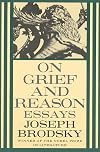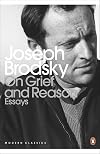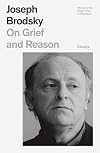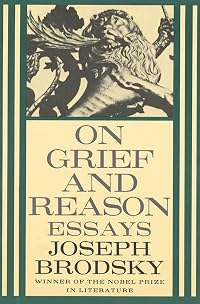
On grief and reason: essays
by Joseph Brodsky
On This Page
Description
On Grief and Reason is the second volume of Joseph Brodsky's essays, and the first to be published since he was awarded the Nobel Prize in Literature in 1987. In addition to his Nobel lecture, the volume includes essays on the condition of exile, the nature of history, the art of reading, and the idea of the poet as an inveterate Don Giovanni, as well as a homage to Marcus Aurelius and an appraisal of the case of the double agent Kim Philby (the last two were selected for inclusion in the show more annual Best American Essays volume). The title essay is a consideration of the poetry of Robert Frost, and the book also includes a fond appreciation of Thomas Hardy, a "Letter to Horace", a close reading of Rilke's poem "Orpheus. Eurydice. Hermes", and a memoir of Stephen Spender. Among the other essays are Mr. Brodsky's open letter to Czech President Vaclav Havel and his "immodest proposal" for the future of poetry, an address he delivered while serving as U.S. Poet Laureate. In his Nobel lecture, Mr. Brodsky declared that "verse really does, in Akhmatova's words, grow from rubbish; the roots of prose are no more honorable"--But his own prose's flowering in these essays gives us thought and language at their noblest. show lessTags
Recommendations


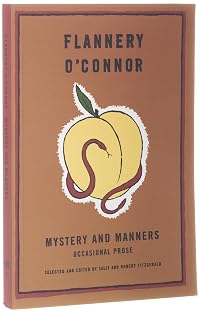
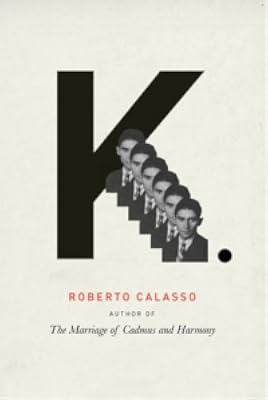
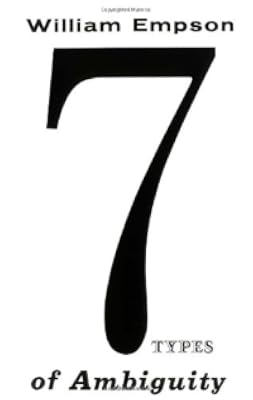
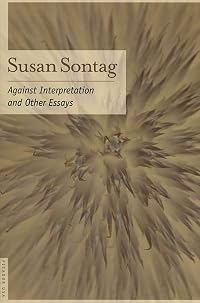


Member Reviews
Brodsky's compilation of essays, speeches, lectures, and letters cover a variety of topics. Here are my most memorable aspects of Brodsky's On Grief and Reason: I loved the list of poets that should be read in their native tongue (German, Spanish, Polish, French, Greek, English, Dutch, Portuguese, Swedish, and Russian. Interestingly, he does not include Italian.). Poetry should be right next to the Bible in hotel nightstands. The joke is the Bible won't mind as it "doesn't object to the proximity of the phonebook" (p 203). Brodsky stresses the importance of poetry on a nation. He later includes a seminar given to people "ignorant or poorly acquainted with Robert Frost (p 223). He pulls apart the poetry of Thomas Hardy. "The Convergence show more of the Twain" was fascinating. The letter to Horace was surprisingly sexual. Despite all this, I found that one of the most fascinating points Brodsky makes is that if he had been a publisher, he would have insisted on putting the "exact age" at which an author composed his or her work on the cover of their book. show less
Ik heb me nogal geërgerd over het artikel dat Marc Reugebrink, overigens een voortreffelijk journalist, over dit essayboek van Brodsky schreef. ( http://reugebrink-recensies.skynetblogs.be/post/3223613/brodsky-joseph ) ; Hij bestempelde Brodsky's proza als apodictisch, ridicuul en hooghartig cynisme! Ik vind niet dat dit predikaten zijn die dit briljante boek de juiste eer verleent die het verdient. Niet zoals Marc Reugebrink houd ik duidelijk wel van auteurs met een duidelijke zeggingskracht; ze maken literatuur juist visionair. Ik wil zelfs meer zeggen, het is een voorrecht van de trage en aandachtige lezer om elk woord van Brodsky tot zich te laten doordringen. Een auteur van zijn soort, die erin slaagt om je ruim 500 bladzijden show more dwingend de keel toe te snoeren, die met een dwingende pen en vanzelfsprekend gezag literatuur gewoon uitademt terwijl hij tot je spreekt, kelder je gewoonweg niet met een negatieve recensie. Bovendien krabbelt Reugebrink op het einde van zijn artikel enigszins terug met de goedmakende zinsnede dat 'een meer belangeloos uitspreken van zijn overtuiging sterker had gewerkt', wat volledig in tegenspraak is met de literair-existentialistische drive van een moeilijk leven, waaruit dit boek tot stand kwam. Sorry Mijnheer Reugebrink, maar literaire giganten tappen uit een ander vaatje dan scribenten met een nine to five job... show less
Ratings
Members
- Recently Added By
Lists

Russian Literature
184 works; 35 members
Author Information

216+ Works 3,920 Members
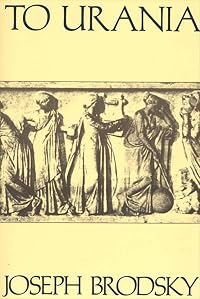
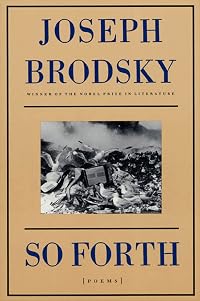
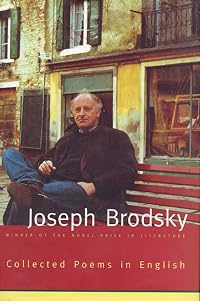
Joseph Brodsky was born in Leningrad on May 24, 1940. He left school at the age of fifteen, taking jobs in a morgue, a mill, a ship's boiler room, and a geological expedition. During this time he taught himself English and Polish and began writing poetry. His first poems appeared mainly in Syntax, a Leningrad underground literary magazine. In show more 1964, he was tried and sentenced to five years of administrative exile for the charge of parasitism. As a result of intervention by prominent Soviet cultural figures, he was freed in 1965. In 1972, under tremendous pressure from the authorities, he emigrated to the United States. He wrote nine volumes of poetry and several collections of essays. His works include A Part of Speech, To Urania, Watermark, On Grief and Reason, So Forth, and Collected Poems in English. He received the Nobel Prize for Literature in 1987 and was named poet laureate of the United States, the first poet whose native language was not English to achieve this honor. He died of a heart attack on January 28, 1996. (Bowker Author Biography) show less
Some Editions
Series
Belongs to Publisher Series
Common Knowledge
- Canonical title
- On grief and reason: essays
- Original publication date
- 1995
- People/Characters
- Clio, Muse of Time; Marcus Aurelius; Horace; Stephen Spender; Thomas Hardy; Rainer Maria Rilke (show all 10); Robert Frost; Vaclav Havel; Kim Philby; Clio
Classifications
- Genres
- Nonfiction, Literature Studies and Criticism, Fiction and Literature
- DDC/MDS
- 814.54 — Literature & rhetoric American literature in English American essays in English 20th Century 1945-1999
- LCC
- PG3479.4 .R64 .O5 — Language and Literature Slavic languages and literatures. Baltic languages. Albanian language Slavic. Baltic. Albanian Russian literature Individual authors and works 1961-2000
- BISAC
Statistics
- Members
- 378
- Popularity
- 82,920
- Reviews
- 3
- Rating
- (4.18)
- Languages
- 8 — Chinese, Dutch, English, Finnish, German, Greek, Italian, Spanish
- Media
- Paper, Ebook
- ISBNs
- 19
- ASINs
- 4