Summer in Baden-Baden
by Leonid Tsypkin
On This Page
Description
Summer in Baden-Baden was acclaimed byThe New York Review of Books as "a short poetic masterpiece" and by Donald Fanger inThe Los Angeles Times as "gripping, mysterious and profoundly moving." A complex, highly original novel,Summer in Baden-Baden has a double narrative. It is wintertime, late December: a species of "now." A narrator--Tsypkinis on a train going to Leningrad. And it is also mid-April 1867. The newly married Dostoyevskys, Fyodor, and his wife, Anna Grigor'yevna, are on their show more way to Germany, for a four-year trip. This is not, like J. M. Coetzee'sThe Master of St. Petersburg, a Dostoyevsky fantasy. Neither is it a docu-novel, although its author was obsessed with getting everything "right." Nothing is invented, everything is invented. Dostoyevsky's reckless passions for gambling, for his literary vocation, for his wife, are matched by her all-forgiving love, which in turn resonates with the love of literature's disciple, Leonid Tsypkin, for Dostoyevsky. In a remarkable introductory essay (which appeared inThe New Yorker), Susan Sontag explains why it is something of a miracle thatSummer in Baden-Baden has survived, and celebrates the happy event of its publication in America with an account of Tsypkin's beleaguered life and the important pleasures of his marvelous novel. show lessTags
Recommendations





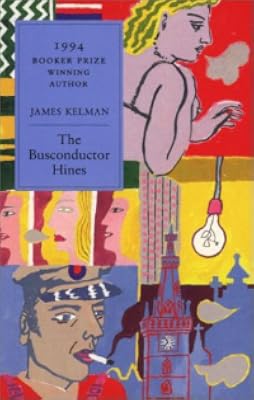
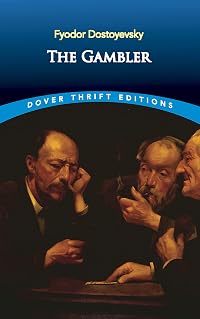
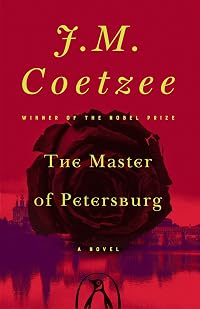











Member Recommendations
wrmjr66 Another book that fictionalizes part of Dostoevsky's life.
giovannigf It's interesting to compare these two stories that feature Dostoevsky as a protagonist. Coetzee writes in a style that more closely resembles a 19th-century novel, but Tsypkin gets much closer to Dostoevsky's personality. Both will be enjoyable to fans of the Russian master's work.
JuliaMaria Der Roman "Ein Sommer in Baden-Baden" von Zypkin basiert auf dem autobiografischen Roman "Der Spieler" von Dostojewski.
Member Reviews
I've been thinking long and hard about what I want to say about this book, or how to describe it. Certainly, what I thought by the end of the book was a major departure from my thoughts in the early stages, when I found myself losing the thread as the narrative continually shifts and doesn't support even the mildest attention wandering.
If you're unfamiliar with the background of this novel, Leonid Tsypkin was a Russian pathologist and fiction-writing hobbyist who, in the 1970s, fell out of favour with the Russian state when his son successfully left Russia. He wrote for 'the drawer', as there was never any chance that his work would be permitted for publication, until someone successfully smuggled out for him a copy of Summer in show more Baden-Baden to the US in 1981. It was serialised but promptly forgotten about until Susan Sontag found a dog-eared copy in a secondhand bookshop in Charing Cross Road and wrote an awe-filled essay about it, propelling it to the status of a supposed twentieth century literary masterpiece.
Susan Sontag writes the foreword in this Faber edition, and for once I wish I'd read the introduction before the novel, as I think it would have helped me make sense of it earlier and wouldn't overly have ruined it with spoilers.
The novel has two narrative threads - one is the story of the narrator (an autobiographical account of Tsypkin himself) who, on a train journey to Leningrad to pay homage to his literary idol Dostoyevsky, is reading the diary of Anna Grigor'yevna, Dostoyevsky's second wife. The second strand is a fictional account of the journey by Dostoyevsky and Anna to Baden-Baden on their honeymoon, and then of his last days back in Leningrad.
It's a unique novel in terms of form; paragraphs can extend for pages without a full stop, and in the same breath Tsypkin can switch from talking about Dostoyevsky and Anna in Baden-Baden to something the narrator sees out the window on the train, which greatly confused me at times until I got into the rhythm of his using first person for the narrator perspective and third person when speaking about Dostoyevsky. It's a melting pot of sudden switches between fiction, biography, criticism and autobiography, and I realised to my cost in the first half that this is not a book that can be read in five-page bursts over breakfast; it requires attention, close reading and concentrated periods of reading.
The reward of this book is that its style envelops you in the world of Dostoyevsky, Anna and the backdrop of Russian literature, past and (relatively) present. The narrative form, with its long sentences and paragraphs, creates a feverish sense of Dostoyevsky's mania and erraticism, of his hot-head childish and dramatic temperament and the demons he fights in terms of a sense of literary inferiority and his years in exile in prison in Siberia. In Baden-Baden he often runs like a lunatic between the gambling house and the pawnshop, pawning the clothes they are standing up in as his debts mount, acting crazed with Anna, yet when the red mist clears he's on his knees like a small boy gently begging for her forgiveness. As a reader we are caught up in that frenetic whirlwind of Dostoyevsky's thoughts and actions whilst our narrator sets out his own perspective on his life and legacy. Scattered throughout are Tsypkin's fan photos of key buildings and places that formed the backdrop to key parts of Dostoyevsky's novels, particularly Crime and Punishment, which somehow also add to the often melancholy sense of Dostoevsky's world.
Quite honestly, whilst I tried to make sense of it to begin with I couldn't wait to reach the end, yet once I'd settled into it I felt like starting it all over again once I'd finished, as no doubt I'd see it through new perspectives on a second read.
4.5 stars - the cleverest of writing which seeps into your pores. Like Dorothy in the Wizard of Oz, you're not in Kansas any more by the time you get to the last page. show less
If you're unfamiliar with the background of this novel, Leonid Tsypkin was a Russian pathologist and fiction-writing hobbyist who, in the 1970s, fell out of favour with the Russian state when his son successfully left Russia. He wrote for 'the drawer', as there was never any chance that his work would be permitted for publication, until someone successfully smuggled out for him a copy of Summer in show more Baden-Baden to the US in 1981. It was serialised but promptly forgotten about until Susan Sontag found a dog-eared copy in a secondhand bookshop in Charing Cross Road and wrote an awe-filled essay about it, propelling it to the status of a supposed twentieth century literary masterpiece.
Susan Sontag writes the foreword in this Faber edition, and for once I wish I'd read the introduction before the novel, as I think it would have helped me make sense of it earlier and wouldn't overly have ruined it with spoilers.
The novel has two narrative threads - one is the story of the narrator (an autobiographical account of Tsypkin himself) who, on a train journey to Leningrad to pay homage to his literary idol Dostoyevsky, is reading the diary of Anna Grigor'yevna, Dostoyevsky's second wife. The second strand is a fictional account of the journey by Dostoyevsky and Anna to Baden-Baden on their honeymoon, and then of his last days back in Leningrad.
It's a unique novel in terms of form; paragraphs can extend for pages without a full stop, and in the same breath Tsypkin can switch from talking about Dostoyevsky and Anna in Baden-Baden to something the narrator sees out the window on the train, which greatly confused me at times until I got into the rhythm of his using first person for the narrator perspective and third person when speaking about Dostoyevsky. It's a melting pot of sudden switches between fiction, biography, criticism and autobiography, and I realised to my cost in the first half that this is not a book that can be read in five-page bursts over breakfast; it requires attention, close reading and concentrated periods of reading.
The reward of this book is that its style envelops you in the world of Dostoyevsky, Anna and the backdrop of Russian literature, past and (relatively) present. The narrative form, with its long sentences and paragraphs, creates a feverish sense of Dostoyevsky's mania and erraticism, of his hot-head childish and dramatic temperament and the demons he fights in terms of a sense of literary inferiority and his years in exile in prison in Siberia. In Baden-Baden he often runs like a lunatic between the gambling house and the pawnshop, pawning the clothes they are standing up in as his debts mount, acting crazed with Anna, yet when the red mist clears he's on his knees like a small boy gently begging for her forgiveness. As a reader we are caught up in that frenetic whirlwind of Dostoyevsky's thoughts and actions whilst our narrator sets out his own perspective on his life and legacy. Scattered throughout are Tsypkin's fan photos of key buildings and places that formed the backdrop to key parts of Dostoyevsky's novels, particularly Crime and Punishment, which somehow also add to the often melancholy sense of Dostoevsky's world.
Quite honestly, whilst I tried to make sense of it to begin with I couldn't wait to reach the end, yet once I'd settled into it I felt like starting it all over again once I'd finished, as no doubt I'd see it through new perspectives on a second read.
4.5 stars - the cleverest of writing which seeps into your pores. Like Dorothy in the Wizard of Oz, you're not in Kansas any more by the time you get to the last page. show less
What a hidden gem this is. Tsypkin weaves together his own spiritual journey to Dostoevsky’s last house in St. Petersburg in the present with Dostoevsky’s travels abroad in the past, in particular to Baden-Baden, where the author was so famously addicted to gambling. His style is fast-paced and breathless, perfect to the feverish nature of the story, and he uses all the right touches, paying homage to Russian literature, but at the same time, remaining clear-eyed, sober, and accurate.
I’ll be frank: Dostoevsky is shown to be irritable, petty, jealous, obsessive, and an overall pain in the ass. He’s extremely awkward, and blurts out all the wrong things in social situations. His treatment of his second wife is poor, pawning off show more her things again and again to throw money away at the roulette wheel. His meetings with the polished and Westernized Turgenev are memorably described: “Turgenev’s eyes had followed him through the lorgnette extremely intently, as if the lorgnette’s owner were afraid he would be bitten by a mad dog at any moment…”. Each had some level of grudging respect for the other, but because of their personalities and differing views on the West, conflict was inevitable.
Dostoevsky had been humiliated in prison, suffered from epileptic fits, was afraid of being laughed at, and desperately wanted to be accepted. He knew what suffering was, and gave alms to every beggar he saw, almost to a comical degree. He knew the power of spirituality, but at the same time knew doubt, and channeled that into scenes like that of the Grand Inquisitor in The Brothers Karamazov. He once begged for a pardon for a drunk who had literally punched him in the face, and then paid the man’s fine when it was levied. He knew he was deeply flawed, and sought forgiveness and redemption.
Tsypkin’s own story is also quite touching. A doctor whose position was punitively reduced after his son and daughter-in-law emigrated to the United States in 1977s, he wrote in his spare time for the sake of writing, never expecting to be published in the Soviet Union. This book was smuggled out of the country in 1982 and published in America; Tsypkin got word of that from his son and “was an author” for seven days before having a heart attack and dying.
In one of the interesting bits of introspection, Tsypkin wonders why he and other Jews like Dostoevsky despite his anti-Semitism, even if it was pretty common in the 19th century. “…it struck me as being strange to the point of implausibility that a man so sensitive in his novels to the sufferings of others, this jealous defender of the insulted and injured who fervently and even frenetically preached the right to exist of every earthly creature and sang a passionate hymn to each little leaf and every blade of grass – that this man should not have come up with even a single word in the defence or justification of a people persecuted over several thousands of years – could he have been so blind? - or was he perhaps blinded by hatred?” And later: “what, in fact, was I doing here? - why was I so strangely attracted and enticed by the life of this man who despised me and my kind (and deliberately so or with his eyes wide open, as he liked to put it)? – why had I come here under cover of darkness, walking along these empty and godforsaken streets like a thief?...”
There are no simple answers, or really any answers, proffered. One suspects it’s appreciation for Dostoevsky’s tortured soul, his humaneness, and his great depth as an author. This book is certainly a must for any fan of Dostoevsky, or of Russian literature in general, and I wish I had read it while on my own spiritual journey to Dostoevsky’s House-Museum in St. Petersburg. However, the book speaks to such basic truths and is so well written, I would recommend it to anyone.
Quotes:
On humiliation:
“…and once again he was flying downhill, bruising himself painfully against things and feeling that he had nothing to hold on to – and that whole theory of his about falling was worthless – he had simply invented it to make his injuries less painful, presenting the wounds to himself and everyone else surrounded by the self-sacrificial halo of some great ‘idea’ – but do we not all do the same thing, deceiving ourselves time and again as we think up convenient theories designed to soften the blows continually rained on us by fate or to justify our own failures and weaknesses? – and is this not the explanation of the so-called crisis which Dostoevsky went through during his penal servitude? – could his morbid pride ever have become reconciled with the humiliations to which he was subjected there? – no, he had only one way out: to consider these humiliations as his just desserts – ‘I bear a cross, and I have deserved it,’ he wrote in one of his letters…”
On Pushkin, I found it insightful and likely true:
“…but you will probably never find as fierce and passionate an admirer of Pushkin as Dostoevsky, for whom Pushkin may have been just as unattainable an antithetical dream as Stavrogin, embodying as he did harmony of spirit (though it may only have appeared that way), a high sense of honour (did Dostoevsky know how loyally Pushkin used to bow to Count Orlov at the Mariinsky Theatre?), strength and constancy of character (did Dostoevsky realized that the Decembrists did not really trust Pushkin very much, considering him both unstable and indiscreet?) and finally the nonchalance of a seducer who always achieved success (here there is really nothing to add in brackets, as Pushkin’s perfection in this sphere was genuinely beyond dispute) – or perhaps the antithetical element lay elsewhere: Dostoevsky the prose-writer was perhaps the most passionate poet and romantic of his age, while Pushkin the poet was possibly the most sober realist of his – but the most important thing, however, was that they lived in different times so that Dostoevsky managed to avoid being the object of one of the poet’s sarcastic epigrams – and if had been, Pushkin would undoubtedly have been ranged with all the other literary enemies of Dostoevsky and might even have held a leading position.”
Lastly, this ending, which reminded me of another Doctor-Author, Anton Chekhov:
“…and the girl went on ahead, like a guide, or perhaps she was simply ashamed of her parents – and in the haloes around the street-lights on Svechnoy Lane snowflakes were slowly circulating – I was approaching the Ligovka, and somewhere behind me was a semi-dark, endlessly straight street all covered in snow which the wind was piling into drifts, lined with silent tenement buildings and with the darkest and most silent of all – at the corner.
A few minutes later I was already in the tram heading towards Gilya’s house, and half an hour later after that I was once again chatting with her, sitting on Mozya’s sofa, as she told me about the Blockade, about Mozya, about the year ’37, and outside lay the wintry Petersburg night, and each time a tram clattered past down below, the whole house together with Mozya’s lamp shuddered, like a ship straining at its moorings.” show less
I’ll be frank: Dostoevsky is shown to be irritable, petty, jealous, obsessive, and an overall pain in the ass. He’s extremely awkward, and blurts out all the wrong things in social situations. His treatment of his second wife is poor, pawning off show more her things again and again to throw money away at the roulette wheel. His meetings with the polished and Westernized Turgenev are memorably described: “Turgenev’s eyes had followed him through the lorgnette extremely intently, as if the lorgnette’s owner were afraid he would be bitten by a mad dog at any moment…”. Each had some level of grudging respect for the other, but because of their personalities and differing views on the West, conflict was inevitable.
Dostoevsky had been humiliated in prison, suffered from epileptic fits, was afraid of being laughed at, and desperately wanted to be accepted. He knew what suffering was, and gave alms to every beggar he saw, almost to a comical degree. He knew the power of spirituality, but at the same time knew doubt, and channeled that into scenes like that of the Grand Inquisitor in The Brothers Karamazov. He once begged for a pardon for a drunk who had literally punched him in the face, and then paid the man’s fine when it was levied. He knew he was deeply flawed, and sought forgiveness and redemption.
Tsypkin’s own story is also quite touching. A doctor whose position was punitively reduced after his son and daughter-in-law emigrated to the United States in 1977s, he wrote in his spare time for the sake of writing, never expecting to be published in the Soviet Union. This book was smuggled out of the country in 1982 and published in America; Tsypkin got word of that from his son and “was an author” for seven days before having a heart attack and dying.
In one of the interesting bits of introspection, Tsypkin wonders why he and other Jews like Dostoevsky despite his anti-Semitism, even if it was pretty common in the 19th century. “…it struck me as being strange to the point of implausibility that a man so sensitive in his novels to the sufferings of others, this jealous defender of the insulted and injured who fervently and even frenetically preached the right to exist of every earthly creature and sang a passionate hymn to each little leaf and every blade of grass – that this man should not have come up with even a single word in the defence or justification of a people persecuted over several thousands of years – could he have been so blind? - or was he perhaps blinded by hatred?” And later: “what, in fact, was I doing here? - why was I so strangely attracted and enticed by the life of this man who despised me and my kind (and deliberately so or with his eyes wide open, as he liked to put it)? – why had I come here under cover of darkness, walking along these empty and godforsaken streets like a thief?...”
There are no simple answers, or really any answers, proffered. One suspects it’s appreciation for Dostoevsky’s tortured soul, his humaneness, and his great depth as an author. This book is certainly a must for any fan of Dostoevsky, or of Russian literature in general, and I wish I had read it while on my own spiritual journey to Dostoevsky’s House-Museum in St. Petersburg. However, the book speaks to such basic truths and is so well written, I would recommend it to anyone.
Quotes:
On humiliation:
“…and once again he was flying downhill, bruising himself painfully against things and feeling that he had nothing to hold on to – and that whole theory of his about falling was worthless – he had simply invented it to make his injuries less painful, presenting the wounds to himself and everyone else surrounded by the self-sacrificial halo of some great ‘idea’ – but do we not all do the same thing, deceiving ourselves time and again as we think up convenient theories designed to soften the blows continually rained on us by fate or to justify our own failures and weaknesses? – and is this not the explanation of the so-called crisis which Dostoevsky went through during his penal servitude? – could his morbid pride ever have become reconciled with the humiliations to which he was subjected there? – no, he had only one way out: to consider these humiliations as his just desserts – ‘I bear a cross, and I have deserved it,’ he wrote in one of his letters…”
On Pushkin, I found it insightful and likely true:
“…but you will probably never find as fierce and passionate an admirer of Pushkin as Dostoevsky, for whom Pushkin may have been just as unattainable an antithetical dream as Stavrogin, embodying as he did harmony of spirit (though it may only have appeared that way), a high sense of honour (did Dostoevsky know how loyally Pushkin used to bow to Count Orlov at the Mariinsky Theatre?), strength and constancy of character (did Dostoevsky realized that the Decembrists did not really trust Pushkin very much, considering him both unstable and indiscreet?) and finally the nonchalance of a seducer who always achieved success (here there is really nothing to add in brackets, as Pushkin’s perfection in this sphere was genuinely beyond dispute) – or perhaps the antithetical element lay elsewhere: Dostoevsky the prose-writer was perhaps the most passionate poet and romantic of his age, while Pushkin the poet was possibly the most sober realist of his – but the most important thing, however, was that they lived in different times so that Dostoevsky managed to avoid being the object of one of the poet’s sarcastic epigrams – and if had been, Pushkin would undoubtedly have been ranged with all the other literary enemies of Dostoevsky and might even have held a leading position.”
Lastly, this ending, which reminded me of another Doctor-Author, Anton Chekhov:
“…and the girl went on ahead, like a guide, or perhaps she was simply ashamed of her parents – and in the haloes around the street-lights on Svechnoy Lane snowflakes were slowly circulating – I was approaching the Ligovka, and somewhere behind me was a semi-dark, endlessly straight street all covered in snow which the wind was piling into drifts, lined with silent tenement buildings and with the darkest and most silent of all – at the corner.
A few minutes later I was already in the tram heading towards Gilya’s house, and half an hour later after that I was once again chatting with her, sitting on Mozya’s sofa, as she told me about the Blockade, about Mozya, about the year ’37, and outside lay the wintry Petersburg night, and each time a tram clattered past down below, the whole house together with Mozya’s lamp shuddered, like a ship straining at its moorings.” show less
I'd long found the title of this novel very appealing, but decided I needed to read some Dostoevsky first as it is a fictionalised account of the time Dostoevsky and his young second wife, Anna Grigor'evna, spent in Germany in 1867.
It is a remarkable book in that it was written by Tsypkin some hundred years later purely out of a passion for Dostoevsky and not with the intention of having it published. In any case, it could not have been published in the Soviet Union. As the Dostoevskys travel first to Dresden and then to Baden-Baden, Tsypkin is on his way from Moscow to St Petersburg to visit the museum dedicated to the great writer and tread in his footsteps. These narrative threads interwine, also allowing us a glimpse of Soviet show more Russia, the boundaries of which Tsypkin never managed to cross, recreating Baden-Baden for us from his meticulous research (he was a medical researcher by profession, which no doubt accounts for his painstaking nature), including from Anna Grigor'evna's diaries.
Tsypkin's depiction of Dostoevsky as a passionate, short-tempered man haunted by memories of his exile and past and present humiliations helped me to understand those works of his I've read and will no doubt illuminate future reading of his books. He perceives insult everywhere and this, coupled with his hopeless gambling addiction, must have made him difficult to live with. Yet he and Anna Grigor'evna clearly adore each other. There is some lovely imagery of the couple 'swimming away together' at night.
The style is very striking - long, lyrical sentences where Tsypkin is prone to go off at a tangent, referring to past events in Dostevsky's life when describing the summer spent in Germany. But this is not as difficult for the reader to follow as it may sound - in fact it seems likely, from the portrayal of the writer in this book, that this is how his mind worked, horrible scenes of previous humiliation flashing before his eyes, interrupting the present. And you cannot help but lose yourself in this flow of thoughts and images. A wonderful book. show less
It is a remarkable book in that it was written by Tsypkin some hundred years later purely out of a passion for Dostoevsky and not with the intention of having it published. In any case, it could not have been published in the Soviet Union. As the Dostoevskys travel first to Dresden and then to Baden-Baden, Tsypkin is on his way from Moscow to St Petersburg to visit the museum dedicated to the great writer and tread in his footsteps. These narrative threads interwine, also allowing us a glimpse of Soviet show more Russia, the boundaries of which Tsypkin never managed to cross, recreating Baden-Baden for us from his meticulous research (he was a medical researcher by profession, which no doubt accounts for his painstaking nature), including from Anna Grigor'evna's diaries.
Tsypkin's depiction of Dostoevsky as a passionate, short-tempered man haunted by memories of his exile and past and present humiliations helped me to understand those works of his I've read and will no doubt illuminate future reading of his books. He perceives insult everywhere and this, coupled with his hopeless gambling addiction, must have made him difficult to live with. Yet he and Anna Grigor'evna clearly adore each other. There is some lovely imagery of the couple 'swimming away together' at night.
The style is very striking - long, lyrical sentences where Tsypkin is prone to go off at a tangent, referring to past events in Dostevsky's life when describing the summer spent in Germany. But this is not as difficult for the reader to follow as it may sound - in fact it seems likely, from the portrayal of the writer in this book, that this is how his mind worked, horrible scenes of previous humiliation flashing before his eyes, interrupting the present. And you cannot help but lose yourself in this flow of thoughts and images. A wonderful book. show less
Written in a breathless, Thomas Bernhard-like style, every sentence a paragraph, sometimes lasting for pages--full of clauses and hyphens--describing Dostoevsky as compulsive, tortured by perceived slights and humiliations, and his wife as long-suffering yet infinitely patient, while the author himself is melancholic and transfixed.
This may well be the most extraordinary book I know. T. found his breathless style interweaving the past with the present, the inclusion of stark black-and-white photographs (reminiscent of Sebald), in isolation from contemporary world-literature. Living in the Soviet Union, a medical researcher by profession, Tsypkin wrote without hope of being published, solely for the drawer. We must thank Susan Sontag for rescuing this work. She tells us in the Introduction how she rediscovered an obscure edition, about Tsypkin’s life and much more: she calls the book an ‘I-novel’ known in the Japanese literature as shishosetsu : an autobiographical novel with fictional episodes - in the past: the summer Dostoyevsky spent in Baden-Baden, in show more the present: the narrator in search of Dostoyevsky. It is one of the rare books I like to re-read again and again. If you love Dostoyevsky don’t miss this book! (XII-15) show less
"I was on a train, traveling by day, but it was winter-time -- late December, the very depths -- and to add to it the train was heading north -- to Leningrad -- so it was quickly darkening on the other side of the windows -- bright lights of Moscow stations flashing into view and vanishing again behind me like the scattering of some invisible hand . . ."(Leonid Tsypkin, Summer in Baden-Baden, p 1).
So begins a literary doppleganger in the sense that there are two narratives, one of Leningrad and today and Leonid Tsypkin, and one of Petersburg and yesterday and Fedya and Anna. Tsypkin's novel mesmerizes with two stories that enthrall with emotion and truth. A taut gem of historical fiction that gets to the heart of Dostoevsky and appeals show more to all who have loved his work. The story clings to the real events of Dostoevsky's life torn form the pages of Anna's Diary and other sources that intertwine with Tsypkin's own modern journey. Among the themes of the book are those of all great Russian literature as seen through the painful experiences of Dostoevsky's own vices and the dreamlike desires of the narrator.
I was fascinated as the novel flowed back and forth between the first person I reflecting the narrator's memories and the third person scenes of fedya and Anna -- between past and present. The taut lyricism that keeps the novel short, even through the use of long sentences is difficult to compare with any other novel I have read. However, in its uniqueness I would place it with Rilke's Notebooks of Malt Laurids Brigge. Different in many ways but just as unique in its ability to haunt one's memory. Sadly, the author did not live to see the Engilsh-language publication of this novel. Like other great Russian authors he worked in the medical profession, but he left us a gift based on his passion for literature. show less
So begins a literary doppleganger in the sense that there are two narratives, one of Leningrad and today and Leonid Tsypkin, and one of Petersburg and yesterday and Fedya and Anna. Tsypkin's novel mesmerizes with two stories that enthrall with emotion and truth. A taut gem of historical fiction that gets to the heart of Dostoevsky and appeals show more to all who have loved his work. The story clings to the real events of Dostoevsky's life torn form the pages of Anna's Diary and other sources that intertwine with Tsypkin's own modern journey. Among the themes of the book are those of all great Russian literature as seen through the painful experiences of Dostoevsky's own vices and the dreamlike desires of the narrator.
I was fascinated as the novel flowed back and forth between the first person I reflecting the narrator's memories and the third person scenes of fedya and Anna -- between past and present. The taut lyricism that keeps the novel short, even through the use of long sentences is difficult to compare with any other novel I have read. However, in its uniqueness I would place it with Rilke's Notebooks of Malt Laurids Brigge. Different in many ways but just as unique in its ability to haunt one's memory. Sadly, the author did not live to see the Engilsh-language publication of this novel. Like other great Russian authors he worked in the medical profession, but he left us a gift based on his passion for literature. show less
There are some books that are so good, that are so in tune with the reader’s current obsessions, that they create a conflict in the reader, a conflict between awe for the achievement of the author, and a kind of burning jealousy and sullen disheartenment that the author had the idea and executed it first. This is the book that I should have written, dammit!
This slim novel has two intertwined narratives and worlds. In the first, the narrator ‘Tsypkin’ is on a train journey from Moscow to Leningrad at some point during the late Soviet period. Day is waning, and it is deep winter. He is reading on his journey the Diaries of Anna Grigoryevna Dostoevskya, the writer’s second wife. He arrives in Leningrad, stays with an old friend, show more and in the morning goes to visit the Dostoevsky museum in Kuznechny Street. His impressions of his journey and his visit to Leningrad are interwoven with the impressions which arise in his mind engendered by the book he is reading, which form the second narrative.
In this narrative, the Dostoevskys are on their way to Baden Baden in the summer of 1867 to escape from the writer’s creditors. They stay in the spa town for a few months, where Dostoevsky is consumed with his passion for gambling and plagued by terrible fits of epilepsy, Anna is pregnant with their first child, they are harassed by money worries and ill treated by the natives of the town, and continuously insulted and humiliated.
This brief synopsis does little to convey the great power of this book, however, which lies chiefly in its prose style, and in its method...
Read the full review on The Lectern show less
This slim novel has two intertwined narratives and worlds. In the first, the narrator ‘Tsypkin’ is on a train journey from Moscow to Leningrad at some point during the late Soviet period. Day is waning, and it is deep winter. He is reading on his journey the Diaries of Anna Grigoryevna Dostoevskya, the writer’s second wife. He arrives in Leningrad, stays with an old friend, show more and in the morning goes to visit the Dostoevsky museum in Kuznechny Street. His impressions of his journey and his visit to Leningrad are interwoven with the impressions which arise in his mind engendered by the book he is reading, which form the second narrative.
In this narrative, the Dostoevskys are on their way to Baden Baden in the summer of 1867 to escape from the writer’s creditors. They stay in the spa town for a few months, where Dostoevsky is consumed with his passion for gambling and plagued by terrible fits of epilepsy, Anna is pregnant with their first child, they are harassed by money worries and ill treated by the natives of the town, and continuously insulted and humiliated.
This brief synopsis does little to convey the great power of this book, however, which lies chiefly in its prose style, and in its method...
Read the full review on The Lectern show less
Members
- Recently Added By
Published Reviews
Originaliteten ligger ikke mindst i bogens kombination af fiktion og dokumentarisme. Tsypkin vil fremstille Fjodor Dostojevskijs psyke og adfærd og samlivet med hustru nummer to, den purunge stenograf Anna, så det fænger som en roman, men uden at komme i modstrid med de eksisterende kilder.
Det sker ved at kombinere Dostojevskij-parrets rejse til Tyskland i 1867 med forfatterens egen show more togrejse fra Moskva til Leningrad godt 100 år senere. Tsypkin har en udgave af Annas dagbog med i toget som rejselekture.
På den måde samles begge tidsplaner i forfatterens bevidsthedsstrøm med raffinerede overgange imellem. Og via forfatterens bevidsthed føres læseren glat ud og ind ad ægtefællernes tankebaner og følelsesture.
Tsypkins stil er påfaldende. Illusionen om bevidsthedsstrøm skaber han ved at skrive i store afsnit, hvor sætning hobes på sætning med bindeord, tankestreger, kommaer, men uden punktummer før næste indrykning og afsnit. Der er grund til at gratulere oversætteren, Ole Husted Jensen, med, at det også fungerer på dansk.
At kalde det en af århundredets bøger er nok at tage munden for fuld. Men det er en fin og speciel læseoplevelse, stilsikker og anderledes. show less
Det sker ved at kombinere Dostojevskij-parrets rejse til Tyskland i 1867 med forfatterens egen show more togrejse fra Moskva til Leningrad godt 100 år senere. Tsypkin har en udgave af Annas dagbog med i toget som rejselekture.
På den måde samles begge tidsplaner i forfatterens bevidsthedsstrøm med raffinerede overgange imellem. Og via forfatterens bevidsthed føres læseren glat ud og ind ad ægtefællernes tankebaner og følelsesture.
Tsypkins stil er påfaldende. Illusionen om bevidsthedsstrøm skaber han ved at skrive i store afsnit, hvor sætning hobes på sætning med bindeord, tankestreger, kommaer, men uden punktummer før næste indrykning og afsnit. Der er grund til at gratulere oversætteren, Ole Husted Jensen, med, at det også fungerer på dansk.
At kalde det en af århundredets bøger er nok at tage munden for fuld. Men det er en fin og speciel læseoplevelse, stilsikker og anderledes. show less
added by 2810michael
Den ukendte læge Leonid Tsypkins roman om Dostojevskijs ægteskab var en sensation, da den takket være Susan Sontag vendte tilbage til Rusland fra USA. Nu er det sindrige værk heldigvis også nået til Danmark ... (Er det) så også en god bog? Ja, det er det ... (Tsypkins) stille standardsprog er smukt i lange, leddelte episoder på flere sider med utallige, melodiske indskud og show more umærkelige overgange mellem hans egen tid og rejse og så Dostojevskijs tid og rejse. Sammenfletningen af de to spor er elegant og uhyre musikalsk ... Og efter at have lagt bogen fra sig mærker læseren, at hun har været i selskab med levende mennesker – endda så vanskeligt forståelige mennesker som Fjodor Mikhajlovitj Dostojevskij og hans hengivne, totalt udsatte og netop i hengivelsen mærkeligt stærke kone. show less
added by 2810michael
»En sommer i Baden-Baden« er en perle af en roman. Ingen, der holder af litteratur bør snyde sig selv for at læse den. (-) Det er ikke muligt at yde denne roman retfærdighed på få linier. Som en novelle af Jorge Luis Borges rummer den på få sider adskillige verdener. Det er hele den russiske litteratur, det er Dostojevskijs sind og hans historie om fangelejr og besættelse af show more dæmoniske kræfter. (-) Den er sublimt oversat af Ole Husted Jensen, og forlaget Batzer og Co. fortjener en varm tak for at have gjort dette mesterværk tilgængeligt for danske læsere.
****** show less
****** show less
added by 2810michael
Lists

1001 Books You Must Read Before You Die
1,448 works; 1,134 members

Russian Literature
184 works; 35 members

real people in fiction circumstances
74 works; 10 members

Lives of the Poets (and Philosophers)
110 works; 5 members

1,001 BYMRBYD Concensus
723 works; 27 members

Books With Place Names in the Title
257 works; 11 members

Top Five Books of 2024
795 works; 264 members

In Our Time books
4,934 works; 2 members
Author Information

5 Works 754 Members
Some Editions
Awards and Honors
Series
Belongs to Publisher Series
Work Relationships
Was inspired by
Common Knowledge
- Canonical title
- Summer in Baden-Baden
- Original title
- Лето в Бадене
- Alternate titles
- Leto v Badene
- Original publication date
- 1981; 1987 (English) (English)
- People/Characters
- Fyodor Dostoevsky; Anna Dostoevskaya
- Important places
- St. Petersburg, Russia; Dresden, Saxony, Germany; Baden-Baden, Baden-Württemberg, Germany; Moscow, USSR; Leningrad, USSR
- Epigraph
- And who knows . . . perhaps the only purpose which mankind aspires to in this worls is the perpetual process of achievement, in other words - not any specific goal, but life itself.
How tiring, how arrogant are these tricks of yours, and yet at the same time how fearful you are!
~ Fyodor Dostoyevsky
Notes from Underground - Dedication
- Dedicated to Klara Mikhaylovna Rozental'
- First words
- I was on a train, traveling by day, but it was winter-time -- late December, the very depths -- and to add to it the train was heading north -- to Leningrad -- so it was quickly darkening on the other side of the windows -- b... (show all)right lights of Moscow stations flashing into view and vanishing again behind me like the scattering of some invisible hand - each snow veiled suburn platform with its fleeting row of lamps melting into one fiery ribbon -
- Blurbers
- Glendinning, Victoria; Dixon, Stephen; Sontag, Susan; McGregor, Jon; Power, Chris; Thirwell, Adam (show all 7); Aridjis, Chloe
- Original language
- Russian
- Canonical DDC/MDS
- 891.734
Classifications
- Genres
- General Fiction, Fiction and Literature
- DDC/MDS
- 891.734 — Literature & rhetoric Literatures of other languages East Indo-European and Celtic literatures Russian and East Slavic languages Russian fiction USSR 1917–1991
- LCC
- PG3489 .S976 .L4813 — Language and Literature Slavic languages and literatures. Baltic languages. Albanian language Slavic. Baltic. Albanian Russian literature Individual authors and works 1961-2000
- BISAC
Statistics
- Members
- 708
- Popularity
- 40,213
- Reviews
- 16
- Rating
- (3.71)
- Languages
- 15 — Danish, Dutch, English, Estonian, Finnish, French, German, Hebrew, Italian, Norwegian (Bokmål), Polish, Portuguese, Russian, Spanish, Swedish
- Media
- Paper, Audiobook, Ebook
- ISBNs
- 30
- ASINs
- 3