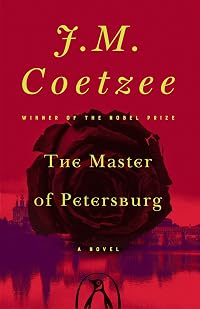
The Master of Petersburg: A Novel
by J. M. Coetzee
On This Page
Description
The novel recreates the world of the Russian writer, Dostoevsky, with him as the protagonist. He returns from exile to St. Petersburg to investigate the death of his stepson, officially a suicide, but as he was a revolutionary Dostoevsky suspects murder. By the author of Waiting for the Barbarians.Tags
Recommendations

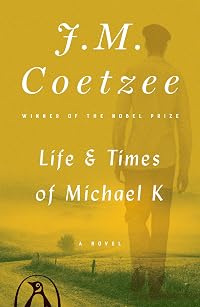
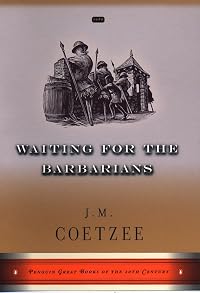





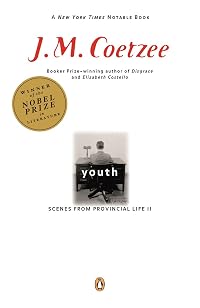
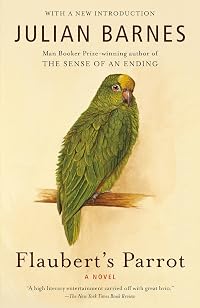
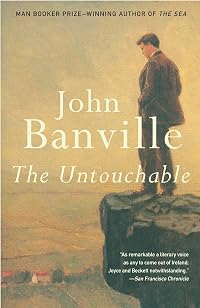



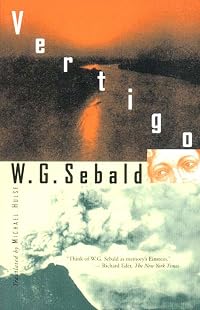





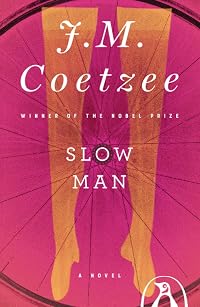
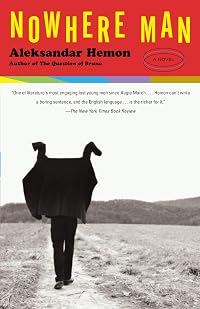

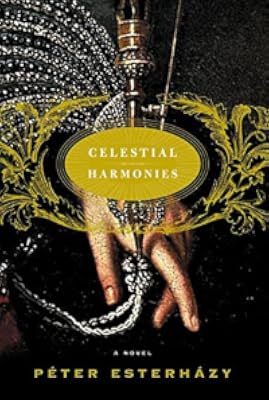

Member Recommendations
wrmjr66 Another book that fictionalizes part of Dostoevsky's life.
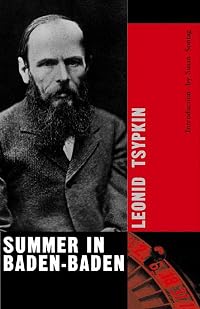
giovannigf It's interesting to compare these two stories that feature Dostoevsky as a protagonist. Coetzee writes in a style that more closely resembles a 19th-century novel, but Tsypkin gets much closer to Dostoevsky's personality. Both will be enjoyable to fans of the Russian master's work.
40
xtien Brilliand novel by Coetzee about a fictional Dostoevsky
31

giovannigf Conrad's most Dostoevsky-esque novel (supposedly written as a retort to Crime and Punishment) shares some of the themes and subjects of Coetzee's novel in which Dostoevsky is the protagonist. Both will help you when you're jonesin' for more Dostoevsky.

gust Ook over Dostojewski
Member Reviews
A disagreeable, disappointing effort from J.M. Coetzee, who I’ve liked elsewhere (e.g. Life and Times of Michael K) and centered on Dostoevsky, an author I love. It imagines Dostoevsky traveling from Germany to Russia in 1869 because his stepson has died under suspicious circumstances, meeting the nihilist Sergey Nachaev, and wrestling with dark elements of the soul before beginning to work on his novel Demons. It’s a fascinating premise, but unfortunately in execution it’s quite a dull, dreary affair.
The bulk of the novel focuses so intently on Dostoevsky’s imagined grief and ventures into silly meanderings (“I am he and he is me”) that very little happens; there is just not enough escalation in the plot. The inspiration show more for the novel was undoubtedly Coetzee’s own 20-something year old son dying from a fall from his balcony, as in real life, Dostoevsky’s stepson did not die young, and on the contrary, he was a constant thorn in his side. It felt like a lot of transplanted wallowing that didn’t work because it didn’t feel authentic.
Compounding the novel’s problems are Coetzee making Dostoevsky out to be a pedophile in many passages – imagining himself to write anonymous works with children engaging in sex, imagining him to give Nachaev tips on cleaning up a child so she can be used as a prostitute to make money, imagining him wanting the 9-year-old daughter of his landlady or fantasizing through an early draft of his fiction having sex in front of her to groom her. It’s all repugnant, and whether it stems from Nikolay Strakhov’s discredited slander against Dostoevsky or conflation with a chapter Dostoevsky wrote but did not publish in Demons, it’s unforgivable. Coetzee should have known better.
There are lots of little winks to the reader here – references to Crime and Punishment (though curiously not The Idiot, which would have been written by then), and references to the generation struggle between “fathers and sons” that Turgenev would write about. While there is a nice bit of skewering of nihilism through the Nachaev’s dialogue, most of what Coetzee includes feels rather forced and shallow relative to the period.
I strongly suggest reading Leonid Tsypkin’s masterpiece Summer in Baden-Baden instead, and skipping this book entirely. show less
The bulk of the novel focuses so intently on Dostoevsky’s imagined grief and ventures into silly meanderings (“I am he and he is me”) that very little happens; there is just not enough escalation in the plot. The inspiration show more for the novel was undoubtedly Coetzee’s own 20-something year old son dying from a fall from his balcony, as in real life, Dostoevsky’s stepson did not die young, and on the contrary, he was a constant thorn in his side. It felt like a lot of transplanted wallowing that didn’t work because it didn’t feel authentic.
Compounding the novel’s problems are Coetzee making Dostoevsky out to be a pedophile in many passages – imagining himself to write anonymous works with children engaging in sex, imagining him to give Nachaev tips on cleaning up a child so she can be used as a prostitute to make money, imagining him wanting the 9-year-old daughter of his landlady or fantasizing through an early draft of his fiction having sex in front of her to groom her. It’s all repugnant, and whether it stems from Nikolay Strakhov’s discredited slander against Dostoevsky or conflation with a chapter Dostoevsky wrote but did not publish in Demons, it’s unforgivable. Coetzee should have known better.
There are lots of little winks to the reader here – references to Crime and Punishment (though curiously not The Idiot, which would have been written by then), and references to the generation struggle between “fathers and sons” that Turgenev would write about. While there is a nice bit of skewering of nihilism through the Nachaev’s dialogue, most of what Coetzee includes feels rather forced and shallow relative to the period.
I strongly suggest reading Leonid Tsypkin’s masterpiece Summer in Baden-Baden instead, and skipping this book entirely. show less
Dostoevsky as the protagonist of this book is not a person you would like to meet.
I feel the repetition of a theme that Coetzee addressed elsewhere - the damnation of being a Writer. The weight of talent, which is too much for a human being to bear. Excellent recreation of the atmosphere of (mostly fictional) St Petersburg
I feel the repetition of a theme that Coetzee addressed elsewhere - the damnation of being a Writer. The weight of talent, which is too much for a human being to bear. Excellent recreation of the atmosphere of (mostly fictional) St Petersburg
I recommend this for anyone who's read, at the very least, Crime & Punishment and Demons. I'm not sure how much sense it would make without that background. It's a wonderful piece of art, perfectly structured and paced, and reflects impressively on its themes - generational conflict, what it means to be an author, contemplation vs action - but is depressing in a way I'm not sure I can get behind. Don't get me wrong. I love depressing books. But this one... maybe it's just that Coetzee's more recent work has been so painfully bad, and I can see how he might have gotten there from this one. Maybe that just gets me down. But at the end, the suggestion that a quietist pessimism is the only available response to nihilism is, well, not so show more much beautifully dark as soul-crushingly morbid. Kind of like a Dostoevsky novel written by an atheist... oh... I see... show less
I’ve had to reflect on this for a few days before posting my final thoughts and review, because, as with all other Coetzee books, there is a lot to absorb, and mostly the right words to use are as evasive as the author (master) himself.
Quite simply, this is a tale spun from loose threads of Fyodor Dostoevsky’s life. Coetzee’s Dostoevsky is a broken man, returning to Petersburg from exile to put to rest his recently deceased step-son Pavel. He becomes entangled with the nihilist Nechaev, who claims, to Dostoevsky’s disgust, that Pavel had been an ardent admirer and friend of his. Superficially set against the doctrine of anarchy preached by Nechaev and his followers, yet bound by a reluctant fascination with the young man and his show more youthful fervour, Dostoevsky finds himself lost in a web of the past and present, truth and lies and self-deceit. He begins an affair with Anna, the landlady who had housed Pavel, and further involved with her willful daughter Matryona, yet another ardent, if infant, Nechaev follower.
The usual slippage that I affix to Coetzee’s work is present in ample quantities in The Master of Petersburg. In particular, descriptions of people, including the protagonist, delineates the wavering surface of reality. One memorable example is the unveiling of Nechaev to Dostoevsky. He is at first mistaken for a woman, tall and lithe, and, to Dostoevsky’s imagination, Pavel’s sometime lover. The sexual tension embedded in their touching feet further cements this idea, until Dostoevsky spies the smallpox marks underneath the heavy makeup - and the remnants of stubble. Suddenly, the alluring scent of lavender is an abomination of womanhood; the mask disintegrates and the man steps forth, appearing as what he was not, and yet being what he is.
Even Dostoevsky is a mirage, even to himself. Illumination comes with Pavel’s papers, when they are returned to him from the police (excepting for the condemning list of to-be-assassinated Russian personages), but also through his exploration of Pavel’s world for himself - his relationship with Anna, the clashes with Matryona and Nechaev, the beggar-spy who is mysteriously murdered shortly after finding refuge in Pavel’s old quarters.
I did not realise this until afterwards, although in hindsight it certainly lends greater emotion to the body of the work, but Coetzee’s writing of this book came soon after the death of his own son at the age of 23, in a falling accident. It struck me with all the more force, how intensely embedded into our lives are our writings, no matter how infamously reclusive we might be to the world. It is a very naked feeling, and particularly in Coetzee’s case, strikes me further speechless on the subject. show less
Quite simply, this is a tale spun from loose threads of Fyodor Dostoevsky’s life. Coetzee’s Dostoevsky is a broken man, returning to Petersburg from exile to put to rest his recently deceased step-son Pavel. He becomes entangled with the nihilist Nechaev, who claims, to Dostoevsky’s disgust, that Pavel had been an ardent admirer and friend of his. Superficially set against the doctrine of anarchy preached by Nechaev and his followers, yet bound by a reluctant fascination with the young man and his show more youthful fervour, Dostoevsky finds himself lost in a web of the past and present, truth and lies and self-deceit. He begins an affair with Anna, the landlady who had housed Pavel, and further involved with her willful daughter Matryona, yet another ardent, if infant, Nechaev follower.
The usual slippage that I affix to Coetzee’s work is present in ample quantities in The Master of Petersburg. In particular, descriptions of people, including the protagonist, delineates the wavering surface of reality. One memorable example is the unveiling of Nechaev to Dostoevsky. He is at first mistaken for a woman, tall and lithe, and, to Dostoevsky’s imagination, Pavel’s sometime lover. The sexual tension embedded in their touching feet further cements this idea, until Dostoevsky spies the smallpox marks underneath the heavy makeup - and the remnants of stubble. Suddenly, the alluring scent of lavender is an abomination of womanhood; the mask disintegrates and the man steps forth, appearing as what he was not, and yet being what he is.
Even Dostoevsky is a mirage, even to himself. Illumination comes with Pavel’s papers, when they are returned to him from the police (excepting for the condemning list of to-be-assassinated Russian personages), but also through his exploration of Pavel’s world for himself - his relationship with Anna, the clashes with Matryona and Nechaev, the beggar-spy who is mysteriously murdered shortly after finding refuge in Pavel’s old quarters.
I did not realise this until afterwards, although in hindsight it certainly lends greater emotion to the body of the work, but Coetzee’s writing of this book came soon after the death of his own son at the age of 23, in a falling accident. It struck me with all the more force, how intensely embedded into our lives are our writings, no matter how infamously reclusive we might be to the world. It is a very naked feeling, and particularly in Coetzee’s case, strikes me further speechless on the subject. show less
Coetzee audaciously imagines the life of Dostoevsky in THE MASTER OF PETERSBURG. Unlike Leonid Tsypkin's SUMMER IN BADEN BADEN, a novel whose verisimilitude lends an amazing accuracy to that of a documentary, Coetzee's is a pure fantasy of the great 19th century Russian novelist. Set in 1869, when Dostoevsky was summoned from Germany to St. Petersburg by the sudden death of his stepson, the novel is at once a compelling mystery steeped in the atmosphere of pre-revolutionary Russia and a brilliant and courageous meditation on authority and rebellion, art and imagination. Dostoevsky under Coetzee's hand obsessively followed his stepson's spirit, trying to ascertain whether he was a suicide or a murder victim and whether he loved or show more despised his stepfather.
Coetzee deftly works up a mystery of the death of Pavel Alexandrovich and a haunting quasi-appearance of the dead from page one. Dostoevsky breathed in deeply, again and again, mentally begging his stepson's ghost to enter him. His grief for Pavel's death was poignant that being alive to him was like, at the moment, a kind of nausea, a desire to be extinguished and annihilated. Since the news came of the death, something had been ebbing out of him as if he was the one being dead: he died but his death failed to arrive.
No sooner had Dostoevsky convinced of his stepson's suicide did a seditionist belonging to the People's Vengeance unveil the truth about Pavel's death. Among Pavel's belongings was a piece of paper with a list of people to be assassinated. In the name of the sedition group, Pavel (who had yet murdered anyone) was to carry out the assassination as soon as signal was given. The assassinations were meant to precipitate a general uprising and to lead to the overthrow of the state. Did Pavel fear of the consequences, or did the People's Vengeance find him to be traitor and execute him?
As Dostoevsky sidled to the heart of the matter, Pavel's death and his left-behind diary revealed a national crisis: one that was redolent of the hideous face of hunger, sickness, and poverty. These were the ways in which real forces manifest themselves in the world. The forces had the origins in the centers of power. Pavel allegedly wrote, distributed subversive pamphlets and was believed to be murdered. Like the People's Vengeance, Pavel could have simply merged with the invisible people of the city and with the conditions that produced him, became underground man who chose to alienate from the hostility of the world. His death, therefore, became the underground group's bait to lure Dostoevsky from Dresden to St. Petersburg so he could write stories of people oppressed by the regime. In a way, Pavel was sacrificed for the cause of revolution, nothing short of martyrdom. But Dostoevsky did not understand how or for whom Pavel was sacrificed nor was he moved by the group's bitterness toward Russia.
The ingenuity of THE MASTER OF PETERSBURG lies in Cozetee's mindful association of the fantasized entities in his novel to Dostoevsky and his heroes, especially Raskolnikov, the underground man, and even Ivan Karamazov. These heroes from Dostoevsky's classics manifest in the form of a distant allusion in Cozetee's work, trickling into Cozetee's lines through a suggestiveness and pervasiveness. The seditionist fantasized a sort of re-creation, a new mindset and way of thinking almost as radical to that of Raskolnikov, who positioned himself on the same level as God and contrived to re-order the world and transcended his conscience. In other way the group resembled the underground man, as the group no longer acted in the name of ideas but in accord to the extreme of senses. It is through the tempestuous political backdrop Dostoevsky embarked on a journey to discovery of the relationship between father and son. show less
Coetzee deftly works up a mystery of the death of Pavel Alexandrovich and a haunting quasi-appearance of the dead from page one. Dostoevsky breathed in deeply, again and again, mentally begging his stepson's ghost to enter him. His grief for Pavel's death was poignant that being alive to him was like, at the moment, a kind of nausea, a desire to be extinguished and annihilated. Since the news came of the death, something had been ebbing out of him as if he was the one being dead: he died but his death failed to arrive.
No sooner had Dostoevsky convinced of his stepson's suicide did a seditionist belonging to the People's Vengeance unveil the truth about Pavel's death. Among Pavel's belongings was a piece of paper with a list of people to be assassinated. In the name of the sedition group, Pavel (who had yet murdered anyone) was to carry out the assassination as soon as signal was given. The assassinations were meant to precipitate a general uprising and to lead to the overthrow of the state. Did Pavel fear of the consequences, or did the People's Vengeance find him to be traitor and execute him?
As Dostoevsky sidled to the heart of the matter, Pavel's death and his left-behind diary revealed a national crisis: one that was redolent of the hideous face of hunger, sickness, and poverty. These were the ways in which real forces manifest themselves in the world. The forces had the origins in the centers of power. Pavel allegedly wrote, distributed subversive pamphlets and was believed to be murdered. Like the People's Vengeance, Pavel could have simply merged with the invisible people of the city and with the conditions that produced him, became underground man who chose to alienate from the hostility of the world. His death, therefore, became the underground group's bait to lure Dostoevsky from Dresden to St. Petersburg so he could write stories of people oppressed by the regime. In a way, Pavel was sacrificed for the cause of revolution, nothing short of martyrdom. But Dostoevsky did not understand how or for whom Pavel was sacrificed nor was he moved by the group's bitterness toward Russia.
The ingenuity of THE MASTER OF PETERSBURG lies in Cozetee's mindful association of the fantasized entities in his novel to Dostoevsky and his heroes, especially Raskolnikov, the underground man, and even Ivan Karamazov. These heroes from Dostoevsky's classics manifest in the form of a distant allusion in Cozetee's work, trickling into Cozetee's lines through a suggestiveness and pervasiveness. The seditionist fantasized a sort of re-creation, a new mindset and way of thinking almost as radical to that of Raskolnikov, who positioned himself on the same level as God and contrived to re-order the world and transcended his conscience. In other way the group resembled the underground man, as the group no longer acted in the name of ideas but in accord to the extreme of senses. It is through the tempestuous political backdrop Dostoevsky embarked on a journey to discovery of the relationship between father and son. show less
Endlessly circling in itself and on "writing and reading"... for me what stood out was Coetzee's ability to dredge up (typically sordid) odds and ends from head of his Dostoevsky—it feels so unflinching, and so... perceptive? But then, the book lags at times, and the Coetzee-Dostoevsky's internal monologues sometimes feel rather... listless? Odd for a novel which simultaneously feels so gripping. Ending is brilliant though...
I was rather underwhelmed by this book- disappointing as Coetzee’s Disgrace is among my favorites. While I do respect the dark melancholy that hovers throughout the work- the internal dialog driving it felt contrived and shallow. Plus, I was bothered by the flirtation with pedophilia laced into the text. This work has been praised as a literary mystery- which, if intended- fails at achieving any dramatic tension towards discovering the ‘murderer’. And as Dostoevsky falls into intellectual dueling with Nechaev- the story careens to a halt. If the intellectual banter had been original or daring- this could have been overlooked. As it stands, it seems forced and stale. The one thing I can appreciate is the way Coetzee paints the show more setting and community of St. Petersburg- the streets, the people and the politics. If there is any successful tension in the book- it is not with Dostoevsky and his son’s death--- but of a city on the brink. show less
Members
- Recently Added By
Lists

Top Five Books of 2013
1,562 works; 721 members

Lives of the Poets (and Philosophers)
110 works; 5 members

Books set in Saint Petersburg
16 works; 1 member

Books Read in 2017
4,249 works; 130 members

In Our Time books
4,934 works; 2 members
Author Information

113+ Works 42,258 Members
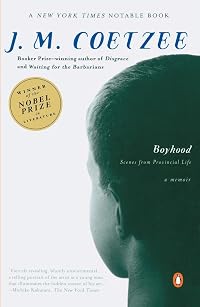
J.M. Coetzee's full name is John Michael Coetzee. Born in Cape Town, South Africa, in 1940, Coetzee is a writer and critic who uses the political situation in his homeland as a backdrop for many of his novels. Coetzee published his first work of fiction, Dusklands, in 1974. Another book, Boyhood, loosely chronicles an unhappy time in Coetzee's show more childhood when his family moved from Cape Town to the more remote and unenlightened city of Worcester. Other Coetzee novels are In the Heart of the Country and Waiting for the Barbarians. Coetzee's critical works include White Writing and Giving Offense: Essays on Censorship. Coetzee is a two-time recipient of the Booker Prize and in 2003, he won the Nobel Literature Award. (Bowker Author Biography) J. M. Coetzee's books include "Boyhood", "Dusklands", "In the Heart of the Country", "Waiting for the Barbarians", "Life & Times of Michael K", "Foe", & "The Master of Petersburg". A professor of general literature at the University of Cape Town, Coetzee has won many literary awards, including the CNA Prize (South Africa's premier literary award), the Booker Prize (twice), the Prix Etranger Femina, the Jerusalem Prize, the Lannan Literary Award, & The Irish Times International Fiction Prize. (Publisher Provided) show less
Some Editions
Awards and Honors
Series
Belongs to Publisher Series
Common Knowledge
- Canonical title*
- Der Meister von Petersburg
- Original title
- The Master of Petersburg
- Alternate titles*
- Осень в Петербурге
- Original publication date
- 1994
- People/Characters
- Fyodor Dostoevsky; Sergey Nechayev
- Important places
- St. Petersburg, Russia
- First words*
- Oktober 1869. Eine Droschke fährt langsam eine Strasse im Heumarkt-Bezirk von St. Petersburg entlang.
- Last words*
- (Click to show. Warning: May contain spoilers.)Es schmeckt wie Galle.
- Original language*
- Englisch
*Some information comes from Common Knowledge in other languages. Click "Edit" for more information.
Classifications
Statistics
- Members
- 1,292
- Popularity
- 18,894
- Reviews
- 23
- Rating
- (3.55)
- Languages
- 17 — Chinese, Danish, Dutch, English, Finnish, French, German, Greek, Italian, Norwegian (Bokmål), Norwegian, Polish, Portuguese, Russian, Spanish, Swedish, Turkish
- Media
- Paper, Audiobook, Ebook
- ISBNs
- 51
- ASINs
- 9