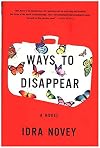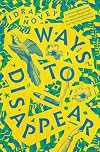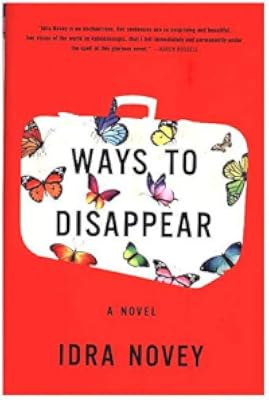
Ways to Disappear
by Idra Novey
On This Page
Description
When Brazilian novelist Beatriz Yagoda suddenly disappears, her American translator Emma travels to Brazil to solve the mystery while fending off rapacious loan sharks and the washed-up editor who made Yagoda famous.Tags
Recommendations













































Member Reviews
From my blog: I loved Idra Novey’s Ways to Disappear. She had me with her first sentence: “In a crumbling park in the crumbling back end of Copacabana, a woman stopped under an almond tree with a suitcase and a cigar.” Whether it was the repetition of “crumbling,” the combination of the suitcase and the cigar, or the thought of almonds, which I enjoy eating on just about anything, yes, dear reader, I bought the book. In hardcover. I had to find out what happens when American translator Emma Neufeld goes from snowy Pittsburg to blazing-hot Brazil in search of the almond tree woman, Beatriz Yagoda, who happens to be Emma’s author. Beatriz has gone missing because of gambling debts and Emma goes missing on her show more lets-go-running-and-lets-get-married boyfriend because, well, our authors are part of us in some mysterious way. Has Novey ever used the hairbrush of one of her authors? I don’t know and I don’t need to know but I will say that I, personally, have never used a hairbrush (or comb or other grooming device) belonging to any of my authors but oh my, what a wonderful, fitting metaphor. On the same page (23, if anyone’s looking), there’s a mention of Emma’s (earlier, of course) confession to Beatriz that she “hadn’t been quite as dutiful in her last translation as in Beatriz’s earlier books, and Beatriz had replied that duty was for clergy. For translation to be an art, she told Emma, you have to make the uncomfortable but necessary transgressions that an artist makes.” Yes, yes, and yes. I couldn’t wait to buy the book because Novey mentions “the risk-taking, the reckless joys of translation” in an LA Times interview that my cousin clipped and sent to me… Risks and joys are what make translation so exhilarating and I feel lots of reckless joy and risk-taking in Ways to Disappear, too, and all of it works and pays off for Novey. show less
I read this novel for the second time this weekend, and found it to be even more a pleasure than the first time I read it. The novel is propelled forward by a story that has the momentum of a thriller, but even so, interstitially, almost magically within this rapid-fire plot, Novey finds a way to explore many aspects of how great fiction happens: the role an author's life plays in her fictions; the relationship between author and editor; the gap between what is on the page and what the author meant to write; the need for privacy vs. the need for publicity; and the role of translation--both the literal act of translating one language to another, and also, the way readers translate marks on the page into meanings, through the act of show more reading them. The novel beautifully answers the question: why read? show less
This clever novel deals with issues related to the pitfalls of translating fiction—the translator must maintain the art that the author puts on paper while creating something new that is not exactly literal. The definitions behind the author’s words need to be considered while refraining from extensive editing that may alter the meaning behind those words. The danger comes in losing the truth that the author intended. In her story, Novey—herself a translator—uses the mysterious disappearance of an author and the search for her by her translator to explore these problems of identity and definition. Emma Neufeld believes that she is eminently qualified to conduct the search for the famous Brazilian writer, Beatriz Yagoda, because show more she has been translating her work for years and thus knows her intimately. She quickly learns that she may have been mistaken because Beatriz had a secret life as a compulsive online gambler with extensive debts to a murderous loan shark, Flamenguinho. Moreover, from an unfinished manuscript, Emma begins to doubt the extent to which her translations may have altered and embellished Yagoda’s writings making them into something they may not have been.
All of this transpires with the involvement of several interesting characters, who also may have misconstrued Beatriz. These include her two children, the unconvinced Raquel and the dashing Marcus; her dull Pittsburgh boyfriend, who insists that Emma’s real life is not in Rio; and Beatriz’ failed editor, Roberto Rocha who would like nothing better than to get his hands on another successful new cult novel. Each of these characters views the missing Beatriz through a different prism: an idol, a mother, a best-selling novelist or a deadbeat. Novey seems to suggest that, in the end, defining Beatriz can be quite problematic.
At first blush, the story appears to be a farce, but quickly morphs into a darker tale. Notwithstanding this, Novey maintains playfulness and a brisk pace throughout, facilitated by short punchy chapters interspersed with relevant emails, poems, definitions and news bulletins. Although none of the characters is developed to the extent one might expect in a longer novel, Novey manages to bestow each with Runyonesque qualities while maintaining a high degree of suspense. show less
All of this transpires with the involvement of several interesting characters, who also may have misconstrued Beatriz. These include her two children, the unconvinced Raquel and the dashing Marcus; her dull Pittsburgh boyfriend, who insists that Emma’s real life is not in Rio; and Beatriz’ failed editor, Roberto Rocha who would like nothing better than to get his hands on another successful new cult novel. Each of these characters views the missing Beatriz through a different prism: an idol, a mother, a best-selling novelist or a deadbeat. Novey seems to suggest that, in the end, defining Beatriz can be quite problematic.
At first blush, the story appears to be a farce, but quickly morphs into a darker tale. Notwithstanding this, Novey maintains playfulness and a brisk pace throughout, facilitated by short punchy chapters interspersed with relevant emails, poems, definitions and news bulletins. Although none of the characters is developed to the extent one might expect in a longer novel, Novey manages to bestow each with Runyonesque qualities while maintaining a high degree of suspense. show less
In the opening scene of Idra Novey’s debut novel, the brilliant but eccentric Brazilian novelist Beatriz Yagoda is seen climbing a tree, carrying a packed suitcase and smoking a cigar. After this she vanishes completely. In Brazil, the disappearance of the country’s pre-eminent writer is newsworthy. The incident is reported internationally as well, and comes to the attention of Yagoda’s American translator, Emma Neufeld, who promptly leaves a sterile life and controlling boyfriend behind in Pittsburgh and heads to Brazil. In Rio, Emma forms an uneasy alliance with Beatriz’s grown children—protective and suspicious Rachel and carefree Marcus—in the search for their mother, but is quickly sidetracked by Marcus’ youthful show more charms and the two become embroiled in a passionate affair. In the meantime, a new Yagoda manuscript has been uncovered and Emma learns a few facts about her elusive author, the chief one being that Beatriz is addicted to online poker and has run up a massive debt with a ruthless loan shark, hence her desire to disappear. The action proceeds, via numerous brief chapters, at breakneck speed, with Emma using her intimate knowledge of Beatriz’s published works to spot clues to her possible whereabouts. Beatriz’s effete former publisher becomes involved, eventually publishing the new manuscript. It all seems like harmless fun until the loan shark decides the only way he’s going to recover his investment is to leverage a portion of the proceeds from the new book, which he does using threats and violence. Novey’s spirited narrative is difficult to pin down, one moment reading like a zany spoof of Amado or Garcia Marquez and the next evoking a grisly noir thriller. The key concept seems to be translation. Beatriz, elusive to the end, only exists in the minds of the characters we meet, each of whom is pursuing a private version of her (mother, iconic author, colleague, debtor). Make no mistake, Ways to Disappear provides a pleasant and inoffensive diversion for a couple of hours: the writing flows with unstoppable momentum and is often brilliantly evocative of a joyful and sensual Brazilian street culture. But the novel’s bubbly surface makes it very difficult to take the characters and their struggles seriously. Novey fills page after page with frantic action, but at no point does she give us a reason to cheer her characters on. There is an attempt at poignancy at the end, but by then the reader will have discovered the book lacks the emotional depth that would make us care. show less
A famous Brazilian writer, Beatriz Yagoda, one day climbs a tree with suitcase, book and cigars. Then she disappears. Her American translator Emma immediately flies to Brazil, unsure of what she can do. Beatriz's two adult children are also flummoxed, as she only cryptically communicates with her former publisher. This is a witty, engaging novel that will leave you never quite sure of what will happen when you turn the page, reminiscent of Calvino I think. It also explores the role of the translator via Emma's role in the saga; should she be an invisible presence or an active participant?
The language of this book completely charmed me - deft and playful without being coy or artful.
Some samples:
“...she rolled down the window to take in the breeze. She could taste the ocean in it the way it was blowing tonight, rinsing away the stink Thiago liked to call the sweaty ass of Rio.”
More on the hot summers: "...the heat in Brazil was an animal’s mouth. It would swallow anything to feed itself.”
A character anxiously awaiting an email: “The seconds it took to reach Raquel felt like each one had a century folded inside it."
Other charms of this book: the characters; the perfect pacing - the plot is helped along by the physical layout of the book - many small sections, with nearly as much blank space as printed space; a show more love of language, as seen through the thoughts of the main character who is an American translator of Brazilian fiction into English. show less
Some samples:
“...she rolled down the window to take in the breeze. She could taste the ocean in it the way it was blowing tonight, rinsing away the stink Thiago liked to call the sweaty ass of Rio.”
More on the hot summers: "...the heat in Brazil was an animal’s mouth. It would swallow anything to feed itself.”
A character anxiously awaiting an email: “The seconds it took to reach Raquel felt like each one had a century folded inside it."
Other charms of this book: the characters; the perfect pacing - the plot is helped along by the physical layout of the book - many small sections, with nearly as much blank space as printed space; a show more love of language, as seen through the thoughts of the main character who is an American translator of Brazilian fiction into English. show less
In a crumbling park in the crumbling back end of Copacabana, a woman stopped under an almond tree with a suitcase and a cigar. She was a round woman with a knob of gray hair pinned at the nape of her neck. After staring a minute up into the tree, she bit into her cigar, lifted her suitcase onto the lowest branch, and climbed up after it.”
Idra Novey’s Ways to Disappear begins when a woman tosses her suitcase up a tree, climbs up after it and disappears. She is the legendary Brazilian novelist Beatriz Lozado and her disappearance sets off a media storm. In the States, Emma, her translator is convinced her granular knowledge of the author’s text might help to find her, so she packs her bags and flies to Brazil to the consternation of show more her dutiful and dull fiancé.
As soon as she arrives, she quickly learns that Beatriz owes a violent, threatening loan shark a lot of money. The loan shark has this idea that the author’s make lots of money in the US, but the truth is anything but. So now Emma not only needs to find Beatriz, but figure out how to pay off the loan shark. She meets with Beatriz’ children, Raquel and Marcus and her editor Rocha.
In the novel, we realize there are really many ways to disappear. Beatriz not only disappears into a tree, but as Emma learns more about the role of the editor in the author’s process, there is another kind of disappearance. For Raquel, who has never read her mother’s books, (Why read her books when she can just talk to her?) there is another painful kind of disappearance. Add kidnapping, hired contract killers, gunfire, extortion and there are a lot of serious threats and dangers.Meanwhile, the tone if often more caper than thriller, with moments of slapstick and moments of poignancy, all of which made it somehow less than it should have been.
I like so many elements, the writing, the humor, the theme, the plot and yet, put together, the book is inexplicably dissatisfying. It is less than the sum of its parts. That is disappointing because I really loved so much about it. My favorite parts are the interstitial definitions of words like between and transcribe, all highly personal and so much fun.
I think Ways to Disappear is a good novel and well worth reading as I suspect Idra Novey will write more and better novels in the future. It is funny, at times downright charming and as fast-paced as you could hope for. There is a disconnect between tone and story that makes it just a bit off, but I expect her future books will have more congruence and it is worthwhile to get to know a good writer from her very first book.
https://tonstantweaderreviews.wordpress.com/2016/04/12/ways-to-disappear-by-idra... show less
Idra Novey’s Ways to Disappear begins when a woman tosses her suitcase up a tree, climbs up after it and disappears. She is the legendary Brazilian novelist Beatriz Lozado and her disappearance sets off a media storm. In the States, Emma, her translator is convinced her granular knowledge of the author’s text might help to find her, so she packs her bags and flies to Brazil to the consternation of show more her dutiful and dull fiancé.
As soon as she arrives, she quickly learns that Beatriz owes a violent, threatening loan shark a lot of money. The loan shark has this idea that the author’s make lots of money in the US, but the truth is anything but. So now Emma not only needs to find Beatriz, but figure out how to pay off the loan shark. She meets with Beatriz’ children, Raquel and Marcus and her editor Rocha.
In the novel, we realize there are really many ways to disappear. Beatriz not only disappears into a tree, but as Emma learns more about the role of the editor in the author’s process, there is another kind of disappearance. For Raquel, who has never read her mother’s books, (Why read her books when she can just talk to her?) there is another painful kind of disappearance. Add kidnapping, hired contract killers, gunfire, extortion and there are a lot of serious threats and dangers.Meanwhile, the tone if often more caper than thriller, with moments of slapstick and moments of poignancy, all of which made it somehow less than it should have been.
I like so many elements, the writing, the humor, the theme, the plot and yet, put together, the book is inexplicably dissatisfying. It is less than the sum of its parts. That is disappointing because I really loved so much about it. My favorite parts are the interstitial definitions of words like between and transcribe, all highly personal and so much fun.
I think Ways to Disappear is a good novel and well worth reading as I suspect Idra Novey will write more and better novels in the future. It is funny, at times downright charming and as fast-paced as you could hope for. There is a disconnect between tone and story that makes it just a bit off, but I expect her future books will have more congruence and it is worthwhile to get to know a good writer from her very first book.
https://tonstantweaderreviews.wordpress.com/2016/04/12/ways-to-disappear-by-idra... show less
Members
- Recently Added By
Published Reviews
ThingScore 100
The protagonist, Emma Neufeld, is a Portuguese-to-English translator devoted to the work of a cult-classic Brazilian writer. Novey herself translates from Portuguese to English, most recently the work of Clarice Lispector, the cult-classic Brazilian writer.
But Novey has wholly eluded the hazards of writing about writers. Instead, this lush and tightly woven novel manages to be a meditation on show more all forms of translation while still charging forward with the momentum of a bullet. show less
But Novey has wholly eluded the hazards of writing about writers. Instead, this lush and tightly woven novel manages to be a meditation on show more all forms of translation while still charging forward with the momentum of a bullet. show less
added by theaelizabet
Lists

Novels featuring language professionals
98 works; 12 members
Author Information

10+ Works 860 Members
Some Editions
Awards and Honors
Common Knowledge
- People/Characters
- Beatriz Yagoda; Emma Neufeld; Raquel Yagoda; Marcus Yagoda; Roberto Rocha; Flamenguinho
- Important places
- Pittsburgh, Pennsylvania, USA; Rio de Janeiro, Brazil
- Epigraph
- For a time we became the same word.
It could not last.
EDMOND JABÈS
Translated by Rosmarie Waldrop - Dedication
- For Leo, for every coast with you
- First words
- In a crumbling park in the crumbling back end of Copacabana, a woman stopped under an almond tree with a suitcase and a cigar.
- Last words
- (Click to show. Warning: May contain spoilers.)Might they wake in the night and discover foam around their ankles, to find that they were entering the ocean with this unknown woman in their sleep?
Classifications
Statistics
- Members
- 384
- Popularity
- 81,839
- Reviews
- 19
- Rating
- (3.53)
- Languages
- English, Italian, Portuguese (Portugal)
- Media
- Paper, Ebook
- ISBNs
- 11
- ASINs
- 3