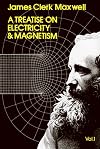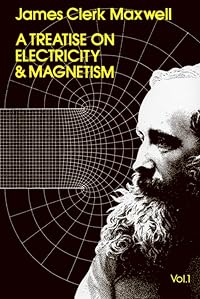
Treatise on Electricity and Magnetism, Vol. 1
by James Clerk Maxwell
143 Members (4.67)
On This Page
Description
Arguably the most influential nineteenth-century scientist for twentieth-century physics, James Clerk Maxwell (1831-1879) demonstrated that electricity, magnetism and light are all manifestations of the same phenomenon: the electromagnetic field. A fellow of Trinity College Cambridge, Maxwell became, in 1871, the first Cavendish Professor of Physics at Cambridge. His famous equations - a set of four partial differential equations that relate the electric and magnetic fields to their sources, show more charge density and current density - first appeared in fully developed form in his 1873 Treatise on Electricity and Magnetism. This two-volume textbook brought together all the experimental and theoretical advances in the field of electricity and magnetism known at the time, and provided a methodical and graduated introduction to electromagnetic theory. Volume 2 covers magnetism and electromagnetism, including the electromagnetic theory of light, the theory of magnetic action on light, and the electric theory of magnetism. show lessTags
Recommendations










Member Reviews
Members
- Recently Added By
Author Information

32+ Works 569 Members
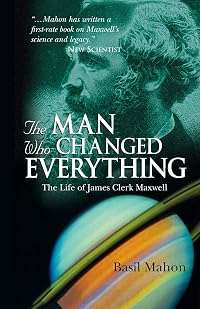
James Maxwell was a British physicist who developed a standard theoretical model for the modern understanding of electricity and magnetism. He showed that these two phenomena are two aspects of the same field and as a result he unified and systematized a vast field of research. Maxwell took many diverse observations and qualitative concepts show more developed by Michael Faraday and others, formulating them into a unified theory between 1864 and 1873. On the basis of this theory, Maxwell predicted that electromagnetic waves should exist and travel with the speed of light, and he identified light as a form of electromagnetic radiation. Both of these predictions were experimentally confirmed. Maxwell's other great contribution to physics was formulating a mathematical basis for the kinetic theory of gases. Using a statistical approach, he related the velocity of the molecules in a gas to its temperature, showing that heat results from the motion of molecules. Maxwell's result had been conjectured for some time, but it had never been supported experimentally. Maxwell then expanded his research to study viscosity, diffusion, and other properties of gases. Maxwell also provided the first satisfactory explanation of Saturn's rings. He established on theoretical grounds that the rings are not solid but rather composed of many small, fragmented objects that orbit Saturn. (Bowker Author Biography) show less
Series
Belongs to Publisher Series
Common Knowledge
- Original title
- A Treatise on Electricity and Magnetism [Volume I]
- Original publication date
- 1873
Classifications
Statistics
- Members
- 143
- Popularity
- 229,486
- Rating
- (4.67)
- Languages
- English, Russian
- Media
- Paper, Ebook
- ISBNs
- 10
- UPCs
- 1