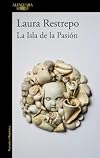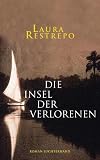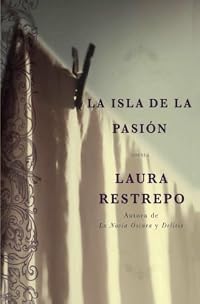
Isle of Passion
by Laura Restrepo
On This Page
Description
In 1908, under orders to defend a tiny, isolated Pacific atoll from an improbable French invasion, Mexican captain Ramón Arnaud, his young bride, Alicia, and eleven soldiers and their families set sail for the so-called Isle of Passion. In this dire, forbidding place, a viable community is created under Ramón's guidance and inspired by Alicia's dedication. But they are soon forgotten by a motherland distracted by political upheaval and the first rumblings of World War I. Left to the show more mercies of nature and one another—falling victim one by one to disease, hunger, lust, despair, and, ultimately, violence—the castaways who remain must find strength in the courage and steadfast resourcefulness of Alicia Arnaud, upon whom their collective survival now depends. Based on true events, Laura Restrepo's Isle of Passion is a brilliantly rendered and dramatic tale of savage human nature—and one woman's determination to triumph over a harrowing fate. show lessTags
Recommendations



































Member Reviews
[Isle of Passion] is Columbian author [[Laura Restrepo]]'s first novel. She began her career as a journalist, and while living in Mexico learned of certain events that occurred on Clipperton Island, previously known as the Isle of Passion, in the early years of the 20th century. Fearing a claim to ownership of the island by the French, the Mexican government sent a small group of soldiers and their families to the island to "protect" it. The island was remote, desolate, barren, and inhospitable, and its inhabitants were dependent on frequent shipments of food and other supplies from the mainland. Unfortunately, when the Mexican Civil War broke out, the soldiers and their families were entirely forgotten about, and they were left to fend show more for themselves.
After researching the historical archives and speaking to survivors and their descendants, [[Restrepo]] felt that there were too many open questions about what actually happened on the island to present the story as nonfiction, and wrote this fictionalized account.
When they initially arrived on the island, their existence was idyllic. Their plight after the supplies stop coming is vividly imagined by [[Restrepo]]. While the adults struggle for survival, the children are blissfully happy, chasing crabs and birds and playing on the beach.
Clipperton Island is now a French possession. I highly recommend that you view the photo gallery at www.clipperton.fr if you have read or intend to read this book. You won't forget the island's stark beauty, and you can see where all the major events of the novel occurred.
Highly recommended.
4 stars show less
After researching the historical archives and speaking to survivors and their descendants, [[Restrepo]] felt that there were too many open questions about what actually happened on the island to present the story as nonfiction, and wrote this fictionalized account.
When they initially arrived on the island, their existence was idyllic. Their plight after the supplies stop coming is vividly imagined by [[Restrepo]]. While the adults struggle for survival, the children are blissfully happy, chasing crabs and birds and playing on the beach.
Clipperton Island is now a French possession. I highly recommend that you view the photo gallery at www.clipperton.fr if you have read or intend to read this book. You won't forget the island's stark beauty, and you can see where all the major events of the novel occurred.
Highly recommended.
4 stars show less
A story of love, duty, and devotion as an army deserter is rehabilitated, with a posting to a remote island in the Pacific. Very well written and translated (from the Spanish original.)
Restrepo writes about the lives of people stranded on a desert island. Ramón Arnaud, a loser in military life, is offered a chance to redeem his past failures and be governor of a tiny island Southwest of the Pacific coast of Mexico. It is to protect the island from the threat of french possession that he is sent there, along with his wife, a troop of soldiers and their families, and a servant. Scurvy and foolishness kill many of the inhabitants, but several survive. This is their true story.
Absolutely mind blowing that this is a true story! I was completely engrossed in the story and couldn't put it down. I googled pictures of Clipperton and it is amazing people actually used to live there, it doesn't seem possible.
From Publishers Weekly
In 1908, Ramón Arnaud, a young Mexican military officer with a spotty record, is named governor of the small Pacific island of Clipperton—an isolated atoll originally dubbed "Isle of Passion" by Magellen. He, his young wife, Alicia, and a retinue of soldiers and their families—including assistant lieutenant Cardona, and his wife, Tirsa—establish a makeshift garrison and settlement, along with a small group of British guano miners. After several relatively idyllic months, Mexico's revolution and WWI leave them largely cut off from supplies and the world at large. When a powerful hurricane and tsunami wipe out most of the settlement, the group must band together to survive, and the disasters are only show more beginning. As a Lord of the Flies mentality sets in, Alicia and Tirsa are left, or so they think, to lead the remaining women and children. Colombian novelist Restrepo (The Dark Bride), basing the narrative on a true story, writes from the perspective of an unnamed journalist living in the present and trying to piece together the Clipperton mystery via conflicting reports and interviews with survivors. As translated by Koch, she pulls the various elements together with a clear, no-nonsense cartographer's precision, and the result is smooth sailing indeed, à la Jennifer Vanderbes's Easter Island. (Nov. 1)
Copyright © Reed Business Information, a division of Reed Elsevier Inc. All rights reserved. show less
In 1908, Ramón Arnaud, a young Mexican military officer with a spotty record, is named governor of the small Pacific island of Clipperton—an isolated atoll originally dubbed "Isle of Passion" by Magellen. He, his young wife, Alicia, and a retinue of soldiers and their families—including assistant lieutenant Cardona, and his wife, Tirsa—establish a makeshift garrison and settlement, along with a small group of British guano miners. After several relatively idyllic months, Mexico's revolution and WWI leave them largely cut off from supplies and the world at large. When a powerful hurricane and tsunami wipe out most of the settlement, the group must band together to survive, and the disasters are only show more beginning. As a Lord of the Flies mentality sets in, Alicia and Tirsa are left, or so they think, to lead the remaining women and children. Colombian novelist Restrepo (The Dark Bride), basing the narrative on a true story, writes from the perspective of an unnamed journalist living in the present and trying to piece together the Clipperton mystery via conflicting reports and interviews with survivors. As translated by Koch, she pulls the various elements together with a clear, no-nonsense cartographer's precision, and the result is smooth sailing indeed, à la Jennifer Vanderbes's Easter Island. (Nov. 1)
Copyright © Reed Business Information, a division of Reed Elsevier Inc. All rights reserved. show less
Die Autorin erzählt in dieser Mischung aus Roman und Sachbuch die wahre Geschichte der Bewohner der Clipperton Insel. 1908 wurden die etwa 40 Personen auf dieser etwa 1000 km von Mexiko entfernt liegenden Insel angesiedelt, um die Insel gegen etwaige Übernahmen Frankreichs zu verteidigen. Dann aber, im Strudel des mexikanischen Bürgerkriegs, werden die Bewohner vergessen und müssen sich selbst ohne Versorgungsschiff durchschlagen.
Ich finde das Buch interessant und durchaus spannend.
Ich finde das Buch interessant und durchaus spannend.
Dec 26, 2012German
Members
- Recently Added By
Author Information

19+ Works 1,782 Members
Awards and Honors
Notable Lists
Common Knowledge
- Canonical title
- Isle of Passion
Classifications
- Genres
- Fiction and Literature, General Fiction, Historical Fiction
- DDC/MDS
- 863.7 — Literature & rhetoric Spanish Literature Spanish fiction 21st Century
- LCC
- PQ8180.28 .E7255 — Language and Literature French, Italian, Spanish and Portuguese literatures Spanish literature Provincial, local, colonial, etc. Spanish America
- BISAC
Statistics
- Members
- 178
- Popularity
- 183,284
- Reviews
- 8
- Rating
- (3.68)
- Languages
- English, Finnish, German, Spanish
- Media
- Paper, Ebook
- ISBNs
- 20
- ASINs
- 5