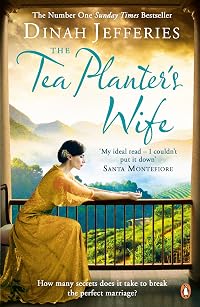
The Tea Planter's Wife
by Dinah Jefferies
On This Page
Description
#1 INTERNATIONAL BESTSELLER-
1920s Ceylon: A young Englishwoman marries a charming tea plantation owner and widower, only to discover he's keeping terrible secrets about his past, including what happened to his first wife, that lead to devastating consequences
In this lush, atmospheric page-turner, nineteen-year-old Gwendolyn Hooper has married Laurence, the seductively mysterious owner of a vast tea empire in colonial Ceylon, after a whirlwind romance in London. When she joins him at his
Tags
Recommendations










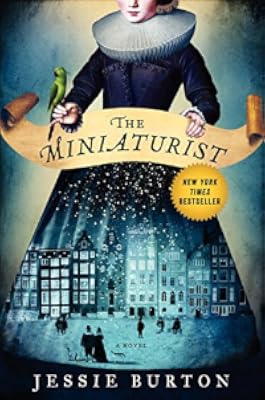


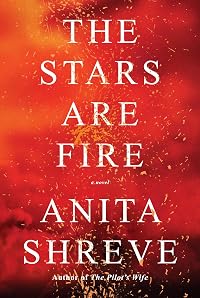
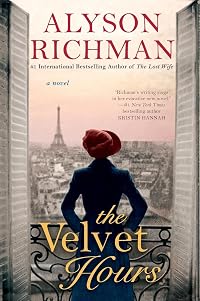

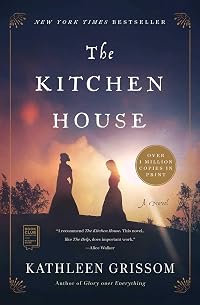



Member Reviews
This is a delightful story set in Ceylon during the 1920s/30s. A recently married young English girl is looking forward to starting a new life with her husband on a tea plantation. However, as time goes on she realises that being the wife of a plantation owner is not all she thought it would be. She discovers clashes of different cultures and social classes, dissident employees, a wayward and resentful sister-in-law and a big family secret which has heartbreaking consequences.
I thoroughly enjoyed The Tea Planter’s Wife. It’s atmospheric and evocative. There’s a great sense of time and place. The descriptions are very vivid and colourful. It’s so easy to visualise, I almost felt I was there experiencing the sights and sounds. show more There are some fantastic, realistic and likeable characters, as well as the odd unlikeable one! It’s beautifully written and plotted, and although I did guess the truth behind the secret, I was totally absorbed and captivated.
An engaging, compelling and poignant read which brought a tear to my eye. Highly recommended. show less
I thoroughly enjoyed The Tea Planter’s Wife. It’s atmospheric and evocative. There’s a great sense of time and place. The descriptions are very vivid and colourful. It’s so easy to visualise, I almost felt I was there experiencing the sights and sounds. show more There are some fantastic, realistic and likeable characters, as well as the odd unlikeable one! It’s beautifully written and plotted, and although I did guess the truth behind the secret, I was totally absorbed and captivated.
An engaging, compelling and poignant read which brought a tear to my eye. Highly recommended. show less
I loved the writers exotic description of Ceylon and the process of growing and producing tea. I have been following Masterpiece Theaters "Indian Summers" and this helped me to visualize what the way of life for the British living in Ceylon would be during this time period. There are definitely some interesting plot twists that I never saw coming. This book covers many subjects, racial prejudice, Ghandi's quiet revolt, tea production, British occupation, poverty, postpartum depression, jealousy, family secrets, forgiveness and love. It's a great read and it made Ceylon and this period in history come alive for me. Highly recommended for lovers of historical fiction.
 This review was written for LibraryThing Early Reviewers.
A middling novel. Jefferies is a good writer and tells a good dramatic story. I was invested in the main character, and the forces that set in motion her plight, but Jefferies' shallow depiction of colonialism and racism outweighs that. Jeffries takes pains to highlight the brutal exploitation occurring at the plantation, as well as the racist prejudices of all of the White British characters (including the heroine), but ultimately her view seems sanguine, as if all of these problems can be fixed by the White plantation owners being good humane people. To be honest, the price paid for the White people turning out good appears to be the suffering born by the Sinhalese.
The Tea Planter’s Wife by Dinah Jeffries is a 2015 Penguin publication. I was provided a copy of this book by the publisher and the LIbraryThing early reviewer program.
The Tea Planter’s Wife is an exemplary novel, written with a lush literary prose, which pulls me deep into the landscape and historical setting of colonial Ceylan.
Gwen, only nineteen, marries Laurence, a widower, after a whirlwind romance. Laurence is a tea planter running a successful plantation, and Gwen is determined to learn the business and be a good asset to her husband.
However, almost from the beginning, Gwen finds her husband is still haunted by the death of his first wife, the staff behaves oddly, and then Gwen finds she must cope with her sister-in-law, show more Verity, who wishes to keep Laurence all to herself, as well as watching another woman try to steal away her new husband.
If this were not bad enough, Gwen will soon face a crisis that will tear her heart to pieces while the atmosphere around her becomes almost oppressive.
This story is so absorbing and haunting, I couldn’t bear to continue reading it, but couldn’t stop turning pages. This book taps every emotion imaginable, as Gwen tries to navigate her new surroundings and faces one wall of opposition after another, one trial after another, while carrying a heavy burden on her heart.
I became frustrated with all the characters at one point or another, and Verity is most certainly a poisonous character, but I often found myself irritated with Laurence, who constantly turned a blind eye to those issues plaguing Gwen and the people causing her such great heartache.
This couple will encounter incredible adversity, survive hardships, and endure much heartache, make mistakes and harbor dark secrets in their souls. Naturally, the racial divide is one which causes so many misunderstandings, and it is so very sad to think how this situation could have turned out differently if not for that prejudice.
But, ultimately this is a love story, one that proves love’s power to overcome vindictiveness, jealously, grief and pain, and can give the heart the fortitude to forgive, accept, change, and move on with renewed hope.
This is a well written novel, with very interesting historical details, set in a magical location, and is packed with riveting dramas that kept me engaged and very invested in the characters on an emotional level.
I loved the atmosphere in this one, the slight Gothic tones, and the tantalizing pace that swept me away to another time and place. show less
The Tea Planter’s Wife is an exemplary novel, written with a lush literary prose, which pulls me deep into the landscape and historical setting of colonial Ceylan.
Gwen, only nineteen, marries Laurence, a widower, after a whirlwind romance. Laurence is a tea planter running a successful plantation, and Gwen is determined to learn the business and be a good asset to her husband.
However, almost from the beginning, Gwen finds her husband is still haunted by the death of his first wife, the staff behaves oddly, and then Gwen finds she must cope with her sister-in-law, show more Verity, who wishes to keep Laurence all to herself, as well as watching another woman try to steal away her new husband.
If this were not bad enough, Gwen will soon face a crisis that will tear her heart to pieces while the atmosphere around her becomes almost oppressive.
This story is so absorbing and haunting, I couldn’t bear to continue reading it, but couldn’t stop turning pages. This book taps every emotion imaginable, as Gwen tries to navigate her new surroundings and faces one wall of opposition after another, one trial after another, while carrying a heavy burden on her heart.
I became frustrated with all the characters at one point or another, and Verity is most certainly a poisonous character, but I often found myself irritated with Laurence, who constantly turned a blind eye to those issues plaguing Gwen and the people causing her such great heartache.
This couple will encounter incredible adversity, survive hardships, and endure much heartache, make mistakes and harbor dark secrets in their souls. Naturally, the racial divide is one which causes so many misunderstandings, and it is so very sad to think how this situation could have turned out differently if not for that prejudice.
But, ultimately this is a love story, one that proves love’s power to overcome vindictiveness, jealously, grief and pain, and can give the heart the fortitude to forgive, accept, change, and move on with renewed hope.
This is a well written novel, with very interesting historical details, set in a magical location, and is packed with riveting dramas that kept me engaged and very invested in the characters on an emotional level.
I loved the atmosphere in this one, the slight Gothic tones, and the tantalizing pace that swept me away to another time and place. show less
This review was written for LibraryThing Early Reviewers.Damn you, Richard and Judy! Like I need another reason to buy books. Even though I tend to ignore novels titled along the lines of 'The [historical occupation]'s [female relation]', buy one get one for £1 could not be ignored, and actually I quite enjoyed the story. A blend of Rebecca and The Painted Veil, Dinah Jefferies' novel, set in 1920s Ceylon (Sri Lanka), comes surprisingly close to the claim of 'couldn't put it down'.
Young bride Gwendolyn Hooper joins her husband in Ceylon to live on his tea plantation. Unfortunately, she also has to put up with his clingy sister, brusque estate manager and over-familiar American lady friend, but Gwen and Laurence seem to be in love and able to form a united front. When Gwen discovers she is show more pregnant with twins, she thinks her happiness is sealed - only the birth reveals a dark secret that threatens to destroy them both.
Like Sir Percy and Marguerite in The Scarlet Pimpernel, Gwen and Laurence really need to learn how to communicate. Then this novel would be shorter by half. However, I did enjoy the tangled web caused by Gwen fearing one appalling betrayal and Laurence hiding his own shame. And what a beautiful location - Jefferies really brings 1920s Ceylon vividly to life, full of colour and heat. There is a soapy flavour to the plot, full of improbable events and coincidences, but that's what makes a fast-paced, riveting story, I suppose. In the words of Gwen and Laurence:
'It's so vivid, and so exciting, you really think you're there.'
'A little unrealistic though.'
'True, but I like to lose myself in a story.'
A good story, beautifully told. show less
Young bride Gwendolyn Hooper joins her husband in Ceylon to live on his tea plantation. Unfortunately, she also has to put up with his clingy sister, brusque estate manager and over-familiar American lady friend, but Gwen and Laurence seem to be in love and able to form a united front. When Gwen discovers she is show more pregnant with twins, she thinks her happiness is sealed - only the birth reveals a dark secret that threatens to destroy them both.
Like Sir Percy and Marguerite in The Scarlet Pimpernel, Gwen and Laurence really need to learn how to communicate. Then this novel would be shorter by half. However, I did enjoy the tangled web caused by Gwen fearing one appalling betrayal and Laurence hiding his own shame. And what a beautiful location - Jefferies really brings 1920s Ceylon vividly to life, full of colour and heat. There is a soapy flavour to the plot, full of improbable events and coincidences, but that's what makes a fast-paced, riveting story, I suppose. In the words of Gwen and Laurence:
'It's so vivid, and so exciting, you really think you're there.'
'A little unrealistic though.'
'True, but I like to lose myself in a story.'
A good story, beautifully told. show less
I'm truly at a loss for words when it comes to this book. The first chapter from Gwen's POV was enough to make me not want to read this book because of the racism. This book takes place in the 1920s so one could argue that her reactions would have been fairly common for a 19 year old British woman coming to a new and foreign place such as Ceylon. HOWEVER... this author is from present day and could have written those reactions in a much less offensive way. The racism did not stop with Gwen. All of the well off white colonialists that were there were very racist as well. But then it gets even worse. Part two of the book comes in with the big secret twist. That's when I wanted to throw this book across the room. Spoiler alert: Gwen ends show more up having twins BUT one of them is not white. Due to certain circumstances, Gwen is home alone with her maid and quickly sends her off with the baby who would ruin her life and reputation before anyone sees her. The baby is placed with a family in a nearby village so no one one would ever know. Flashback to earlier chapters when Gwen was at an event with her husband and got drunk and possibly had sex with the local man she met right away in chapter one. She immediately thinks the worst of him and assumes he raped her which adds to the racist talk of the beginning. I really tried to keep reading past this point, and made it farther than I ever thought it would but I ended up deciding on DNFing this book. What I read after the secret was revealed was just Gwen's constant inner monologue about being so miserable without her daughter Liyoni. Well, maybe you shouldn't have shipped her off then lady. Ugh. This book is a big solid NO for me and I do not recommend it to anyone.
I received a copy of this book through Blogging For Books in exchange for an honest review. show less
I received a copy of this book through Blogging For Books in exchange for an honest review. show less
In Ceylon, between the First and Second World Wars, pre-Independence, a young wife arrives from England to join her new husband on his tea plantation. ‘The Tea Planter’s Wife’ by Dinah Jeffries is a portrayal of an island riven by racial differences, a marriage riven by an inability to be honest, concluding that in the end skin colour should not matter.
As her ship from England docks in Colombo, Gwen Hooper feels faint and is helped by a charming dark-skinned man. This is our introduction to Savi Ravasinghe, a pivotal character, a Sinhalese portrait painter who paints the rich in Ceylon, England and America. At this first meeting, Gwen demonstrates her naivety of racial tensions between Ceylon’s native Sinhalese population and show more the Tamil workers brought to the island by the British tea planters to work on the plantations. Soon after, trying to help an injured worker, she tramples over old sensitivities and the Raj way of doing things. I found Gwen both fascinating and a little irritating. The story is told totally from her viewpoint and, for me, her husband Laurence is rather remote. When Gwen gives birth to twins, the first, a boy, is christened Hugh. The second is a dark-skinned girl. In fear of accusations of infidelity with Savi, and rejection by her husband, Gwen panics. Her ayah Naveena takes the child to be cared for in a nearby village. Conveniently, the birth took place with only the ayah present so secrecy is assured. But Gwen lives on, haunted by her lies to her husband and her failings to her daughter.
This story hangs on the premise that Gwen feels unable to question her husband about the death of his first wife and child. When we finally get the answer in the last few pages, it seems obvious. Except of course the book is set in the late 1920s early 1930s so though obvious to a modern reader, it would not be widely known or understood at that time. To say more would give away the plot. This aside, I enjoyed this fragrant tale of the Hooper tea plantation, the difficulties faced after the Wall Street Crash, the changing times, the fashions and foods. There is a particularly unlikeable sister-in-law Verity, American vamp Christina, and bright and charming cousin-from-home Fran. The story felt alive in Ceylon. Jeffries cultivates a believable world from another time with the scents of cinnamon, sandalwood and jasmine combined with bullock dung, grease and rotting fish, servants dressed in white, and glamorous balls danced to the music of jazz. In contrast the short section in New York when Laurence and Gwen meet bankers and advertising men to launch the Hoopers Tea brand, seems remote and it was a relief to return to the lushness and complications of Ceylon.
Read more of my book reviews at http://www.sandradanby.com/book-reviews-a-z/ show less
As her ship from England docks in Colombo, Gwen Hooper feels faint and is helped by a charming dark-skinned man. This is our introduction to Savi Ravasinghe, a pivotal character, a Sinhalese portrait painter who paints the rich in Ceylon, England and America. At this first meeting, Gwen demonstrates her naivety of racial tensions between Ceylon’s native Sinhalese population and show more the Tamil workers brought to the island by the British tea planters to work on the plantations. Soon after, trying to help an injured worker, she tramples over old sensitivities and the Raj way of doing things. I found Gwen both fascinating and a little irritating. The story is told totally from her viewpoint and, for me, her husband Laurence is rather remote. When Gwen gives birth to twins, the first, a boy, is christened Hugh. The second is a dark-skinned girl. In fear of accusations of infidelity with Savi, and rejection by her husband, Gwen panics. Her ayah Naveena takes the child to be cared for in a nearby village. Conveniently, the birth took place with only the ayah present so secrecy is assured. But Gwen lives on, haunted by her lies to her husband and her failings to her daughter.
This story hangs on the premise that Gwen feels unable to question her husband about the death of his first wife and child. When we finally get the answer in the last few pages, it seems obvious. Except of course the book is set in the late 1920s early 1930s so though obvious to a modern reader, it would not be widely known or understood at that time. To say more would give away the plot. This aside, I enjoyed this fragrant tale of the Hooper tea plantation, the difficulties faced after the Wall Street Crash, the changing times, the fashions and foods. There is a particularly unlikeable sister-in-law Verity, American vamp Christina, and bright and charming cousin-from-home Fran. The story felt alive in Ceylon. Jeffries cultivates a believable world from another time with the scents of cinnamon, sandalwood and jasmine combined with bullock dung, grease and rotting fish, servants dressed in white, and glamorous balls danced to the music of jazz. In contrast the short section in New York when Laurence and Gwen meet bankers and advertising men to launch the Hoopers Tea brand, seems remote and it was a relief to return to the lushness and complications of Ceylon.
Read more of my book reviews at http://www.sandradanby.com/book-reviews-a-z/ show less
Members
- Recently Added By
Lists

Global Reads: Books Set in South Asia
30 works; 3 members
Author Information

14 Works 1,474 Members
Some Editions
Common Knowledge
- Canonical title
- The Tea Planter's Wife
- Original title
- The Tea Planter's Wife
- Original publication date
- 2015
- People/Characters
- Gwen Hooper; Laurence Hooper; Naveena, the baboe; Hugh; Liyoni
- Important places
- Colombo, Sri Lanka; Ceylon
- First words
- The woman held a slim white envelope to her lips. She hesitated for a moment longer, pausing to listen to the achingly sweet notes of a distant Sinhalese flute. She considered her resolve, turning it over as she would a pebbl... (show all)e in her palm, then sealed the envelope and propped it against a vase of wilting red roses. The antique tootman stood at the end of the four-poster bed.
- Blurbers*
- Rodriguez, Deborah; Riley, Lucinda; Buchan, Elizabeth; Fforde, Katie
- Original language*
- English
*Some information comes from Common Knowledge in other languages. Click "Edit" for more information.
Classifications
Statistics
- Members
- 651
- Popularity
- 44,784
- Reviews
- 134
- Rating
- (3.60)
- Languages
- 12 — Dutch, English, French, German, Italian, Norwegian (Bokmål), Portuguese, Romanian, Russian, Croatian, Spanish, Swedish
- Media
- Paper, Audiobook, Ebook
- ISBNs
- 39
- ASINs
- 8