On This Page
Description
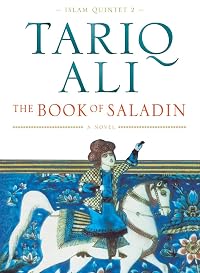
The fictional memoirs of Saladin, the liberator of Jerusalem As victories mount and accolades are showered upon the great warrior Saladin, he is nearly deified. He conquers the infidel Franj, or Crusaders, and reclaims the holy city of Jerusalem while remaining true to his senses of honor, justice, and humor. When it comes time for Saladin to record his own story, he turns to a Jewish scribe. In the interlinking stories of The Book of Saladin, the mighty sultan deftly navigates the deep show more chasms separating Muslims, Christians, and Jews. show lessTags
Recommendations


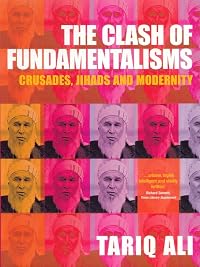

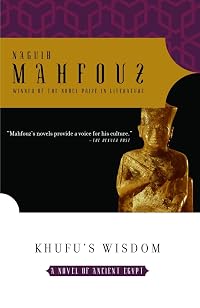




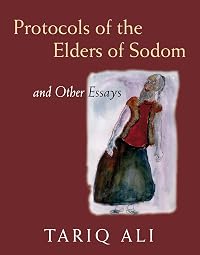
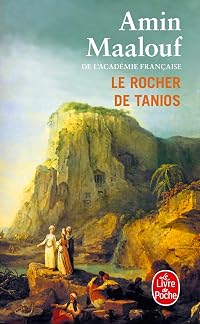








Member Recommendations
DeltaQueen50 12th century historical fiction, Crusades
Member Reviews
Using a fictional narrator in the form of the great Sultan's scribe, Tariq Ali pieces together a brilliant mosaic of the life of the Saladin (Salah al-Din or if you prefer, Yusuf al-ud-Dn Ysuf ibn Ayyb). The Jewish scribe, Ibn Yakub, is meant to faithfully record everything the Sultan says and does. Given that Salah al-Din is about to embark on the 12th century jihad to expel the 'Franj' (their term for the Franks or Crusaders) from al-Kuds (Jerusalem), the scribe finds himself witness to many great events; war councils, battles, celebrations, and sorrows.
Salah al-Din also spins out his life's story from a wild Kurdish boyhood in Tikrit, through his uncle's rise to power under Nur-ad-Din, and the Sultan's own gradual consolidation of show more power. The tale is given added spice by his (fictional) great friend and counselor Shadhi, who adds some bawdy details that the Sultan omits. The book explores life in and around the Sultan's court and includes several historical characters such as the Sultan's brothers and nephews, and the scholar-poet and official secretary Imad Al Din. Of necessity Ali invents the female characters, in particular, Halima and Jalima, two members of the harem, but their portrayal rings true.
Ali's book is not a history of the battles - descriptions of fighting are generally sparse. Instead, Ali concentrates on the preoccupations of the Sultan and his inner circle - their thinking, feeling, and talking about jihad, food, sex, religion. The Sultan eventually bemoans the fickle devotion to the jihad of the Islamic peoples and their leaders.
A wonderfully readable book of an important figure and time in history. That the story is told from the Muslim view only makes it all the more valuable to Western readers. show less
Salah al-Din also spins out his life's story from a wild Kurdish boyhood in Tikrit, through his uncle's rise to power under Nur-ad-Din, and the Sultan's own gradual consolidation of show more power. The tale is given added spice by his (fictional) great friend and counselor Shadhi, who adds some bawdy details that the Sultan omits. The book explores life in and around the Sultan's court and includes several historical characters such as the Sultan's brothers and nephews, and the scholar-poet and official secretary Imad Al Din. Of necessity Ali invents the female characters, in particular, Halima and Jalima, two members of the harem, but their portrayal rings true.
Ali's book is not a history of the battles - descriptions of fighting are generally sparse. Instead, Ali concentrates on the preoccupations of the Sultan and his inner circle - their thinking, feeling, and talking about jihad, food, sex, religion. The Sultan eventually bemoans the fickle devotion to the jihad of the Islamic peoples and their leaders.
A wonderfully readable book of an important figure and time in history. That the story is told from the Muslim view only makes it all the more valuable to Western readers. show less
Ali continues his Islam Quintet series with this second volume focusing on Salah-al-din (or, as westerners know him, Saladin). Through a fictional Jewish scribe invited into Saladin’s inner circle, Saladin’s life story, from his childhood to becoming a sultan, uniting the Islamic world and retaking Jerusalem, is revealed. I wasn't as engrossed in this story as I was in the first, Shadows of the Pomegranate Tree (which I highly recommend!), but the alternate Islamic perspective of this era during the Second and Third Crusades was intriguing. Each novel stands independently – one need not read them in order.
The Book of Saladin is a novel about the life of Yusaf Salah-ad-din Ibn Ayyub, known as Saladin to the Franks or Crusaders. Saladin has brought a Jewish scribe into his life for the singular purpose of writing down his memoirs. The book details his life by allowing us to hear his stories as he dictates to his scribe.
We follow not only the life of Saladin, but the life of those closest to him and the scribe as well. Thus we are given a great overview of the Muslim world from the politics and intrigues of the day, to life in and around the palaces of this sultan. Of course, the one burning issue for Saladin was the eviction of the Franks from the mid-east, especially the regaining of Jerusalem for the “True Believers”.
I found this an show more educational and enlightening read. The author manages to convey to the reader the thoughts, feelings and purpose of a Arab leader who dominated his world. The history of the Crusades is varied and covers hundreds of years. This book manages to shed light on one of the most interesting characters from the 12th century. The only drawback for me, was that the book felt very detached, more like a history textbook than a novel. show less
We follow not only the life of Saladin, but the life of those closest to him and the scribe as well. Thus we are given a great overview of the Muslim world from the politics and intrigues of the day, to life in and around the palaces of this sultan. Of course, the one burning issue for Saladin was the eviction of the Franks from the mid-east, especially the regaining of Jerusalem for the “True Believers”.
I found this an show more educational and enlightening read. The author manages to convey to the reader the thoughts, feelings and purpose of a Arab leader who dominated his world. The history of the Crusades is varied and covers hundreds of years. This book manages to shed light on one of the most interesting characters from the 12th century. The only drawback for me, was that the book felt very detached, more like a history textbook than a novel. show less
I certainly expected more from this when I encountered it at Twice Told back in 2004. It was by the numbers historical fiction with the standard authorial flourishes but little else. Syncretism is the order of the day. This is a reworking by Ali to meet some kinder, gentler view of the controversial figure form the Crusades: as if, there were any saintly personages in the record of such. I eventually gave this and a few other unread novels by Ali to my friend Ed.
Great historical novel, horribly edited in this edition though
Having a hard time with this. Surprisingly tedious writing. Taking a break.
Cuando un día el judío Isaac ben Yakub recibe la visita del médico Ibn Maimun –Maimónides– en su casa de El Cairo, poco sospecha que lo hace en busca de un escriba que va recogiendo de viva voz las memorias del poderoso sultán de Egipto, Salah al-Din. No es más que el comienzo de El libro de Saladino, una novela que no deja lugar al aburrimiento y que despliega ante el lector el exótico y evocador mundo de las Cruzadas y del Oriente medieval con sus florecientes ciudades –El Cairo, Damasco, Bagdad–, en las que los palacios con sus lujosos aposentos y silenciosos patios, sus harenes y eunucos, se alzan al lado de los bulliciosos barrios con sus baños y callejuelas, sus comerciantes y sus espectáculos. Junto con los show more campos de batalla, tal es el escenario en el que se desarrollan, salpicadas de pasiones e intrigas, de júbilo y tensiones, las andanzas y hazañas del gran caudillo musulmán. show less
Jul 18, 2022Spanish
Members
- Recently Added By
Published Reviews
Roman Tarika Alija bogata je i raskošna hronika čija se radnja odvija u dvanaestom veku, u Kairu, Damasku i Jerusalim. Knjiga o saladinu predstavlja izmišljene memoare Saladina, Kurda koji je oslobodio Jerusalim od krstaša, koji svoja sećanja u pero kazuje Jevrejinu Ibn Jakubu, ličnom pisaru. Saladin dopušta Ibn Jakubu da razgovara sa njegovom ženom i slugama kako bi u memoarima mogao show more da prikaže celovit sultanov portret. Sledi čitav niz međusobno povezanih priča, pripovesti prepunih topline, sočnog humora i strasti, u kojima se ideali sudaraju sa stvarnošću, a želje brkaju sa snovima. U središtu radnje nalazi se dirljiva ljubavna priča između sultanove najdraže žene Džamile i prelepe Halime, koja je kasnije dospela u harem. Roman opisuje uspon Saladina do sultana Egipta i Sirije i prati njegove pripreme da, u savezu sa podanicima hrišćanima i Jevrejima, povrati Jerusalim od krstaša. show less
added by Sensei-CRS
Roman Tarika Alija bogata je i raskošna hronika čija se radnja odvija u dvanaestom veku, u Kairu, Damasku i Jerusalim. Knjiga o saladinu predstavlja izmišljene memoare Saladina, Kurda koji je oslobodio Jerusalim od krstaša, koji svoja sećanja u pero kazuje Jevrejinu Ibn Jakubu, ličnom pisaru. Saladin dopušta Ibn Jakubu da razgovara sa njegovom ženom i slugama kako bi u memoarima mogao show more da prikaže celovit sultanov portret. Sledi čitav niz međusobno povezanih priča, pripovesti prepunih topline, sočnog humora i strasti, u kojima se ideali sudaraju sa stvarnošću, a želje brkaju sa snovima. U središtu radnje nalazi se dirljiva ljubavna priča između sultanove najdraže žene Džamile i prelepe Halime, koja je kasnije dospela u harem. Roman opisuje uspon Saladina do sultana Egipta i Sirije i prati njegove pripreme da, u savezu sa podanicima hrišćanima i Jevrejima, povrati Jerusalim od krstaša. show less
added by Sensei-CRS
Lists

Middle East Fiction
179 works; 16 members

THE WAR ROOM
813 works; 24 members

In Our Time books
4,934 works; 2 members
Author Information

83+ Works 5,273 Members
Tariq Ali is a writer and filmmaker. He has written more than two dozen books on world history and politics, seven novels (translated into over a dozen languages), and scripts for the stage and screen. He is an editor of New Left Review and lives in London.
Some Editions
Series

Belongs to Publisher Series
Work Relationships
Is contained in
Common Knowledge
- Canonical title
- The Book of Saladin
- Original title
- The Book of Saladin
- Original publication date
- 1998
- People/Characters
- Saladin (as Yusuf Salah-ud-Din ibn Ayyub); Isaac ibn Yakub; Maimonides (Moses ben Maimon or Rambam, as Musa ibn Maymun); Shadhi; Kadi al-Fadil; Halima (show all 14); Nur el Din (as Nur al-Din); Jamila; Imad al-Din; Taki al-Din; Keukburi; Al-Afdal; Al-Adil; Rachel
- Important places
- Cairo, Egypt; Damascus, Syria; Jerusalem (al-Kuds)
- Important events
- Crusades; Battle of Hattin (1187)
- Dedication
- For Robin Blackburn
- First words
- I have not thought of our old home for many years. It is a long time now since the fire.
- Last words
- (Click to show. Warning: May contain spoilers.)My task is complete. There is nothing more to write.
Peace be upon you, till we meet,
Your loyal friend,
Ibn Yakub
(Scribe to the late Sultan Salah al-Din ibn Ayyub) - Original language
- English
Classifications
Statistics
- Members
- 461
- Popularity
- 66,523
- Reviews
- 9
- Rating
- (3.63)
- Languages
- 9 — Bosnian, English, French, German, Italian, Polish, Portuguese, Serbian, Spanish
- Media
- Paper, Ebook
- ISBNs
- 28
- ASINs
- 8