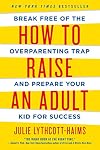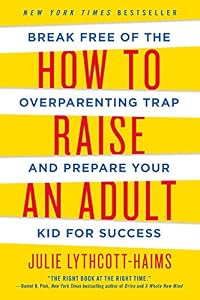
How to Raise an Adult: Break Free of the Overparenting Trap and Prepare Your Kid for Success
by Julie Lythcott-Haims
On This Page
Description
New York Times Bestseller!A provocative manifesto that exposes the harms of helicopter parenting and sets forth an alternate philosophy for raising preteens and teens to self-sufficient young adulthood.
"Julie Lythcott-Haims is a national treasure. . . . A must-read for every parent who senses that there is a healthier and saner way to raise our children." -Madeline Levine, author of the New York Times bestsellers The Price of Privilege and Teach Your Children Well
In How to Raise an show more Adult, Julie Lythcott-Haims draws on research, on conversations with admissions officers, educators, and employers, and on her own insights as a mother and as a student dean to highlight the ways in which overparenting harms children, their stressed-out parents, and society at large. While empathizing with the parental hopes and, especially, fears that lead to overhelping, Lythcott-Haims offers practical alternative strategies that underline the importance of allowing children to make their own mistakes and develop the resilience, resourcefulness, and inner determination necessary for success.
Relevant to parents of toddlers as well as of twentysomethings-and of special value to parents of teens-this book is a rallying cry for those who wish to ensure that the next generation can take charge of their own lives with competence and confidence.
"For parents who want to foster hearty self-reliance instead of hollow self-esteem, How to Raise an Adult is the right book at the right time." -Daniel H. Pink, author of the New York Times bestsellers Drive and A Whole New Mind
. show less
Tags
Recommendations
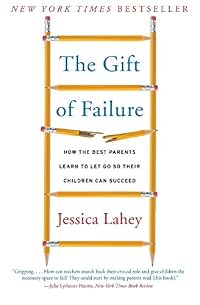
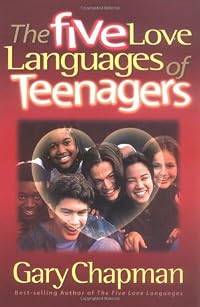
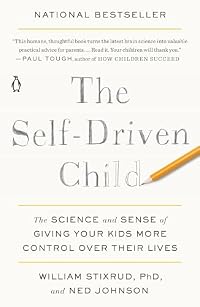
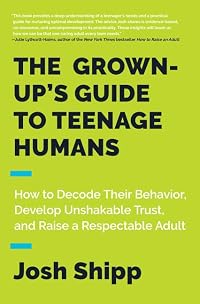

Member Reviews
As the mother of a tween in an upper middle/upper class suburb, I have often wondered about the change in parenting expectations that I have seen between the parents of my generation versus how my friends and I were parented. The norm these days seems to be that we are supposed to be heavily involved in the homework load and school projects, setting up play dates, extracurricular activities, educational camps, etc. I grew up in a working class community, where the parents were not expected to micromanage their children's lives to this extent. I have been wondering for a few years now whether this is simply a difference in having moved up the socioeconomic ladder, or whether parenting has changed across the board.
The book How to Raise an show more Adult tackles this issue, specifically how many parents in middle/upper class communities are over-parenting their children in order to help them secure the best opportunities in life. The author says that we often do this in the hope that our children will get into one of the most competitive universities, but our well-meaning intent can lead to producing helpless young adults. Do we want our children to be high academic achievers but be uncomfortable making simple decisions for themselves and performing simple household tasks? Or should we take a step back, let our children take over more of the control and the decision making process for their own lives, even though it will be uncomfortable to watch them fail?
The author clearly laid out the benefits to going against the current culture of over-parenting, as well as discussing why the goal of pushing our children toward a top college might not lead to the happiest/most successful career path after all. She also laid out some practical ideas/examples to stop over-parenting in our day to day interactions with our children. I found this to be a very timely and thought-provoking read, and would certainly recommend it to friends. show less
The book How to Raise an show more Adult tackles this issue, specifically how many parents in middle/upper class communities are over-parenting their children in order to help them secure the best opportunities in life. The author says that we often do this in the hope that our children will get into one of the most competitive universities, but our well-meaning intent can lead to producing helpless young adults. Do we want our children to be high academic achievers but be uncomfortable making simple decisions for themselves and performing simple household tasks? Or should we take a step back, let our children take over more of the control and the decision making process for their own lives, even though it will be uncomfortable to watch them fail?
The author clearly laid out the benefits to going against the current culture of over-parenting, as well as discussing why the goal of pushing our children toward a top college might not lead to the happiest/most successful career path after all. She also laid out some practical ideas/examples to stop over-parenting in our day to day interactions with our children. I found this to be a very timely and thought-provoking read, and would certainly recommend it to friends. show less
 This review was written for LibraryThing Early Reviewers.
Free LibraryThing Early Reviewer book. Wealthy parents, especially mothers, are spending way too much time and energy trying to make sure their children are perfect and go to Stanford, Yale, or Harvard. They do homework for their kids; they get their kids ADHD diagnoses; they intervene in personal disputes to smooth the way. This strategy paradoxically backfires and leaves the children stressed, possibly abusing drugs, ungrounded and uninterested in learning, and unable to accomplish ordinary life tasks for themselves. I was struck when reading the book how much the practices described synced up with the anti-vaccination movement: they both come from a place of mistrust. Mistrust of other people to treat your child right; mistrust of show more institutions like schools, universities, even the military. And mistrust of any outreach to others that isn’t paid coaching, as if relations outside the family can only be monetary exchanges. This turning inward is an effect and a cause of growing inequality. It’s a very sad picture. And I’m certainly vulnerable to these pressures; I too would like my kids to go to a top college and avoid severe suffering. When people a few miles away got child welfare called on them for letting their kids walk a mile alone, it’s hard to relax about letting your kids be independent. The advice to individual parents is sensible enough, given the problem: get your own life, let your kid make mistakes, let them find the path that’s right for them even though that path probably does not lead to Stanford, Yale, or Harvard. show less
This review was written for LibraryThing Early Reviewers.Brilliant and interesting, this book discusses the recent trend of "helicopter parenting" and the effects it is having on children and society. Julie Lythcott-Haims bases her book on interviews with teenagers, parents, teachers, high school principals and guidance counselors, and college admissions professionals, as well as on her own experience as a parent and a freshman dean at Stanford. In addition to writing about the unintended consequences of overparenting (depression, drug abuse, stress, and young adults who are not capable of independence), she provides practical advice for how parents can overcome the trend in their own home and neighborhoods.
I particularly like the discussion about college admissions. She stresses that finding show more the right college is about fit more than about prestige. Ivy league and similar colleges are not the only choice, and often are not even the right choice for a particular kid.
This book does have a definite perspective that may not feel relatable to all parents - Lythcott-Haims is an upper middle class, well-educated, professional mother - but parents from other walks of life can certainly take the bits and pieces that apply to them. show less
I particularly like the discussion about college admissions. She stresses that finding show more the right college is about fit more than about prestige. Ivy league and similar colleges are not the only choice, and often are not even the right choice for a particular kid.
This book does have a definite perspective that may not feel relatable to all parents - Lythcott-Haims is an upper middle class, well-educated, professional mother - but parents from other walks of life can certainly take the bits and pieces that apply to them. show less
This review was written for LibraryThing Early Reviewers.This book came to my attention having been recommended by my daughter's middle school. It was eye-opening and a bit of a wake-up call for me, as I could see some of the same dynamics playing out in our household. Lythcott-Haims' essential premise is that kids need responsibilities and challenges to feel confident and grow a sense of independence, and by denying them (doing everything for them and not allowing them to experience failure or navigate conflict) we are not setting them up for success. I took photos (my version of highlighting) of many passages and ideas to refer back to later on. Definitely a must-read for parents today.
I’ve never had children, but I’ve worked around college-aged kids my entire career. Like the author, I’ve increasingly become concerned about a large population of kids who appear to lack the ability to mature into full-fledged adults. I’ve assumed the cause was the growing trend of overprotective parenting (what many call helicopter parenting), but other than short articles in newspapers and magazines, I never taken the time to read anything more substantial. I hoped this book would provide me with that opportunity and it did…very nicely! Lythcott-Haims’ book is an excellent overview of the problem and a thoughtful collection of ideas designed to remedy the situation.
The book crosses genres: it’s both an in-depth show more research-journalism treatment of the problem, as well as a how-to guidebook outlining specific ways to help resolve it.
The first third of the book covers the problem from all angles: historical, sociological, cultural, psychological, and economic. Although there are extensive bibliographical notes at the end, the book covers these concepts in a style that demonstrates good journalism more than in-depth academic research. Well-educated readers will find the book easy to read, entertaining, and compelling. But it’s important to note that Lythcott-Haims is not a sociologist, nor is her book meant to be an academic treatise. She should probably be considered a concerned academic administrator who saw a significant problem in the college-aged population she served and it worried her enough (both as an administrator and as a recent parent) to investigate it further on her own and write a book about it.
The book is definitely aimed at well-educated and affluent parents. As you will learn in the book (and I certainly do not have the time here to explain it further), helicopter parenting is a phenomenon that primarily effects the high-end of the socioeconomic ladder.
In the first third, she outlines the problem, focusing both on the various cultural and sociological phenomena that have caused it, as well as the societal, economic, and psychological damage that it is causing. It is this first section that interested me the most. In it, the author gathers a great deal of evidence to support her ideas. These trends have been playing out slowly in virtually every facet of life in America over the last three decades, pushing us toward this new style of parenting. What I found fascinating about her analysis, is that this is almost exclusively an American phenomenon. It is not happening in other highly civilized Western-style cultures. The problem is ours and the damage (to our children and society at large) is our own. The author makes a strong case for this and backs it up with extensive bibliographical notes and interviews.
Interestingly, she approaches evidence more like a lawyer than an academic. She relies heavily on the interviews with experts. Perhaps she does it this way because she is a lawyer. After graduating from Stanford, she earned a law degree at Harvard and practiced corporate law. Then she left her law career to return to Stanford where she served in various administrative positions including Dean (and later Associate Vice Provost) of Freshmen and Undergraduate Advising. It was in that position where she became alarmed about the growing number of Stanford freshmen who appeared incapable of maturing into adulthood. It is also at that time that she became a parent herself and felt the intense pressure to conform to helicopter-style parenting.
In the last two-thirds of the book, the author discusses steps that parents can take to raise a child who should have no difficulty mastering adulthood when the time comes. This is the “how-to” sections of the book. The course that is outlined is brave, reasonable, and creative.
I found the book to be exceptionally well written. Personally, I hope it will spark a trend away from overparenting styles of child rearing…but I am certainly not holding my breath. Advice on how to parent outside the cultural norm is almost taboo. Like politics and religion, it is not a topic you discuss lightly even with close friends and family.
[As a side note, it is interesting to know that in June of 2012, Lythcott-Haims left Stanford to enroll in a master of fine arts program. Her goal was to prepare herself for a new career in writing. This is her first book since she switched gears to become a writer.] show less
The book crosses genres: it’s both an in-depth show more research-journalism treatment of the problem, as well as a how-to guidebook outlining specific ways to help resolve it.
The first third of the book covers the problem from all angles: historical, sociological, cultural, psychological, and economic. Although there are extensive bibliographical notes at the end, the book covers these concepts in a style that demonstrates good journalism more than in-depth academic research. Well-educated readers will find the book easy to read, entertaining, and compelling. But it’s important to note that Lythcott-Haims is not a sociologist, nor is her book meant to be an academic treatise. She should probably be considered a concerned academic administrator who saw a significant problem in the college-aged population she served and it worried her enough (both as an administrator and as a recent parent) to investigate it further on her own and write a book about it.
The book is definitely aimed at well-educated and affluent parents. As you will learn in the book (and I certainly do not have the time here to explain it further), helicopter parenting is a phenomenon that primarily effects the high-end of the socioeconomic ladder.
In the first third, she outlines the problem, focusing both on the various cultural and sociological phenomena that have caused it, as well as the societal, economic, and psychological damage that it is causing. It is this first section that interested me the most. In it, the author gathers a great deal of evidence to support her ideas. These trends have been playing out slowly in virtually every facet of life in America over the last three decades, pushing us toward this new style of parenting. What I found fascinating about her analysis, is that this is almost exclusively an American phenomenon. It is not happening in other highly civilized Western-style cultures. The problem is ours and the damage (to our children and society at large) is our own. The author makes a strong case for this and backs it up with extensive bibliographical notes and interviews.
Interestingly, she approaches evidence more like a lawyer than an academic. She relies heavily on the interviews with experts. Perhaps she does it this way because she is a lawyer. After graduating from Stanford, she earned a law degree at Harvard and practiced corporate law. Then she left her law career to return to Stanford where she served in various administrative positions including Dean (and later Associate Vice Provost) of Freshmen and Undergraduate Advising. It was in that position where she became alarmed about the growing number of Stanford freshmen who appeared incapable of maturing into adulthood. It is also at that time that she became a parent herself and felt the intense pressure to conform to helicopter-style parenting.
In the last two-thirds of the book, the author discusses steps that parents can take to raise a child who should have no difficulty mastering adulthood when the time comes. This is the “how-to” sections of the book. The course that is outlined is brave, reasonable, and creative.
I found the book to be exceptionally well written. Personally, I hope it will spark a trend away from overparenting styles of child rearing…but I am certainly not holding my breath. Advice on how to parent outside the cultural norm is almost taboo. Like politics and religion, it is not a topic you discuss lightly even with close friends and family.
[As a side note, it is interesting to know that in June of 2012, Lythcott-Haims left Stanford to enroll in a master of fine arts program. Her goal was to prepare herself for a new career in writing. This is her first book since she switched gears to become a writer.] show less
This review was written for LibraryThing Early Reviewers.I wish I had read this book before I finished raising my two children, now in their thirties. Lythcott-Haims speaks to a select set of parents - primarily those in the upper middle-class, upper class demographic - whose desires to "do right" by their children have led to many of the wrong conclusions. There are a subset of parents in the middle class and lower middle class who also succumb to the overparenting traps, but for the most part those in the lower class have neither the time nor the inclination to do everything for their children to spare them the hard facts of life. While a good portion of the book is devoted to those whose children would primarily fall between the tween and twenty ages, there is also good practical advice show more for parents of younger kids. The author begins by delineating what "good" parents are doing now thinking they are helping their children to beat the odds and be "winners" in the game of life. She indicates things like "Keeping Them Safe and Sound", "Providing Opportunity", "Being There for Them", and "Succumbing to the College Admissions Arms Race" finally asking the question "To What End?" In Part 2 of the book she explains why all the above, which sound great on paper are leading to kids who are lacking basic life skills, and overstressing our children to no good end, as well as hurting their job prospects in the long run. Part 3 suggests another way of parenting that includes teaching life skills, giving kids unstructured time, teaching kids how to think, preparing them for hard work, and normalizing struggle - all features of the adult life. This is an important book and benefits both kids and parents when those who read it take it to heart. Highly recommended. show less
This review was written for LibraryThing Early Reviewers.This is a must read for all parents. It is extremely relevant to mainstream, middle class families too, not just the Palo Alto Ivy League parent types. I live in an upper middle class neighborhood in Ohio, where most of the parents did not go to Ivy League schools. We went to normal colleges and worked really hard to get where we are. Our public school district is one of the best in Ohio. Every year we have maybe one student who gets into a Stanford level school, but most go to regular public universities in Ohio. Even so, these kids are being overparented and harmed in exactly the same way as JLH describes of her Stanford freshmen.
I live in a small suburb, about 1 square mile. The neighborhood overlooks a river. There are woods and show more creeks. The elementary school is right in the middle of it all. The main road through town has several restaurants, a Starbucks, movie theatre and ice cream parlor. It's the perfect town for kids to walk to school, go to the movies, or play in the woods on their own. I'm sure they did this 30 years ago but they don't anymore. Kids are at home under the watchful eye of their parents. They are all in sports, piano lessons, dance lessons, gymnastics, swim team, tae kwon do, multiple AP classes each year, and the list goes on. My son had a natural curiosity when he was little, so I let him build forts in the woods by himself and walk to school by himself in 2nd grade (3 blocks), but there were never other kids doing these things, and I felt the skeptical eyes of parents and teachers. Today he is one of the most independent kids I know, but other college kids in my neighborhood are barely making it.
They are depressed, dropping out of college, living at home, getting into drugs, not driving at age 16. All of their parents are good, kind people who only want the best for their kids. But they helicoptered and gave in to their kid's whims and now they are paying the price. Not only are their kids not going to elite colleges, but they are barely coping with life. All of these parents are standing around in disbelief wondering "What the hell happened?"
JLH's book does focus mainly on the academic demands placed on middle class kids. This is a huge piece of the problem and she chose to tackle this piece because this is where she has experience and expertise. She talks heavily about her dislike of the US News college rankings and admissions criteria, however, she also gives lots of specific parenting advice. She suggests practical things you can do as a parent at each developmental stage to help kids learn independence. She has lots of other suggestions too, such as showing your kids you have personal interests, hobbies, passions. In other words, you aren't stopping your life to drive them all over the place and attend every sports game. They need to see an example of their parent living life, not catering to their kids. She also mentions the importance of finding like-minded parents and suggestions for what you can say to parents who question your hands-off parenting style.
People who judge this book as not relevant to them because they have a kid who doesn't come close to Ivy League material have completely missed the point. The book goes way beyond that. I would love for JHL to stay on this track in her writing and continue to research the plight of young adults today, because she is obviously passionate about it. I would also love for her to delve deeper into the effects of technology on their development, because that is another major change in this generation vs. her generation. Thank you JLH for writing this book. My kids can go to any college they choose, including community college, and it won't bother me in the least.
One final comment. Every parent at my daughter's private christian school was given a copy of this book for an all school discussion. It's clear that schools are concerned. I am encouraged by this, but don't feel that anything will really change. Parents, teachers and administrators will talk and agree, but in the end kids will continue to load up on AP classes. And I am certain that the ultimate pride will always be for those kids who make it into an Ivy. show less
I live in a small suburb, about 1 square mile. The neighborhood overlooks a river. There are woods and show more creeks. The elementary school is right in the middle of it all. The main road through town has several restaurants, a Starbucks, movie theatre and ice cream parlor. It's the perfect town for kids to walk to school, go to the movies, or play in the woods on their own. I'm sure they did this 30 years ago but they don't anymore. Kids are at home under the watchful eye of their parents. They are all in sports, piano lessons, dance lessons, gymnastics, swim team, tae kwon do, multiple AP classes each year, and the list goes on. My son had a natural curiosity when he was little, so I let him build forts in the woods by himself and walk to school by himself in 2nd grade (3 blocks), but there were never other kids doing these things, and I felt the skeptical eyes of parents and teachers. Today he is one of the most independent kids I know, but other college kids in my neighborhood are barely making it.
They are depressed, dropping out of college, living at home, getting into drugs, not driving at age 16. All of their parents are good, kind people who only want the best for their kids. But they helicoptered and gave in to their kid's whims and now they are paying the price. Not only are their kids not going to elite colleges, but they are barely coping with life. All of these parents are standing around in disbelief wondering "What the hell happened?"
JLH's book does focus mainly on the academic demands placed on middle class kids. This is a huge piece of the problem and she chose to tackle this piece because this is where she has experience and expertise. She talks heavily about her dislike of the US News college rankings and admissions criteria, however, she also gives lots of specific parenting advice. She suggests practical things you can do as a parent at each developmental stage to help kids learn independence. She has lots of other suggestions too, such as showing your kids you have personal interests, hobbies, passions. In other words, you aren't stopping your life to drive them all over the place and attend every sports game. They need to see an example of their parent living life, not catering to their kids. She also mentions the importance of finding like-minded parents and suggestions for what you can say to parents who question your hands-off parenting style.
People who judge this book as not relevant to them because they have a kid who doesn't come close to Ivy League material have completely missed the point. The book goes way beyond that. I would love for JHL to stay on this track in her writing and continue to research the plight of young adults today, because she is obviously passionate about it. I would also love for her to delve deeper into the effects of technology on their development, because that is another major change in this generation vs. her generation. Thank you JLH for writing this book. My kids can go to any college they choose, including community college, and it won't bother me in the least.
One final comment. Every parent at my daughter's private christian school was given a copy of this book for an all school discussion. It's clear that schools are concerned. I am encouraged by this, but don't feel that anything will really change. Parents, teachers and administrators will talk and agree, but in the end kids will continue to load up on AP classes. And I am certain that the ultimate pride will always be for those kids who make it into an Ivy. show less
Members
- Recently Added By
Author Information

4 Works 794 Members
Julie Lythcott-Haims served as dean of freshmen and undergraduate advising at Stanford University, where she received the Dinkelspiel Award for her contributions to the undergraduate experience. She holds a BA from Stanford University, a JD from Harvard Law School, and an MFA in writing from California College of the Arts. She is a member of the show more San Francisco Writers' Grotto, and resides in the Bay Area with her husband, their two teenagers, and her mother. show less
Common Knowledge
- Original publication date
- 2015-05-12
- Dedication
- To Dan, who always
~ and ~
To Sawyer and Avery, the soon-to-be adults we're raising. - First words
- This is a book about parents who are overinvolved in the lives of their kids. (introduction)
- Last words
- (Click to show. Warning: May contain spoilers.)Together we can push the parenting pendulum back in the other direction: toward raising adults.
- Blurbers
- Levine, Madeline; Pink, Daniel H.; Deresiewicz, William
- Original language
- English
Classifications
- Genres
- Nonfiction, General Nonfiction
- DDC/MDS
- 306.874 — Social sciences Social sciences, sociology & anthropology Culture and institutions Marriage, partnerships, unions; family Intrafamily relationships Parent-child relationship
- LCC
- HQ755.8 .L97 — Social sciences The family. Marriage, Women and Sexuality The Family. Marriage. Women The family. Marriage. Home Parents. Parenthood
- BISAC
Statistics
- Members
- 559
- Popularity
- 52,615
- Reviews
- 20
- Rating
- (4.08)
- Languages
- English
- Media
- Paper, Audiobook, Ebook
- ISBNs
- 11
- ASINs
- 4