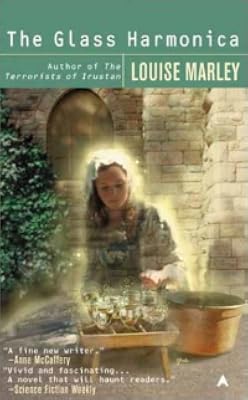
The Glass Harmonica
by Louise Marley
On This Page
Description
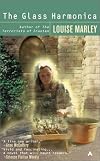
Two young women of two different times are bound by a passion for the ethereal music of a glass harmonica in this compelling novel that mixes science fiction, mystery, and romance. Eilish Eam is an orphan, living in 1761, London. She stands on an icy corner and plays her instrument: water-filled glasses. Fingers raw from the cold, her only comfort is the place her music takes her...to visions of a young girl, much her own age, but with odd short hair. Eilish survives on pennies and applause, show more and nothing more. Until the night Benjamin Franklin stops to listen, awe-struck by her gift--and with plans for her future... Erin Rushton is a musical prodigy, living in Seattle, 2018. She stands in the orchestra, consumed by the music of her own instrument: the glass harmonica. Like a current of electricity, the music moves from her fingers to her lips and hands. And the only thing that alters the rhythm are the visions that haunt her...of an odd old-fashioned girl, much her own age, who needs her help... show lessTags
Recommendations


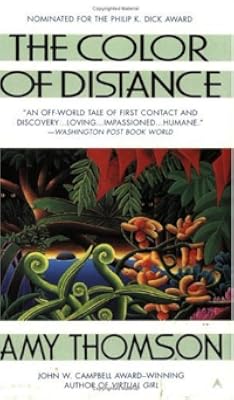

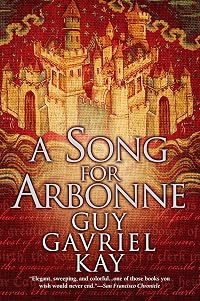
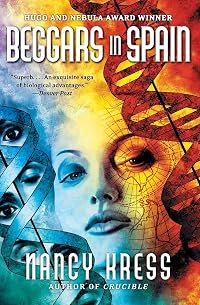
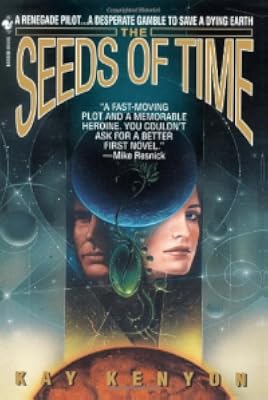
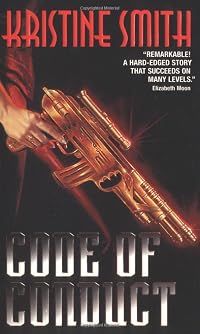

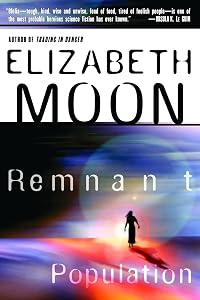
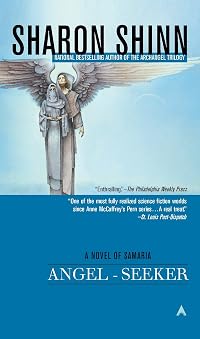
Member Recommendations

Member Reviews
This is two stories told in alternating chapters, with the connections between them gradually becoming clearer. Eilish Eam is an Irish orphan living in the Seven Dials section of London in 1761, barely keeping herself alive playing tunes on glasses for pennies. Erin Rushton is a professional musician in 2018, playing the glass harmonica to audiences newly interested in the old instrument, in a society going through a serious nostalgia fit. Eilish is found by Benjamin Franklin, who, charmed by her playing on the glasses, takes her in to help with the tuning of the glass harmonica, which he is trying to perfect. Erin finds her self increasingly caught up in two things: her twin brother Charles, who composes much of the music she plays, is show more determined to walk again, and has found a doctor with an unproven new technique, augmented binaural stimulation, to restore Charles' ability to walk, and at the same time Erin herself is troubled by a wraith that sometimes appears when she's playing the glass harmonica.
Eilish finds that, despite the fact that Franklin and most of the residents of the Stevenson household (where Franklin was living at the time) are kind, her good fortune hasn't solved all her problems. She isn't earning enough money to make a big difference in the life of Mackie, the little crippled boy she had been helping to care for before meeting Franklin. Franklin's other project at the time, experimenting with electrical shocks for the treatment of epilepsy, distresses her greatly. Like Erin, she's seeing wraiths--although, believing in second sight and that she has second sight, she's not as distressed by them as Erin is.
Erin struggles to trust Dr. Berrick, struggles with seeing her brother struggle to walk, struggles with fear of going mad, struggles with their mother Sarah's efforts to control their lives for their own good. Eilish faces everything bravely; Erin has to force herself not to run from trouble and confrontation, and does it only for her brother's sake. What Erin and Eilish have in common is the love of the music of the glass harmonica.
Marley's not a cheerful writer, but she does present here characters that feel rounded and real, and if the world of 2018 feels a little thin in places, it's quite convincing in others, and she avoids either romanticizing London of 1761, or dwelling on its awfulness. Worth reading. show less
Eilish finds that, despite the fact that Franklin and most of the residents of the Stevenson household (where Franklin was living at the time) are kind, her good fortune hasn't solved all her problems. She isn't earning enough money to make a big difference in the life of Mackie, the little crippled boy she had been helping to care for before meeting Franklin. Franklin's other project at the time, experimenting with electrical shocks for the treatment of epilepsy, distresses her greatly. Like Erin, she's seeing wraiths--although, believing in second sight and that she has second sight, she's not as distressed by them as Erin is.
Erin struggles to trust Dr. Berrick, struggles with seeing her brother struggle to walk, struggles with fear of going mad, struggles with their mother Sarah's efforts to control their lives for their own good. Eilish faces everything bravely; Erin has to force herself not to run from trouble and confrontation, and does it only for her brother's sake. What Erin and Eilish have in common is the love of the music of the glass harmonica.
Marley's not a cheerful writer, but she does present here characters that feel rounded and real, and if the world of 2018 feels a little thin in places, it's quite convincing in others, and she avoids either romanticizing London of 1761, or dwelling on its awfulness. Worth reading. show less
This novel has the same title as Dorothee Kocks' historical novel (which I recently finished reading), and half of it is set in the same historical period -- the other half is set in the near future, giving the book an angle of the fantastic. The historical portion, set in 1760s London, focuses on a young Irish orphan named Eilish Eam, who barely survives, earning a few pennies from passers-by, by playing folk tunes on water-filled glasses. One of the passers-by is Benjamin Franklin who is struck by the girl's musical talent and decides that she could assist him with his newest invention -- the glass harmonica. The futuristic portion, set in America in 2018, focuses on Erin Rushton, a musical prodigy whose performances on the glass show more harmonica have set the artistic world abuzz.
The book's chapters alternate between the two time periods, and the two protagonists have a psychic connection to each other that plays out in life and death circumstances. Personally, I found Eilish's story fuller and developed with more interesting details and personalities than Erin's world. But Marley does have some intriguing speculations on how issues such as gentrification and economic gap between rich and poor play out with developing technology and bureaucracy.
Overall, I enjoyed the novel, and I was happy to get more information about Franklin's role in the development of the glass harmonica. show less
The book's chapters alternate between the two time periods, and the two protagonists have a psychic connection to each other that plays out in life and death circumstances. Personally, I found Eilish's story fuller and developed with more interesting details and personalities than Erin's world. But Marley does have some intriguing speculations on how issues such as gentrification and economic gap between rich and poor play out with developing technology and bureaucracy.
Overall, I enjoyed the novel, and I was happy to get more information about Franklin's role in the development of the glass harmonica. show less
This book somehow landed on my TBR pile, and I'm embarrassed to say I know not how. I think it was probably left on a book exchange bookshelf and I grabbed it thinking it sounded interesting. It was surprisingly engaging for an unexpected find. There are two intertwined stories: Eilish Eam an orphan living in London, who comes to the notice of Ben Franklin because of her skill at playing melodies on water-filled glasses and Erin Rushton, a child prodigy on the glass harmonica, living in 2018. I found both stories of interest, though the link between the two a bit ambiguous. I kept trying to make the characters from one match the characters from the other -- stretching a reincarnation theme, but think that there just might be more of show more harmonioius (ha!) parallels instead of exact rebirth of souls.
This book was published in 2000, and it was interesting to see how the author envisioned the world in 2018. Here in 2012, we're a bit closer to the setting of the book. I must admit that I'm a little glad some of the future "changes" are not that likely to happen in the next few years.
Another thing that was of interest to me was that the original glass in Franklin's glassy armonica (gained the h when Germans began using the word) was that there was a high content of lead in the glasses. Here in Charleston, the old houses are loaded with high lead content paint, making lead poisoning something still seen in my pediatric nursing practice. Interesting how that played into the story. show less
This book was published in 2000, and it was interesting to see how the author envisioned the world in 2018. Here in 2012, we're a bit closer to the setting of the book. I must admit that I'm a little glad some of the future "changes" are not that likely to happen in the next few years.
Another thing that was of interest to me was that the original glass in Franklin's glassy armonica (gained the h when Germans began using the word) was that there was a high content of lead in the glasses. Here in Charleston, the old houses are loaded with high lead content paint, making lead poisoning something still seen in my pediatric nursing practice. Interesting how that played into the story. show less
Interesting sci-fi novel that focusses on links between past and present (not an unusual sci-fi topic), and on music -- a far less usual focus. A street musician in London in 1761 and a celebrated musician in 2018 don't appear to have much in common. Both, however, play the glass harmonica, and stranger links between them emerge as the novel progresses. The good guys (or more properly girls) in this are a bit too good, and the story could do with more momentum, but it is an interesting read.
This was an odd one. Its the story of two women, both musicians, one in the future and one in the past. In the near future Erin is a virtuoso and a child prodigy who plays the glass harmonica, an instrument from the 1700's that has recently come back into fashion. In the 1700's Eileesh is an Irish girl from the slums who is hired by Ben Franklin to learn to play and help him perfect his invention, the glass harmonica. Each of the women occasionally sees an apparition of the other, although they never actually communicate, just see visions of one another.
I liked the parts but it was hard to see how they fit together. It was like two separate novellas sort of loosely connected by these little ghost story interludes. Eileesh's story was show more pretty good historical fiction, Erin's story was a sort of romance with science fictiony overtones - the two parts were quite different. And although there were themes and echoes and similarities, they weren't strong enough to pull the thing together into a whole that was greater than the sum of its parts.
It remained sort of fragmented. Although the fragments were nice. You could do a whole lot worse if you were looking for something to read. But somehow, it just never quite... gells. show less
I liked the parts but it was hard to see how they fit together. It was like two separate novellas sort of loosely connected by these little ghost story interludes. Eileesh's story was show more pretty good historical fiction, Erin's story was a sort of romance with science fictiony overtones - the two parts were quite different. And although there were themes and echoes and similarities, they weren't strong enough to pull the thing together into a whole that was greater than the sum of its parts.
It remained sort of fragmented. Although the fragments were nice. You could do a whole lot worse if you were looking for something to read. But somehow, it just never quite... gells. show less
I picked up this book because I am a fan of William Wilde Zeitler’s glass armonica music but did not realize until after I started reading it that the author mentions him in her acknowledgments. This book alternates between the 1700’s when Benjamin Franklin invented the glass armonica and a professional musician in the near future, blending history with fantasy. I found the historical facet of this book more satisfying then the advances into the future but still enjoyed the story overall.
I'm not sure whether this was science fiction or fantasy. Possibly both. The doctor keeps alluding to some sort of scientific explanation, though it's never spelled out. But that doesn't seem important. The armonica's magic, is all. ""Tis like that, my little instrument." I really liked poor Elish.
Members
- Recently Added By
Lists

Favorite Science Fiction by Women Authors
737 works; 202 members
Author Information

33+ Works 4,219 Members
Some Editions
Awards and Honors
Awards
Distinctions
Common Knowledge
- People/Characters
- Benjamin Franklin; Eilish Eam; Erin Rushton
- Important places
- London, England, UK; Seattle, Washington, USA
- First words
- "Play it again, child."
- Blurbers
- Bear, Greg; McCaffrey, Anne
Classifications
- Genres
- Fiction and Literature, Science Fiction, Historical Fiction, Fantasy
- DDC/MDS
- 813.54 — Literature & rhetoric American literature in English American fiction in English 1900-1999 1945-1999
- LCC
- PS3563 .A6732 .G58 — Language and Literature American literature American literature Individual authors 1961-
- BISAC
Statistics
- Members
- 249
- Popularity
- 130,114
- Reviews
- 9
- Rating
- (3.71)
- Languages
- English
- Media
- Paper, Ebook
- ISBNs
- 3
- ASINs
- 2