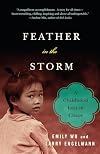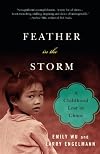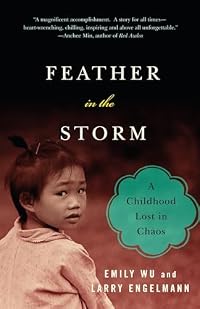
Feather in the Storm: A Childhood Lost in Chaos
by Emily Wu
On This Page
Description
"It is my hope that this memoir may serve as a reminder and a memorial to all of the children who were lost in the Chaos," Emily Wu writes at the beginning of Feather in the Storm. Told from a child's and young girl's point of view, Wu's spellbinding account-which spans nineteen years of growing up during the chaos of China's Great Leap Forward and Cultural Revolution-opens on her third birthday as she meets her father for the first time in a concentration camp. A well-known academic and show more translator of American literary classics, her father had been designated an "ultra-rightist" and class enemy. As a result, Wu's family would be torn apart and subjected to an unending course of humiliation, hardship and physical and psychological abuse. Wu tells her story of this hidden Holocaust, in which millions of children and their families died, through a series of vivid vignettes that brilliantly-and innocently-evoke the cruelty and brutality of what was taking place daily in the world around her. From watching helplessly as the family apartment is ransacked and her father carted off by former students to be publicly beaten, to her own rape and the hard labor and primitive rituals of life in a remote peasant village, Wu is persecuted as a child of the damned. Wu's narrative is poignant, disturbing and unsentimental, and, despite the nature of what it describes, is filled with the resiliency of youth-and even humor. That Emily Wu survived is remarkable. That she is able to infuse her story with such immediacy, power and unexpected beauty is the greatness of this book. Feather in the Storm is an unforgettable story of the courage and silent suffering of one small child set in a quicksand world of endless terror. show lessTags
Recommendations





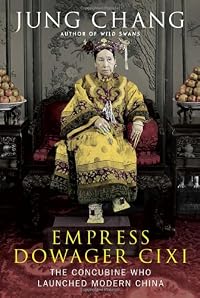
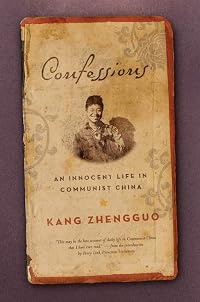

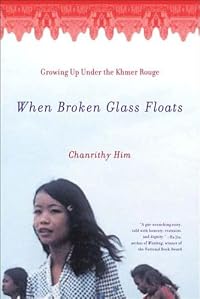
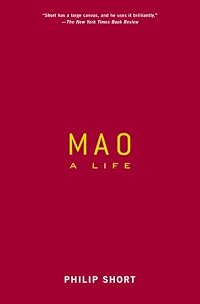





Member Recommendations

Member Reviews
Wu Maomao was born during the famine of 1958-1962. With her father in a reeducation camp, her mother was forced to let relatives raise her until she was a few years old. Reunited with a family she didn't remember, Maomao grew up sandwiched between two brothers who were favored for being boys. She was an excellent student, but because her father had received his PhD at the University of Chicago, she was continually harassed for belonging to a black (as opposed to red) family. This is the story of her first 19 years: her early years in the city, her family's forced relocation to a remote village, and her years working as an "educated youth" (i.e. middle or high school graduate) in the mountains. It's a brutal story at times, but also a show more story of family, friendship, and the beauty of rural China. I couldn't put it down.
Be forewarned that the book contains the sexual assault of a child and rape. show less
Be forewarned that the book contains the sexual assault of a child and rape. show less
This vivid memoir chronicles the early years of Yimao Wu, a child whose intellect, resourcefulness, and instincts help her to survive the chaos of China’s Cultural Revolution. This frank depiction of life within a “black-family,” a family whose patriarch must suffer the torture and indignity of re-education because he is believed to hold Western ideals, illustrates the astonishing degree of suffering and injustice millions of Chinese children experienced during China’s Great Leap Forward. Wu’s remembrances infuse her story with unexpected beauty and humor, surprising and rare moments when Wu is able to experience a taste of what it is to be a child. The graceful, unsentimental writing draws readers into memories that seem both show more honest and impossibly brutal. This book is recommended to any teen or adult reader who is interested in history and awed by the human will, the ability to persevere just for the chance to live. show less
This absolutely phenomenal book about the author’s growing up during the Chaos period of China’s history and the Cultural Revolution is jaw-droopingly powerful. Her writing style is simple, analysis of emotion is scant, but the stark narrative hits hard. Most amazing: the story starts when the author is only four, but she brilliantly reconstructs her childhood experience, and despite an environment very different than anything I’ve ever personally experienced, she is still a child and one can recognize curiosity, innocence and the amazing resilience of all children in her. Warning, this is not a happy read; many die in terrible, ironic and sad ways, the treatment of “black families” (families that have been deemed to be show more against the cultural reform of China) is never-endingly frustrating, but still the author’s family lives and strives to stay together. A very important and hauntingly beautiful book. I’ve read some other memoirs from this period in China, and this one, I know, will stay with me. show less
The author Emily Wu begins with her memories of meeting her father in a concentration camp when she is three. The story continues with her memories and materials located through dairies and visits to the area she grew up in. Book ends as she becomes 17 and begins college. Told in the voice of the child this book gives a picture of hardship in China suffered by the families of families considered dangerous to the government.
Spellbinding and chilling. Especially as I am the grandmother of two little girls from China.
Really painful tale of a childhood shattered in Mao's China.
From Booklist
This is a fascinating but problematic book: fascinating for its narrative of personal survival through chaotic times, glimpses of childhood during the Chinese Cultural Revolution, and as a case study in adult reconstruction of traumatic childhood experience; problematic because it is presented as memoir "in the unadorned, heartrending voice of a child." All recollection is reconstructed, but by calling this a memoir, are we diverted from seeing it, perhaps properly, as historical fiction? Wu has a story to tell, but Engelmann's role is unclear and inspires wariness. The book draws equally on oral history, adult memories, and the narrative techniques of survival tales and conversion stories, veering painfully close to show more formula fiction and feeding a relentlessly negative stereotype of rural life. Capitalizing chaos throughout casts Wu's story as a cosmic struggle, and personal stories cast as cosmic struggles have enabled more than one cultural revolution by diverting attention from what Steinbeck called "bad things made by men." Such simplifications will draw readers, one hopes, to search further for a China beyond stereotypes. Steven Schroeder
Copyright © American Library Association. All rights reserved --This text refers to the Hardcover edition.
Review
“Feather in the Storm represents a magnificent accomplishment. Here is the truly timely tale of a world in revolutionary chaos as suffered and seen by an innocent and powerless child. Emily Wu's memoir is a story for all times–heart-wrenching, chilling, inspiring and above all unforgettable.”
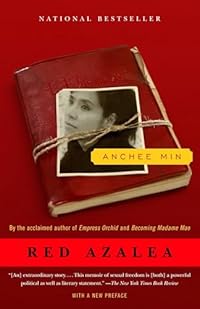
—Anchee Min, author of Red Azalea
“With passion, candor, and restraint, Feather in the Storm tells a young girl’s story of growing up in a violent, revolution-battered China. . . . This rich, unique, heartbreaking narrative is about human cruelty, foolishness and decency, and is ultimately a testimony to indomitable human tenacity and vitality.”
—Ha Jin, author of Waiting, winner of the National Book Award
“Wu rises from the ashes of death and destruction to give voice to the lost and tortured innocent souls of her haunting childhood.”
—San Francisco Chronicle
“A starkly vivid memoir. . . . Throughout this compelling work, her voice is quiet and steady, underscoring the violent capriciousness of Wu’s childhood under Mao. By the end, we’re more than readers; we’ve become her witnesses.”
—Newsweek show less
This is a fascinating but problematic book: fascinating for its narrative of personal survival through chaotic times, glimpses of childhood during the Chinese Cultural Revolution, and as a case study in adult reconstruction of traumatic childhood experience; problematic because it is presented as memoir "in the unadorned, heartrending voice of a child." All recollection is reconstructed, but by calling this a memoir, are we diverted from seeing it, perhaps properly, as historical fiction? Wu has a story to tell, but Engelmann's role is unclear and inspires wariness. The book draws equally on oral history, adult memories, and the narrative techniques of survival tales and conversion stories, veering painfully close to show more formula fiction and feeding a relentlessly negative stereotype of rural life. Capitalizing chaos throughout casts Wu's story as a cosmic struggle, and personal stories cast as cosmic struggles have enabled more than one cultural revolution by diverting attention from what Steinbeck called "bad things made by men." Such simplifications will draw readers, one hopes, to search further for a China beyond stereotypes. Steven Schroeder
Copyright © American Library Association. All rights reserved --This text refers to the Hardcover edition.
Review
“Feather in the Storm represents a magnificent accomplishment. Here is the truly timely tale of a world in revolutionary chaos as suffered and seen by an innocent and powerless child. Emily Wu's memoir is a story for all times–heart-wrenching, chilling, inspiring and above all unforgettable.”
—Anchee Min, author of Red Azalea
“With passion, candor, and restraint, Feather in the Storm tells a young girl’s story of growing up in a violent, revolution-battered China. . . . This rich, unique, heartbreaking narrative is about human cruelty, foolishness and decency, and is ultimately a testimony to indomitable human tenacity and vitality.”
—Ha Jin, author of Waiting, winner of the National Book Award
“Wu rises from the ashes of death and destruction to give voice to the lost and tortured innocent souls of her haunting childhood.”
—San Francisco Chronicle
“A starkly vivid memoir. . . . Throughout this compelling work, her voice is quiet and steady, underscoring the violent capriciousness of Wu’s childhood under Mao. By the end, we’re more than readers; we’ve become her witnesses.”
—Newsweek show less
Members
- Recently Added By
Author Information
1 Work 95 Members
Classifications
Statistics
- Members
- 92
- Popularity
- 337,662
- Reviews
- 8
- Rating
- (3.89)
- Languages
- Danish, English, Finnish, German
- Media
- Paper, Ebook
- ISBNs
- 7
- ASINs
- 2