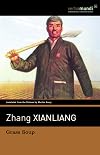
Grass Soup
by Xianliang Zhang
On This Page
Description
Zhang Xianliang, one of China's greatest living writers, spent twenty-two years in Chinese prisons and labor camps until his "rehabilitation" in 1979. Through most of those years he kept a diary of his experiences. Because any detail would have meant the diary's destruction and Zhang's execution, the entries were curt and cryptic; sometimes entire days were condensed into two or three words. This is a frightening portrait of how a major civilization can bring itself to its knees by mass show more complicity (it would have been absurdly easy to escape from the camp, yet no prisoner ever thought to do so), told with a deft matter-of-factness that only highlights the horror. At the same time, Zhang does not ignore the minor kindnesses and moments of human recognition that dotted his prison years. show lessTags
Recommendations



















Member Recommendations
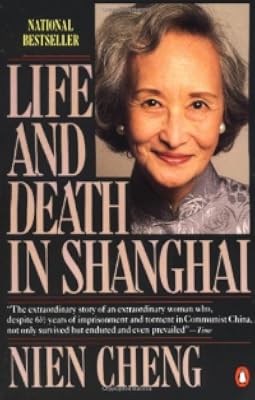
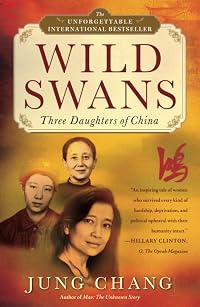
wandering_star Two descriptions of life in a labour camp, decades apart - one in 1930s Russia and one in 1950s China. Both very moving.
Member Reviews
Xianliang Zhang was 21-years-old when he was first sent to a forced labor reeducation camp during the Anti-Rightist Campaign. His poetry had been deemed counter-revolutionary and he would spend a total of 22 years in the camps and prisons over the course of his life. This book is based on scraps of a diary he kept and covers a relatively short amount of time: June 11-September 8, 1960. Each chapter begins with a few diary entries, usually only a sentence or two per entry, and then the author describes all that he could not say about what happened on those days. Because his diary was subject to confiscation and reading by the censors at any time, he had to be extremely circumspect about what he said. But now the author is able to show more reconstruct the past from the clues in what was said, and equally important what was not said, as well as reflect on the experience from a point decades in the future. The result is a fascinating diary/memoir/history of the day-to-day life of an intellectual struggling to survive famine, but also of the mental gymnastics required to "rehabilitate" oneself when accused of wrong thoughts. show less
I didn’t expect to like this book. It’s about the author’s experiences in a political prison/re-education centre in China in the late 1950’s. The grass soup of the title is all they had to live on for months on end and the re-education consisted of forced labour. You’d be looking at the summary a long time before ‘light hearted romp through the Chinese countryside’ came to mind.
But it’s not far off that. I believe Comrade Zhang has written other books about his time in the camps, and they are probably more harrowing, but here he concentrates more on the if-you-don’t-die-life-goes-on approach. While he doesn’t skip over the inevitable starvation and deaths he doesn’t dwell on them – apart from one horrific show more incident he keeps ‘til the end, to send you off not feeling too happy, and therefore guilty, at having enjoyed his story.
The whole feel is bright and breezy which is at odds with the subject matter. The translation is well done, as at no point does any of the text seem clunky or forced and you (hopefully correctly) get a good feel for the author’s style and wit. show less
But it’s not far off that. I believe Comrade Zhang has written other books about his time in the camps, and they are probably more harrowing, but here he concentrates more on the if-you-don’t-die-life-goes-on approach. While he doesn’t skip over the inevitable starvation and deaths he doesn’t dwell on them – apart from one horrific show more incident he keeps ‘til the end, to send you off not feeling too happy, and therefore guilty, at having enjoyed his story.
The whole feel is bright and breezy which is at odds with the subject matter. The translation is well done, as at no point does any of the text seem clunky or forced and you (hopefully correctly) get a good feel for the author’s style and wit. show less
Distantly, very distantly this book reminds me of A Day in the Life of Ivan Denisovich.
The paralel is, that an 'enemy of the state' is put away in a distant place, where the governement tries to change his views by making him work hard in a labor camp.
This book starts when the main character is released from the labor camp and put to work on a kind of farm.
The 'freedom' he has there allows him to visit a woman who lives in one of the houses on a nearly daily basis. They have a kind of relationship, but he hesitates. And finally the 'freedom' gets in his way and that little bit he had was taken form him. Put in a labor camp again, in prison, under guidance of the people, no right to even read Mao's works, they try to break him by making show more him work hard.
From what I understood, having read the last part of the book, they succeeded. Too bad, I'm not happy with that , but I understand. I don't think any one individual anywhere in the world is in the end strong enough to keep resisting the governement, the exhaustion, isolation, hunger and continuous exposure to propaganda.
In that light I'm happy that the book ended the way it did. Superheroes are already abundantly present in other books. In his own way, Zhang Yonglin tried his best and to me for that he's already heroic. show less
The paralel is, that an 'enemy of the state' is put away in a distant place, where the governement tries to change his views by making him work hard in a labor camp.
This book starts when the main character is released from the labor camp and put to work on a kind of farm.
The 'freedom' he has there allows him to visit a woman who lives in one of the houses on a nearly daily basis. They have a kind of relationship, but he hesitates. And finally the 'freedom' gets in his way and that little bit he had was taken form him. Put in a labor camp again, in prison, under guidance of the people, no right to even read Mao's works, they try to break him by making show more him work hard.
From what I understood, having read the last part of the book, they succeeded. Too bad, I'm not happy with that , but I understand. I don't think any one individual anywhere in the world is in the end strong enough to keep resisting the governement, the exhaustion, isolation, hunger and continuous exposure to propaganda.
In that light I'm happy that the book ended the way it did. Superheroes are already abundantly present in other books. In his own way, Zhang Yonglin tried his best and to me for that he's already heroic. show less
In 1958 at the age of 23 Xianliang was imprisoned for being a poet and an intellectual.
Two years later he was allowed to keep a small notebook and a pen, and began to keep a diary. Almost all his notes and camp records were destroyed in front of him but the authorities allowed him to keep his notebook, from that he wrote of his experiences in the camp, deciphering the cryptic notes.
It is a heart wrenching tale. He was treated harshly, like all the others in the camp, but never brutally. They were expected to do hard labour, and would graduate onto other tasks for good behaviour. The food was a thin, barely nutritious grass soup, made from thinning from beet or rice.
He suffered this for 22 years before the authorities saw fit to show more release him. He had been regularly dismissed as a capitalist for any minor infringement, and even though he suffered greatly, he never lost his humanity. It is a fascinating book, and timely too as the Chinese authorities announced this week that they would be closing these camps. Finally. show less
Two years later he was allowed to keep a small notebook and a pen, and began to keep a diary. Almost all his notes and camp records were destroyed in front of him but the authorities allowed him to keep his notebook, from that he wrote of his experiences in the camp, deciphering the cryptic notes.
It is a heart wrenching tale. He was treated harshly, like all the others in the camp, but never brutally. They were expected to do hard labour, and would graduate onto other tasks for good behaviour. The food was a thin, barely nutritious grass soup, made from thinning from beet or rice.
He suffered this for 22 years before the authorities saw fit to show more release him. He had been regularly dismissed as a capitalist for any minor infringement, and even though he suffered greatly, he never lost his humanity. It is a fascinating book, and timely too as the Chinese authorities announced this week that they would be closing these camps. Finally. show less
I read this already knowing a little about this period of Chinese history, and the paranoia bred into people thanks to the different drives for 'honesty' put in place by the Mao leadership. Zhang describes the relentless questionings of himself and his fellow prisoners well, and the mental punishments and endless self examinations endured. It's not what I would call a 'fun' read, nor is it particularly gripping in story - after all it is a diary. However, to understand what the Chinese people endured during this period is important, and is often overlooked.
Ratings
Members
- Recently Added By
Author Information

Some Editions
Series
Belongs to Publisher Series
Geuzenpocket (48)
Common Knowledge
- Canonical title
- Grass Soup
- Original title
- Fan-nao jiu shi zhi-hui
- Original publication date
- 1992; 1994 English translation
- Important events
- Anti-Rightist Movement
- First words
- I don't know why this was the day I began writing a diary.
- Quotations
- I used the pen to survive. This diary was written in the interstices, the cracks of time, when I wasn't either working in the fields or writing something else. As I wrote it, the first thing I would think of was not what had ... (show all)happened on a particular day, nor of the thoughts I might have had that were worth setting down. Instead, I would think first of the events or thoughts that I must absolutely not write down.
- Last words
- (Click to show. Warning: May contain spoilers.)I am willing to do everything for you,
Just so long as you can be happy. - Blurbers
- Calisher, Hortense
- Original language
- Chinese
Classifications
- Genre
- Biography & Memoir
- DDC/MDS
- 895.1 — Literature & rhetoric Asian Literature Literatures of East and Southeast Asia Chinese
- LCC
- PL2837 .H762 .F3613 — Language and Literature Languages and literatures of Eastern Asia, Africa, Oceania Languages of Eastern Asia, Africa, Oceania Chinese language and literature Chinese literature Individual authors and works
- BISAC
Statistics
- Members
- 111
- Popularity
- 291,881
- Reviews
- 5
- Rating
- (3.79)
- Languages
- Dutch, English, Italian
- Media
- Paper
- ISBNs
- 8
- ASINs
- 1