On This Page
Description
Both witness to and victim of Stalin's reign of terror, a courageous woman tells the story of her harrowing eighteen-year odyssey through Russia's prisons and labor camps.Tags
Recommendations
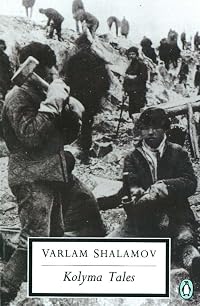

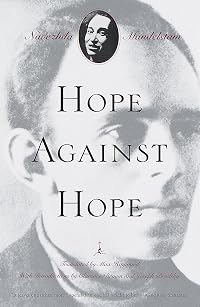

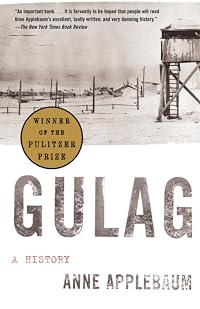































Member Recommendations

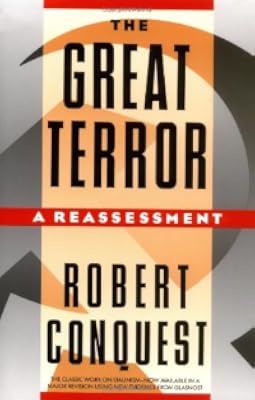
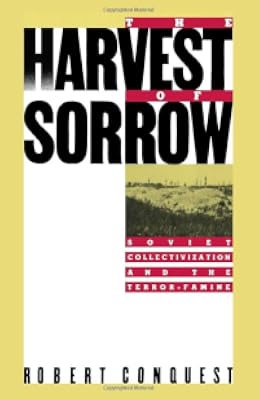
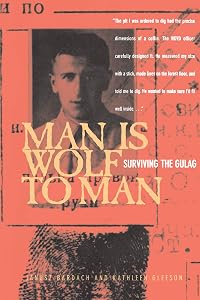
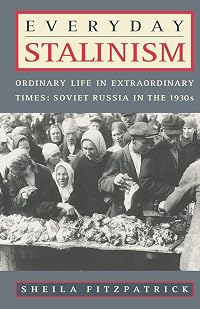
wandering_star Two descriptions of life in a labour camp, decades apart - one in 1930s Russia and one in 1950s China. Both very moving.
20

wandering_star One autobiographical and one fictional tale of what it was like to fall victim to Stalin's purges. Dunmore lists "Into The Whirlwind" as one of the books she referred to when writing "The Betrayal".
20


meggyweg Being a victim of the Chinese Cultural Revolution isn't that much different from being a victim of Stalin's purges of the 1930s.
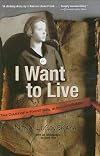
meggyweg Eugenia Ginzburg mentions Nina Lugovskaya in passing; they briefly shared a prison cell. In its two English editions, the book is titled "I Want To Live: The Diary of a Young Girl in Stalin's Russia" or "The Diary of a Soviet Schoolgirl, 1932 - 1937."
Member Reviews
Eugenia Ginzburg was an academic who was caught up in Stalin's purges. This book is her memoir of the time of her accusation, trial and first few years in prison, at first near to Moscow (and in solitary confinement) and then by prison train to a labour camp in the Russian Far East. What happens to her is horrific - even more so because as I was reading this book, I somehow simultaneously felt incomprehension and recognition. Incomprehension that people could treat other people in this way - it wasn't just a brutal system, it was made up of a long chain of personal encounters, with an accuser, an interrogator, a prison guard. And recognition because the stories were so familiar: this is the first book I have read about Stalin's purges show more but I have read a lot about the Cultural Revolution, and many elements of the story are the same; and other elements are recognisable from films, or books about other periods of history. The description of her accusation and trial really made me think that Kafka was prescient - or perhaps not, perhaps even in Henry VIII's time the same exchanges were taking place between purging apparatchiks and their randomly chosen victims.
It is remarkable that Eugenia Ginzburg stayed sane through her experiences, never mind finding enough detachment to write this book, which is never self-pitying and manages to find the irony in the most desperate situations. For example, one thread is the difficult relationships in prison between the committed Communists such as Ginzburg and her contemporaries, and the earlier rounds of political prisoners, the Mensheviks and so on. At one point, one of the women in the cell - a Social Revolutionary - runs out of cigarettes and Ginzburg offers her one. She taps out a message to the regional committee secretary, incarcerated in the next cell:
"There's a woman Communist here who has offered me cigarettes. Should I accept?" Mukhina inquired whether the Communist belonged to the opposition. Derkovskaya asked me, passed on my reply - and Mukhina tapped categorically: "No". The cigarettes lay on the table between us. During the night I heard Derkovskaya sighing deeply. Though thin as a rake, she would much sooner have done without bread.
As you can see from this story, Ginzburg is good at highlighting the details which throw light on the bigger picture. In the prison train, for instance, the women are given one small cup of dirty water per day, and friendships could be broken if someone jogged another's cup, spilling a few drops. When one woman's cup got broken because the train stopped abruptly, the guard refused to give her a new one. Another example is that the Communist women turn to the earlier generations of political prisoners to explain the system and what is coming next - but sometimes their experiences are out-of-date. The same Derkovskaya from the cigarette story tells Ginzburg that she will be allowed to see her children before she is deported - but that does not happen. Derkovskaya had spoken out of her experience of Tsarist prisons. There was no room nowadays for 'rotten liberalism' or 'pseudo-humanitarianism'. show less
It is remarkable that Eugenia Ginzburg stayed sane through her experiences, never mind finding enough detachment to write this book, which is never self-pitying and manages to find the irony in the most desperate situations. For example, one thread is the difficult relationships in prison between the committed Communists such as Ginzburg and her contemporaries, and the earlier rounds of political prisoners, the Mensheviks and so on. At one point, one of the women in the cell - a Social Revolutionary - runs out of cigarettes and Ginzburg offers her one. She taps out a message to the regional committee secretary, incarcerated in the next cell:
"There's a woman Communist here who has offered me cigarettes. Should I accept?" Mukhina inquired whether the Communist belonged to the opposition. Derkovskaya asked me, passed on my reply - and Mukhina tapped categorically: "No". The cigarettes lay on the table between us. During the night I heard Derkovskaya sighing deeply. Though thin as a rake, she would much sooner have done without bread.
As you can see from this story, Ginzburg is good at highlighting the details which throw light on the bigger picture. In the prison train, for instance, the women are given one small cup of dirty water per day, and friendships could be broken if someone jogged another's cup, spilling a few drops. When one woman's cup got broken because the train stopped abruptly, the guard refused to give her a new one. Another example is that the Communist women turn to the earlier generations of political prisoners to explain the system and what is coming next - but sometimes their experiences are out-of-date. The same Derkovskaya from the cigarette story tells Ginzburg that she will be allowed to see her children before she is deported - but that does not happen. Derkovskaya had spoken out of her experience of Tsarist prisons. There was no room nowadays for 'rotten liberalism' or 'pseudo-humanitarianism'. show less
"Крутой маршрут" - это первое документальное произведение о сталинских лагерях, написанное женщиной. Драматическое повествование о восемнадцати годах тюрем, лагерей и ссылок потрясает своей беспощадной правдивостью и вызывает глубочайшее уважение к силе человеческого духа, который не сломили страшные испытания. "Много разных чувств терзало меня за эти годы. Но основным, ведущим было чувство изумления. show more Неужели такое мыслимо? Неужели это всё всерьез? Пожалуй, именно это изумление и помогло выйти живой. Я оказалась не только жертвой, но и наблюдателем". Евгения Гинзбург show less
This is a memoir of Ginzburg's life as a loyal Communist, and then her arrest, interrogation, and transport to the Siberian gulag during Stalin's reign of terror. She tells us her story without a hint of self-pity, yet she conveys the immensity of the tragedy that has overcome her, her family and friends, and all those she comes into contact with during her journey.
I read Gulag, Anne Applebaum's excellent history of the gulag last year, which in part was structured by considering separately each aspect of the process, i.e. the arrest, the interrogations, the transports, etc. I was struck by how closely Ginzburg's experiences matched those described in general by Applebaum. Ginzburg's memoir, however, conveys these events as unique and show more personal, and so all the more tragic.
I'll be reading the sequel, which focuses on her time in the gulag rather than her journey to the gulag, as soon as I can get my hands on it. This is a book everyone should read. show less
I read Gulag, Anne Applebaum's excellent history of the gulag last year, which in part was structured by considering separately each aspect of the process, i.e. the arrest, the interrogations, the transports, etc. I was struck by how closely Ginzburg's experiences matched those described in general by Applebaum. Ginzburg's memoir, however, conveys these events as unique and show more personal, and so all the more tragic.
I'll be reading the sequel, which focuses on her time in the gulag rather than her journey to the gulag, as soon as I can get my hands on it. This is a book everyone should read. show less
Ginzburg, a teacher and loyal and active member of the Communist Party of the Soviet Union, wife of a prominent official, mother of two, was arrested in 1937 and charged with being a member of a “Trotskyist terrorist counter-revolutionary group” (which she was not) . She expected to be shot but was sentenced to 10 years in solitary confinement with loss of civil rights for 5 years and confiscation of all personal property. She was so relieved that, “Every nerve in my body was quivering with the joy of being alive.” When she left the military court that had pronounced sentence, she gave the guards such a friendly smile that, “They looked at me in astonishment.”
In the end, Ginzburg spent 18 years in the gulag system. These show more memoirs cover the first years; two years spent in solitary confinement, though with a companion thrown into her cell late in the period, followed by an agonizing train transport across Siberia to a transit camp in Vladivostok from where she was taken by ship further north to Magadan and Elgen on the Kolyma River where she dug in the permafrost and felled trees, but also worked for awhile in a kitchen and a barracks for officials.
Ginzburg describes well the madness of what she calls The Great Lunacy characterized by “the reversal of logic and common sense”. Arguing the fallacy and ludicrous nature of charges was a waste of time and could lead to greater punishment. For Ginzburg, the critical point was not to give in to the temptation to denounce others in hope of better treatment, and she had the heart-rending experience of being confronted by old friends who had done just that and denounced her with complete fabrications. The experience of arrest, denunciation, prison, gross mistreatment, camps, betrayal, torture, extremes of endurance—all of this was a crucible, a world, “in which either the spirit was broken and degraded or true courage was born.”
A few things struck me reading this memoir. For Ginzburg and many others, poetry had the power to calm the soul and to capture the moment, the feelings, the hopes and fears; to express the indescribable. Ginzburg herself had studied poetry all her life and had a phenomenal memory: she could recite lengthy poems for an hour or more; this not only consoled her in solitary confinement, but solaced many others too, especially on the very long, very slow train transport to Siberia.
It is astonishing to read about prisoners who kept their faith in the Communist Party and the communist system. Arrests, mistreatment, prison terms were attributed to corrupt agents, to careerists; these believers would staunchly defend the system, castigate and even report those who spoke negatively about it, and believed that if Stalin only knew what was being done, it wouldn’t be happening. Interesting that the same phenomenon was to be seen in Germany where many believed that if the Furhrer only knew, things would be different. I suppose for some this sort of denial is psychologically necessary, otherwise one would have to admit that one’s lifelong beliefs were lies.
Ginzburg herself, although she saw more clearly than many, was not completely immune to this. In 1980, when she was finishing her memoirs, she noted, at the end of the book, “…the great Leninist truths have again come into their own in our country and Party!” Ginzburg ends by describing her book as, “…the story of an ordinary Communist woman during the period of the ‘personality cult’” . No insights into the fact that while the Leninist system did not preordain Stalinism and the terror, it certainly provided fertile ground for its development, including the cult of personality. show less
In the end, Ginzburg spent 18 years in the gulag system. These show more memoirs cover the first years; two years spent in solitary confinement, though with a companion thrown into her cell late in the period, followed by an agonizing train transport across Siberia to a transit camp in Vladivostok from where she was taken by ship further north to Magadan and Elgen on the Kolyma River where she dug in the permafrost and felled trees, but also worked for awhile in a kitchen and a barracks for officials.
Ginzburg describes well the madness of what she calls The Great Lunacy characterized by “the reversal of logic and common sense”. Arguing the fallacy and ludicrous nature of charges was a waste of time and could lead to greater punishment. For Ginzburg, the critical point was not to give in to the temptation to denounce others in hope of better treatment, and she had the heart-rending experience of being confronted by old friends who had done just that and denounced her with complete fabrications. The experience of arrest, denunciation, prison, gross mistreatment, camps, betrayal, torture, extremes of endurance—all of this was a crucible, a world, “in which either the spirit was broken and degraded or true courage was born.”
A few things struck me reading this memoir. For Ginzburg and many others, poetry had the power to calm the soul and to capture the moment, the feelings, the hopes and fears; to express the indescribable. Ginzburg herself had studied poetry all her life and had a phenomenal memory: she could recite lengthy poems for an hour or more; this not only consoled her in solitary confinement, but solaced many others too, especially on the very long, very slow train transport to Siberia.
It is astonishing to read about prisoners who kept their faith in the Communist Party and the communist system. Arrests, mistreatment, prison terms were attributed to corrupt agents, to careerists; these believers would staunchly defend the system, castigate and even report those who spoke negatively about it, and believed that if Stalin only knew what was being done, it wouldn’t be happening. Interesting that the same phenomenon was to be seen in Germany where many believed that if the Furhrer only knew, things would be different. I suppose for some this sort of denial is psychologically necessary, otherwise one would have to admit that one’s lifelong beliefs were lies.
Ginzburg herself, although she saw more clearly than many, was not completely immune to this. In 1980, when she was finishing her memoirs, she noted, at the end of the book, “…the great Leninist truths have again come into their own in our country and Party!” Ginzburg ends by describing her book as, “…the story of an ordinary Communist woman during the period of the ‘personality cult’” . No insights into the fact that while the Leninist system did not preordain Stalinism and the terror, it certainly provided fertile ground for its development, including the cult of personality. show less
Evgenia Ginzburg’s harrowing memoir of her experience in Soviet prisons and camps during the 1930’s is a powerful and compelling read. She relates the story of her arrest, trial, life in a series of prisons culminating in two years of (supposedly) solitary confinement in Yaroslavl, then her transport to some of the most notorious camps of the Gulag – Magaden, Kolyma. The prose is clear and vivid and the book is, for such an unpleasant subject, highly readable and engrossing. Ginzburg’s quick portraits of the interrogators and jailers as well as her fellow prisoners are sharply drawn. She highlights the absurdity and brutality of the system, but there are occasional flashes of happiness and laughter as well as small and large show more generosities that often prove life-saving. Ginzburg repeatedly finds strength and comfort in literature and poetry as well. Highly recommended and a must-read for anyone interested in the topic.
Ginzburg was an academic living in the provincial town of Kazan with a highly-placed husband, two sons and a happy family. After the assassination of Kirov, another professor was accused of forming a counterrevolutionary unit and Ginzburg was swept up in the circle of arrests. She was sentenced to ten years of solitary imprisonment but ended up serving 18 in prisons and camps of the Gulag. She covers the years leading up to her arrest and the first few years in the system in Journey Into the Whirlwind, the first part of her memoir.
She often had good luck as she notes throughout the book – one would have to in order to survive – but initially, she was fortunate in several ways. Suspicion fell on her before 1937 – the notorious year of the Great Terror – so she never solely blamed Yezhov, the head of the NKVD, and was disillusioned early on with Stalin. She would see some who still believed in him while eking out a life of misery in the camps. Still, she had some hope for the system –
“Even now – we asked ourselves – after all that has happened to us, would we vote for any other than the Soviet system, which seemed as much a part of us as our hearts and as natural to us as breathing? Everything I had in the world – the thousands of books I had read, memories of my youth, the very endurance which was now keeping me from going under – all this had been give me by the Soviet system, and the revolution which had transformed my world when I was a child. How exciting life had been and how gloriously everything had begun! What in God’s name had happened to us all?”
Her case was closed before new regulations allowed for torture so she was spared that experience during her interrogation. In her first prison in Kazan, Ginzburg had a caring and kind cellmate so she would later try to act in a similar manner. The atmosphere in several holding prisons was congenial and Ginzburg describes a wide variety of imprisoned women. There are the German and Italian Communists who fled Hitler and Mussolini and make her feel ashamed of the way they were treated by the Soviets; the experienced prisoners/Bolshevik boogeymen, the Social Revolutionaries and Mensheviks, who are kind but concerned about associating with the enemy; the cheerful “babblers” – women who told a joke about Stalin, know what they did and are lucky to “only” be serving 5 years; and the Communists who still believe they were only mistakenly arrested and are disgusted by the other women. Ginzburg describes many examples of people who receive their comeuppance – people who betrayed her, her interrogators, members of the NKVD. Though she describes a couple instances where she spitefully lashes out, in the end these are just murky and unhappy examples of a system cannibalizing its people.
Ginzburg clearly analyzes the people and policies during her trip through the meatgrinder and eventually lands in a solitary cell for two years. She was lucky to get a cellmate due to overcrowding and together they learn all sorts of strategies to communicate in the prison, flout regulations and try to make each grey day bearable. Her prison experience is a marked contrast to life in the camps and several women that she meets wonder which is worse. One lengthy chapter describes the hellish transport to the northern camps. Many of the women are happy to have company after years of solitary but the horrific conditions are vividly portrayed. Ginzburg also describes the fate of the women in parenthetical asides – a mixed lot, with most dying, a couple surviving and some becoming hardened oppressors. She notes names, families and backstories of her cellmates and fellow prisoners and it is clear that part of her intent is to share their lives as well.
Ginzburg and other politicals were looked down on by the common criminals and those with lighter sentences. In the camps, they were put on some of the worst jobs – felling trees. Ginzburg and her partner struggled to fulfill their norms and she compares them unfavorably to the efficient peasant Christian women, to whom such work seemed easy. However, her academic skills did come in use. Her knowledge of several languages enabled her to comfort some who didn’t speak Russian but also allowed her to bond with other inmates, which proved important in several instances. Books and poetry give her a distraction (they were allowed to read in solitary), some choice phrases to describe her situations, and occasionally a shield against despair.
“Poetry, at least, they could not take away from me! They had taken my dress, my shoes and stockings, and my comb, they had left me half naked and freezing, but this was not in their power to take away, it was and remained mine.”
“Then there was a shrill cry of despair; it continued for a long while on the same note, and stopped abruptly…I prayed, as Pushkin once did, ‘Please God, may I not go mad! Rather grant me prison, poverty, or death.’ The first sign of approaching madness must surely be the urge to scream like that on a single continuous note. I must conquer it and preserve the balance of my mind by giving it something to do. So I began again to recite verses to myself. I composed more of my own and said them over and over so as not to forget them, and above all not to hear that awful cry.”
One great story has Ginzburg entertaining the transport train with her recitals from memory. Unfortunately, one of the guards heard her and believed they had a contraband book hidden. The guard furiously demands they hand it over and the women can’t convince him – until Ginzburg ends up reciting the whole Eugene Onegin from memory for him. “As I went on reciting, I kept my eyes fixed on the two guards. The Brigand at first wore a threatening expression: she’d get stuck in a minute, and then he’d show her! This gave place by degrees to astonishment, almost friendly curiosity, and finally ill-concealed delight.”
Well-written, powerful and very readable – next need to get the second half of her memoir. show less
Ginzburg was an academic living in the provincial town of Kazan with a highly-placed husband, two sons and a happy family. After the assassination of Kirov, another professor was accused of forming a counterrevolutionary unit and Ginzburg was swept up in the circle of arrests. She was sentenced to ten years of solitary imprisonment but ended up serving 18 in prisons and camps of the Gulag. She covers the years leading up to her arrest and the first few years in the system in Journey Into the Whirlwind, the first part of her memoir.
She often had good luck as she notes throughout the book – one would have to in order to survive – but initially, she was fortunate in several ways. Suspicion fell on her before 1937 – the notorious year of the Great Terror – so she never solely blamed Yezhov, the head of the NKVD, and was disillusioned early on with Stalin. She would see some who still believed in him while eking out a life of misery in the camps. Still, she had some hope for the system –
“Even now – we asked ourselves – after all that has happened to us, would we vote for any other than the Soviet system, which seemed as much a part of us as our hearts and as natural to us as breathing? Everything I had in the world – the thousands of books I had read, memories of my youth, the very endurance which was now keeping me from going under – all this had been give me by the Soviet system, and the revolution which had transformed my world when I was a child. How exciting life had been and how gloriously everything had begun! What in God’s name had happened to us all?”
Her case was closed before new regulations allowed for torture so she was spared that experience during her interrogation. In her first prison in Kazan, Ginzburg had a caring and kind cellmate so she would later try to act in a similar manner. The atmosphere in several holding prisons was congenial and Ginzburg describes a wide variety of imprisoned women. There are the German and Italian Communists who fled Hitler and Mussolini and make her feel ashamed of the way they were treated by the Soviets; the experienced prisoners/Bolshevik boogeymen, the Social Revolutionaries and Mensheviks, who are kind but concerned about associating with the enemy; the cheerful “babblers” – women who told a joke about Stalin, know what they did and are lucky to “only” be serving 5 years; and the Communists who still believe they were only mistakenly arrested and are disgusted by the other women. Ginzburg describes many examples of people who receive their comeuppance – people who betrayed her, her interrogators, members of the NKVD. Though she describes a couple instances where she spitefully lashes out, in the end these are just murky and unhappy examples of a system cannibalizing its people.
Ginzburg clearly analyzes the people and policies during her trip through the meatgrinder and eventually lands in a solitary cell for two years. She was lucky to get a cellmate due to overcrowding and together they learn all sorts of strategies to communicate in the prison, flout regulations and try to make each grey day bearable. Her prison experience is a marked contrast to life in the camps and several women that she meets wonder which is worse. One lengthy chapter describes the hellish transport to the northern camps. Many of the women are happy to have company after years of solitary but the horrific conditions are vividly portrayed. Ginzburg also describes the fate of the women in parenthetical asides – a mixed lot, with most dying, a couple surviving and some becoming hardened oppressors. She notes names, families and backstories of her cellmates and fellow prisoners and it is clear that part of her intent is to share their lives as well.
Ginzburg and other politicals were looked down on by the common criminals and those with lighter sentences. In the camps, they were put on some of the worst jobs – felling trees. Ginzburg and her partner struggled to fulfill their norms and she compares them unfavorably to the efficient peasant Christian women, to whom such work seemed easy. However, her academic skills did come in use. Her knowledge of several languages enabled her to comfort some who didn’t speak Russian but also allowed her to bond with other inmates, which proved important in several instances. Books and poetry give her a distraction (they were allowed to read in solitary), some choice phrases to describe her situations, and occasionally a shield against despair.
“Poetry, at least, they could not take away from me! They had taken my dress, my shoes and stockings, and my comb, they had left me half naked and freezing, but this was not in their power to take away, it was and remained mine.”
“Then there was a shrill cry of despair; it continued for a long while on the same note, and stopped abruptly…I prayed, as Pushkin once did, ‘Please God, may I not go mad! Rather grant me prison, poverty, or death.’ The first sign of approaching madness must surely be the urge to scream like that on a single continuous note. I must conquer it and preserve the balance of my mind by giving it something to do. So I began again to recite verses to myself. I composed more of my own and said them over and over so as not to forget them, and above all not to hear that awful cry.”
One great story has Ginzburg entertaining the transport train with her recitals from memory. Unfortunately, one of the guards heard her and believed they had a contraband book hidden. The guard furiously demands they hand it over and the women can’t convince him – until Ginzburg ends up reciting the whole Eugene Onegin from memory for him. “As I went on reciting, I kept my eyes fixed on the two guards. The Brigand at first wore a threatening expression: she’d get stuck in a minute, and then he’d show her! This gave place by degrees to astonishment, almost friendly curiosity, and finally ill-concealed delight.”
Well-written, powerful and very readable – next need to get the second half of her memoir. show less
In her powerful autobiography, INTO THE WHIRLWIND, Eugenia Ginzburg shares her experiences of being arrested in 1937, imprisoned, and eventually sent to do grueling manual labor in a Siberian gulag. She was “officially” convicted as a political terrorist and enemy of the people. Naturally, none of this was true - she was part of Joseph Stalin's "Great Purge" campaign. While her experiences were unbelievably harrowing and heartbreaking, it is her unrelentingly strong spirit that shines through this work.
Ginzburg was a highly educated woman, receiving university training as a teacher, and later heading up the Culture section of a regional Communist Party newspaper called Red Tartary. She was proficient in literature, poetry, and show more political theory; could understand some German, and read other languages. She was solidly in the Soviet Elite social class, as were most of her acquaintances. This made her, and her family, a prime target for Stalin’s program of intellectual and political repression.
When one of her coworkers, Nikolay Naumovich, was arrested for supposed terrorist activities, she was brought in for interrogation. The violence she experienced in her interrogation was purely verbal and emotional, as the questioners were not permitted to use physical torture until a few months after. During one of her interrogation sessions, she was pressured into writing a statement, one that the secret police could use to discover other “enemies of the state”. She knows that her fate has essentially been sealed, so she decides she has nothing to lose. She tells her questioner that, “Well, you yourself mentioned the kind of writing I do – articles, translations. But I’ve never tried my hand at detective novels, and I doubt if I could do the kind of fiction you want” (pg. 58). She decides that she should at least write something, as the time spent writing would be time without the interrogator’s abuse. So, she spends hours writing a letter to the head of the secret police, explaining the illegality of the case against her and the methods used for the investigation. The questioner verbally abused her for this act, but ultimately could not do anything to harm her. It is this undercurrent of sass and bravery, appearing throughout the work, which endears Ginzburg to the reader. She understands that she is powerless to change her overall situation, but jabs at those in power when she has the opportunity.
Because she refused to denounce her colleague, or to implicate others, she was tried (in a show-court lasting only a few minutes) and convicted of being a co-conspirator. She was sentenced to 10 years imprisonment, with a loss of civil rights for 5 years. Instead of feeling dissolute about her situation, she was almost euphoric because it meant that there was the possibility of freedom and life. However, this jubilant spirit is tested throughout the rest of the book, because the conditions she endures are horrific at best.
Ginzburg’s imprisonment is described as being “buried alive for a little over two years” (pg. 146). Ginzburg, as a political prisoner, is kept in almost complete isolation in her cell. Deprived of much light, company, and fresh air, she is afraid of losing language and her sanity, so she quietly recites poetry and other works that she can recall, and reads whatever books she is able to acquire from the prison library. This solace in literature serves her throughout the rest of her time in that prison, with its filthy conditions, meager food rations, brutal guards, and the knowledge that all this was for false charges.
The cruel treatment of the prisoners leads to near-starvation and suffering from a wide variety of malnutrition and constitution sicknesses. After being in the isolation of prison, the author and her fellow prisoners had to adapt to life in a camp where there is a hierarchy based on the crime. As political prisoners, they were treated as the lowest form of inmate, and given the hardest and least desirable tasks. Ginzburg and many of her fellow political prisoners, many of them unaccustomed to heavy manual labor, were expected to fell large trees on very meager rations and terrible living conditions. The author, herself, was close to death on many occasions, and was saved through a kind-hearted camp doctor.
Her experience of the camps, and the treatment of the prisoners, seems eerily similar to the Nazi treatment of prisoners in concentration camps. Although the USSR camps were meant for labor and not necessarily extermination, the incarcerated often died because of the harsh conditions and poor health. The most critical aspect of this novel is that most of the individuals she encounters in the prisons and camps are of similar social class to her. Therefore, the reader gets no perspective of what conditions and treatment were like for people from more impoverished conditions and rural areas. There is also no information about what life was like for non-incarcerated peoples. These criticisms are accurate, but also invalid because the book was written as her own memoirs of this time. INTO THE WHIRLWIND is important because it bears witness to the ways that the USSR treated its citizens during this time in history. In a world where political instability is a real possibility, and human rights are violated regularly, works like this remind us of how dangerous those things can be when unchecked. show less
Ginzburg was a highly educated woman, receiving university training as a teacher, and later heading up the Culture section of a regional Communist Party newspaper called Red Tartary. She was proficient in literature, poetry, and show more political theory; could understand some German, and read other languages. She was solidly in the Soviet Elite social class, as were most of her acquaintances. This made her, and her family, a prime target for Stalin’s program of intellectual and political repression.
When one of her coworkers, Nikolay Naumovich, was arrested for supposed terrorist activities, she was brought in for interrogation. The violence she experienced in her interrogation was purely verbal and emotional, as the questioners were not permitted to use physical torture until a few months after. During one of her interrogation sessions, she was pressured into writing a statement, one that the secret police could use to discover other “enemies of the state”. She knows that her fate has essentially been sealed, so she decides she has nothing to lose. She tells her questioner that, “Well, you yourself mentioned the kind of writing I do – articles, translations. But I’ve never tried my hand at detective novels, and I doubt if I could do the kind of fiction you want” (pg. 58). She decides that she should at least write something, as the time spent writing would be time without the interrogator’s abuse. So, she spends hours writing a letter to the head of the secret police, explaining the illegality of the case against her and the methods used for the investigation. The questioner verbally abused her for this act, but ultimately could not do anything to harm her. It is this undercurrent of sass and bravery, appearing throughout the work, which endears Ginzburg to the reader. She understands that she is powerless to change her overall situation, but jabs at those in power when she has the opportunity.
Because she refused to denounce her colleague, or to implicate others, she was tried (in a show-court lasting only a few minutes) and convicted of being a co-conspirator. She was sentenced to 10 years imprisonment, with a loss of civil rights for 5 years. Instead of feeling dissolute about her situation, she was almost euphoric because it meant that there was the possibility of freedom and life. However, this jubilant spirit is tested throughout the rest of the book, because the conditions she endures are horrific at best.
Ginzburg’s imprisonment is described as being “buried alive for a little over two years” (pg. 146). Ginzburg, as a political prisoner, is kept in almost complete isolation in her cell. Deprived of much light, company, and fresh air, she is afraid of losing language and her sanity, so she quietly recites poetry and other works that she can recall, and reads whatever books she is able to acquire from the prison library. This solace in literature serves her throughout the rest of her time in that prison, with its filthy conditions, meager food rations, brutal guards, and the knowledge that all this was for false charges.
The cruel treatment of the prisoners leads to near-starvation and suffering from a wide variety of malnutrition and constitution sicknesses. After being in the isolation of prison, the author and her fellow prisoners had to adapt to life in a camp where there is a hierarchy based on the crime. As political prisoners, they were treated as the lowest form of inmate, and given the hardest and least desirable tasks. Ginzburg and many of her fellow political prisoners, many of them unaccustomed to heavy manual labor, were expected to fell large trees on very meager rations and terrible living conditions. The author, herself, was close to death on many occasions, and was saved through a kind-hearted camp doctor.
Her experience of the camps, and the treatment of the prisoners, seems eerily similar to the Nazi treatment of prisoners in concentration camps. Although the USSR camps were meant for labor and not necessarily extermination, the incarcerated often died because of the harsh conditions and poor health. The most critical aspect of this novel is that most of the individuals she encounters in the prisons and camps are of similar social class to her. Therefore, the reader gets no perspective of what conditions and treatment were like for people from more impoverished conditions and rural areas. There is also no information about what life was like for non-incarcerated peoples. These criticisms are accurate, but also invalid because the book was written as her own memoirs of this time. INTO THE WHIRLWIND is important because it bears witness to the ways that the USSR treated its citizens during this time in history. In a world where political instability is a real possibility, and human rights are violated regularly, works like this remind us of how dangerous those things can be when unchecked. show less
Into the Whirlwind is really an extraordinary book, I had never heard of Eugenia Ginzburg, and frankly felt very ignorant of the terror unleashed by Stalin during the 1930s. Into the Whirlwind doesn’t always make for easy reading, but for those interested in Russian history it must surely be required reading. In the 1930’s Ginzburg was a loyal communist party member, a university teacher and journalist. A wife and mother, living a life surrounded by people who thought as she did, Eugenia (Jenny) found herself caught up in Stalin’s Great Purge of 1937, accused on trumped up charges when her colleague Elvov at the university was charged with leading a counter-revolutionary group – a group that was totally fictitious. From 1934 show more when prominent party member kirov was assassinated Jenny suddenly found herself, suspected, watched and frequently questioned.
“The year 1937 really began on the 1st December 1934.
The telephone rang at four in the morning. My husband, Paul Aksyonov, a leading member of the Regional Committee of the party, was away on business. I could hear the steady breathing of my children asleep in the nursery next door”
The tension and fear that surrounded Jenny and her husband at this time, as they struggled to continue with their normal family life was palpable. Many people advised Jenny to flee – to disappear until “they” forgot about her – or things settled down, many other people in her situation had saved themselves this way. Jenny refused to do so, her belief in the party, and her own innocence leaving her vulnerable to what followed.
“Perhaps I’ll just stop at my mother’s on the way” I said to my husband.
“No, don’t. Go at once. The sooner it’s all cleared up the better.’
He helped me as I hurried into my things. I sent Alyosha off to the skating rink. He went without saying goodbye. I never saw him again.
For some strange reason, little Vasya, who was used to my coming and going and always took it perfectly calmly, kept asking insistently:
‘Where are you going, mummy, where? I don’t want you to go!’
But I could not so much as look at the children or kiss them. If I had, I would have died then and there. I turned away and called: ‘Nanny. Do take him. I haven’t time for him now.’
Perhaps it was just as well not to see my mother either. What must be must be, and there was no point in trying to postpone it. The door banged shut. I still remember the sound. That was all… I was never again to open that door behind which I had lived with my dear children. “
In 1937 she was finally arrested – and from then on spent almost twenty years in a series of Stalin’s prisons and labour camps. The first two years she spent in solitary, although fortunately for her, a lack of space meant that she soon had a cell mate with whom she developed a strong friendship. The treatment of so called “politicals” was especially harsh, the rules of the prison incredibly strict – but after a few months Jenny and her cell mate Julia were allowed books, oh and I could so appreciate the joy when finally after weeks of nothing at all to do – they had reading again. Those books and a few minutes’ walk outside each day were their only pleasures. The women were kept strictly segregated; however they quickly developed a way of communicating with other prisoners by tapping out messages on their cell walls, in this way they kept up a little with what was going on. The food was foul and lacked any real nourishment; the women became skeletal, and were later to find themselves suffering from scurvy and night blindness through lack of vitamins. The punishment cells were a frequent threat, where they were taken for the smallest of transgressions – singing for instance.
In 1939 – Jenny was herded onto a train with the rest of the prisoners and transported at a snail’s pace, through the stifling heat of a Russian summer, to a transit camp in Vladivostok and then on to Kolyma camp – one of Stalin’s network of Gulag prisons. On the train which took a month to cross Russia, the women were crowded together with just one cup of water a day each; they developed strong bonds, but necessarily quarrelled too. Women from different political backgrounds sometimes regarding one another with a degree of suspicion forced together in an unbearable situation. At the end of this dreadful journey, Jenny’s physical condition is so poor she isn’t expected to survive, and yet she does. Once she is in the labour camp, Jenny has new rules to learn, she is instructed by others in basic survival, for now she is no longer among just political prisoners – but among all kinds of prisoners, many really criminal and violent. Jenny is destined to remain in these camps for the next eighteen years, although this book is merely the first volume in Eugenia Ginzburg’s memoirs, and take us up to about 1940.
What comes across most strongly in this book is the resilience of these women, women separated forever from their families, from their children; Jenny herself never saw her eldest son, her husband or her parents again. Just as Jenny had in 1937, many of the women imprisoned with Jenny, believe in Stalin still, maintain that “He” couldn’t possibly be aware of what was happening in his name, that at some future time, the mistake would be remedied and all would be well.
This astonishing memoir is a brilliant addition to the Persephone list, I was rather amazed in fact at how much I enjoyed it, Eugenia Ginzburg comes across as a brave, intelligent woman, whose life was destroyed by Stalin, and yet who found the strength within herself, to not only survive, but survive well, and to go on and write about her experiences. I can’t help but hope that Persephone decide to publish the second volume at some stage too. show less
“The year 1937 really began on the 1st December 1934.
The telephone rang at four in the morning. My husband, Paul Aksyonov, a leading member of the Regional Committee of the party, was away on business. I could hear the steady breathing of my children asleep in the nursery next door”
The tension and fear that surrounded Jenny and her husband at this time, as they struggled to continue with their normal family life was palpable. Many people advised Jenny to flee – to disappear until “they” forgot about her – or things settled down, many other people in her situation had saved themselves this way. Jenny refused to do so, her belief in the party, and her own innocence leaving her vulnerable to what followed.
“Perhaps I’ll just stop at my mother’s on the way” I said to my husband.
“No, don’t. Go at once. The sooner it’s all cleared up the better.’
He helped me as I hurried into my things. I sent Alyosha off to the skating rink. He went without saying goodbye. I never saw him again.
For some strange reason, little Vasya, who was used to my coming and going and always took it perfectly calmly, kept asking insistently:
‘Where are you going, mummy, where? I don’t want you to go!’
But I could not so much as look at the children or kiss them. If I had, I would have died then and there. I turned away and called: ‘Nanny. Do take him. I haven’t time for him now.’
Perhaps it was just as well not to see my mother either. What must be must be, and there was no point in trying to postpone it. The door banged shut. I still remember the sound. That was all… I was never again to open that door behind which I had lived with my dear children. “
In 1937 she was finally arrested – and from then on spent almost twenty years in a series of Stalin’s prisons and labour camps. The first two years she spent in solitary, although fortunately for her, a lack of space meant that she soon had a cell mate with whom she developed a strong friendship. The treatment of so called “politicals” was especially harsh, the rules of the prison incredibly strict – but after a few months Jenny and her cell mate Julia were allowed books, oh and I could so appreciate the joy when finally after weeks of nothing at all to do – they had reading again. Those books and a few minutes’ walk outside each day were their only pleasures. The women were kept strictly segregated; however they quickly developed a way of communicating with other prisoners by tapping out messages on their cell walls, in this way they kept up a little with what was going on. The food was foul and lacked any real nourishment; the women became skeletal, and were later to find themselves suffering from scurvy and night blindness through lack of vitamins. The punishment cells were a frequent threat, where they were taken for the smallest of transgressions – singing for instance.
In 1939 – Jenny was herded onto a train with the rest of the prisoners and transported at a snail’s pace, through the stifling heat of a Russian summer, to a transit camp in Vladivostok and then on to Kolyma camp – one of Stalin’s network of Gulag prisons. On the train which took a month to cross Russia, the women were crowded together with just one cup of water a day each; they developed strong bonds, but necessarily quarrelled too. Women from different political backgrounds sometimes regarding one another with a degree of suspicion forced together in an unbearable situation. At the end of this dreadful journey, Jenny’s physical condition is so poor she isn’t expected to survive, and yet she does. Once she is in the labour camp, Jenny has new rules to learn, she is instructed by others in basic survival, for now she is no longer among just political prisoners – but among all kinds of prisoners, many really criminal and violent. Jenny is destined to remain in these camps for the next eighteen years, although this book is merely the first volume in Eugenia Ginzburg’s memoirs, and take us up to about 1940.
What comes across most strongly in this book is the resilience of these women, women separated forever from their families, from their children; Jenny herself never saw her eldest son, her husband or her parents again. Just as Jenny had in 1937, many of the women imprisoned with Jenny, believe in Stalin still, maintain that “He” couldn’t possibly be aware of what was happening in his name, that at some future time, the mistake would be remedied and all would be well.
This astonishing memoir is a brilliant addition to the Persephone list, I was rather amazed in fact at how much I enjoyed it, Eugenia Ginzburg comes across as a brave, intelligent woman, whose life was destroyed by Stalin, and yet who found the strength within herself, to not only survive, but survive well, and to go on and write about her experiences. I can’t help but hope that Persephone decide to publish the second volume at some stage too. show less
Members
- Recently Added By
Lists

David Bowie's Top 100
97 works; 23 members

Recommend the 20 best books you've read in the last five years
2,168 works; 606 members

David Bowie's List of Top 100 Books
94 works; 6 members

500 Great Books by Women
507 works; 60 members
David Bowie’s Top 100 Favourite Reads
100 works; 3 members
Author Information

7+ Works 1,079 Members
Some Editions
Awards and Honors
Distinctions
Series

Belongs to Publisher Series
Harvill (22)
Persephone (106)
Work Relationships
Has as a student's study guide
Common Knowledge
- Canonical title
- Into the Whirlwind
- Original title
- Крутой маршрут
- Alternate titles
- Journey Into the Whirlwind
- Original publication date
- 1967
- First words
- The year 1937 began, to all intents and purposes, at the end of 1934--to be exact, on the first of December.
- Last words
- (Click to show. Warning: May contain spoilers.)Here, then, is the story of an ordinary Communist woman during the period of the "personality cult."
- Original language
- Russian
- Disambiguation notice
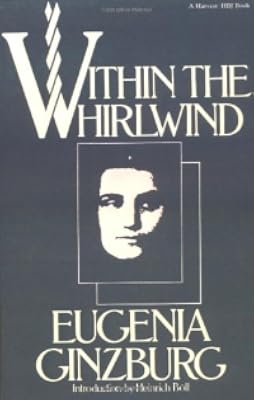
- "Journey/Into the Whirlwind" is a different work from "Within the Whirlwind" - they are the first and second parts of a memoir, respectively. Do not combine.
Classifications
- Genres
- Nonfiction, Biography & Memoir, History, General Nonfiction
- DDC/MDS
- 365.45092 — Society, government, & culture Social problems and social services Punishment Institutions for specific classes of inmates Institutions for political prisoners and related groups of people
- LCC
- DK268.3 .G513 — History of Europe, Asia, Africa and Oceania Russia. Soviet Union. Former Soviet Republics – Poland History of Russia. Soviet Union. Former Soviet Republics History Soviet regime, 1918-1991
- BISAC
Statistics
- Members
- 918
- Popularity
- 29,126
- Reviews
- 16
- Rating
- (4.14)
- Languages
- 7 — English, French, German, Italian, Polish, Russian, Spanish
- Media
- Paper, Ebook
- ISBNs
- 30
- ASINs
- 19