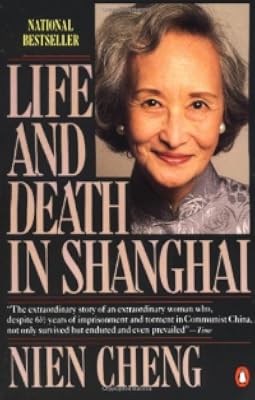
Life and Death in Shanghai
by Nien Cheng
On This Page
Description
Life and Death in Shanghai, Nien Cheng's searing memoir of the Chinese Cultural Revolution, was an instant international best-seller on its original hardcover publication by Grove Press. This phenomenal, unforgettable book captured the attention of the world just as Communism was starting to collapse. The main summer selection of the Book of the Month Club, it was excerpted at considerable length (13,000 words) in Time, and Cheng was invited to a state dinner at the White House, where she show more was seated next to President Ronald Reagan. More than twenty years after it was originally published, Cheng's memoir is considered a twentieth century classic, one of the most remarkable, enduring works on totalitarianism and personal endurance. In August 1966, a group of Red Guards ransacked Nien Cheng's home, threatened her and destroyed priceless, irreplaceable ancient Chinese relics. Cheng's background made her an obvious target for the fanatics of the Cultural Revolution: educated at the London School of Economics, the widow of an official of Chiang Kai-shek's regime, and an employee of Shell Oil, Cheng enjoyed comforts that few Chinese could afford. When she refused to confess to the false accusations that she was a spy, Cheng was placed in solitary confinement. Cheng suffered year upon year of bruatality and deprivation, but she refused to give in to her torturers and interrogators. After more than six years, when they told her would be released because of her attitude of repentance," even then she remained defiant, vowing to remain in detention until the Communist officials declared her innocent and published an apology. Life and Death in Shanghai is Cheng's powerful story of her imprisonment, of the hardship and cruelty she endured, of her heroic resistance, and of her insistent quest for justice when she was released. It is the story, too, of a country torn apart by Mao Zedong's savage fight for power. A penetrating personal account of a terrifying chapter in twentieth-century history, Life and Death in Shanghai is also an astounding portrait of one woman's courage. show lessTags
Recommendations













Member Recommendations

Member Reviews
Először nézzük magát az elbeszélőt. Nien Cheng kvázi kapitalista buborékban élt a kommunista Kínában jó ideig: a Shell multicég alkalmazásában tengette napjait Sanghajban, három cseléddel és olyan lakhatási körülményekkel, amelyek drasztikusan különböztek a mezei kínaiak lehetőségeitől. Na ja, akkoriban még Maónak szüksége volt - legalábbis mutiba' - pár külföldi cégre, mert önerőből nem tudott beszerezni olyan nélkülözhetetlen termékeket, mint például a rovarirtó szerek. Aztán persze ez a hatvanas évek derekára megváltozott – nem mintha ekkorra képes lett volna minőségi vegyipari termékeket előállítani, egyszerűen nem érdekelte, hogy van-e használható rovarirtó, avagy show more sem. Úgyhogy elzavarta a Shell-t, szegény Nien Cheng úrhölgy pedig ott találta magát a maga burzsoá allűrjeivel a proletárparadicsomban. Puff neki. Viszont ellentétben legtöbb sorstársával, ő nem hagyta el magát, hanem minden lelkierejével és ravaszságával szembeszállt a rezsimmel. Pedig a rezsim aztán ebben az időszakban elég komoly erőfeszítéseket tett, hogy megkeserítse az életét.
Merthogy ez volt az ún. „kulturális forradalom” évtizede. Történt ugyanis, hogy a bölcs Mao, akinek kis piros könyvecskéje a cuki idézetekkel szériatartozéka volt minden kínai állampolgárnak, a "nagy ugrás"* kudarca után kénytelen volt visszavenni az arcából. (Még önkritikát is kellett gyakorolnia saját pártvezetői előtt, bizony!) Ekkoriban vette át a gyeplőt a miniszterelnök, Csou En-laj, aki néhány reformmal stabilizálta azt, amit a főnök elpacsált. Csak hát Mao nem az a karakter volt, aki huzamosabb ideig képes meghúzni magát, és elsősorban feleségére, Csiang Csingre támaszkodva átnyúlt a kommunista párt struktúrája fölött, és közvetlenül elkezdett a néphez szólni, arra buzdítva őket, hogy lázadjanak, forradalmárkodjanak kedvükre, mert a pártba beférkőztek a „kapitalista úton járók”, és csak az istenadta nép tudja őket megfékezni. Ez lett a nevezetes „kulturális forradalom”, amelynek során a csőcselék szanaszét díbolta az országot, miközben a fegyveres testületek óvatosan, távolról figyelték az attrakciót. A helyzetet úgy képzeljük el, hogy amennyiben felhúztál egy vörös karszalagot, akkor nyugodtan berúghattad a szomszéd ház ajtaját, megverhetted és kirabolhattad a tulajt, ő egy szót se szólhatott, mert még imperialista ügynöknek bélyegzik. Aztán ha már kirámoltad haverjaiddal az összes házat a városban, hát felpattantál egy vonatra, és elkezdted ugyanezt egy másik városban művelni – jegyet sem kellett váltanod, hisz a kalauzok hülyék lettek volna kekeckedni veled. Nos, beláthatjuk, ez a szituáció a teljes káosz állapotába zúdította vissza az országot: fegyveres bandák száguldoztak mindenfelé, a termelés, az oktatás, az egészségügy és a tömegközlekedés gyakorlatilag megszűnt, az értelmiségieket és egyéb gyanús egzisztenciákat megölték vagy vidékre száműzték, és az lett az élet császára, aki a leggátlástalanabbul vetette bele magát a forgatagba, és a legszemérmetlenebbül tudott bármilyen bűncselekményt egy Mao-idézettel legitimálni.
Ennek a katyvasznak esett áldozatul Nien Cheng is, akinek először szétkapták az otthonát, aztán jól börtönbe is csukták, merthogy imperialista kém. (Ami ebben a kontextusban azt jelenti, hogy látott már elő fehér embert, és ráadásul szebb ruhája van, mint nekünk.) Folyamatosan vegzálták, tegyen vallomást, de Nien Cheng tökösebb ennél – szent meggyőződése volt, hogy ha egyszer vallomást tesz, akkor utána már nincs visszaút, elveszíti esélyét a rehabilitációra. Ártatlannak vallotta hát magát, kerül, amibe kerül. A börtönidőszak leírásának legerősebb jelenetei ezek: a kihallgatók gyakran szürreális igyekezete, hogy kimondassák vele: „Bűnös vagyok!”, bevetve mindent, marxista érveket, nyilvános megszégyenítést, kínzást, ám a hölgyben emberükre találnak. Nien Cheng minden neki szegezett Mao-idézetre Mao-idézettel felel, okosan, taktikusan, kitartóan áll ellent az offenzívának, sőt, gyakran erőt merít a kihallgatásokból, melyek felpezsdítik a magánzárkában eltöltött unalmas órák után. Közben pedig bízik benne, hogy a külvilág pártharcai egyszer végre a javára dőlnek el, és árgus szemmel figyeli a börtönbe beszűrődő politikai híreket, amelyekből a sorok között olvasva néha kihüvelyezhetőek a változások.
A türelem pedig ebben az esetben is rózsát terem, a forradalmi éveket ugyanis valóban felváltja a konszolidáció vágya. Csiang Csing és a „négyek bandája” lassan visszaszorul, és újra előtérbe kerül Csou En-laj a maga reformer-mentalitásával. Nien Cheng hat és fél év után újra beleszippanthat a friss levegőbe – ami persze nem annyira friss, mint amilyen az Alpok ormain lenne, de azért a cellához képest mégiscsak felüdülés. Ezzel pedig kezdetét veszi a kötet második etapja, amelyben a főhős immár szabad emberként feszül szembe a diktatúrával, küzd egyfelől a rehabilitációért, no meg azért, hogy megtalálja azokat, akik felelősek lánya haláláért. Míg a börtönfejezetek egy zárt térben játszódtak, a magányos egyén lelkierejére helyezve a hangsúlyt, addig itt értelemszerűen szélesebb freskót kapunk a korabeli Kínáról, és ez – ha lehet – még tanulságosabb. Ez a Kína ugyanis a folyamatos politikai belháború színtere: hol Csou En-laj gárdája kerül nyerő helyzetbe, és akkor kicsit könnyebb az élet, hol pedig a „négyek bandája” nyer teret, és akkor félni kell**. Ez az ingamozgás, ez a kiszámíthatatlanság természetesen nem tesz jót a kínai gazdaságnak sem, következésképpen a polcok jobbára üresek, a szolgáltatások pedig csapnivalóak. De semmi gond, mert itt van a „kiskapuk” rendszere, ami a kádárista Magyarországról is ismerős lehet. Ami azt jelenti, hogy ha fáj a fogad, akkor nem csak úgy besétálsz a fogorvoshoz, mert akkor sose kerülsz sorra, hanem keresel valakit, akinek ismerőse a fogorvos, teszel neki valami szívességet, és akkor ő cserébe soron kívül bevisz téged hozzá. Ha meg vízvezeték-szerelőre van szükséged, akkor keresel egyet, adsz neki pár karton külföldi cigit, és ő munkaidőn kívül rendesen megcsinálja a melót. Mert munkaidőn belül csak nem rendesen szokta. És ennek a sajátos működésnek a leírásában Nien Chang egyszerűen verhetetlen.
A memoárirodalom egyik jelentős produktuma ez a könyv. Főleg azért, mert írója nem pusztán passzív elszenvedője a diktatúrának, hanem cselekvő személy, aki nem csak arra képes, hogy szépen haljon meg, hanem még (korlátozott) sikereket is elér. Ez, akárhonnan is nézzük, nagyon felemelő. Másfelől pedig Nien Cheng nem elégszik meg annyival, hogy vádiratot szerkeszt Mao ellen, hanem igyekszik megértetni velünk a hatalmas Kína bonyolult belső folyamatait is, és az állampolgárok túlélési stratégiáit, akik a „hajlik a széllel, hogy túlélje a vihart” közmondás szellemében zokszó nélkül csinálták mindig azt, amit mondtak nekik. Nien Cheng nem is kárhoztatja őket ezért – de hogy ő jobb és erősebb ember volt legtöbbüknél, az számomra vitán felül áll.
* https://hu.wikipedia.org/wiki/Nagy_ugrás
** A kötélhúzás közöttük egészen addig zajlik, amíg Mao végre kegyeskedik feldobni a tappancsot. Ekkor lesz elég ereje Teng Hsziao-pingnek (Csou En-laj utódjának – a miniszterelnök ugyanis rákban korábban elhunyt), hogy leszámoljon Mao özvegyével. show less
Merthogy ez volt az ún. „kulturális forradalom” évtizede. Történt ugyanis, hogy a bölcs Mao, akinek kis piros könyvecskéje a cuki idézetekkel szériatartozéka volt minden kínai állampolgárnak, a "nagy ugrás"* kudarca után kénytelen volt visszavenni az arcából. (Még önkritikát is kellett gyakorolnia saját pártvezetői előtt, bizony!) Ekkoriban vette át a gyeplőt a miniszterelnök, Csou En-laj, aki néhány reformmal stabilizálta azt, amit a főnök elpacsált. Csak hát Mao nem az a karakter volt, aki huzamosabb ideig képes meghúzni magát, és elsősorban feleségére, Csiang Csingre támaszkodva átnyúlt a kommunista párt struktúrája fölött, és közvetlenül elkezdett a néphez szólni, arra buzdítva őket, hogy lázadjanak, forradalmárkodjanak kedvükre, mert a pártba beférkőztek a „kapitalista úton járók”, és csak az istenadta nép tudja őket megfékezni. Ez lett a nevezetes „kulturális forradalom”, amelynek során a csőcselék szanaszét díbolta az országot, miközben a fegyveres testületek óvatosan, távolról figyelték az attrakciót. A helyzetet úgy képzeljük el, hogy amennyiben felhúztál egy vörös karszalagot, akkor nyugodtan berúghattad a szomszéd ház ajtaját, megverhetted és kirabolhattad a tulajt, ő egy szót se szólhatott, mert még imperialista ügynöknek bélyegzik. Aztán ha már kirámoltad haverjaiddal az összes házat a városban, hát felpattantál egy vonatra, és elkezdted ugyanezt egy másik városban művelni – jegyet sem kellett váltanod, hisz a kalauzok hülyék lettek volna kekeckedni veled. Nos, beláthatjuk, ez a szituáció a teljes káosz állapotába zúdította vissza az országot: fegyveres bandák száguldoztak mindenfelé, a termelés, az oktatás, az egészségügy és a tömegközlekedés gyakorlatilag megszűnt, az értelmiségieket és egyéb gyanús egzisztenciákat megölték vagy vidékre száműzték, és az lett az élet császára, aki a leggátlástalanabbul vetette bele magát a forgatagba, és a legszemérmetlenebbül tudott bármilyen bűncselekményt egy Mao-idézettel legitimálni.
Ennek a katyvasznak esett áldozatul Nien Cheng is, akinek először szétkapták az otthonát, aztán jól börtönbe is csukták, merthogy imperialista kém. (Ami ebben a kontextusban azt jelenti, hogy látott már elő fehér embert, és ráadásul szebb ruhája van, mint nekünk.) Folyamatosan vegzálták, tegyen vallomást, de Nien Cheng tökösebb ennél – szent meggyőződése volt, hogy ha egyszer vallomást tesz, akkor utána már nincs visszaút, elveszíti esélyét a rehabilitációra. Ártatlannak vallotta hát magát, kerül, amibe kerül. A börtönidőszak leírásának legerősebb jelenetei ezek: a kihallgatók gyakran szürreális igyekezete, hogy kimondassák vele: „Bűnös vagyok!”, bevetve mindent, marxista érveket, nyilvános megszégyenítést, kínzást, ám a hölgyben emberükre találnak. Nien Cheng minden neki szegezett Mao-idézetre Mao-idézettel felel, okosan, taktikusan, kitartóan áll ellent az offenzívának, sőt, gyakran erőt merít a kihallgatásokból, melyek felpezsdítik a magánzárkában eltöltött unalmas órák után. Közben pedig bízik benne, hogy a külvilág pártharcai egyszer végre a javára dőlnek el, és árgus szemmel figyeli a börtönbe beszűrődő politikai híreket, amelyekből a sorok között olvasva néha kihüvelyezhetőek a változások.
A türelem pedig ebben az esetben is rózsát terem, a forradalmi éveket ugyanis valóban felváltja a konszolidáció vágya. Csiang Csing és a „négyek bandája” lassan visszaszorul, és újra előtérbe kerül Csou En-laj a maga reformer-mentalitásával. Nien Cheng hat és fél év után újra beleszippanthat a friss levegőbe – ami persze nem annyira friss, mint amilyen az Alpok ormain lenne, de azért a cellához képest mégiscsak felüdülés. Ezzel pedig kezdetét veszi a kötet második etapja, amelyben a főhős immár szabad emberként feszül szembe a diktatúrával, küzd egyfelől a rehabilitációért, no meg azért, hogy megtalálja azokat, akik felelősek lánya haláláért. Míg a börtönfejezetek egy zárt térben játszódtak, a magányos egyén lelkierejére helyezve a hangsúlyt, addig itt értelemszerűen szélesebb freskót kapunk a korabeli Kínáról, és ez – ha lehet – még tanulságosabb. Ez a Kína ugyanis a folyamatos politikai belháború színtere: hol Csou En-laj gárdája kerül nyerő helyzetbe, és akkor kicsit könnyebb az élet, hol pedig a „négyek bandája” nyer teret, és akkor félni kell**. Ez az ingamozgás, ez a kiszámíthatatlanság természetesen nem tesz jót a kínai gazdaságnak sem, következésképpen a polcok jobbára üresek, a szolgáltatások pedig csapnivalóak. De semmi gond, mert itt van a „kiskapuk” rendszere, ami a kádárista Magyarországról is ismerős lehet. Ami azt jelenti, hogy ha fáj a fogad, akkor nem csak úgy besétálsz a fogorvoshoz, mert akkor sose kerülsz sorra, hanem keresel valakit, akinek ismerőse a fogorvos, teszel neki valami szívességet, és akkor ő cserébe soron kívül bevisz téged hozzá. Ha meg vízvezeték-szerelőre van szükséged, akkor keresel egyet, adsz neki pár karton külföldi cigit, és ő munkaidőn kívül rendesen megcsinálja a melót. Mert munkaidőn belül csak nem rendesen szokta. És ennek a sajátos működésnek a leírásában Nien Chang egyszerűen verhetetlen.
A memoárirodalom egyik jelentős produktuma ez a könyv. Főleg azért, mert írója nem pusztán passzív elszenvedője a diktatúrának, hanem cselekvő személy, aki nem csak arra képes, hogy szépen haljon meg, hanem még (korlátozott) sikereket is elér. Ez, akárhonnan is nézzük, nagyon felemelő. Másfelől pedig Nien Cheng nem elégszik meg annyival, hogy vádiratot szerkeszt Mao ellen, hanem igyekszik megértetni velünk a hatalmas Kína bonyolult belső folyamatait is, és az állampolgárok túlélési stratégiáit, akik a „hajlik a széllel, hogy túlélje a vihart” közmondás szellemében zokszó nélkül csinálták mindig azt, amit mondtak nekik. Nien Cheng nem is kárhoztatja őket ezért – de hogy ő jobb és erősebb ember volt legtöbbüknél, az számomra vitán felül áll.
* https://hu.wikipedia.org/wiki/Nagy_ugrás
** A kötélhúzás közöttük egészen addig zajlik, amíg Mao végre kegyeskedik feldobni a tappancsot. Ekkor lesz elég ereje Teng Hsziao-pingnek (Csou En-laj utódjának – a miniszterelnök ugyanis rákban korábban elhunyt), hogy leszámoljon Mao özvegyével. show less
Wow, man. Just, wow. What the fuck.
People were being treated like this 5o years ago. Just fifty years. Granted, the Holocaust was only 25 years before this, but still, it never ceases to amaze me how cruel people can be, and the sheer destructiveness that Communism or its offshoots has wrought upon the world - China, Russia/the USSR, Cambodia, etc.
I have to wonder how Karl Marx would have felt if he had seen the misery that countless people suffered through because of zealots in power who saw Communism as black and white.
Nien Cheng's story really illustrates how fucked up the Cultural Revolution was - not just on a personal level as her home and possessions were ransacked/stolen - but on a national level, as old ways of living were show more discarded. In some ways this was good - Communism in China made it so that women were equal to men - but a lot of ugliness and prejudice remained, and were exacerbated by Communist principles. People of all levels of society suffered, and for the most asinine and stupid things.
This poor woman spent over six years in prison because she refused to offer a false confession. Given what she went through, I can understand how some people would break under that sort of treatment and make a false confession just to make the pain stop, and Nien went through a LOT - including almost losing her hands. I can not help but feel angry on her behalf because when she finally finds out why she was targeted, it's so fucking bogus that it only holds water in a dystopia - which is pretty much what Communist China was back then - and still is in many ways today.
This was a very educational and sobering read, and really gives the reader a searing glance into the consequences of Chairman Mao's delusions as well as the fanaticism that gets people swept up in madness and violence. show less
People were being treated like this 5o years ago. Just fifty years. Granted, the Holocaust was only 25 years before this, but still, it never ceases to amaze me how cruel people can be, and the sheer destructiveness that Communism or its offshoots has wrought upon the world - China, Russia/the USSR, Cambodia, etc.
I have to wonder how Karl Marx would have felt if he had seen the misery that countless people suffered through because of zealots in power who saw Communism as black and white.
Nien Cheng's story really illustrates how fucked up the Cultural Revolution was - not just on a personal level as her home and possessions were ransacked/stolen - but on a national level, as old ways of living were show more discarded. In some ways this was good - Communism in China made it so that women were equal to men - but a lot of ugliness and prejudice remained, and were exacerbated by Communist principles. People of all levels of society suffered, and for the most asinine and stupid things.
This poor woman spent over six years in prison because she refused to offer a false confession. Given what she went through, I can understand how some people would break under that sort of treatment and make a false confession just to make the pain stop, and Nien went through a LOT - including almost losing her hands. I can not help but feel angry on her behalf because when she finally finds out why she was targeted, it's so fucking bogus that it only holds water in a dystopia - which is pretty much what Communist China was back then - and still is in many ways today.
This was a very educational and sobering read, and really gives the reader a searing glance into the consequences of Chairman Mao's delusions as well as the fanaticism that gets people swept up in madness and violence. show less
In 1966, Red Guards, a paramilitary social group mobilized by Mao Zedong, appeared at Nien Cheng’s door and ransacked her house. A widow, her deceased husband had once served in the Nationalist government, and both of them worked for Shell Oil in China following the Communist takeover. Accused of being a spy for Britain, Cheng was arrested. This took place at the start of Cultural Revolution, a movement seeking to purge remnants of capitalist and western elements from Chinese society. Cheng was to spend the next six and a half years in solitary confinement where she suffered abuse, torture, and serious illness because of her poor diet and unsanitary living conditions.
This autobiographical memoir recounts what she underwent while in show more prison. It also provides an overview of the political struggle taking place for the control of the Communist Party as Mao’s health began to fail late in his life. Throughout her imprisonment, Cheng continued to insist on her innocence, refusing to sign a confession. She later learned that, shortly after being arrested, her only daughter had died. While ruled a suicide, she was most likely killed by government officials. Even when finally released (for health reasons) in 1973, Cheng was not returned to her former home, but placed in cramped living conditions with another family. Even there, she was kept under close observation by authorities. It was only when the Cultural Revolution ended in 1976 that she was able get permission to visit her sister in the United States. She then chose to remain in this country.
There are many published accounts from survivors of the Cultural Revolution, and Life and Death in Shanghai for good reason ranks among the best. Nien Cheng’s account, while harrowing, is gripping and a page turner. Her determination to survive and her refusal to confess to the false charges attest to the power and resilience of the human spirit in the darkest of times. For anyone wanting a personal account of life in China during the Cultural Revolution, this book makes for a fascinating introduction. show less
This autobiographical memoir recounts what she underwent while in show more prison. It also provides an overview of the political struggle taking place for the control of the Communist Party as Mao’s health began to fail late in his life. Throughout her imprisonment, Cheng continued to insist on her innocence, refusing to sign a confession. She later learned that, shortly after being arrested, her only daughter had died. While ruled a suicide, she was most likely killed by government officials. Even when finally released (for health reasons) in 1973, Cheng was not returned to her former home, but placed in cramped living conditions with another family. Even there, she was kept under close observation by authorities. It was only when the Cultural Revolution ended in 1976 that she was able get permission to visit her sister in the United States. She then chose to remain in this country.
There are many published accounts from survivors of the Cultural Revolution, and Life and Death in Shanghai for good reason ranks among the best. Nien Cheng’s account, while harrowing, is gripping and a page turner. Her determination to survive and her refusal to confess to the false charges attest to the power and resilience of the human spirit in the darkest of times. For anyone wanting a personal account of life in China during the Cultural Revolution, this book makes for a fascinating introduction. show less
Life and Death in Shanghai is a very interesting memoir, capturing a critical time in China's history. Cheng's intimate participation in the Cultural Revolution comes with its own limitations, of course, but also gives a unique perspective.
It's 1966, and the Cultural Revolution is intensifying across China. The wealthy widow of a Kuomintang official, former worker for Shell Oil in Shanghai and frequent overseas traveler, Nien Cheng stands out for all the wrong reasons, and it isn't long until the Red Guards are knocking at her door.
What follows is an incredible story of deprivation and injustice - all the more incredible for being so common at the time. Cheng shares with us her incarceration, and much else, over the many years of show more Cultural Revolution.
As a Westerner looking back some forty-odd years into the past, I can't help but marvel at the collective insanity of the Revolution. Cheng captures its meaningless banality, empty slogans and hopeless denunciations, but also how the Revolution, and communism in general warped the mindset of Chinese at the time.
Her retrospective analysis, and the crude Sinology she is forced to engage in - a stumbling attempt to ascertain what is going on in the CCP at the time - mirrors what so many were doing.
There's nothing especially clever about Life and Death in Shanghai - it's not that kind of book. Rather it is a no-holds-barred testament. A powerful, strident voice shouting out the truth.
And yet, Cheng's decades of having to guard her thoughts is not so easily shaken it seems. Fiercely anti-Communist, there is nonetheless a feeling of careful construction to the memoir. She recalls so much, so perfectly, and her thoughts are always so... right. As a character she is faultless.
But I was left with a feeling that part of Cheng's survival came at the expensive of a certain type of self-reflection or even self-knowledge. This manifests most obviously in her (seeming) complete unawareness of either her incipient danger, or - for a woman with tens of thousands of dollars in domestic and overseas bank accounts; three servants; a house to herself filled with precious art and ceramic - curious inability to see herself as the Party (rightly, in this one case) saw her: a bourgeois member of the elite.
In some ways, this second layer - not Cheng as rebel, but Cheng as Chinese, and Cheng as representative of former elite - deepens the book considerably, adding a far more allusive and ambiguous set of questions the reader can ask. The answers, of course, are not supplied - at least not on the surface - but I wouldn't be surprised if the book ignites a hunger for more 20th Century Chinese history in anyone who reads it. Just this one voice is so compelling, and there are millions more. show less
It's 1966, and the Cultural Revolution is intensifying across China. The wealthy widow of a Kuomintang official, former worker for Shell Oil in Shanghai and frequent overseas traveler, Nien Cheng stands out for all the wrong reasons, and it isn't long until the Red Guards are knocking at her door.
What follows is an incredible story of deprivation and injustice - all the more incredible for being so common at the time. Cheng shares with us her incarceration, and much else, over the many years of show more Cultural Revolution.
As a Westerner looking back some forty-odd years into the past, I can't help but marvel at the collective insanity of the Revolution. Cheng captures its meaningless banality, empty slogans and hopeless denunciations, but also how the Revolution, and communism in general warped the mindset of Chinese at the time.
Her retrospective analysis, and the crude Sinology she is forced to engage in - a stumbling attempt to ascertain what is going on in the CCP at the time - mirrors what so many were doing.
There's nothing especially clever about Life and Death in Shanghai - it's not that kind of book. Rather it is a no-holds-barred testament. A powerful, strident voice shouting out the truth.
And yet, Cheng's decades of having to guard her thoughts is not so easily shaken it seems. Fiercely anti-Communist, there is nonetheless a feeling of careful construction to the memoir. She recalls so much, so perfectly, and her thoughts are always so... right. As a character she is faultless.
But I was left with a feeling that part of Cheng's survival came at the expensive of a certain type of self-reflection or even self-knowledge. This manifests most obviously in her (seeming) complete unawareness of either her incipient danger, or - for a woman with tens of thousands of dollars in domestic and overseas bank accounts; three servants; a house to herself filled with precious art and ceramic - curious inability to see herself as the Party (rightly, in this one case) saw her: a bourgeois member of the elite.
In some ways, this second layer - not Cheng as rebel, but Cheng as Chinese, and Cheng as representative of former elite - deepens the book considerably, adding a far more allusive and ambiguous set of questions the reader can ask. The answers, of course, are not supplied - at least not on the surface - but I wouldn't be surprised if the book ignites a hunger for more 20th Century Chinese history in anyone who reads it. Just this one voice is so compelling, and there are millions more. show less
This would have to be the most profound book I have read on what it was like to live in Communist China during the Mao Tze-tung years. This remarkable woman gives an account of her life and experiences, including 6 and a half years spent in a detention centre, where she was subjected to repeated interrogations but her resilience and intelligence refused to be broken. Upon her release she discovers her only daughter has died at the hands of her over-zealous captors. Throughout, the reader never doubts her love and devotion for her beloved China.
I thought the late 60s in the US were a time of radical change, but they're nothing compared to how Mao's Red Guards turned China upside down. I live in Shanghai where this memoir took place. Surprisinly, there's very little local history preserved. No walking tours, nothing much in the Shanghai Museum. While reading I wanted to run out and find her former house and the prison where she spent six years. No luck yet finding them. The author does a great job of blending her personal narrative with enough background history lessons that when you're done reading her story you come away with a much deeper understanding of why and how thousands of Chinese were persected. But for me, I have more questions about Communism than ever before. What show more Mao preached as class struggle and a new revolution was just the usual dictatorship diatribe. Maybe after reading up on it and comparing the Chinese revolution with the Cuban revolution I'll understand Communism better.Read this book. show less
An amazing story of the power of the human spirit to survive adversity. While the story of a woman in solitary confinement during the height of China's cultural revolution may seem to be a story that would depressing and difficult to read, this woman's story is infused a tremendous amount of humanity and courage and steadfast belief in right and the ultimate triumph of right -- so much so that the book is continually uplifting and inspiring. Here is a woman to be considered a true hero.
Members
- Recently Added By
Lists

Best Biographies, Autobiographies and Memoirs
465 works; 160 members

Best Autobiographies and Memoirs
370 works; 67 members

Blue Pyramid 1,276 Best Books of All Time
1,248 works; 32 members

Writers at Risk
106 works; 17 members

All Things China
205 works; 3 members

The China Project Book List
100 works; 2 members

In Our Time books
4,934 works; 2 members
Author Information

1+ Work 1,614 Members
Awards and Honors
Distinctions
Notable Lists
Common Knowledge
- Canonical title
- Life and Death in Shanghai
- Original title
- Élet és halál Sanghajban
- Original publication date
- 1986
- People/Characters
- Nien Cheng
- Important places
- Shanghai, China
- Important events
- Cultural Revolution
- Dedication
- To Meiping
- First words
- The past is forever with me and I remember it all.
- Last words
- (Click to show. Warning: May contain spoilers.)Those wishing for stability and moderation in China may have their voices heard.
- Blurbers
- Miller, Arthur; Shapiro, Judith; Schell, Orville; Witke, Roxane; Fast, Howard; Salisbury, Charlotte
- Original language
- Engllish
Classifications
- Genres
- Biography & Memoir, Nonfiction, History, General Nonfiction
- DDC/MDS
- 951.0560924 — History & geography History of Asia East Asia: China, Taiwan, Hong Kong, Korea History 1949- (People's Republic, 20th century) 1960-1969, Cultural revolution
- LCC
- DS778.7 .C445 — History of Europe, Asia, Africa and Oceania Asia History of Asia China History
- BISAC
Statistics
- Members
- 1,615
- Popularity
- 13,982
- Reviews
- 21
- Rating
- (4.20)
- Languages
- 11 — Chinese, Danish, Dutch, English, Finnish, French, German, Hungarian, Japanese, Spanish, Swedish
- Media
- Paper, Ebook
- ISBNs
- 28
- ASINs
- 10