On This Page
Description
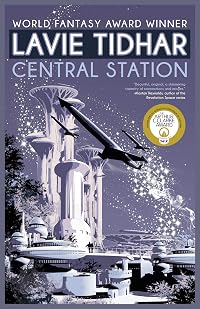
A worldwide diaspora has left a quarter of a million people at the foot of a space station. Cultures collide in real life and virtual reality. The city is literally a weed, its growth left unchecked. Life is cheap, and data is cheaper. When Boris Chong returns to Tel Aviv from Mars, much has changed. Boris' ex-lover is raising a strangely familiar child who can tap into the datastream of a mind with the touch of a finger. His cousin is infatuated with a robotnik--a damaged cyborg soldier who show more might as well be begging for parts. His father is terminally-ill with a multigenerational mind-plague. And a hunted data-vampire has followed Boris to where she is forbidden to return. Rising above them is Central Station, the interplanetary hub between all things: the constantly shifting Tel Aviv; a powerful virtual arena, and the space colonies where humanity has gone to escape the ravages of poverty and war. Everything is connected by the Others, powerful alien entities who, through the Conversation--a shifting, flowing stream of consciousness--are just the beginning of irrevocable change. At Central Station, humans and machines continue to adapt, thrive ... and even evolve. show lessTags
Recommendations









Member Recommendations
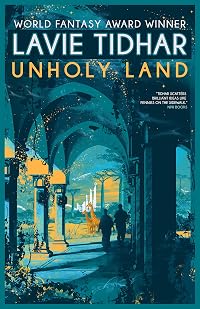
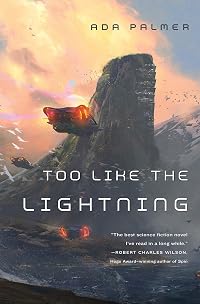
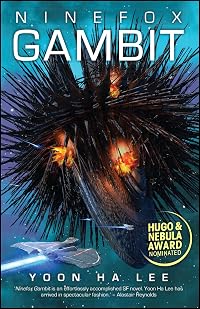
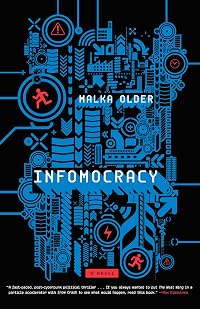
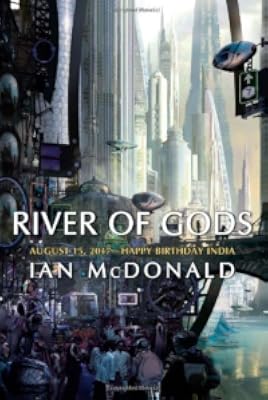
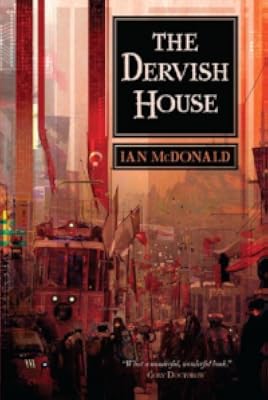
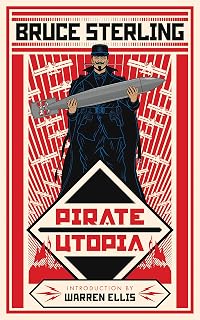
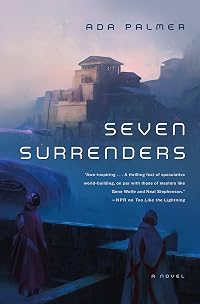
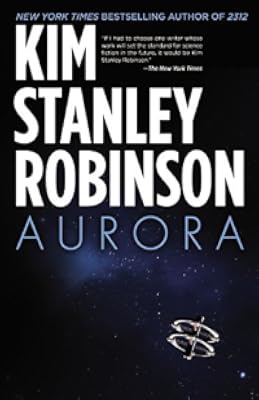
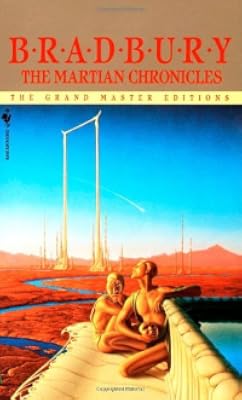
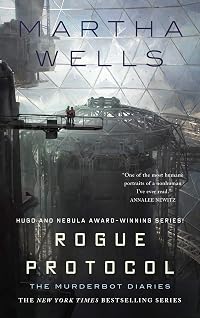
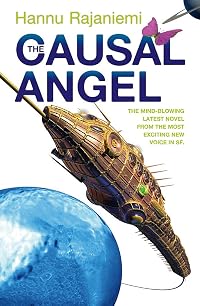
andreas.wpv Lives woven together with a critical, but gentle look at humankind. Different language, and much more elaborate on the setting and characters, but similar in its storytelling.
Member Reviews
After a confusing start, I ended up really enjoying this collection of inter-connected short stories. There is not much action and very little resolution to be found here but Tidhar's wonderful writing brings his characters to life within the titular Central Station community.
And it is a large cast of characters that inhabit Central Station, many of whom are related in one form or another. The tech seems magical, (in a Clarke's Law sort of way), but the characters are all very human, even the robots, cyborgs, and space vampires. Which brings up an aspect of this book that I really got a kick out of - all the subtle (and not so subtle) references to other works of SF. One very obvious example is Carmel, the Shambleau character. Her back show more story is essentially a re-telling of C.L. Moore's classic tale, with some very creative technological twists, which were nicely done. Many other references abound. I caught a bunch of them but am sure I also missed a few.
It took me a while to realize that I was reading a collection as opposed to an actual novel, hence my initial confusion. Once I tumbled to that fact, my expectations changed, and I was able to better settle into the world of Central Station.
This is my first Tidhar. I expect to read more soon. show less
And it is a large cast of characters that inhabit Central Station, many of whom are related in one form or another. The tech seems magical, (in a Clarke's Law sort of way), but the characters are all very human, even the robots, cyborgs, and space vampires. Which brings up an aspect of this book that I really got a kick out of - all the subtle (and not so subtle) references to other works of SF. One very obvious example is Carmel, the Shambleau character. Her back show more story is essentially a re-telling of C.L. Moore's classic tale, with some very creative technological twists, which were nicely done. Many other references abound. I caught a bunch of them but am sure I also missed a few.
It took me a while to realize that I was reading a collection as opposed to an actual novel, hence my initial confusion. Once I tumbled to that fact, my expectations changed, and I was able to better settle into the world of Central Station.
This is my first Tidhar. I expect to read more soon. show less
Astounding. This is my fourth book by Tidhar, and he may be the greatest living writer. His imagination seems to know no bounds and he doesn't write the same book over and over. This one stems from a series of short stories, which have been revised and augmented to tell the story of a space port in Tel Aviv. It takes a few pages to get into the swing of things, because this is a future that takes a bit of getting used to, but soon Tidhar's large cast of characters begin to take hold in your affections and you watch with interest and emotion as they go about with their lives in a future world where everyone--well, almost everyone--is connected through an implanted node into a sort of uber-internet that spans not only Earth but Earth's show more far-flung outposts on Mars, the asteroid belt, Saturn's moon Titan, and out into the galaxy. There isn't a single overriding plot here, but the interconnections between the characters and the events paint a very vivid picture of the worlds Tidhar has created. This is not cold science fiction. Despite the cleverness of his ideas, Tidhar's work is grounded in character, and that is why Central Station succeeds on all fronts and may even bring a tear or two to your eyes. show less
There have been science fiction novels before that have tried to illustrate everyday life in the future. It's actually hard to pull that trick off, because all too often the writer attempts to shoe-horn all sorts of ideas into the book that just don't ring true, especially a few years down the line when it turns out that the future isn't as different as we expected. We see this now. If I'd read a novel when I was 14 about everyday life in the early 21st Century, I'd be excited by the computers, the Web, the mobile phones and the high-definition televisions connecting me to the world. But I'd be unimpressed by the absence of flying cars, silver suits and personal jetpacks. And I'd perhaps be surprised to find in that novel that many of show more us still live in the same houses, we catch buses or trains to work, we still read books (at least some of us), use utensils in our everyday lives that have been unchanged for centuries, and have things around us that are very old as well as brand new. (I have crockery and drinking glasses in particular that I know are a good sixty years old.) This isn't how we were told the future would be (and a good thing too, many would say).
Lavie Tidhar's Central Station is a book that depicts a future as lived by ordinary people. They do things and have lives that are radically changed from our own; but at the same time, they live in spaces, and use things, that we would recognise; indeed, I'm sure that if you dived down to some of the scenes in the book, you would find things - the glasses in Miriam Jones' shebeen, the books in Achimwene's collection - that are with us now. And that is the great thing about this personal narrative, told in fourteen short stories, interlinked by characters and (in particular) the place. There is a tremendous sense of continuity, of how lives might be lived two hundred or so years from now.
There are differences, of course. Humanity has colonised space and travel to other worlds is comparatively commonplace. The virtual world has grown, and has become more seamlessly integrated with the biological. And human biology has been amended to adopt and adapt to these changes, sometimes in ways that seem to rob people of their humanity (except it doesn't, despite everything).
For some readers, the setting will seem the most fantastical part of the story - a spaceport built above the post-Israeli city of Tel Aviv. How we got there from here is not part of the story; there have been wars and peaces, and we get glimpses of the ruins of the Israel/Palestine we see today. But there is no sense that there has been any major dislocation of peoples; the region remains the melting pot it always was, and the building of Central Station in particular, an event just fading in human memory at the time of the book, acted as a magnet to draw people in from a range of different cultures. All have contributed to a diverse, vibrant city, though one not without its problems.
This is not a book of action and adventure. Some of the characters have lived lives that would be incredible to us - think Roy Batty's closing speech in Blade Runner, "I've seen things you people wouldn't believe...", though in Central Station, the characters would believe these things whilst recognising their wondrousness - but it is a book that rings true. The author was born in Israel and has lived all over the world. It shows in the lives he brings to our attentions; perhaps for a white, middle-aged British reader, this is as much a part of the fantastical picture as anything else. As someone once said, Earth is the alien planet. show less
Lavie Tidhar's Central Station is a book that depicts a future as lived by ordinary people. They do things and have lives that are radically changed from our own; but at the same time, they live in spaces, and use things, that we would recognise; indeed, I'm sure that if you dived down to some of the scenes in the book, you would find things - the glasses in Miriam Jones' shebeen, the books in Achimwene's collection - that are with us now. And that is the great thing about this personal narrative, told in fourteen short stories, interlinked by characters and (in particular) the place. There is a tremendous sense of continuity, of how lives might be lived two hundred or so years from now.
There are differences, of course. Humanity has colonised space and travel to other worlds is comparatively commonplace. The virtual world has grown, and has become more seamlessly integrated with the biological. And human biology has been amended to adopt and adapt to these changes, sometimes in ways that seem to rob people of their humanity (except it doesn't, despite everything).
For some readers, the setting will seem the most fantastical part of the story - a spaceport built above the post-Israeli city of Tel Aviv. How we got there from here is not part of the story; there have been wars and peaces, and we get glimpses of the ruins of the Israel/Palestine we see today. But there is no sense that there has been any major dislocation of peoples; the region remains the melting pot it always was, and the building of Central Station in particular, an event just fading in human memory at the time of the book, acted as a magnet to draw people in from a range of different cultures. All have contributed to a diverse, vibrant city, though one not without its problems.
This is not a book of action and adventure. Some of the characters have lived lives that would be incredible to us - think Roy Batty's closing speech in Blade Runner, "I've seen things you people wouldn't believe...", though in Central Station, the characters would believe these things whilst recognising their wondrousness - but it is a book that rings true. The author was born in Israel and has lived all over the world. It shows in the lives he brings to our attentions; perhaps for a white, middle-aged British reader, this is as much a part of the fantastical picture as anything else. As someone once said, Earth is the alien planet. show less
You know you've got a winner when:
You keep saying to yourself, over and over and over, I hope this never ends, I hope this never ends.
You get so deeply immersed in ideas, with so much world-building and awe and exploration of humanity, post-humanity, robot, evolutionary AI, and how everyone interacts, explores, and lives together pretty much harmoniously, that you cry and say, I live here. I will always live here. I have already been living here.
You snap out of a nested story self-reference long enough to realize that the author just Louis Woo'd you or slammed you right into a data-singularity mine within the Game-World or you just found your way to the mythical land of Pac-Mandu.
Woah.
This novel is not a plot-heavy. It doesn't need to show more be. It follows an ensemble list of characters, all fascinating and wonderful in their own rights, following a dense nested stream of short stories tightly tied to the place of Tel-Aviv a good long while AFTER the technological singularity had had its way with the world and the solar system, until everyone from normal humans, noded humans, cyborgs, demi-godlings, and most especially, the "Others" (Post-Singularity Intelligences) coexist and live in an extremely idea-dense world.
Its full of Jewish-Robot religions, a wide assortment of post-mortality packages, Strigoi (data vampirism, damn I loved Carmel,) and a heavily advanced system of MMORPG's that is tied very tightly to real-money systems, and can help you earn enough to book passage off-planet by way of captaining a starship in-game. How cool is all this? I can't even begin click off all these hundreds of wonderful ideas, and so many of them get explored so deeply, too.
Yes, it's a setting piece, but the characters are much more than just setting. The themes are also deep and introspective and Lavie Tidhar loves to explore everything deeply and interestingly.
I just couldn't get enough of this novel.
But don't expect a plot payoff, mind you. This isn't that kind of novel at all. Think about an interwoven tapestry of dense short stories that touch and caress Central Station, itself, and just revel in the glory of sensations. You won't be disappointed.
As something of an afterward, I do want to bring up one last thing. Another reviewer mentioned that the feel is close to Hannu Rajaniemi in many ways, and I have to agree. Hell, the one thing that decided me on reading this book was that reference. It sold me and sold me HARD.
So what about a post-analysis comparison? Both artists love their nested stories, their sometimes nearly hidden easter eggs, their wide and exhaustive knowledge of the SF field, and the glory of the godlike *idea*. Both imagine a Post-Singularity solar system. The difference between them are pretty fundamental, though. Lavie Tidhar focuses on reflection and coming to grips with reality and just plain living. It's gorgeous. Hannu Rajaniemi doesn't ignore those themes, but he also ties some really damn BIG rip-roaring adventures and plot twists among all the nested stories.
You might say that this novel has a bit more yin to Hannu's yang. This might be a major selling point to prospective readers. Who knows? I know I loved it, but it IS quite different in tone. :)
I could read this novel forever. I could keep reading its like from now to eternity. It's just that good and it's BRIGHT in my head.
Thanks to Netgalley for the ARC! show less
You keep saying to yourself, over and over and over, I hope this never ends, I hope this never ends.
You get so deeply immersed in ideas, with so much world-building and awe and exploration of humanity, post-humanity, robot, evolutionary AI, and how everyone interacts, explores, and lives together pretty much harmoniously, that you cry and say, I live here. I will always live here. I have already been living here.
You snap out of a nested story self-reference long enough to realize that the author just Louis Woo'd you or slammed you right into a data-singularity mine within the Game-World or you just found your way to the mythical land of Pac-Mandu.
Woah.
This novel is not a plot-heavy. It doesn't need to show more be. It follows an ensemble list of characters, all fascinating and wonderful in their own rights, following a dense nested stream of short stories tightly tied to the place of Tel-Aviv a good long while AFTER the technological singularity had had its way with the world and the solar system, until everyone from normal humans, noded humans, cyborgs, demi-godlings, and most especially, the "Others" (Post-Singularity Intelligences) coexist and live in an extremely idea-dense world.
Its full of Jewish-Robot religions, a wide assortment of post-mortality packages, Strigoi (data vampirism, damn I loved Carmel,) and a heavily advanced system of MMORPG's that is tied very tightly to real-money systems, and can help you earn enough to book passage off-planet by way of captaining a starship in-game. How cool is all this? I can't even begin click off all these hundreds of wonderful ideas, and so many of them get explored so deeply, too.
Yes, it's a setting piece, but the characters are much more than just setting. The themes are also deep and introspective and Lavie Tidhar loves to explore everything deeply and interestingly.
I just couldn't get enough of this novel.
But don't expect a plot payoff, mind you. This isn't that kind of novel at all. Think about an interwoven tapestry of dense short stories that touch and caress Central Station, itself, and just revel in the glory of sensations. You won't be disappointed.
As something of an afterward, I do want to bring up one last thing. Another reviewer mentioned that the feel is close to Hannu Rajaniemi in many ways, and I have to agree. Hell, the one thing that decided me on reading this book was that reference. It sold me and sold me HARD.
So what about a post-analysis comparison? Both artists love their nested stories, their sometimes nearly hidden easter eggs, their wide and exhaustive knowledge of the SF field, and the glory of the godlike *idea*. Both imagine a Post-Singularity solar system. The difference between them are pretty fundamental, though. Lavie Tidhar focuses on reflection and coming to grips with reality and just plain living. It's gorgeous. Hannu Rajaniemi doesn't ignore those themes, but he also ties some really damn BIG rip-roaring adventures and plot twists among all the nested stories.
You might say that this novel has a bit more yin to Hannu's yang. This might be a major selling point to prospective readers. Who knows? I know I loved it, but it IS quite different in tone. :)
I could read this novel forever. I could keep reading its like from now to eternity. It's just that good and it's BRIGHT in my head.
Thanks to Netgalley for the ARC! show less
Central Station imagines a world where divisions have blurred between man-created and biological entities and corporate and personal memory. Conversation has shifted from personal one-on-one dialogue to universal eavesdropping and vicarious experience available through an implanted node.
Central Station is the interstellar port that rises above Jewish Tel Aviv and Arab Jaffa where people "still lived as they had always lived." We will recognize aspects of their lives, the human need for love, the seeking of answers through faith and escape through drugs, the vilification of those who are different. And yet this world, this society, is totally a new imagining.
Originally a series of short stories about individuals whose ancestors came to show more build the station or fight in the old wars, this is not a plot-driven book but is still compulsive. Long explanations do not burden the tale; you take the strange and new by faith and context, growing into understanding.
Some of the characters and their stories include:
Boris Chong and Miriam Jones had once been young and in love. Boris worked in the labs that created human life but left to work on Mars. He has returned to Central Station with a Martian aug, a parasite, having learned his father's memory was failing. Miriam has adopted a strange child born in Boris's lab.
Boris is followed by an ex-lover named Carmel, a data vampire who is shunned and dangerous. Carmel becomes lovers with one of the few humans without a node, Achimwene, a man she cannot feed on and who cannot become addicted to the dopamine high stimulated by her theft of their memory data. Sometimes he wonders what it was like to be "whole," growing up part of the Conversation, for a human without a node was a 'cripple'. His passion is for mid-twentieth century pulp fiction books, the cheap paperbacks crumbling and yellowed. Their story and search for answers was one of my favorite sections.
"Just another broken-down robotnik, just another beggar hunting the night streets looking for a handout or a fix or both."
Miriam's sister Isobel Chow is in love with Motl, an ex-soldier who was mechanically rebuilt over and over until he is more machine than man. Robots haven't been made for a long time and these veterans end up on the street begging for replacement parts to keep going. He no longer recalls what wars he had fought, but the vision of war and death remain. He is an ex-addict of the faith drug Crucifixion. Now his parts are breaking down, but his feelings are strong. "Sometimes you needed to believe you could believe, sometimes you had to figure heaven could come from another human being and not just in a pill."
"This part of the world had always needed a messiah."
R. Brother Patch-It is a robo-priest and part-time moyel. "We dream a consensus of reality," he preaches. It feels tired, old, his parts wearing out, and sometimes he is envious of the human trait of sensation and stimulation. "To be a robot, you needed faith, R. Patch-It thought. To be a human, too."
On the flip side, Ruth Cohen longs to be part of something bigger, a total immersion in The Conversation, the linked awareness made possible through the node implant. "Are you willing to give up your humanity?" she is asked.
Behind these otherworldly characters are still basic stories of humanity's essence: the search for love and meaning.
"It is, perhaps, the prerogative of every man or woman to imagine, and thus force a shape, a meaning, onto that wild and meandering narrative of their lives by choosing genre. A princess is rescued by a prince; a vampire stalks a victim in the dark; a student becomes the master. The circle is complete. And so on."
"There comes a time in a man's life when he realizes stories are lies. Things do not end neatly."
My son, blog writer of Battered, Tattered, Yellowed and Creased, raved about Tidhar's book (read his review here) which motivated me to request it through NetGalley. Central Station has won multiple awards and huge recognition. It is sure to be a classic. I thank the publisher for the ebook in exchange for a fair and unbiased review. show less
Central Station is the interstellar port that rises above Jewish Tel Aviv and Arab Jaffa where people "still lived as they had always lived." We will recognize aspects of their lives, the human need for love, the seeking of answers through faith and escape through drugs, the vilification of those who are different. And yet this world, this society, is totally a new imagining.
Originally a series of short stories about individuals whose ancestors came to show more build the station or fight in the old wars, this is not a plot-driven book but is still compulsive. Long explanations do not burden the tale; you take the strange and new by faith and context, growing into understanding.
Some of the characters and their stories include:
Boris Chong and Miriam Jones had once been young and in love. Boris worked in the labs that created human life but left to work on Mars. He has returned to Central Station with a Martian aug, a parasite, having learned his father's memory was failing. Miriam has adopted a strange child born in Boris's lab.
Boris is followed by an ex-lover named Carmel, a data vampire who is shunned and dangerous. Carmel becomes lovers with one of the few humans without a node, Achimwene, a man she cannot feed on and who cannot become addicted to the dopamine high stimulated by her theft of their memory data. Sometimes he wonders what it was like to be "whole," growing up part of the Conversation, for a human without a node was a 'cripple'. His passion is for mid-twentieth century pulp fiction books, the cheap paperbacks crumbling and yellowed. Their story and search for answers was one of my favorite sections.
"Just another broken-down robotnik, just another beggar hunting the night streets looking for a handout or a fix or both."
Miriam's sister Isobel Chow is in love with Motl, an ex-soldier who was mechanically rebuilt over and over until he is more machine than man. Robots haven't been made for a long time and these veterans end up on the street begging for replacement parts to keep going. He no longer recalls what wars he had fought, but the vision of war and death remain. He is an ex-addict of the faith drug Crucifixion. Now his parts are breaking down, but his feelings are strong. "Sometimes you needed to believe you could believe, sometimes you had to figure heaven could come from another human being and not just in a pill."
"This part of the world had always needed a messiah."
R. Brother Patch-It is a robo-priest and part-time moyel. "We dream a consensus of reality," he preaches. It feels tired, old, his parts wearing out, and sometimes he is envious of the human trait of sensation and stimulation. "To be a robot, you needed faith, R. Patch-It thought. To be a human, too."
On the flip side, Ruth Cohen longs to be part of something bigger, a total immersion in The Conversation, the linked awareness made possible through the node implant. "Are you willing to give up your humanity?" she is asked.
Behind these otherworldly characters are still basic stories of humanity's essence: the search for love and meaning.
"It is, perhaps, the prerogative of every man or woman to imagine, and thus force a shape, a meaning, onto that wild and meandering narrative of their lives by choosing genre. A princess is rescued by a prince; a vampire stalks a victim in the dark; a student becomes the master. The circle is complete. And so on."
"There comes a time in a man's life when he realizes stories are lies. Things do not end neatly."
My son, blog writer of Battered, Tattered, Yellowed and Creased, raved about Tidhar's book (read his review here) which motivated me to request it through NetGalley. Central Station has won multiple awards and huge recognition. It is sure to be a classic. I thank the publisher for the ebook in exchange for a fair and unbiased review. show less
The old Central Bus Station in Tel Aviv was a special place. Not necessarily a good place, but one that evokes strong images from anyone who ever had to traverse the endless platforms to find a connecting bus. And then they built a new one, a monstrous monumental structure, one the scale of NYC's Port Authority and Grand Central Station and a massive indoor mall all wrapped into one. Efficient and ugly and neighbourhood destroying, a modern crossroads bereft of soul yet home to thousands of people who depend on its existence for survival. Tidhar masterfully makes this into the setting for this imaginative and dark yet hopeful vision of the future. Now a major spaceport, the station still serves its purpose as a transport hub, and also show more the anchor for the surrounding South Tel Aviv neighborhood, a melting pot on the border between Arab Jaffa and Jewish Tel Aviv. But with robots. And AIs, and vat grown kids. And cyborgs, and data vampires, and ubiquitous connectivity and immersive VR.
The biggest problem with the book is that it's essentially a stitched together compilation of short stories, so doesn't really flow as a novel with a clear plotline, it's more episodic and hence a bit disjointed. But keeping that in mind, it manages to cover a lot of ground.
While not everyone may appreciate all of the references, I'm pretty much the perfect target demographic for this book, and it's towards the very top of the list of my favourite books I've read this year, and of cyberpunk books in general. show less
The biggest problem with the book is that it's essentially a stitched together compilation of short stories, so doesn't really flow as a novel with a clear plotline, it's more episodic and hence a bit disjointed. But keeping that in mind, it manages to cover a lot of ground.
While not everyone may appreciate all of the references, I'm pretty much the perfect target demographic for this book, and it's towards the very top of the list of my favourite books I've read this year, and of cyberpunk books in general. show less
"The Shambleau called Carmel came to Central Station in spring, when the smell in the air truly is intoxicating. It is a smell of the sea, and of the sweat of so many bodies, their heat and their warmth, and it is the smell of humanity’s spices and the cool scent of its many machines."
In “Central Station” by Lavie Tidhar
This is a navel gazing novel; a friend of mine would say it's a novel about the human condition. Back in the day, this was the stuff that interested me less. But they say SF at its best is allegorical and because contemporary versions are all about we live in navel gazing times, this one was much up my alley. Quoting from “Blade Runner”, in one of the most wonderful Roy Batty lines, just so you know how geeky I show more am: "I've felt wind in my hair, riding test boats off the black galaxies and seen an attack fleet burn like a match and disappear. I've seen it...felt it!", one can sense what makes us human even in a SF milieu. This existential part is what makes the genre so appealing to me. I wonder when they will do a film based on Kim Stanley Robinson's Mars stuff? It has to be high-quality to do justice, casting & special effects both, so it’s going cost a bunch, also there are some themes they might not want to show the masses at this stage, perhaps that is some factor why, surprisingly, they haven't tried a film yet... big bucks to be made though if they do it well! How will you cram, what, 1500 pages of well-crafted prose into 90 minutes of Hollywood glitz? We all remember what happened to e.g. "Dune" when they tried that.
Even if we ignore ancient stories that could be categorised as SF (e.g. guy goes voyaging for golden fleece, gains it by sweet-talking girl for advice on how to avoid the guardian monster, marries her and has children, ditches her and sacrifices their children to escape, wife becomes justifiably homicidal and wreaks vengeance from a dragon-drawn chariot...) and go straight for the academically agreed "first ever" science fiction story - Frankenstein, or a Modern Prometheus - it's generally been about the characters. For every 9 books of the Lucky Starr and the Oceans of Venus (did someone think Asimov?) variety there's a “Venus Plus X”. And here we are, decades later, still making the "but then 90% of everything is crap" protestations, and still fighting the critical ignorance that insists that SF is all about rocket ships and ray guns. Of course a lot of it is. For the same reason that you recognise the names Jackie Collins and Dan Brown - because schlock sells. I'm just pointing out myself that "new wave" was a term used to describe the type of SF going way back to the 60s and that nothing really has changed since - there still remain new SF books worth investing the time taken to read and those that make you wish you hadn't. There are still those that examine "the human condition", some that contrast by examining "the non-human condition" and those that ignore both to concentrate on the technical issues. And in each of those groups, the same old 90/10 ratio of crap to gems. The same as every other branch of any other art. SF has long been about the human condition, I dare-say since it was ever a 'thing' and before, men have written about what it is to be a man/woman. I would say most things SF presently use it just to fill plot holes - star trek had its “treknobabble”, but it also explored humanity, something modern SF shows seem to barely acknowledge. Heck, even Terminator 2 plucked a few notes in that regard, besides being a brilliant action film. Yeah, come to think of it plenty of 90s SF films had a bit of the old existentialism going on, “Dark City”, “Contact”, “Matrix” (first one, just about) - I have a terrible memory and can't recall any more off the top of my head because I’m getting senile due to old age… I've watched “Arrival”, and the bulk of the film’s juicy stuff came from the book, i.e., a language expressing thoughts/meaning all-at-once, and the relationship with time being a very interesting theme. We're fast approaching the singularity though; population, productivity, consumption, identity; so who knows how we'll handle the future. Man was not born to be idle, and there's a lot of idleness approaching, and idle hands are the devils workshop. These questions, they're age old, really, aren't they. SF with outer space settings is a fraction of that genre. Much SF takes place in the future here on earth. That’s why Tidhar’s novel came as total surprise in this day and age of contemporary SF. This is my first Tidhar, but I suspect that all of his novels may have existentialist themes to them. I'm not exactly sure what the true premise of this book is, except that it's no longer difficult to imagine some of the fiction in SF and that the struggles of book’s characters now seem oddly familiar to me. Every single story in this book’s tapestry has a subtle human angle: The greatest dangers for Jews and Arabs in this novel are not each other, but “strigoi” humans with vampire-like power; at the Central Station, ethnicity, religion, race, technology, and virtual reality rub elbows; descriptions of fantastical aspects of the future seem like references to completely commonplace occurrences...sublime writing. SF with believable characters with complex emotional lives driving the plot. Wow, if only someone had thought of this before of course; there is a lot SF that has unrealistic characters driven by the needs of the plot, but that describes all fiction. The all-over-the-place plot will not be to anyone’s tastes, even to the SF hardcore fan. One of the most interesting aspects of the book is that Tidhar refers to so many classics in SF, yet he chose a structure for his work that not many of those writers would have considered. It's a work in constant dialogue with the genre but not afraid to go off the beaten path. As such it is not a book for everyone, but if one likes a book that is a bit weird even by SF standards, “Central Station” might be your thing. Personally, I thoroughly enjoyed it.
SF = Speculative Fiction. show less
In “Central Station” by Lavie Tidhar
This is a navel gazing novel; a friend of mine would say it's a novel about the human condition. Back in the day, this was the stuff that interested me less. But they say SF at its best is allegorical and because contemporary versions are all about we live in navel gazing times, this one was much up my alley. Quoting from “Blade Runner”, in one of the most wonderful Roy Batty lines, just so you know how geeky I show more am: "I've felt wind in my hair, riding test boats off the black galaxies and seen an attack fleet burn like a match and disappear. I've seen it...felt it!", one can sense what makes us human even in a SF milieu. This existential part is what makes the genre so appealing to me. I wonder when they will do a film based on Kim Stanley Robinson's Mars stuff? It has to be high-quality to do justice, casting & special effects both, so it’s going cost a bunch, also there are some themes they might not want to show the masses at this stage, perhaps that is some factor why, surprisingly, they haven't tried a film yet... big bucks to be made though if they do it well! How will you cram, what, 1500 pages of well-crafted prose into 90 minutes of Hollywood glitz? We all remember what happened to e.g. "Dune" when they tried that.
Even if we ignore ancient stories that could be categorised as SF (e.g. guy goes voyaging for golden fleece, gains it by sweet-talking girl for advice on how to avoid the guardian monster, marries her and has children, ditches her and sacrifices their children to escape, wife becomes justifiably homicidal and wreaks vengeance from a dragon-drawn chariot...) and go straight for the academically agreed "first ever" science fiction story - Frankenstein, or a Modern Prometheus - it's generally been about the characters. For every 9 books of the Lucky Starr and the Oceans of Venus (did someone think Asimov?) variety there's a “Venus Plus X”. And here we are, decades later, still making the "but then 90% of everything is crap" protestations, and still fighting the critical ignorance that insists that SF is all about rocket ships and ray guns. Of course a lot of it is. For the same reason that you recognise the names Jackie Collins and Dan Brown - because schlock sells. I'm just pointing out myself that "new wave" was a term used to describe the type of SF going way back to the 60s and that nothing really has changed since - there still remain new SF books worth investing the time taken to read and those that make you wish you hadn't. There are still those that examine "the human condition", some that contrast by examining "the non-human condition" and those that ignore both to concentrate on the technical issues. And in each of those groups, the same old 90/10 ratio of crap to gems. The same as every other branch of any other art. SF has long been about the human condition, I dare-say since it was ever a 'thing' and before, men have written about what it is to be a man/woman. I would say most things SF presently use it just to fill plot holes - star trek had its “treknobabble”, but it also explored humanity, something modern SF shows seem to barely acknowledge. Heck, even Terminator 2 plucked a few notes in that regard, besides being a brilliant action film. Yeah, come to think of it plenty of 90s SF films had a bit of the old existentialism going on, “Dark City”, “Contact”, “Matrix” (first one, just about) - I have a terrible memory and can't recall any more off the top of my head because I’m getting senile due to old age… I've watched “Arrival”, and the bulk of the film’s juicy stuff came from the book, i.e., a language expressing thoughts/meaning all-at-once, and the relationship with time being a very interesting theme. We're fast approaching the singularity though; population, productivity, consumption, identity; so who knows how we'll handle the future. Man was not born to be idle, and there's a lot of idleness approaching, and idle hands are the devils workshop. These questions, they're age old, really, aren't they. SF with outer space settings is a fraction of that genre. Much SF takes place in the future here on earth. That’s why Tidhar’s novel came as total surprise in this day and age of contemporary SF. This is my first Tidhar, but I suspect that all of his novels may have existentialist themes to them. I'm not exactly sure what the true premise of this book is, except that it's no longer difficult to imagine some of the fiction in SF and that the struggles of book’s characters now seem oddly familiar to me. Every single story in this book’s tapestry has a subtle human angle: The greatest dangers for Jews and Arabs in this novel are not each other, but “strigoi” humans with vampire-like power; at the Central Station, ethnicity, religion, race, technology, and virtual reality rub elbows; descriptions of fantastical aspects of the future seem like references to completely commonplace occurrences...sublime writing. SF with believable characters with complex emotional lives driving the plot. Wow, if only someone had thought of this before of course; there is a lot SF that has unrealistic characters driven by the needs of the plot, but that describes all fiction. The all-over-the-place plot will not be to anyone’s tastes, even to the SF hardcore fan. One of the most interesting aspects of the book is that Tidhar refers to so many classics in SF, yet he chose a structure for his work that not many of those writers would have considered. It's a work in constant dialogue with the genre but not afraid to go off the beaten path. As such it is not a book for everyone, but if one likes a book that is a bit weird even by SF standards, “Central Station” might be your thing. Personally, I thoroughly enjoyed it.
SF = Speculative Fiction. show less
Members
- Recently Added By
Lists

2017 Hugo Eligible Novels
145 works; 14 members

Storybundle World of SF 2026
15 works; 1 member

Arthur C. Clarke Award Winners and Shortlisted Books
219 works; 14 members
Author Information

187+ Works 5,341 Members
Some Editions
Awards and Honors
Awards
Series

Work Relationships
Contains
Has as a commentary on the text
Common Knowledge
- Original publication date
- 2016-05
- People/Characters
- Boris Aharon Chong; Miriam Jones; Kranki Jones; Isobel Chow; Zhong Weiwei; R. Brother Patch-It (show all 19); Matt Cohen; Carmel; Achimwene Haile Selassie Jones; Eliezer; Ezekiel; Ruth Cohen; Vladimir Mordechai Chong; Youssou Jones; Tamara Chong; Yan Chong; Ibrahim; Motl; Bill Glimmung
- Important places
- Tel Aviv, Israel
- First words
- I first came to Central Station on a day in winter. African refugees sat on the green, expressionless. They were waiting, but for what, I didn't know. -Prologue
The smell of rain caught them unprepared. It was spring, there was that smell of jasmine and it mixed with the hum of electric buses, and there were solar gliders in the sky, like flocks of birds. -Chapter One: The Indignity ... (show all)of Rain - Blurbers
- Liu, Ken; Reynolds, Alastair
- Original language
- English
- Canonical DDC/MDS
- 823.92
- Canonical LCC
- PR9510.T53
Classifications
Statistics
- Members
- 589
- Popularity
- 49,833
- Reviews
- 36
- Rating
- (3.56)
- Languages
- 7 — Czech, English, French, German, Italian, Polish, Spanish
- Media
- Paper, Audiobook, Ebook
- ISBNs
- 15
- ASINs
- 6